- Introduction
- What Does Early Rock Drill Bit Failure Mean?
- 10 Common Reasons Why Rock Drill Bits Fail Early
- Choosing the Wrong Drill Bit for the Rock Formation
- Poor-Quality Materials and Manufacturing Processes
- Incorrect Drilling Parameters
- Insufficient Flushing and Poor Removal of Drill Cuttings
- Continuing to Use a Severely Worn Drill Bit
- Incorrect Grinding and Bit Maintenance
- Poor Compatibility Between Drill Bits and Other Drilling Tools
- Extremely Abrasive Rock Conditions Without the Right Bit Design
- Excessive Heat During Drilling
- Choosing Drill Bits Based Only on Initial Price
- How to Prevent Premature Rock Drill Bit Failure?
- How Long Should a Rock Drill Bit Last?
- Rock Drill Bit Failure vs Normal Wear: How to Tell the Difference?
- What Should You Do When a Drill Bit Fails Early?
- Conclusion
Introduction #
Rock drill bits are essential tools in mining, quarrying, tunneling, and construction projects, directly affecting drilling efficiency, operational costs, and overall productivity. However, premature rock drill bit failure is a common challenge faced by many drilling contractors and operators.
A drill bit that wears out too quickly not only increases replacement costs but also leads to more downtime, lower penetration rates, and higher cost per meter drilled. In many cases, early failure is not simply caused by the bit itself. Factors such as incorrect bit selection, unsuitable drilling parameters, poor rock condition analysis, improper operation, and inadequate maintenance can significantly shorten service life.
Understanding why rock drill bits fail early helps operators identify potential problems, select the right drilling tools, and optimize drilling performance. By analyzing the common causes of premature failure and applying proper solutions, it is possible to extend bit life, improve drilling efficiency, and reduce overall operating costs.
In this guide, we will explore the most common reasons why rock drill bits fail prematurely and provide practical recommendations to help you achieve longer-lasting and more reliable drilling performance.
What Does Early Rock Drill Bit Failure Mean? #
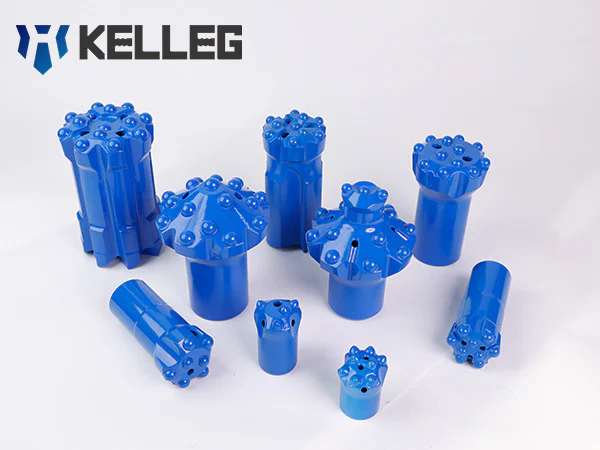
Early rock drill bit failure occurs when a drill bit loses its expected performance or becomes unusable before reaching its normal service life. Instead of gradually wearing under normal drilling conditions, the bit experiences premature damage that reduces drilling efficiency, increases tool consumption, and raises operating costs.
Depending on the drilling application and rock formation, the expected service life of a rock drill bit can vary. However, certain failure signs usually indicate that the bit is not performing as expected, including:
- Carbide button breakage before the expected service life – Tungsten carbide buttons may crack, loosen, or fall out due to excessive impact stress, overheating, or poor button retention.
- Excessive wear rate – The cutting structure wears faster than normal, causing frequent bit replacement and increased drilling costs.
- Reduced penetration speed – A worn or damaged bit requires more time and energy to achieve the same drilling depth.
- Cracked bit body – Structural cracks in the bit body may occur due to excessive impact force, improper drilling parameters, or material quality issues.
- Poor flushing performance – Inadequate removal of rock cuttings can cause regrinding, overheating, and accelerated wear of the bit face.
Common Rock Drill Bit Failure Symptoms and Possible Causes #
| Failure Symptom | Possible Cause |
|---|---|
| Buttons fall out | Poor carbide retention, overheating, or excessive impact stress |
| Slow drilling speed | Dull carbide buttons, incorrect bit selection, or poor flushing |
| Bit body cracks | Excessive impact force, improper operating parameters, or material fatigue |
| Uneven wear on the bit face | Incorrect rotation speed, uneven rock conditions, or poor drilling control |
| Increased vibration during drilling | Worn buttons, damaged threads, or poor tool alignment |
Identifying these early warning signs allows operators to take corrective action before complete bit failure occurs. In many cases, adjusting drilling parameters, improving flushing conditions, or selecting a more suitable bit design can significantly extend rock drill bit service life.
10 Common Reasons Why Rock Drill Bits Fail Early #
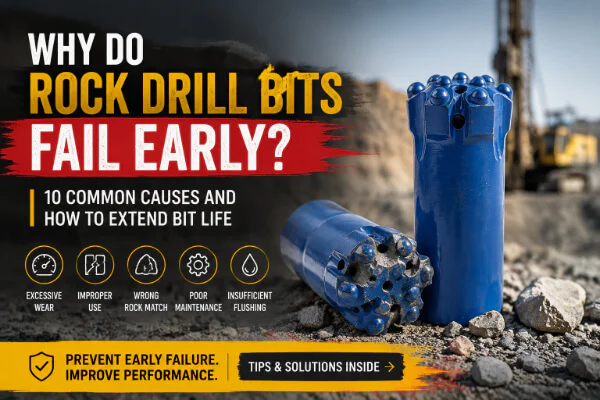
Rock drill bits can fail prematurely for many reasons, and the problem is often caused by a combination of factors rather than a single issue. While rock conditions and drilling environments are beyond the operator’s control, proper bit selection, correct operating parameters, and regular maintenance can greatly reduce unexpected failures.
Below are the 10 most common reasons why rock drill bits fail early and how to prevent them.
Choosing the Wrong Drill Bit for the Rock Formation #
One of the most common causes of premature rock drill bit failure is selecting a bit that does not match the drilling conditions. Different rock formations require different bit designs, carbide grades, and cutting structures.
For example:
- Hard and abrasive rocks require wear-resistant carbide buttons and durable bit designs.
- Soft or fractured formations may require sharper cutting edges and better flushing performance.
- Highly fractured rock may require retrac button bits to improve stability and reduce jamming risks.
Using an unsuitable drill bit can result in excessive wear, broken carbide buttons, reduced penetration speed, and shorter service life.
How to prevent it:
Analyze rock hardness, abrasiveness, and drilling conditions before selecting a drill bit design.
Poor-Quality Materials and Manufacturing Processes #
The quality of raw materials and manufacturing processes directly affects rock drill bit durability. A low-quality bit may look similar to a premium product but can fail much earlier under demanding drilling conditions.
Common quality-related problems include:
- Low-grade alloy steel causing premature body wear or cracking;
- Poor-quality tungsten carbide buttons leading to breakage;
- Improper heat treatment reducing strength and fatigue resistance;
- Weak carbide brazing causing button loss.
How to prevent it:
Choose drill bits manufactured with reliable steel materials, high-quality carbide, and strict quality control procedures.
Incorrect Drilling Parameters #
Even a high-quality rock drill bit can fail quickly if drilling parameters are not properly adjusted. Excessive force or incorrect settings can overload the bit and accelerate damage.
Common parameter-related issues include:
- Excessive impact pressure causing carbide button damage;
- Too much feed force creating unnecessary stress on the bit body;
- Incorrect rotation speed causing uneven wear or overheating.
How to prevent it:
Adjust impact energy, rotation speed, and feed pressure according to rock conditions and bit specifications.
Insufficient Flushing and Poor Removal of Drill Cuttings #
Flushing plays a critical role in maintaining drilling performance. Its main function is to remove rock cuttings, cool the bit face, and prevent debris from being repeatedly crushed.
Poor flushing can cause:
- Accumulation of drill cuttings around the bit;
- Increased friction and heat generation;
- Faster carbide wear;
- Reduced penetration efficiency.
How to prevent it:
Ensure sufficient air or water flushing pressure and maintain clean drilling conditions.
Continuing to Use a Severely Worn Drill Bit #
Many operators continue using a worn drill bit in order to maximize usage time. However, excessive wear can actually increase drilling costs and create a higher risk of sudden failure.
A severely worn bit may cause:
- Lower penetration rates;
- Higher energy consumption;
- Increased vibration;
- Greater stress on drilling equipment.
How to prevent it:
Inspect carbide button wear regularly and replace or regrind the bit at the appropriate time.
Incorrect Grinding and Bit Maintenance #
For reusable rock drill bits, proper grinding is essential for maintaining cutting performance. Incorrect grinding methods can reduce the service life of both carbide buttons and the bit body.
Common mistakes include:
- Removing too much carbide material;
- Grinding at an incorrect angle;
- Failing to maintain the original button shape.
How to prevent it:
Follow recommended grinding procedures and use suitable grinding equipment to restore the cutting profile.
Poor Compatibility Between Drill Bits and Other Drilling Tools #
Rock drilling systems work as a complete unit. A drill bit must properly match the drill rod, shank adapter, and drilling equipment.
Compatibility issues include:
- Incorrect thread type or size;
- Worn thread connections;
- Poor alignment between drilling components.
These problems can cause:
- Impact energy loss;
- Excessive vibration;
- Thread damage;
- Uneven bit wear.
How to prevent it:
Use compatible drilling tools with correct thread specifications and maintain proper connection conditions.
Extremely Abrasive Rock Conditions Without the Right Bit Design #
Some rock formations contain highly abrasive minerals, such as quartz, which can rapidly wear down cutting components.
In abrasive formations, standard drill bits may experience:
- Fast carbide button wear;
- Reduced drilling speed;
- Frequent replacement requirements.
How to prevent it:
Select drill bits with suitable carbide grades, button shapes, and face designs for abrasive rock conditions.
Excessive Heat During Drilling #
Heat is one of the hidden factors behind premature drill bit failure. Excessive temperature can weaken carbide buttons, damage brazing areas, and accelerate wear.
Common causes of overheating include:
- Insufficient flushing;
- Excessive rotation speed;
- High friction during drilling.
How to prevent it:
Maintain proper flushing performance and optimize drilling parameters to control heat generation.
Choosing Drill Bits Based Only on Initial Price #
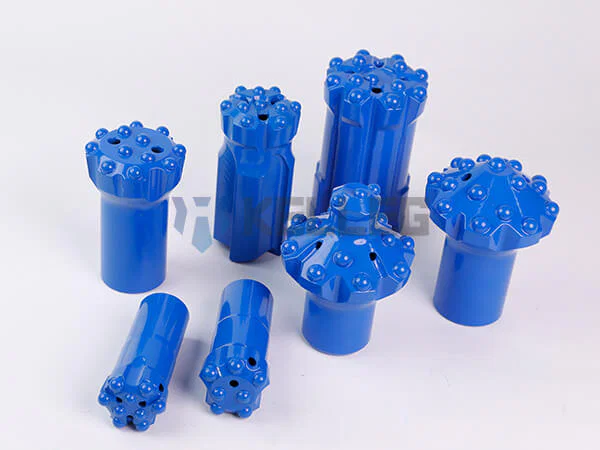
The cheapest drill bit is not always the most economical choice. A low-cost bit with short service life may increase total drilling expenses due to frequent replacements and downtime.
A better measurement is:
Cost per meter = Drill bit price ÷ Total drilling meters achieved
For example:
- Bit A: $50 and drills 100 meters → $0.50/meter
- Bit B: $80 and drills 250 meters → $0.32/meter
Although Bit B costs more initially, it provides lower overall drilling costs.
How to prevent it:
Evaluate drill bits based on service life, drilling performance, and total cost rather than purchase price alone.
Understanding these common causes of rock drill bit failure helps operators reduce unnecessary downtime and improve drilling efficiency. In the next section, we will discuss practical methods to prevent premature failure and extend rock drill bit service life.
How to Prevent Premature Rock Drill Bit Failure? #
Preventing premature rock drill bit failure requires more than simply choosing a high-quality product. A drill bit’s service life depends on the interaction between bit design, rock conditions, drilling parameters, flushing performance, and daily maintenance practices.
By optimizing these factors, operators can reduce unexpected failures, improve drilling efficiency, and achieve a lower cost per meter. The following practices can help extend rock drill bit service life.
Select the Correct Bit Design for Your Drilling Conditions #
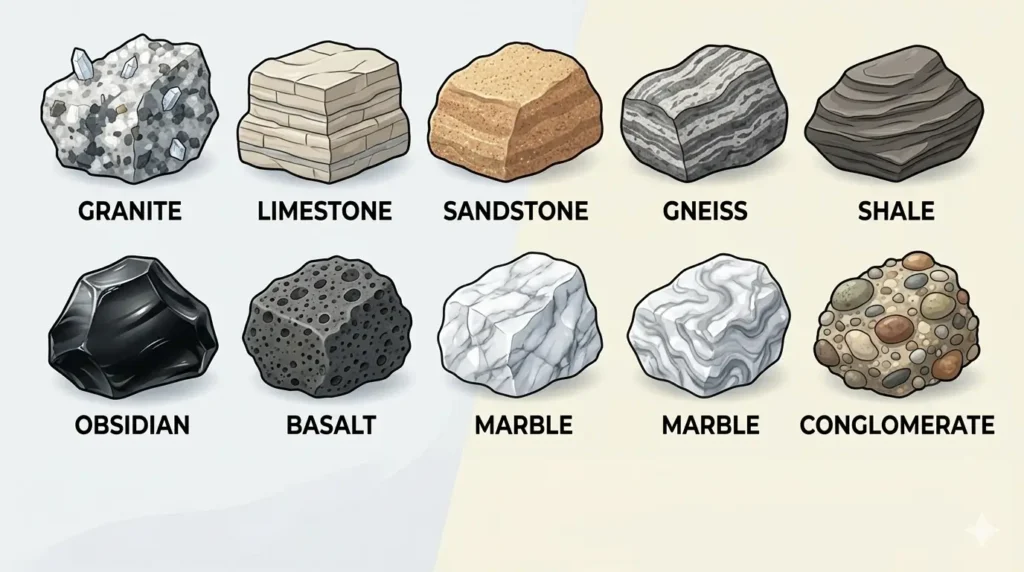
Choosing the right drill bit is the first step to preventing early failure. Different rock formations and drilling applications require different bit designs, carbide configurations, and face structures.
Important factors to consider include:
- Rock hardness and abrasiveness – Hard and abrasive formations require wear-resistant carbide buttons and durable designs.
- Rock structure – Fractured or unstable formations may require retrac button bits or specialized face designs.
- Drilling method and equipment – The bit must match the drilling system, including drill rigs, rods, and shank adapters.
A properly selected drill bit can improve penetration speed, reduce unnecessary wear, and maximize drilling performance.
Match Drilling Parameters with Rock Conditions #
Even a premium-quality rock drill bit can fail early if drilling parameters are not properly adjusted.
Operators should optimize:
- Impact pressure – Excessive impact force may cause carbide button damage or bit body stress.
- Rotation speed – Incorrect rotation speed can lead to uneven wear and overheating.
- Feed pressure – Excessive feed force can overload the bit and accelerate damage.
The best drilling parameters depend on the rock formation, equipment capability, and bit design. Regularly adjusting these settings helps maintain efficient and stable drilling performance.
Monitor Bit Wear and Replace at the Right Time #
Regular inspection helps identify potential problems before they lead to complete bit failure.
Operators should check for:
- Flattened or worn carbide buttons;
- Cracks on the bit body;
- Uneven wear patterns;
- Reduced penetration speed;
- Increased vibration during drilling.
Continuing to use a severely worn drill bit often results in lower productivity and higher operating costs. Timely replacement or proper regrinding can significantly extend tool life.
Maintain Proper Flushing Performance #
Effective flushing is essential for protecting the drill bit during operation. It removes rock cuttings, reduces heat buildup, and prevents repeated crushing of debris.
Poor flushing conditions may cause:
- Faster carbide wear;
- Overheating of the bit face;
- Reduced drilling speed;
- Increased risk of premature failure.
Maintaining sufficient air or water supply and ensuring clean flushing channels help improve drilling efficiency and extend bit life.
Work with a Reliable Drill Bit Supplier #
Selecting a reliable supplier is not only about purchasing a drill bit. A professional supplier can provide technical support, product recommendations, and solutions based on actual drilling conditions.
A trusted drilling tool partner should offer:
- Suitable bit recommendations based on rock conditions;
- Stable product quality and manufacturing control;
- Technical support for drilling optimization;
- Customized solutions for different applications.
By working with an experienced supplier, operators can avoid incorrect tool selection and achieve more consistent drilling performance.
Preventing premature rock drill bit failure is a continuous process involving proper tool selection, optimized drilling operations, and effective maintenance. When these factors are properly managed, drill bits can achieve longer service life, better penetration performance, and lower overall drilling costs.
How Long Should a Rock Drill Bit Last? #
One of the most common questions from drilling operators is: “How long should a rock drill bit last?” However, there is no universal answer because drill bit service life depends on multiple factors, including rock conditions, drilling methods, operating practices, and bit quality.
A high-quality rock drill bit may achieve excellent performance in suitable conditions, but the same bit may wear faster when used in extremely hard, abrasive, or challenging formations. Therefore, evaluating drill bit service life should focus on drilling performance and cost per meter rather than simply measuring operating time.
The main factors affecting rock drill bit service life include:
Rock Hardness and Abrasiveness #
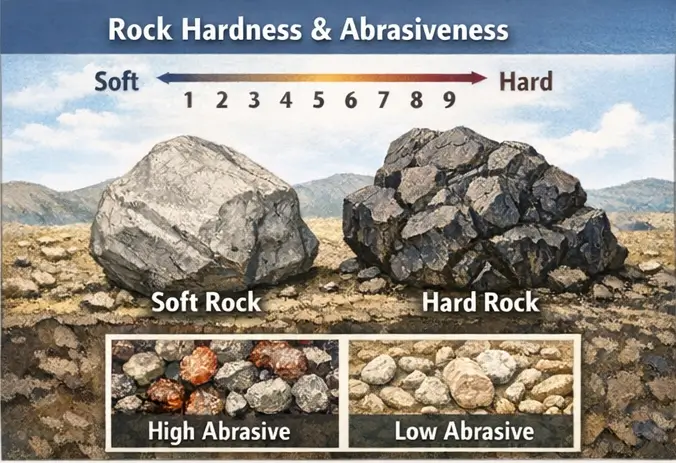
Rock properties have a direct impact on bit wear. Hard and abrasive formations containing minerals such as quartz can accelerate carbide button wear and require more frequent inspection or replacement.
In softer or less abrasive formations, a properly selected drill bit can typically maintain higher penetration efficiency and longer service life.
Drilling Method and Equipment Conditions #
Different drilling methods place different demands on drill bits. Factors such as impact energy, rotation speed, feed pressure, and drilling equipment condition all influence wear rates.
A drill bit operating under optimized parameters will usually achieve better performance than one working under excessive impact force, improper rotation speed, or unstable drilling conditions.
Operator Experience and Drilling Practices #
Operator skill plays an important role in maximizing drill bit life. Experienced operators can adjust drilling parameters according to changing ground conditions and recognize early warning signs of excessive wear.
Proper operation helps prevent:
- Overloading the bit;
- Excessive vibration;
- Improper flushing;
- Unnecessary carbide damage.
Drill Bit Quality and Design #
The materials, manufacturing process, and design of a drill bit directly affect durability.
Key quality factors include:
- Carbide button grade;
- Bit body material and heat treatment;
- Face design and flushing hole;
- Compatibility with drilling tools.
A well-designed drill bit provides more stable performance and better resistance to wear under demanding conditions.
Can a Premium Rock Drill Bit Last Longer in All Conditions? #
Not necessarily. A premium drill bit is designed to provide better durability and performance, but it still needs to match the actual drilling environment.
For example, in hard and abrasive formations, even a high-quality button bit may require frequent inspection due to intense wear conditions. In moderate rock formations, however, proper bit selection, optimized drilling parameters, and correct maintenance can significantly extend service life.
The best way to evaluate drill bit performance is not only by initial purchase price or drilling hours, but by measuring:
Cost per meter = Total drill bit cost ÷ Total drilling meters achieved
A longer-lasting drill bit reduces downtime, improves productivity, and helps lower overall drilling costs.
Rock Drill Bit Failure vs Normal Wear: How to Tell the Difference? #
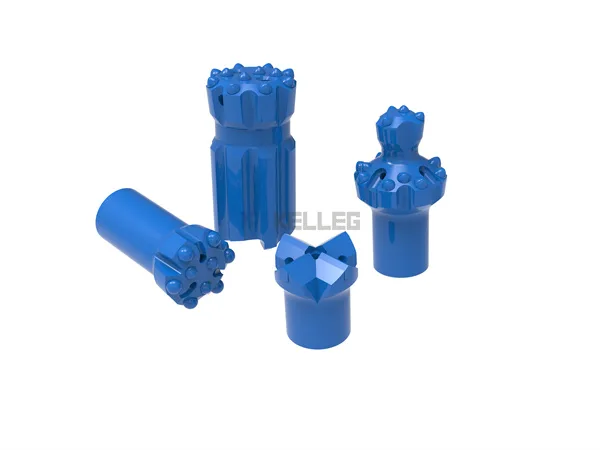
Not all wear on a rock drill bit indicates a problem. Drill bits are designed to gradually wear during drilling, and normal wear is an expected part of their service life. However, premature failure usually occurs when damage develops faster than expected or when the bit loses performance due to improper operating conditions.
Understanding the difference between normal wear and abnormal failure helps operators take corrective action, avoid unnecessary downtime, and improve drilling efficiency.
Normal Rock Drill Bit Wear #
Normal wear occurs when a drill bit gradually loses cutting performance after continuous drilling under suitable conditions. The wear process is usually predictable and evenly distributed.
Common signs of normal wear include:
- Gradual reduction in penetration speed – Drilling efficiency decreases slowly as carbide buttons become worn.
- Even carbide button wear – Buttons wear consistently across the bit face without sudden damage.
- Stable drilling performance – The bit continues working without excessive vibration or abnormal noise.
- Predictable replacement timing – Operators can estimate when the bit should be replaced or reground.
Normal wear is not a failure. With proper monitoring and maintenance, the drill bit can continue to deliver efficient performance throughout its expected service life.
Premature Rock Drill Bit Failure #
Premature failure happens when a drill bit loses its performance unexpectedly or becomes unusable before reaching its expected service potential.
Typical signs include:
- Carbide buttons breaking or falling out – Often caused by excessive impact stress, overheating, poor carbide retention, or unsuitable drilling conditions.
- Cracks on the bit body – May result from excessive impact force, material fatigue, or incorrect drilling parameters.
- Sudden drop in penetration speed – Indicates possible cutting structure damage, poor flushing, or incorrect bit selection.
- Uneven or abnormal wear patterns – Often related to incorrect rotation speed, unstable drilling, or mismatched drilling tools.
- Severe vibration during operation – Can indicate damaged buttons, poor alignment, or worn tool connections.
Premature failure usually indicates that one or more factors in the drilling process need adjustment.
Normal Wear vs Premature Failure: Key Differences #
| Feature | Normal Wear | Premature Failure |
|---|---|---|
| Wear speed | Gradual and predictable | Rapid and unexpected |
| Carbide condition | Even button wear | Broken, cracked, or missing buttons |
| Drilling performance | Slowly decreases | Sudden performance loss |
| Bit body | Maintains structural integrity | Cracks or severe damage may appear |
| Vibration | Normal operating level | Excessive vibration or impact |
| Main cause | Normal drilling process | Incorrect selection, operation, or conditions |
What Should You Do When a Drill Bit Fails Early? #
When a rock drill bit fails earlier than expected, replacing the bit immediately may not solve the problem. Operators should first identify the root cause.
Check the following:
- Review drilling parameters
- Was the impact pressure too high?
- Was rotation speed suitable for the rock condition?
- Was excessive feed pressure applied?
- Inspect flushing performance
- Was enough air or water supplied?
- Were drill cuttings removed effectively?
- Evaluate bit selection
- Was the bit design suitable for the rock formation?
- Was the carbide grade appropriate for the application?
- Check the complete drilling tools
- Are drill rods, shank adapters, and threads properly matched?
- Are other drilling components causing vibration or impact loss?
Correctly identifying whether the problem is normal wear or premature failure helps operators avoid repeated bit damage and achieve better drilling results.
Choosing the right rock drill bit is only one part of achieving long service life. Proper operation, regular inspection, and continuous optimization of drilling conditions are equally important for maximizing tool performance.
Conclusion #
Premature rock drill bit failure is rarely caused by a single factor. In most cases, it is the result of multiple conditions working together, including incorrect bit selection, unsuitable rock conditions, improper drilling parameters, poor flushing performance, and insufficient maintenance.
Understanding these failure causes allows operators to identify potential problems earlier, optimize drilling operations, and make better decisions when selecting drilling tools. The right drill bit design, combined with proper operation and regular inspection, can significantly improve drilling efficiency, reduce downtime, and lower overall drilling costs.
A reliable drilling tool supplier can also provide valuable support by recommending suitable bit designs based on rock formations, equipment conditions, and specific project requirements.