- Introduction
- Why Is It Difficult to Identify Rock Drill Bit Quality Before Purchase?
- Check the Rock Drill Bit Material and Steel Grade
- Why Steel Grade Matters in Rock Drill Bit Quality
- What Steel Grades Are Commonly Used for Rock Drill Bits?
- What Should Buyers Ask About Drill Bit Material?
- How to Identify Potential Material Quality Problems
- Material Selection Should Match the Drilling Application
- Buyer Checklist: Drill Bit Material Evaluation
- Evaluate Heat Treatment and Hardness Control
- Heat Treatment Quality Should Be Verified Through Manufacturing Capability
- Inspect Tungsten Carbide Button Quality
- Why Tungsten Carbide Button Quality Matters
- Check the Carbide Grade and Material Specification
- Evaluate Button Shape and Design Compatibility
- Inspect Button Installation and Retention Quality
- How to Verify Tungsten Carbide Quality Before Purchase
- Match Carbide Button Selection With Drilling Conditions
- Buyer Checklist: Tungsten Carbide Button Evaluation
- Examine Manufacturing Precision and Thread Accuracy
- Evaluate the Manufacturer's Quality Control and Inspection Process
- Why Quality Control Matters
- What Should a Quality Control System Include?
- Ask for Inspection Reports Instead of General Promises
- Batch Consistency Is a Key Indicator of Manufacturing Capability
- Signs of a Reliable Manufacturer
- Warning Signs Buyers Should Watch For
- Buyer Checklist: Quality Control Evaluation
- Verify Supplier Experience and Technical Support
- Compare Cost per Meter Instead of Purchase Price
- Conclusion
Introduction #
Selecting the right rock drill bit before purchase can be challenging, especially when different suppliers offer products with similar specifications, appearances, and price ranges. For many buyers, it is difficult to determine whether a drill bit will deliver reliable performance until it is already being used on the job site.
A high-quality rock drill bit should not be judged only by its appearance or initial cost. Professional buyers need to evaluate a range of quality indicators, including product specifications, manufacturing consistency, inspection procedures, supplier capabilities, and proven field performance. These factors help determine whether a drill bit can provide stable drilling results, reduce unexpected replacements, and achieve a lower cost per meter.
For mining companies, quarry operators, tunneling contractors, and drilling tool distributors, choosing the wrong drill bit supplier can lead to increased downtime, reduced drilling efficiency, and higher operating expenses. A reliable supplier should be able to provide clear technical information, quality verification, and practical support throughout the product lifecycle.
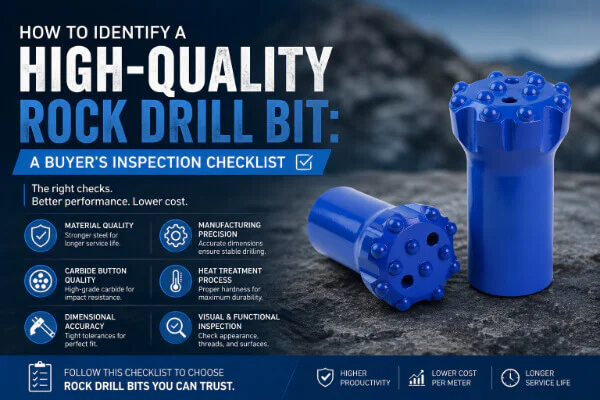
This guide provides a practical checklist for identifying a high-quality rock drill bit before buying. It explains what buyers should inspect, what questions they should ask suppliers, and which quality factors should be considered when comparing different drilling tools.
Understanding the factors that influence drill bit performance is the first step toward making a better purchasing decision. For a deeper explanation of why some rock drill bits achieve significantly longer service life, you can also refer to our guide on the relationship between materials, manufacturing processes, and drilling performance.
Why Is It Difficult to Identify Rock Drill Bit Quality Before Purchase? #
At the purchasing stage, identifying the quality of a rock drill bit is often more difficult than expected. Many drill bits from different manufacturers may look almost identical, with similar diameters, button layouts, thread types, and product specifications. However, their actual drilling performance, service life, and reliability can vary significantly once they are used in real operating conditions.
The reason is that many critical quality factors are hidden inside the manufacturing process. Unlike visible characteristics such as size and design, factors including steel quality, heat treatment control, tungsten carbide performance, machining accuracy, and quality inspection standards cannot always be judged through a simple visual comparison.
For mining companies, quarry operators, tunneling contractors, and drilling tool distributors, choosing a rock drill bit based only on appearance, brand reputation, or purchase price can create unexpected risks. A lower-priced drill bit may reduce initial procurement costs, but if it causes faster wear, frequent replacement, or reduced drilling efficiency, the overall drilling cost can become much higher.
Similar Appearance Does Not Mean Similar Performance #
One of the biggest challenges when comparing rock drill bits is that many products appear similar before they are tested in the field.
For example, two threaded button bits may have:
- The same diameter
- The same thread connection
- Similar button layout
- Similar weight and dimensions
However, their performance may differ because of differences in:
- Raw material quality
- Carbide grade selection
- Heat treatment process
- Manufacturing tolerance
- Quality control procedures
These differences directly affect important drilling factors such as:
- Penetration rate
- Wear resistance
- Impact resistance
- Button retention
- Resistance to cracking
- Overall service life
A drill bit is not simply a cutting tool with carbide buttons attached to a steel body. It is an engineered component designed to withstand repeated impact loads, high-frequency vibration, abrasive rock conditions, and continuous mechanical stress.
The Most Important Quality Factors Are Often Invisible #
When evaluating a rock drill bit before purchase, buyers usually focus on factors that are easy to compare:
| Visible Factors | Why Buyers Check Them |
|---|---|
| Bit diameter | Determines hole size |
| Button number and arrangement | Influences rock breaking pattern |
| Thread type | Ensures compatibility |
| Product dimensions | Confirms equipment matching |
| Unit price | Affects initial purchasing cost |
However, the factors that often determine actual performance are usually hidden:
| Hidden Quality Factors | Why They Matter |
|---|---|
| Steel cleanliness and grade | Affects strength and fatigue resistance |
| Heat treatment consistency | Determines hardness and toughness balance |
| Tungsten carbide quality | Influences wear resistance |
| Machining accuracy | Affects energy transfer and stability |
| Quality inspection process | Ensures product consistency |
This is why two drill bits with identical specifications can produce completely different results in the same drilling environment.
Price Alone Cannot Determine Rock Drill Bit Quality #
Another common challenge is understanding the relationship between price and performance.
A cheaper drill bit does not always mean poor quality, and a more expensive drill bit does not automatically guarantee better performance. The real value depends on how efficiently the product converts its purchase price into drilling meters.
For professional buyers, a more meaningful measurement is often:
Cost per meter drilled = Total drill bit cost ÷ Total meters drilled
For example:
| Drill Bit | Purchase Price | Service Life | Cost per Meter |
|---|---|---|---|
| Bit A | $80 | 300 m | $0.27/m |
| Bit B | $120 | 600 m | $0.20/m |
Although Bit B has a higher purchase price, it delivers a lower drilling cost because it lasts longer and requires fewer replacements.
Therefore, evaluating rock drill bit quality requires looking beyond the initial quotation and considering the complete drilling performance.
Quality Verification Requires More Than Supplier Claims #
Another reason why drill bit selection is challenging is that buyers often rely heavily on supplier descriptions. Marketing information may highlight advantages such as:
- Premium steel
- Advanced heat treatment
- High-quality carbide
- Long service life
However, professional buyers need measurable evidence to verify these claims.
Before purchasing, it is important to ask suppliers about:
- Material specifications
- Heat treatment methods
- Carbide grades
- Manufacturing tolerances
- Inspection procedures
- Field testing results
- Quality certificates
A reliable manufacturer should be able to explain not only what materials are used, but also how quality is controlled throughout the production process.
Why a Systematic Inspection Process Is Necessary #
Because many important quality factors cannot be identified by appearance alone, buyers need a systematic evaluation method before placing orders.
A proper inspection process should include:
- Checking material information
- Evaluating carbide button quality
- Reviewing manufacturing precision
- Verifying quality control procedures
- Comparing supplier technical capabilities
- Assessing actual drilling performance
By following a structured evaluation process, buyers can reduce the risk of selecting low-performance drill bits and improve drilling efficiency over the entire product lifecycle.
Choosing a high-quality rock drill bit requires understanding both visible product features and hidden manufacturing factors. In the following sections, we will examine the key inspection points buyers should evaluate before purchasing, starting with the drill bit body material and steel quality.
Check the Rock Drill Bit Material and Steel Grade #
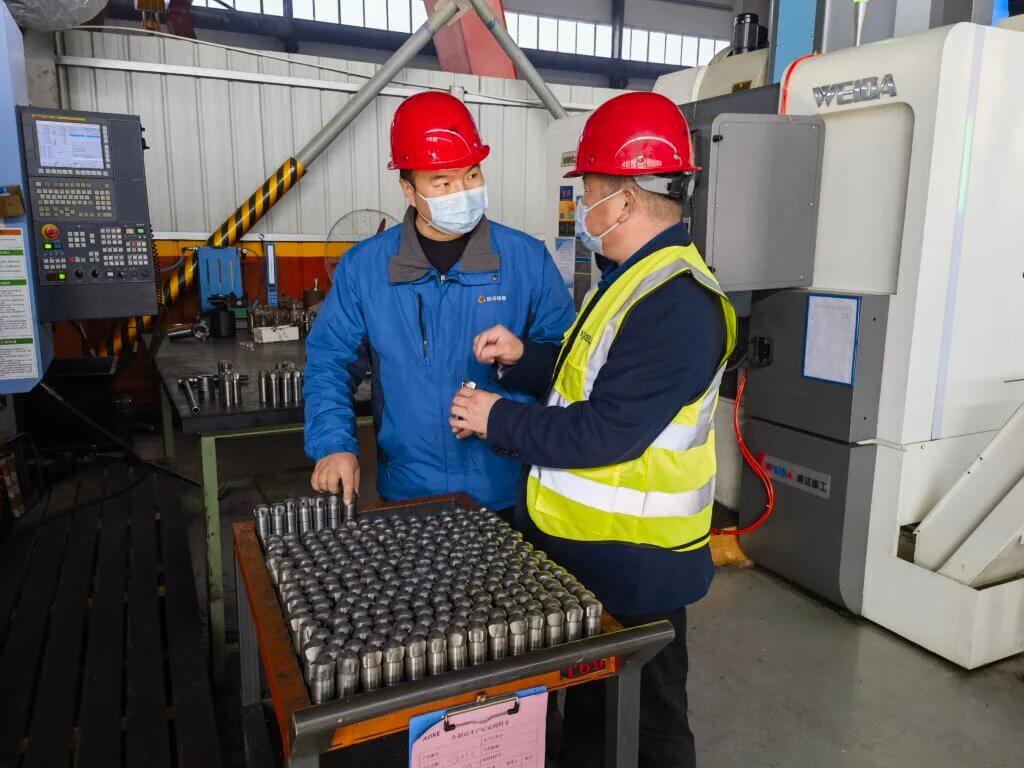
The drill bit body is the foundation of overall drilling performance. Before purchasing rock drill bits, buyers should first verify the material information and steel grade used in manufacturing, because the body material determines how well the drill bit can withstand repeated impact, vibration, and abrasive rock conditions.
A high-quality rock drill bit is not only required to resist wear at the cutting area but also needs sufficient toughness to withstand continuous impact energy transferred from the drilling machine. If the drill bit body is manufactured from unsuitable steel or inconsistent material, problems such as cracking, premature fatigue failure, and thread damage may occur even when the carbide buttons remain in good condition.
However, steel quality is often difficult to evaluate from appearance alone. Two drill bits may look identical externally, while their internal material properties and manufacturing consistency can be significantly different.
Why Steel Grade Matters in Rock Drill Bit Quality #
During drilling operations, the drill bit body experiences multiple types of mechanical stress, including:
- High-frequency impact loading
- Bending stress
- Torsional force
- Abrasive wear
- Fatigue cycles
Therefore, the steel used for a rock drill bit needs to achieve a balanced combination of:
| Material Property | Importance in Drilling |
|---|---|
| High toughness | Prevents cracking under impact loads |
| Sufficient hardness | Improves wear resistance |
| Fatigue resistance | Extends service life under repeated impacts |
| Good machinability | Ensures accurate threads and dimensions |
| Stable heat treatment response | Maintains consistent performance |
A common mistake during purchasing is assuming that higher hardness always means better quality. In reality, a drill bit body that is too hard may become brittle and more likely to crack, while insufficient hardness may result in faster wear and deformation.
The ideal material selection requires a balance between hardness and toughness based on the drilling application.
What Steel Grades Are Commonly Used for Rock Drill Bits? #
Professional rock drill bit manufacturers typically use alloy steels designed for high-impact applications. Common steel materials include:
| Steel Grade | Typical Characteristics | Application Consideration |
|---|---|---|
| 42CrMoA | Good strength, toughness, and fatigue resistance | Widely used for drilling tools |
| 30CrNiMo8 / 30NiCrMo16-6 | High toughness and impact resistance | Suitable for demanding rock conditions |
| 35CrMo | Good mechanical properties and cost balance | General drilling applications |
| 55SiMnMo | High strength and wear resistance | Heavy-duty drilling conditions |
The exact steel grade is not the only factor determining drill bit quality. The final performance also depends on:
- Steel cleanliness
- Forging process
- Heat treatment parameters
- Manufacturing accuracy
- Quality inspection standards
A premium steel grade processed incorrectly may perform worse than a properly manufactured drill bit using a suitable material.
What Should Buyers Ask About Drill Bit Material? #
Before placing an order, buyers should request clear technical information from suppliers instead of relying only on product descriptions.
Important questions include:
What steel grade is used for the drill bit body? #
A reliable supplier should be able to provide specific material specifications rather than general statements such as “premium alloy steel.”
Can you provide material certificates? #
Material certificates help verify:
- Chemical composition
- Mechanical properties
- Batch consistency
They are especially important for large mining projects and long-term procurement agreements.
How is the steel processed? #
The same steel grade can produce different results depending on:
- Forging temperature
- Heat treatment process
- Cooling method
- Quality control procedures
Manufacturing control is as important as material selection.
How to Identify Potential Material Quality Problems #
Although laboratory testing provides the most accurate evaluation, buyers can identify some warning signs through product information and supplier communication.
Potential red flags include:
| Warning Sign | Possible Risk |
|---|---|
| Supplier cannot provide steel grade information | Unclear material source |
| No material certificate available | Difficult to verify quality |
| Extremely low price compared with competitors | Possible cost reduction in materials or process |
| Frequent cracking reported in field use | Insufficient toughness |
| Large variation between batches | Poor production control |
A trustworthy manufacturer should be able to explain not only what material is used, but also why that material is suitable for specific drilling conditions.
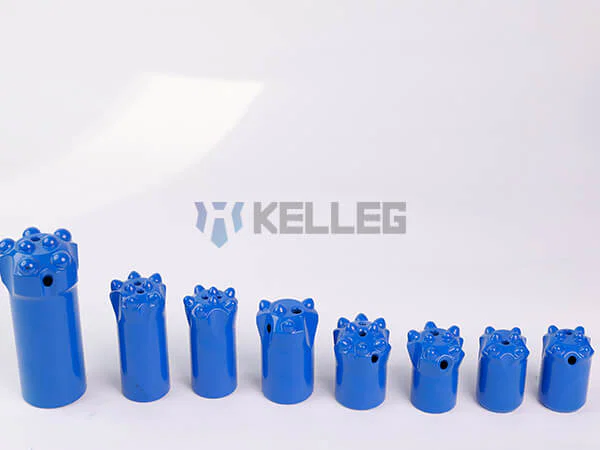
Material Selection Should Match the Drilling Application #
The “best” steel grade does not mean the hardest or most expensive material. The correct choice depends on:
- Rock hardness
- Abrasiveness
- Drilling method
- Impact energy
- Hole diameter
- Operating conditions
For example:
- Highly fractured rock requires better toughness to reduce cracking risk.
- Highly abrasive formations require better wear resistance.
- Heavy-duty mining applications require stable fatigue performance under continuous impact.
Therefore, material selection should always consider the complete drilling environment rather than focusing on steel grade alone.
Buyer Checklist: Drill Bit Material Evaluation #
Before purchasing, buyers can use the following checklist:
| Inspection Item | Check |
|---|---|
| Steel grade specified | ✓ |
| Material certificate available | ✓ |
| Alloy steel suitable for impact applications | ✓ |
| Manufacturing process explained | ✓ |
| Heat treatment process documented | ✓ |
| Field performance data available | ✓ |
While the drill bit body material provides the necessary strength and toughness, the final performance depends heavily on how the steel properties are controlled during production. The next step in evaluating drill bit quality is checking the heat treatment process and hardness control, which directly influence wear resistance, impact durability, and service consistency.
Evaluate Heat Treatment and Hardness Control #
Heat treatment is one of the most important quality control processes in rock drill bit manufacturing. However, it is also one of the factors that buyers cannot easily verify by visual inspection. Two drill bits may have the same material grade and identical appearance, but differences in heat treatment quality can lead to significant variations in durability, wear resistance, and failure performance.
For professional buyers, evaluating heat treatment quality is not simply about asking whether a supplier performs heat treatment. The key is understanding whether the process is properly controlled and whether the final mechanical properties are consistent across production batches.
A reliable rock drill bit manufacturer should be able to provide clear information about heat treatment methods, hardness requirements, inspection procedures, and quality records.
Why Heat Treatment Quality Matters in Rock Drill Bits #
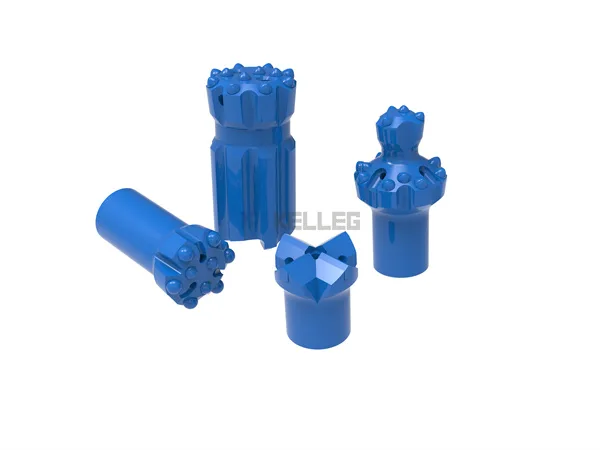
During drilling operations, a rock drill bit is exposed to repeated impact forces, vibration, and abrasive contact with rock. The drill bit body must achieve a proper balance between hardness and toughness.
If the hardness is too low:
- The bit body may wear faster
- Thread areas may deform
- Service life may decrease
If the hardness is too high:
- The material may become brittle
- Cracks may develop under impact loads
- Fatigue resistance may decrease
Therefore, high-quality drill bits require optimized heat treatment rather than simply maximizing hardness.
The goal is to achieve:
High surface wear resistance + Strong internal toughness
This balance allows the drill bit to maintain performance under demanding drilling conditions.
Common Heat Treatment Processes Used for Rock Drill Bits #
Professional manufacturers typically apply controlled heat treatment processes depending on the steel grade and product requirements.
Common processes include:
| Heat Treatment Process | Purpose |
|---|---|
| Carburizing | Increases surface hardness and wear resistance |
| Quenching | Improves strength and hardness |
| Tempering | Reduces brittleness and improves toughness |
| Stress relieving | Reduces internal stress after manufacturing |
For rock drill bits, the final performance depends not only on the selected process but also on:
- Heating temperature
- Holding time
- Cooling method
- Process consistency
- Quality monitoring
Poor process control can create uneven hardness, internal stress, or premature cracking.
Hardness Control: Why Numbers Alone Are Not Enough #
Hardness testing is an important quality indicator, but buyers should avoid evaluating drill bits based only on a single hardness value.
For example, a manufacturer may provide a hardness number, but this information alone does not reveal:
- Whether hardness is uniform throughout the batch
- Whether the surface and core properties are balanced
- Whether toughness is sufficient
- Whether the heat treatment process is stable
A high-quality drill bit requires the right hardness distribution, not simply the highest hardness.
| Property | Too Low | Too High |
|---|---|---|
| Hardness | Faster wear, deformation | Increased cracking risk |
| Toughness | Poor impact resistance | Reduced flexibility |
| Fatigue resistance | Shorter service life | Potential brittle failure |
What Should Buyers Ask About Heat Treatment? #
Before purchasing rock drill bits, buyers should ask suppliers the following questions:
What heat treatment process is used? #
A professional supplier should clearly explain whether the product uses:
- Carburizing
- Quenching and tempering
- Other controlled heat treatment methods
Avoid suppliers who only provide general statements such as “advanced heat treatment technology” without technical details.
Is hardness testing performed on every production batch? #
Consistent hardness control is essential for maintaining product reliability.
Important inspection information includes:
- Testing method
- Testing location
- Hardness range
- Batch inspection records
Can you provide hardness test reports? #
Quality documentation helps buyers verify:
- Material performance
- Production consistency
- Supplier reliability
For mining projects and large-volume purchases, inspection records are especially valuable.
How to Identify Poor Heat Treatment Quality #
Although detailed laboratory testing is required for complete verification, some field problems may indicate heat treatment issues.
| Field Problem | Possible Heat Treatment Issue |
|---|---|
| Drill bit body cracking | Excessive hardness or insufficient toughness |
| Rapid body wear | Insufficient hardness |
| Thread deformation | Poor hardness control |
| Early fatigue failure | Improper heat treatment balance |
| Performance variation between batches | Inconsistent process control |
These failures may increase downtime and replacement frequency, resulting in higher drilling costs.
Heat Treatment Quality Should Be Verified Through Manufacturing Capability #
When comparing suppliers, buyers should evaluate not only the final product but also the manufacturer’s process control capability.
Important factors include:
- In-house heat treatment capability
- Temperature monitoring systems
- Batch traceability
- Hardness inspection equipment
- Quality documentation
- Experience with drilling tool production
A manufacturer with strong process control can provide more consistent drill bit performance compared with suppliers who only assemble or resell products.
Buyer Checklist: Heat Treatment Evaluation #
Before purchasing, buyers should confirm:
| Inspection Item | Check |
|---|---|
| Heat treatment process explained | ✓ |
| Hardness requirements provided | ✓ |
| Hardness testing performed | ✓ |
| Inspection records available | ✓ |
| Batch consistency controlled | ✓ |
| Manufacturer has process capability | ✓ |
Heat treatment determines how the drill bit body performs under repeated impact and wear conditions. However, the cutting performance of a rock drill bit depends heavily on another critical component—the tungsten carbide buttons. The next section will explain how buyers can evaluate carbide quality, button selection, and retention reliability before purchasing.
Inspect Tungsten Carbide Button Quality #
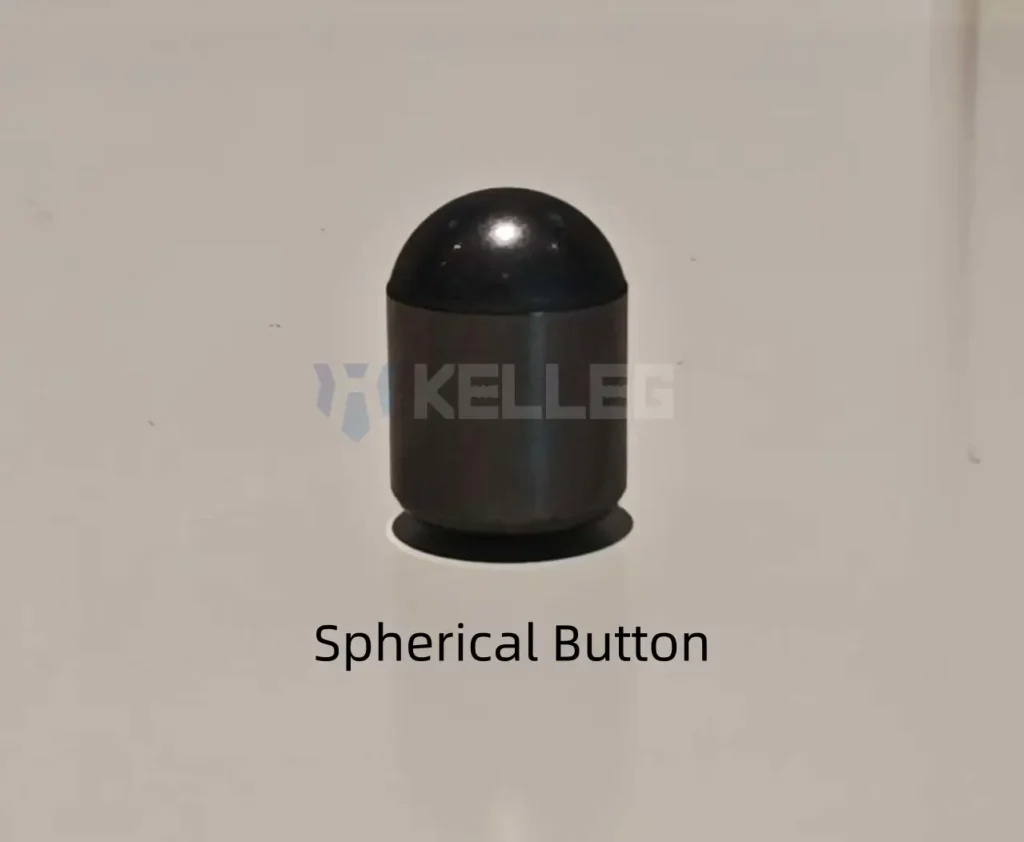
Tungsten carbide buttons are the main cutting components of a rock drill bit and directly interact with the rock formation during drilling. Because they are responsible for crushing and breaking rock under high impact loads, the quality of carbide buttons has a significant influence on penetration rate, wear resistance, drilling stability, and overall tool life.
However, carbide quality is difficult to evaluate through appearance alone. Two rock drill bits may use the same number of buttons and have similar button shapes, but differences in carbide grade, manufacturing consistency, hardness, toughness, and button installation quality can lead to very different drilling results.
For buyers selecting rock drill bits, evaluating tungsten carbide button quality before purchase is an important step in reducing premature wear, button breakage, and unexpected replacement costs.
Why Tungsten Carbide Button Quality Matters #
During drilling operations, carbide buttons experience extreme working conditions, including:
- Repeated impact forces
- High contact pressure
- Abrasive rock wear
- Thermal stress
- Continuous vibration
A high-quality carbide button needs to achieve a proper balance between:
| Property | Importance |
|---|---|
| Wear resistance | Maintains cutting ability in abrasive rock |
| Impact toughness | Prevents cracking and breakage |
| Hardness | Improves resistance to abrasion |
| Structural consistency | Ensures stable performance |
A carbide button that is too hard may provide excellent wear resistance but become vulnerable to impact damage. A button with insufficient toughness may deform or break under heavy impact.
Therefore, the best carbide selection depends on achieving the right balance between hardness and toughness for the specific drilling application.
Check the Carbide Grade and Material Specification #
One of the first questions buyers should ask is:
What tungsten carbide grade is used for the drill bit buttons?
Professional manufacturers typically select carbide grades based on drilling conditions rather than using one standard grade for all applications.
Common carbide grades used in rock drilling tools include:
| Carbide Grade | General Characteristics | Typical Application |
|---|---|---|
| YG6 | Higher hardness, good wear resistance | Softer and less abrasive rock |
| YG8 | Balanced hardness and toughness | General rock drilling |
| YG8C | Improved toughness | Medium-hard and impact conditions |
| YG11C | Higher impact resistance | Hard rock drilling |
| YG13C/YG15C | Strong toughness for heavy impact | Severe drilling environments |
(Actual selection depends on rock properties, drilling method, and operating conditions.)
A reliable supplier should be able to explain why a specific carbide grade is recommended instead of simply claiming to use “premium carbide.”
Evaluate Button Shape and Design Compatibility #
Carbide quality is not only determined by material grade. Button design also affects drilling performance.
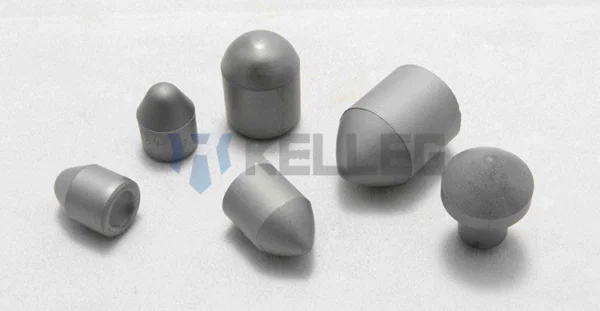
Common button shapes include:
| Button Shape | Characteristics |
|---|---|
| Spherical Button | Good impact resistance and widely used |
| Ballistic Button | Higher penetration efficiency in suitable formations |
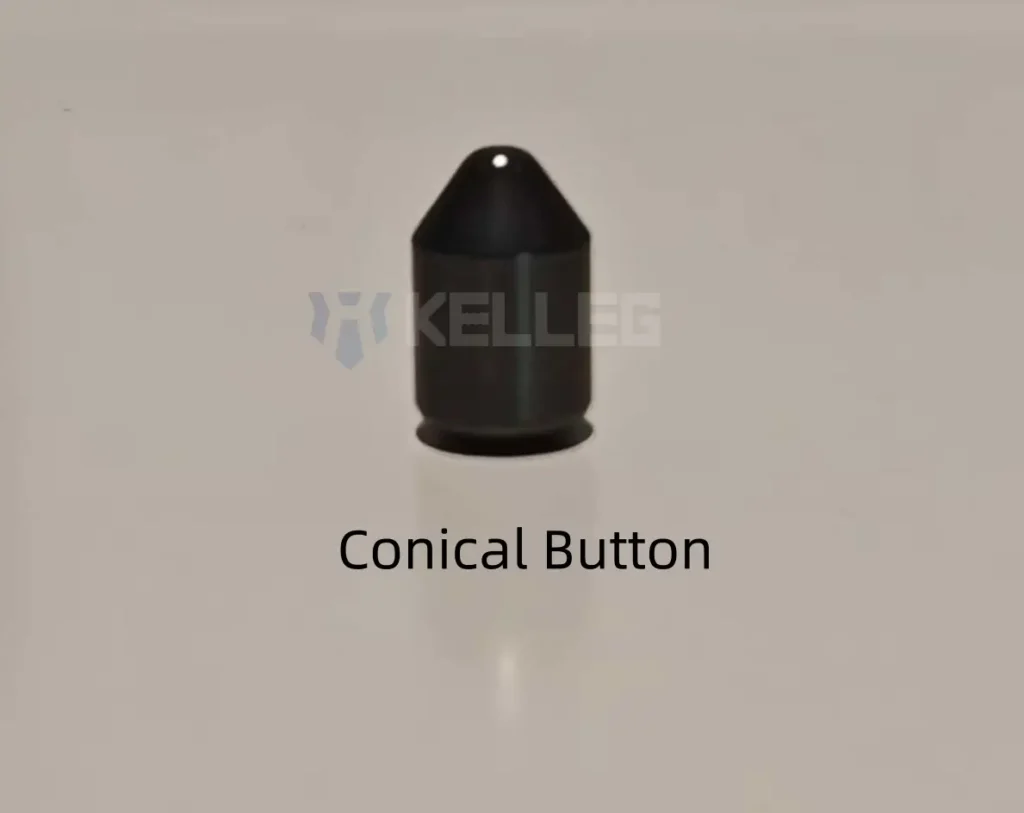
| Conical Button | Strong rock penetration capability |
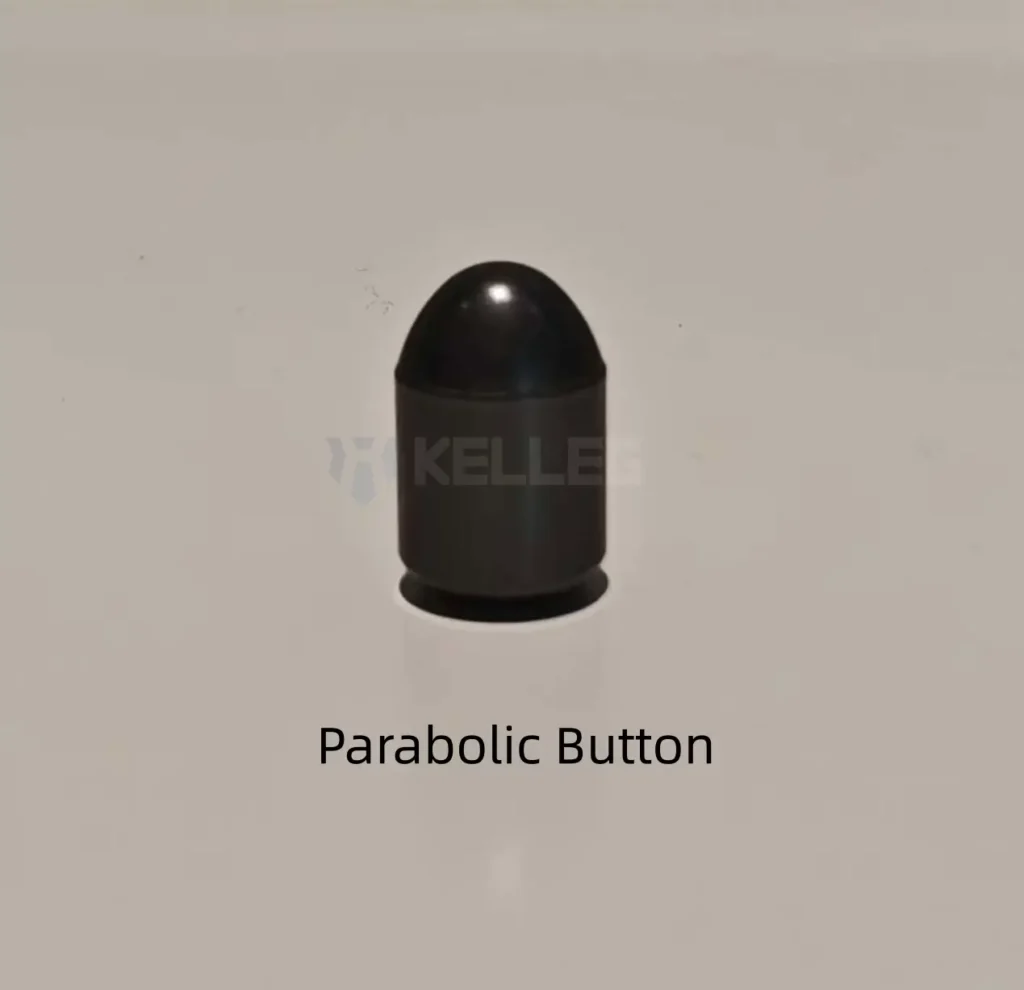
| Parabolic Button | Balance between penetration and wear resistance |
When evaluating drill bits, buyers should consider whether the button design matches:
- Rock hardness
- Rock abrasiveness
- Drilling method
- Impact energy
- Required penetration rate
Using the wrong button design may reduce performance even if the carbide material itself is high quality.
Inspect Button Installation and Retention Quality #
Even premium tungsten carbide can fail if the button installation process is poor.
Before purchasing, buyers should check:
Button Position Accuracy #
Incorrect button positioning may cause:
- Uneven wear
- Reduced drilling efficiency
- Increased vibration
Button Tightness #
Poor button installation may result in:
- Loose buttons
- Button loss during operation
- Reduced drilling life
Button Alignment #
Consistent button height and alignment help ensure:
- Uniform rock contact
- Stable drilling performance
- Better gauge buttons protection
A professional manufacturer should have controlled button pressing processes and inspection procedures.
How to Verify Tungsten Carbide Quality Before Purchase #
Buyers can request the following information from suppliers:
| Verification Item | Purpose |
|---|---|
| Carbide grade specification | Confirms material selection |
| Carbide supplier information | Ensures material reliability |
| Hardness test results | Evaluates wear resistance |
| Density test results | Checks carbide consistency |
| Impact performance data | Evaluates toughness |
| Field test results | Confirms actual performance |
For large mining projects or distributor partnerships, requesting carbide quality documentation can help reduce procurement risks.
Common Signs of Poor Carbide Quality #
Some early warning signs include:
| Problem Observed | Possible Cause |
|---|---|
| Buttons wear extremely fast | Low wear resistance |
| Button edges chip frequently | Insufficient toughness |
| Buttons fall out during drilling | Poor installation or retention |
| Uneven button wear | Poor alignment or unsuitable design |
| Low penetration rate | Incorrect carbide selection |
These problems not only reduce drill bit service life but can also increase drilling costs through frequent tool changes and reduced productivity.
Match Carbide Button Selection With Drilling Conditions #
There is no single “best” tungsten carbide button for every drilling application.
The correct selection depends on:
- Rock hardness
- Rock abrasiveness
- Impact energy
- Rotation speed
- Flushing holes
- Drilling method
For example:
- Hard and abrasive rock requires excellent wear resistance.
- Highly fractured rock requires better impact toughness.
- High-impact drilling requires carbide button with stronger resistance to chipping.
Therefore, buyers should select carbide performance based on actual drilling conditions rather than choosing the highest hardness grade.
Buyer Checklist: Tungsten Carbide Button Evaluation #
Before purchasing, confirm:
| Inspection Item | Check |
|---|---|
| Carbide grade specified | ✓ |
| Carbide performance matches rock condition | ✓ |
| Button shape is suitable | ✓ |
| Button installation quality verified | ✓ |
| Button alignment inspected | ✓ |
| Carbide quality documents available | ✓ |
| Field testing data provided | ✓ |
Tungsten carbide buttons determine how effectively a rock drill bit interacts with the rock, but their performance also depends on how accurately the entire drill bit is manufactured. The next section will focus on manufacturing precision and thread accuracy, which directly affect energy transfer, drilling stability, and tool compatibility.
Examine Manufacturing Precision and Thread Accuracy #
Manufacturing precision is one of the most overlooked factors when evaluating rock drill bit quality. While steel selection, heat treatment, and carbide buttons receive significant attention, the accuracy of machining directly affects how efficiently impact energy is transferred from the drilling machine to the rock.
Even when two drill bits are manufactured using the same materials, differences in machining precision can lead to unstable drilling performance, faster thread wear, excessive vibration, poor hole accuracy, and premature component failure.
For buyers, manufacturing precision should be considered an essential quality indicator rather than a secondary production detail. A well-machined drill bit not only performs more consistently but also improves compatibility with drill rods, shank adapters, and other components in the drilling system.
Why Machining Accuracy Matters #
A rock drill bit operates as part of a complete drilling system. During operation, impact energy travels through the shank adapter, drill rod, and threaded connection before reaching the carbide buttons.
If any component is manufactured outside the required tolerance, part of that energy can be lost through vibration, misalignment, or poor thread engagement.
High machining precision helps achieve:
- Efficient energy transfer
- Stable drilling performance
- Better hole straightness
- Reduced vibration
- Longer thread service life
- Improved compatibility with matching drilling tools
Conversely, poor machining accuracy may reduce penetration efficiency even when the drill bit is manufactured from premium materials.
Key Areas Buyers Should Inspect #
When comparing rock drill bits from different suppliers, buyers should pay attention to several critical machining details.
Thread Accuracy #
Thread precision is essential for secure connections between the drill bit and the drill rod. Poorly machined threads may cause:
- Difficult assembly or removal
- Thread galling or premature wear
- Reduced impact transmission
- Loosening during drilling
Suppliers should manufacture thread profiles according to recognized standards and maintain consistent dimensional tolerances throughout production.
Concentricity #
Concentricity refers to the alignment between the thread centerline and the drill bit body.
Poor concentricity may result in:
- Increased vibration
- Uneven button wear
- Hole deviation
- Reduced drilling efficiency
High concentricity allows impact energy to be transmitted more evenly, improving drilling stability and extending tool life.
Button Position Accuracy #
The location of each carbide button must match the engineering design.
Inaccurate button positioning can lead to:
- Uneven rock breaking
- Unbalanced wear patterns
- Lower penetration rates
- Increased stress on individual buttons
Professional manufacturers typically use precision machining and inspection equipment to ensure consistent button placement.
Gauge Buttons Diameter Accuracy #
The gauge button diameter determines the final hole size and influences drilling accuracy.
If the actual diameter deviates from the design specification, it may cause:
- Incorrect hole dimensions
- Difficult installation of rock bolts or explosives
- Reduced drilling efficiency
- Inconsistent project quality
Maintaining tight dimensional tolerances is particularly important for mining, tunneling, and foundation drilling applications where borehole accuracy is critical.
Surface Finish Reflects Manufacturing Quality #
Although surface appearance alone cannot determine overall quality, machining marks can provide useful clues about manufacturing standards.
Buyers should look for:
- Smooth and uniform machined surfaces
- Clean thread profiles
- Consistent button seating
- No visible burrs or machining defects
Visible defects may indicate inadequate machining control or insufficient quality inspection.
Questions Buyers Should Ask Suppliers #
Before placing an order, buyers should ask manufacturers several questions related to machining quality:
- What machining equipment is used for drill bit production?
- How are dimensional tolerances controlled?
- Are thread dimensions inspected during production?
- Is concentricity measured before shipment?
- What quality standards are followed for machining inspection?
- Can inspection reports be provided upon request?
A manufacturer with mature machining capabilities should be able to answer these questions clearly and provide supporting inspection records when necessary.
Common Signs of Poor Manufacturing Precision #
The following issues may indicate insufficient machining accuracy:
| Warning Sign | Possible Impact |
|---|---|
| Rough or damaged threads | Difficult assembly and faster thread wear |
| Inconsistent drill bit dimensions | Reduced compatibility |
| Visible burrs or machining marks | Poor finishing quality |
| Misaligned carbide buttons | Uneven drilling performance |
| Excessive vibration during drilling | Poor concentricity or dimensional errors |
These problems can increase maintenance costs, reduce drilling efficiency, and shorten the service life of both the drill bit and connected drilling tools.
Buyer Checklist: Manufacturing Precision #
Before purchasing, verify the following:
| Inspection Item | Check |
|---|---|
| Thread dimensions comply with standards | ✓ |
| Thread surfaces are clean and free of defects | ✓ |
| Concentricity is controlled | ✓ |
| Button positioning is accurate | ✓ |
| Gauge button diameter meets specification | ✓ |
| Machining inspection records are available | ✓ |
| Product dimensions are consistent between batches | ✓ |
Precision machining ensures that every component of the drill bit fits and functions as designed, but consistent product quality also depends on systematic inspection throughout the manufacturing process. In the next section, we’ll explore how to evaluate a manufacturer’s quality control system and inspection procedures, and why these processes are critical for ensuring reliable drilling performance from batch to batch.
Evaluate the Manufacturer’s Quality Control and Inspection Process #
Even when high-quality materials and advanced manufacturing equipment are used, a rock drill bit cannot deliver consistent performance without an effective quality control system. Quality control is the process that ensures every drill bit meets the required specifications before it reaches the customer.
For buyers, evaluating a manufacturer’s quality control capability is just as important as evaluating the product itself. A supplier with comprehensive inspection procedures is more likely to deliver consistent product quality, reduce batch-to-batch variation, and minimize the risk of unexpected failures in the field.
Rather than relying solely on marketing claims such as “strict quality control” or “100% inspection,” buyers should understand what is inspected, how it is inspected, and whether inspection records are available.
Why Quality Control Matters #
Rock drill bits operate under extreme impact loads and abrasive working conditions. Even small manufacturing deviations can affect drilling efficiency, service life, and compatibility with the drilling system.
Without effective quality control, problems such as dimensional inconsistency, improper hardness, carbide button defects, or thread inaccuracies may not be detected before shipment.
A systematic quality control process helps manufacturers:
- Ensure consistent product quality
- Reduce manufacturing defects
- Improve batch consistency
- Verify compliance with design specifications
- Provide traceable inspection records
For distributors and mining contractors purchasing large quantities of drill bits, consistent quality across different production batches is often more important than achieving the lowest purchase price.
What Should a Quality Control System Include? #
A professional rock drill bit manufacturer should inspect products throughout the entire production process rather than only checking finished products.
Typical quality control stages include:
| Production Stage | Typical Inspection Focus |
|---|---|
| Raw material inspection | Steel grade, chemical composition, material certificates |
| Forging inspection | Surface integrity and dimensional accuracy |
| Heat treatment inspection | Hardness, toughness, process consistency |
| Machining inspection | Thread accuracy, concentricity, dimensional tolerances |
| Carbide button inspection | Button position, retention quality, alignment |
| Final product inspection | Appearance, dimensions, thread fit, overall quality |
| Packaging inspection | Product identification, protection, traceability |
Inspecting each stage helps identify potential problems early and reduces the possibility of defective products reaching customers.
Ask for Inspection Reports Instead of General Promises #
Many suppliers claim their products undergo strict quality control, but professional buyers should request objective evidence rather than relying on promotional statements.
Useful documents may include:
- Material certificates
- Hardness test reports
- Dimensional inspection records
- Thread inspection reports
- Quality inspection reports
- Batch traceability records
- Field testing reports (if available)
Providing these documents demonstrates that quality control is based on measurable standards rather than verbal assurances.
Batch Consistency Is a Key Indicator of Manufacturing Capability #
A high-quality drill bit is valuable only if the manufacturer can reproduce the same quality consistently.
Inconsistent production batches may lead to:
- Different drilling performance
- Variable service life
- Unexpected compatibility issues
- Increased maintenance costs
- Difficult inventory management
When evaluating suppliers, buyers should ask how production consistency is maintained and whether each batch follows the same inspection procedures.
For long-term projects, stable quality is often more valuable than occasional high-performing products.
Signs of a Reliable Manufacturer #
In addition to inspecting the product itself, buyers should evaluate the manufacturer’s overall quality management capability.
Positive indicators include:
- Clearly documented inspection procedures
- Dedicated quality inspection personnel
- Calibrated measuring equipment
- Batch traceability systems
- Complete inspection records
- Continuous process improvement
- Experience supplying mining and tunneling projects
These factors demonstrate that quality is managed systematically rather than depending solely on individual operators.
Warning Signs Buyers Should Watch For #
The following situations may indicate weaknesses in a supplier’s quality control system:
| Warning Sign | Potential Risk |
|---|---|
| No inspection reports available | Product quality cannot be verified |
| Inconsistent product dimensions | Weak process control |
| Large quality differences between batches | Poor manufacturing consistency |
| Unable to explain inspection procedures | Limited quality management capability |
| Frequent customer complaints about premature failures | Inadequate process control |
If several of these warning signs are present, buyers should conduct additional technical evaluations before placing large orders.
Buyer Checklist: Quality Control Evaluation #
Before selecting a supplier, confirm the following:
| Inspection Item | Check |
|---|---|
| Raw material inspection is performed | ✓ |
| Heat treatment inspection records are available | ✓ |
| Thread and dimensional inspections are completed | ✓ |
| Carbide button quality is verified | ✓ |
| Final inspection is conducted before shipment | ✓ |
| Batch traceability system is available | ✓ |
| Inspection reports can be provided upon request | ✓ |
A manufacturer with a comprehensive quality control system can significantly reduce the risk of product defects, but product quality alone is not enough for a successful purchasing decision. Buyers should also evaluate the supplier’s technical expertise, industry experience, and after-sales support to ensure long-term reliability. The next section explains how to assess a supplier’s technical capabilities before establishing a purchasing partnership.
Verify Supplier Experience and Technical Support #
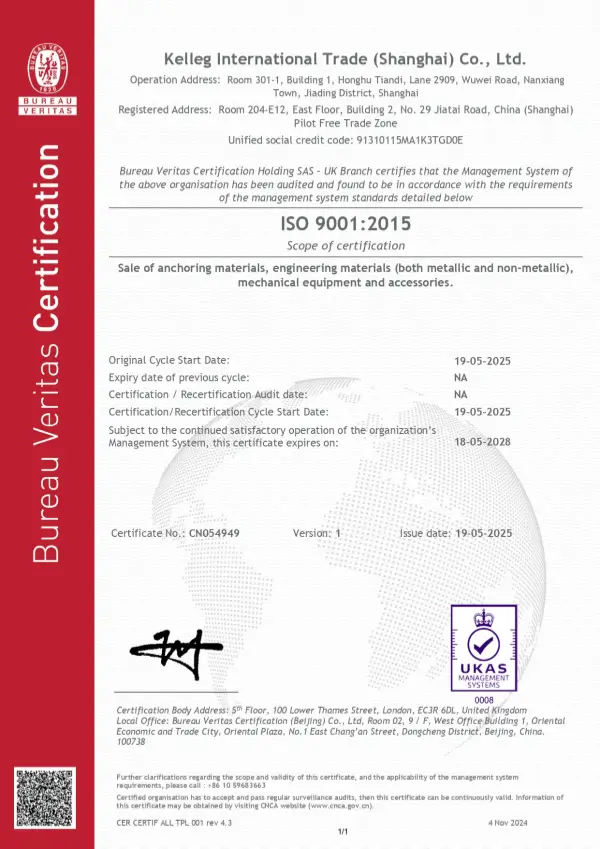
A high-quality rock drill bit is the result of more than premium materials and advanced manufacturing processes. It also reflects the manufacturer’s engineering expertise, production experience, and ability to provide technical support throughout the purchasing and application process.
For buyers, evaluating the supplier is just as important as inspecting the product itself. An experienced manufacturer not only produces consistent drilling tools but also helps customers select the right drill bit for specific rock conditions, drilling equipment, and project requirements. This reduces procurement risks and improves long-term drilling performance.
Instead of choosing a supplier based solely on price or product catalogs, buyers should evaluate whether the company has the technical knowledge and industry experience to support their drilling operations.
Why Supplier Experience Matters #
Rock drilling conditions vary significantly between mining, quarrying, tunneling, and construction projects. Differences in rock hardness, abrasiveness, hole depth, drilling equipment, and operating parameters all influence drill bit performance.
An experienced supplier understands these variables and can recommend products based on practical engineering knowledge rather than standard product specifications.
For example, an experienced manufacturer can help buyers:
- Select the appropriate button shape for different rock formations.
- Recommend suitable carbide grades for abrasive or hard rock.
- Match drill bits with compatible drill rods and shank adapters.
- Optimize drilling efficiency while reducing premature wear.
- Troubleshoot common drilling problems encountered on site.
Without this technical guidance, buyers may purchase a drill bit that meets the required dimensions but is not optimized for the actual drilling conditions.
Evaluate the Supplier’s Manufacturing Experience #
Manufacturing experience often reflects a supplier’s ability to produce reliable and consistent drilling tools.
Before placing an order, buyers should consider the following questions:
- How long has the company specialized in manufacturing rock drilling tools?
- Does the company manufacture drill bits in-house or outsource production?
- What industries does the supplier primarily serve, such as mining, tunneling, quarrying, or construction?
- Can the supplier provide examples of projects using similar drilling applications?
- Does the manufacturer continuously improve product design based on customer feedback?
A supplier with extensive industry experience is generally better equipped to maintain stable product quality and solve technical issues efficiently.
Assess the Quality of Technical Support #
Reliable technical support extends beyond answering product inquiries. It helps buyers select the most suitable drilling solution and improve operational efficiency throughout the product lifecycle.
A professional supplier should be able to provide:
| Technical Support Service | Buyer Benefit |
|---|---|
| Drill bit selection recommendations | Improves tool matching for specific rock conditions |
| Product compatibility advice | Ensures proper connection with drilling equipment |
| Drilling parameter recommendations | Helps optimize penetration rate and service life |
| Failure analysis support | Identifies the causes of premature wear or breakage |
| Product improvement suggestions | Enhances drilling efficiency over time |
| After-sales technical assistance | Reduces downtime when problems occur |
This level of support is especially valuable for large mining projects and long-term supply partnerships.
Request Evidence of Performance #
Experienced suppliers should be able to support their recommendations with real-world evidence rather than marketing claims alone.
Useful information includes:
- Project case studies
- Customer references
- Field testing reports
- Performance comparison data
- Application recommendations for different geological conditions
Reviewing this information helps buyers determine whether the supplier has successfully delivered products for projects similar to their own.
Questions Buyers Should Ask Before Choosing a Supplier #
A supplier’s responses to technical questions often reveal the depth of its expertise.
Consider asking:
- Which rock formations are your drill bits designed for?
- How do you recommend selecting carbide button shapes?
- What quality control procedures do you use during production?
- Can you provide material and inspection certificates?
- Do you offer technical support if drilling performance does not meet expectations?
- Can you share project references or field performance data?
Clear, detailed, and technically sound answers generally indicate a supplier with strong engineering capabilities and a commitment to long-term customer support.
Buyer Checklist: Supplier Evaluation #
Before establishing a purchasing partnership, verify the following:
| Evaluation Item | Check |
|---|---|
| Specialized experience in rock drilling tools | ✓ |
| In-house manufacturing capability | ✓ |
| Proven experience in similar drilling applications | ✓ |
| Technical selection advice available | ✓ |
| Field performance data or case studies provided | ✓ |
| Responsive after-sales technical support | ✓ |
| Material and inspection documentation available | ✓ |
Selecting a high-quality rock drill bit requires more than comparing prices or reviewing product specifications. By evaluating the material, manufacturing quality, carbide buttons, machining precision, quality control system, and supplier expertise together, buyers can make more informed purchasing decisions and select drilling tools that deliver reliable performance, longer service life, and lower overall drilling costs.
Compare Cost per Meter Instead of Purchase Price #
For many buyers, purchase price is often the first factor considered when comparing rock drill bits. However, experienced mining companies and drilling contractors know that the lowest-priced drill bit does not always provide the lowest drilling cost.
A rock drill bit is a productivity tool rather than a one-time purchase. Its true value should be measured by how efficiently it performs throughout its service life. A drill bit that costs slightly more but drills significantly more meters with fewer interruptions can often deliver a much lower total operating cost.
Instead of focusing only on the initial purchase price, professional buyers increasingly evaluate cost per meter drilled, a practical indicator that reflects both product quality and drilling efficiency.
Why Purchase Price Can Be Misleading #
Comparing drill bits based only on their selling price may overlook many factors that affect the total cost of a drilling operation.
For example, a lower-priced drill bit may:
- Wear out more quickly
- Require more frequent replacements
- Increase equipment downtime
- Reduce drilling efficiency
- Require additional labor for tool changes
Although the initial investment is lower, these hidden costs can significantly increase the project’s overall cost.
Conversely, a premium-quality drill bit may have a higher purchase price but deliver longer service life, more stable drilling performance, and fewer interruptions, resulting in a lower overall drilling cost.
What Is Cost per Meter? #
Cost per meter is a widely used performance indicator in mining, quarrying, and tunneling projects. It measures how much the drill bit actually costs per meter drilled, rather than its purchase price.
A simplified calculation is:
Cost per Meter = Drill Bit Purchase Price ÷ Total Meters Drilled
This calculation allows buyers to compare products based on real operational value instead of unit price alone.
For a more comprehensive evaluation, some companies also include additional operating costs such as labor, equipment downtime, and maintenance.
Example: Why a Higher Purchase Price Can Lower Total Cost #
The following example illustrates how service life influences overall drilling costs.
| Drill Bit | Purchase Price | Average Service Life | Cost per Meter |
|---|---|---|---|
| Drill Bit A | $90 | 300 m | $0.30/m |
| Drill Bit B | $130 | 650 m | $0.20/m |
Although Drill Bit B costs approximately 44% more to purchase, it drills more than twice the distance before replacement. As a result, its cost per meter is significantly lower.
In addition, the longer service life reduces the frequency of tool changes, helping improve equipment utilization and productivity.
Consider the Total Cost of Ownership #
When evaluating drill bits, buyers should also consider costs beyond the drill bit itself.
The Total Cost of Ownership (TCO) may include:
- Drill bit purchase cost
- Replacement frequency
- Equipment downtime
- Labor required for bit changes
- Production interruptions
- Inventory management
- Transportation and logistics
For high-production mining operations, these indirect costs can exceed the purchase price of the drill bit itself.
Therefore, selecting a drill bit with stable performance and consistent quality often provides greater long-term value than simply choosing the lowest quotation.
Questions Buyers Should Ask When Comparing Suppliers #
Before making a purchasing decision, buyers should request information that helps evaluate long-term value rather than focusing only on unit price.
Useful questions include:
- What is the average service life under similar drilling conditions?
- Can you provide field performance data or customer case studies?
- How is drilling performance measured?
- What factors influence the expected service life?
- Can you provide recommendations for reducing cost per meter?
Suppliers that can provide performance data and practical recommendations are generally better positioned to support long-term drilling efficiency.
Buyer Checklist: Compare Value, Not Just Price #
Before selecting a rock drill bit, verify the following:
| Evaluation Item | Check |
|---|---|
| Cost per meter has been estimated | ✓ |
| Service life data is available | ✓ |
| Performance has been verified in similar rock conditions | ✓ |
| Total operating costs have been considered | ✓ |
| Supplier provides field performance evidence | ✓ |
| Purchasing decision is based on long-term value | ✓ |
The purchase price of a rock drill bit represents only a small part of its overall value. By comparing cost per meter, service life, and total operating costs, buyers can make more informed procurement decisions and select drilling tools that improve productivity while reducing long-term project expenses.
Conclusion #
Selecting a high-quality rock drill bit involves much more than comparing product specifications or requesting the lowest quotation. While factors such as steel grade, heat treatment, carbide button quality, machining precision, and quality control all influence drilling performance, the real challenge for buyers is verifying these factors before placing an order.
A systematic evaluation process helps reduce uncertainty and procurement risks. By reviewing technical documentation, inspecting manufacturing quality, assessing supplier expertise, and comparing long-term operating costs instead of unit prices alone, buyers can make more confident and informed purchasing decisions.
It is equally important to remember that there is no universal “best” rock drill bit. The ideal choice depends on the drilling application, rock formation, equipment compatibility, and project objectives. A drill bit that performs exceptionally well in one environment may not deliver the same results under different geological or operating conditions. Working with an experienced manufacturer that understands these variables can help ensure the selected drilling tools are matched to the specific requirements of each project.
Ultimately, the value of a rock drill bit should be measured by its overall contribution to drilling efficiency, operational reliability, and cost per meter—not simply by its purchase price. Buyers who evaluate products from a long-term performance perspective are more likely to reduce downtime, improve productivity, and achieve lower total drilling costs throughout the life of their drilling operations.