- Introduction
- Why Manufacturing Quality Matters for Drill Rod Performance
- Overview of the Top Hammer Drill Rod Manufacturing Process
- Step 1: Selecting High-Quality Alloy Steel
- Step 2: Steel Inspection and Material Quality Verification
- Step 3: Cutting & Billet Preparation
- Step 4: Precision Forging
- Step 5: Heat Treatment (The Most Critical Step)
- Step 6: Straightening and Dimensional Correction
- Step 7: CNC Machining
- Step 8: Thread Manufacturing
- Why Thread Service Life Determines Drill Rod Life
- Step 9: Surface Finishing and Anti-Corrosion Treatment
- Step 10: Quality Inspection and Testing
- Chemical Composition Analysis
- Hardness Testing
- Impact Testing
- Tensile Testing
- Thread Inspection
- Straightness Inspection
- Ultrasonic Inspection (Internal Defect Detection)
- Magnetic Particle Inspection (Surface Crack Detection)
- Visual Inspection
- Dimension Inspection
- Quality Inspection System
- What Happens If Quality Inspection Is Weak?
- How Manufacturers Ensure Consistent Drill Rod Quality
- Common Manufacturing Defects That Reduce Drill Rod Service Life
- How to Identify a High-Quality Drill Rod Before Buying
- Conclusion
Introduction #
Top hammer drill rods are manufactured through a precision-controlled process that includes alloy steel selection, forging, heat treatment, precision machining, threading, and rigorous quality inspection. Every manufacturing stage directly influences the rod’s strength, fatigue resistance, energy transfer efficiency, and service life.
For mining, tunneling, quarrying, and construction projects, manufacturing quality is far more than a production detail—it directly affects drilling performance and operating costs. A poorly manufactured drill rod can cause excessive energy loss during impact transmission, premature thread wear, rod bending, unexpected breakage, and increased downtime. In contrast, a well-manufactured drill rod delivers more efficient energy transfer, longer service life, lower maintenance costs, and higher drilling productivity.
Although many top hammer drill rods look similar, significant differences exist in raw material quality, forging technology, heat treatment, machining accuracy, thread precision, and quality control standards. These manufacturing variations often determine whether a drill rod performs reliably under demanding rock drilling conditions.
This guide explains every stage of the top hammer drill rod manufacturing process—from raw steel selection to final inspection—and highlights the key factors that distinguish high-quality drill rods from ordinary products, helping buyers, distributors, and drilling contractors make more informed purchasing decisions.
Why Manufacturing Quality Matters for Drill Rod Performance #
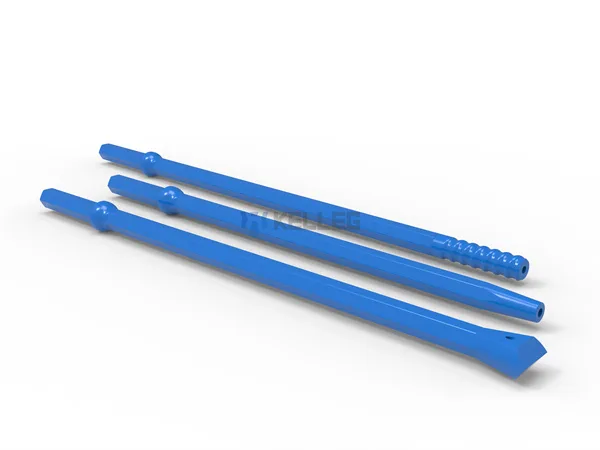
The manufacturing quality of a top hammer drill rod directly determines how effectively impact energy is transferred from the rock drill to the drill bit, and how reliably the rod performs under high-frequency percussive drilling conditions. Even small variations in material quality or processing precision can significantly affect drilling efficiency, tool life, and overall project cost.
In real drilling operations—such as mining, tunneling, quarrying, and foundation engineering—the drill rod is continuously exposed to high impact stress, torsional load, and abrasive rock conditions. Therefore, manufacturing quality is not just a production standard but a key factor that directly influences drilling stability, productivity, and safety.
Below are the key performance aspects directly affected by manufacturing quality:
Energy Transfer Efficiency #
High-quality drill rods ensure minimal energy loss during impact transmission from the rock drill to the drill bit.
Poor manufacturing (such as improper heat treatment or inconsistent material structure) can lead to:
- Reduced impact energy transmission
- Increased vibration and energy dissipation
- Lower penetration rate (ROP)
A well-manufactured drill rod maintains stable wave propagation, ensuring more energy is effectively delivered to the rock formation.
Straightness #
Straightness is critical for maintaining drilling accuracy and reducing stress.
If a drill rod is not properly straightened during manufacturing:
- Hole deviation increases
- Coupling stress becomes uneven
- Vibration intensifies during drilling
High straightness precision ensures smoother rotation and more stable drilling performance, especially in deep-hole applications.
Thread Accuracy #
Thread quality directly affects connection stability between rods, couplings, and shank adapters.
Poor thread manufacturing can cause:
- Thread wear and galling
- Loose connections during drilling
- Energy leakage at joints
- Unexpected thread failure under torque
Precision threading ensures tight engagement, consistent torque transmission, and longer service life of the entire rock drilling tools.
Fatigue Resistance #
Drill rods are subjected to repeated high-frequency impact loads, making fatigue resistance one of the most important performance indicators.
Manufacturing factors such as:
- Steel alloy composition
- Heat treatment control
- Surface hardness gradient
All determine fatigue life.
Low-quality rods often fail due to:
- Crack initiation at stress concentration points
- Internal material defects
- Improper hardness distribution
High-quality manufacturing significantly extends fatigue life and reduces unexpected breakage.
Wear Resistance #
Wear resistance determines how well the drill rod withstands friction, especially at threaded joints and exposed surfaces.
Good manufacturing processes improve wear resistance through:
- Optimized heat treatment (quenching & tempering)
- Surface hardening processes
- Controlled material microstructure
This reduces:
- Thread abrasion
- Surface damage
- Replacement frequency
Hole Deviation Control #
Hole deviation is not only influenced by drilling conditions but also by drill rod quality.
Poor manufacturing can result in:
- Uneven rigidity
- Bent rods under load
- Poor concentricity
These issues cause drilling path deviation, which is especially critical in blasting holes, anchoring, and tunneling projects.
High-quality drill rods help maintain:
- Stable drilling direction
- Better hole alignment
- Improved blasting or anchoring accuracy
Service Life #
Service life is the combined result of all manufacturing factors.
A high-quality drill rod delivers:
- Longer operational life
- Fewer replacements
- Reduced downtime
- Lower total drilling cost
In contrast, low-quality rods may appear cheaper initially but lead to higher long-term operational expenses due to frequent failures and inefficiencies.
Manufacturing quality is the foundation of drill rod performance. It directly influences energy efficiency, drilling accuracy, fatigue life, wear resistance, and overall operational reliability. For high-demand applications, selecting drill rods based on manufacturing standards is more important than choosing based on price alone.
Overview of the Top Hammer Drill Rod Manufacturing Process #
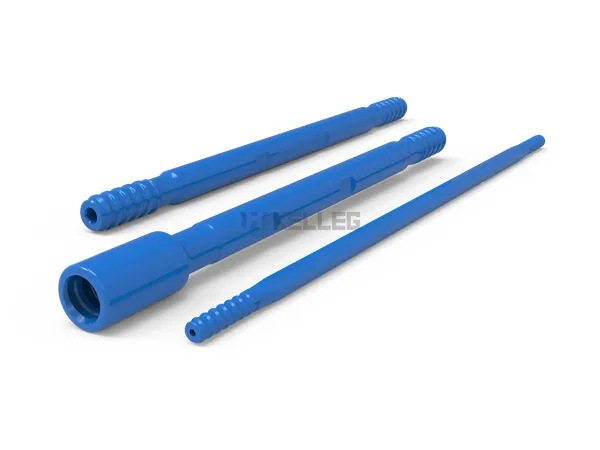
The manufacturing of top hammer drill rods follows a strictly controlled, multi-stage production process designed to ensure strength, precision, and long service life under high-impact drilling conditions. Each step plays a critical role in determining the final mechanical properties, fatigue resistance, and overall performance of the drill rod.
Below is a simplified overview of the complete manufacturing workflow:
Top Hammer Drill Rod Manufacturing Flow #
Raw Steel Selection → Steel Inspection → Cutting & Billet Preparation → Precision Forging → Heat Treatment (Quenching & Tempering) → Straightening & Alignment Correction → CNC Machining → Thread Manufacturing (Rolling or Machining) → Surface Treatment & Corrosion Protection → Quality Inspection & Testing → Packaging & Marking
Process Explanation #
Raw Steel Selection #
High-quality alloy steel is selected as the foundation of the drill rod. The material composition directly affects strength, toughness, and fatigue resistance.
Steel Inspection #
Before processing, raw steel undergoes strict inspection, including chemical composition analysis and ultrasonic testing to ensure internal integrity and consistency.
Cutting & Billet Preparation #
Steel is cut into precise lengths according to product specifications. This ensures uniformity in subsequent forging and machining processes.
Precision Forging #
Forging refines the internal grain structure of the steel, significantly improving strength, impact resistance, and fatigue life compared to casting or simple machining.
Heat Treatment (Critical Step) #
Heat treatment optimizes hardness and toughness balance through controlled processes such as quenching and tempering. This step determines the drill rod’s wear resistance and fatigue performance.
Straightening & Alignment Correction #
After heat treatment, rods may deform slightly. Straightening ensures geometric accuracy, reducing vibration and improving drilling stability.
CNC Machining #
Precision machining defines the final dimensions, including outer diameter, flushing hole, and connection interfaces, ensuring compatibility and concentricity.
Thread Manufacturing #
Threads are produced using high-precision rolling or machining processes. Thread quality directly affects connection strength, torque transmission, and service life.
Surface Treatment #
Surface protection processes such as shot blasting, phosphating, or anti-rust coating improve corrosion resistance and durability during storage and operation.
Quality Inspection & Testing #
Each drill rod undergoes strict quality control, including dimensional inspection, hardness testing, thread gauge checks, and non-destructive testing.
Packaging & Marking #
Final products are marked for traceability, batch control, and OEM identification before being safely packaged for shipment.
Step 1: Selecting High-Quality Alloy Steel #
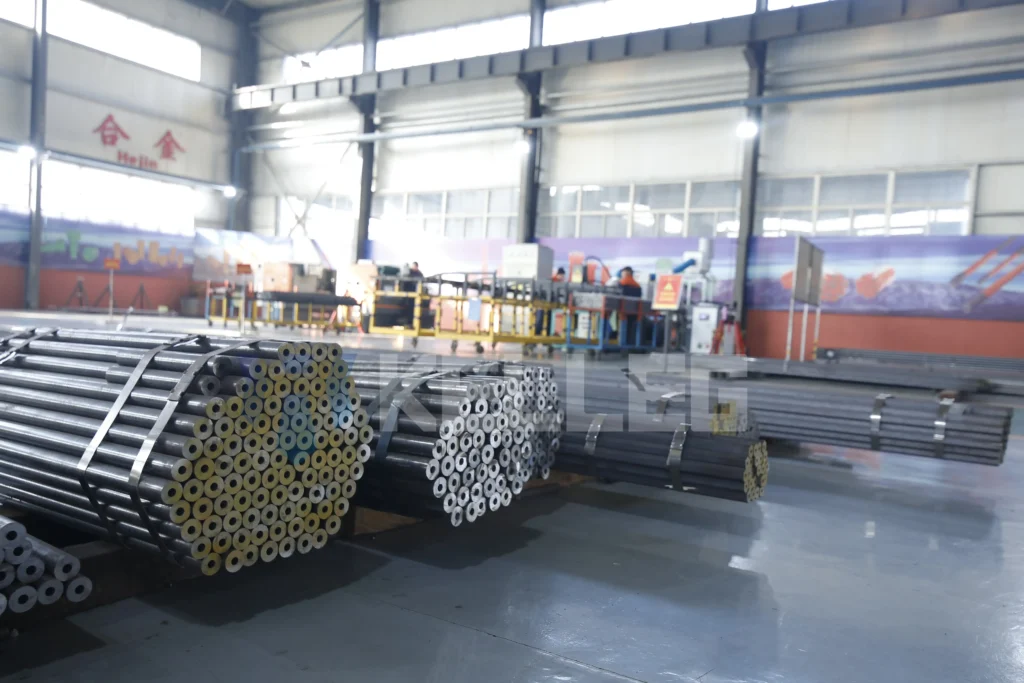
The manufacturing process of a top hammer drill rod begins with selecting the correct alloy steel, which forms the foundation of the rod’s mechanical strength, toughness, and fatigue resistance. Unlike ordinary carbon steel, drill rods must withstand repeated high-impact stress, torsional loads, and abrasive rock conditions. Therefore, only high-performance alloy steels are suitable for production.
Why Not Use Ordinary Steel? #
Ordinary carbon steel lacks the required balance between hardness and toughness. In high-frequency percussive drilling, this would lead to:
- Premature fatigue failure
- Reduced impact energy transmission
- Low wear resistance
- Increased risk of rod bending or breakage
High-performance alloy steels are specifically engineered to maintain stability under extreme drilling conditions.
Common Alloy Steel Grades Used for Drill Rods #
Typical materials used in top hammer drill rod manufacturing include:
- 23CrNi3Mo
- 25CrMo4
- 30CrNiMo8
- 35CrMo
These alloy steels are widely used due to their excellent combination of strength, toughness, and heat treatment response.
Why Alloying Elements Matter #
The performance of drill rod steel is determined not only by the base iron content but also by key alloying elements such as Nickel (Ni), Chromium (Cr), and Molybdenum (Mo). Each element plays a specific role in enhancing mechanical properties.
Function of Key Alloying Elements #
| Alloy Element | Function |
|---|---|
| Nickel (Ni) | Improves toughness and impact resistance, helping the steel withstand repeated shock loading without cracking |
| Chromium (Cr) | Enhances wear resistance and hardness, improving surface durability under abrasive rock conditions |
| Molybdenum (Mo) | Increases strength at high temperatures and improves hardenability and fatigue resistance |
Engineering Insight (Important for Buyers) #
The combination of Ni, Cr, and Mo is critical because drill rods must achieve a balanced performance profile:
- High toughness → prevents brittle fracture
- High wear resistance → extends service life
- Stable strength under heat and stress → ensures reliable drilling performance
If any of these elements are missing or poorly controlled, the drill rod may appear normal in appearance but perform poorly in real drilling conditions.
Selecting the right alloy steel is the foundation of drill rod quality. It determines how well the rod will perform in terms of strength, fatigue resistance, and durability. This step is not just material selection—it defines the entire performance ceiling of the finished product.
Step 2: Steel Inspection and Material Quality Verification #

Before any machining or forging begins, the selected alloy steel must undergo strict quality verification. Even high-grade materials such as 23CrNi3Mo or 30CrNiMo8 can fail in drilling applications if internal defects or chemical deviations are not detected early.
In top hammer drilling, undetected material defects can lead to:
- Unexpected rod breakage under impact load
- Reduced fatigue life in deep-hole drilling
- Inconsistent hardness after heat treatment
- Poor energy transfer efficiency
Therefore, steel inspection is not a formality—it defines the reliability ceiling of the final drill rod.
What Is Checked in Raw Steel Inspection? #
High-quality manufacturers typically perform the following tests:
- Chemical composition analysis (verify Ni, Cr, Mo content)
- Ultrasonic testing (detects internal cracks or voids)
- Hardness pre-check
- Dimensional and batch consistency verification
- Surface defect inspection
Material Quality → Manufacturing Stability Relationship #
Raw steel quality directly affects all downstream processes:
- Forging behavior (grain flow formation)
- Heat treatment response (hardness uniformity)
- Machining precision (dimensional stability)
- Fatigue resistance (crack initiation risk)
Engineering Insight Table #
| Inspection Item | Purpose | Impact on Drill Rod Performance |
|---|---|---|
| Chemical composition control | Ensure correct alloy balance | Determines strength and toughness baseline |
| Ultrasonic testing | Detect internal defects | Prevents hidden fatigue failure |
| Hardness pre-check | Verify material consistency | Ensures stable heat treatment response |
| Surface inspection | Identify external flaws | Reduces crack initiation risk |
What Happens If Inspection Is Poor? #
If steel inspection is not properly controlled, even high-end alloy steel can behave like low-grade material in real drilling conditions.
Typical consequences include:
- Early fatigue cracking at thread roots
- Rod bending under high torque
- Unstable drilling performance
- Increased downtime and replacement cost
Steel inspection acts as the first quality gate in drill rod manufacturing. It ensures that only stable, defect-free, and composition-accurate materials enter the production process, which directly determines the final performance ceiling of the drill rod.
Step 3: Cutting & Billet Preparation #
Cutting is the first dimensional control step in drill rod manufacturing, and its accuracy directly determines the stability of subsequent forging and forming processes.
If the billet length is inconsistent or cutting precision is poor, it can lead to:
- Uneven material distribution during forging
- Local overheating or insufficient deformation
- Incomplete grain flow formation
- Dimensional deviation in the final drill rod
In top hammer drill rod production, forging quality depends heavily on having a uniform and correctly sized billet, because forging is a controlled plastic deformation process that redistributes internal grain structure. Any initial inconsistency will be amplified in later stages.
How Billet Length Influences Grain Flow #
During forging, steel is reshaped under high pressure, and its internal grain structure is elongated and aligned to improve strength and fatigue resistance.
Billet length directly affects this process:
- Correct billet length → stable material flow → continuous grain structure
- Too long billet → uneven deformation → folding or internal stress
- Too short billet → insufficient forging ratio → weak mechanical properties
A properly controlled billet ensures that grain flow follows the geometry of the drill rod, which significantly improves:
- Impact resistance
- Fatigue life
- Structural integrity under high-frequency drilling
This is why precision cutting is not just a preparatory step, but a microstructure control foundation.
How Inconsistency Causes Stress Concentration #
Any inconsistency in billet size, weight, or geometry introduces non-uniform stress distribution during forging and later drilling operations.
These inconsistencies can result in:
- Localized stress concentration points
- Micro-crack initiation during repeated impact
- Reduced fatigue strength at transition zones
- Premature failure near threaded or coupling areas
In high-frequency top hammer drilling, stress is repeatedly transmitted through the drill rod. Even small structural irregularities from the cutting stage can evolve into critical failure points under cyclic loading conditions.
Engineering Insight Table #
| Cutting Parameter | Manufacturing Impact | Drill Rod Performance Result |
|---|---|---|
| Length accuracy | Controls forging ratio | Determines grain flow quality |
| Weight consistency | Ensures uniform deformation | Improves structural stability |
| End face precision | Affects forging alignment | Reduces internal stress concentration |
| Dimensional uniformity | Stabilizes material flow | Enhances fatigue resistance |
Cutting and billet preparation may appear as a simple preprocessing step, but it fundamentally defines how steel will behave during forging. In high-performance drill rod manufacturing, this stage ensures that material deformation occurs in a controlled and predictable way, which is essential for achieving long fatigue life and stable drilling performance.
Step 4: Precision Forging #
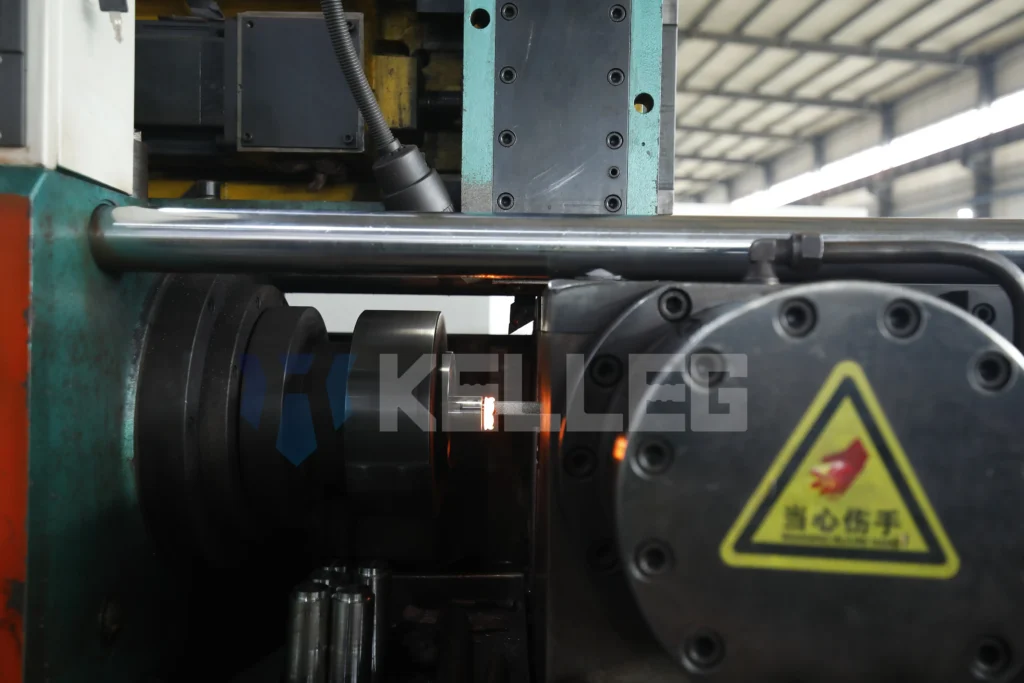
Precision forging is the process that transforms prepared steel billets into a dense, high-strength structure with optimized internal grain flow. In top hammer drill rod manufacturing, this step is essential because it directly determines the rod’s ability to withstand repeated impact loads, torsional stress, and fatigue cycling during drilling operations.
Unlike simple shaping methods, forging does not just change geometry—it fundamentally improves the internal microstructure of the steel.
Hot Forging Process #
Hot forging is performed at high temperatures where steel becomes plastic and easier to deform under pressure.
Key advantages include:
- Improved material flow behavior
- Reduced forming resistance
- Enhanced grain alignment
- Better structural uniformity
Under controlled conditions, hot forging ensures that the steel’s internal structure is continuously reshaped to follow the geometry of the drill rod.
Closed Die Forging (Precision Control Method) #
Closed die forging is used to achieve high dimensional accuracy and consistent mechanical performance.
In this process:
- The steel billet is fully enclosed within a precision mold
- High pressure forces the material to fill the cavity
- Excess material is controlled through flash formation
This method ensures:
- Accurate geometry
- Consistent batch quality
- Reduced internal defects
- Better repeatability in mass production
Closed die forging is especially important for drill rods used in high-demand mining and tunneling applications where consistency is critical.
Grain Refinement and Flow Structure Optimization #
One of the most important benefits of forging is grain refinement.
During deformation:
- Internal grains are compressed and elongated
- Grain flow follows the shape of the rod
- Structural density increases
This results in:
- Higher impact resistance
- Improved fatigue strength
- Reduced crack propagation risk
- Better energy transmission efficiency
A well-forged drill rod has continuous grain flow, which is essential for long service life under cyclic hammering loads.
Why Forging Is Better Than Casting #
Casting and forging produce fundamentally different internal structures.
- Casting relies on molten metal solidification
- Forging relies on solid-state plastic deformation
Because of this, forged drill rods have significantly superior mechanical performance.
Forged vs Cast Comparison #
| Property | Forged Drill Rod | Cast Steel Product |
|---|---|---|
| Strength | Higher due to refined grain structure | Lower due to random grain orientation |
| Impact Resistance | Excellent under repeated hammering | Prone to brittle fracture |
| Fatigue Life | Long service life under cyclic load | Shorter life due to internal porosity |
| Internal Defects | Minimal (dense structure) | Higher risk of porosity and shrinkage |
| Energy Transfer Efficiency | Stable and efficient | Energy loss due to micro-defects |
Engineering Insight (Important for Buyers) #
Forging is not only a shaping process—it is a structural improvement process. By controlling grain flow and eliminating internal discontinuities, precision forging significantly enhances the drill rod’s resistance to fatigue failure and impact shock.
This is why forged drill rods are the standard choice for:
- Mining operations
- Deep hole drilling
- High-impact top hammer drilling
Precision forging transforms steel from a simple material into a high-performance structural component. It establishes the internal grain architecture that determines how the drill rod will perform under real drilling conditions, especially in high-frequency impact environments.
Step 5: Heat Treatment (The Most Critical Step) #
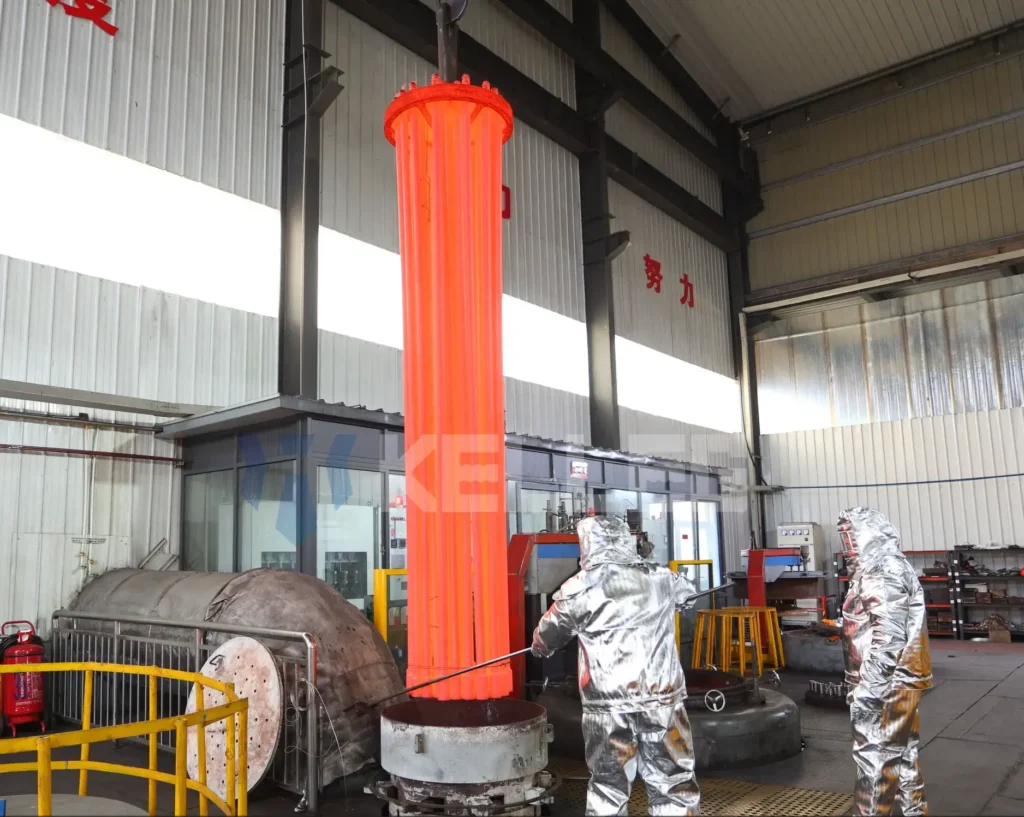
Heat treatment is the key process that determines the final mechanical properties of a top hammer drill rod. While alloy steel provides the base material potential, it is heat treatment that defines how that potential is transformed into real-world performance.
Through controlled heating and cooling cycles, the internal microstructure of steel is modified to achieve a precise balance between hardness and toughness—two properties that directly control drilling durability and failure resistance.
Improper heat treatment is one of the most common causes of:
- Premature drill rod fracture
- Thread wear and deformation
- Reduced fatigue life
- Unstable drilling performance
Normalizing #
Normalizing is performed to refine grain structure and remove internal stresses formed during forging and machining.
Key effects include:
- More uniform grain distribution
- Improved machinability
- Reduced internal stress concentration
- Better preparation for subsequent heat treatment stages
This step ensures the steel responds consistently in later thermal processes.
Quenching #
Quenching involves heating the steel to a high temperature and then rapidly cooling it (usually in oil, water, or controlled media).
Main purpose:
- Increase hardness and strength
Microstructural effect:
- Formation of martensite structure
- Significant hardness improvement
However, quenching alone can make steel brittle, which is why it must be carefully controlled and always followed by tempering.
Tempering #
Tempering is used after quenching to reduce brittleness while maintaining sufficient hardness.
Key improvements:
- Restores toughness
- Reduces internal stress
- Improves fatigue resistance
- Prevents sudden brittle fracture
This is the step that transforms “hard but fragile steel” into “strong and durable drill rod material.”
Carburizing #
Carburizing is a surface hardening process where carbon is introduced into the outer layer of steel.
Benefits:
- Hard outer surface for wear resistance
- Tough inner core for impact absorption
- Extended service life in abrasive rock conditions
This combination is especially useful in high-wear drilling environments.
Induction Hardening #
Induction hardening uses electromagnetic heating to harden specific surface areas, such as thread regions or critical wear zones.
Advantages:
- Localized hardening without affecting core structure
- High precision and repeatability
- Improved thread durability
- Reduced risk of overall brittleness
Why Heat Treatment Directly Determines Drill Rod Performance #
Heat treatment controls the final balance of key performance factors:
| Performance Factor | Effect of Heat Treatment |
|---|---|
| Hardness | Determines surface wear resistance |
| Core Toughness | Prevents brittle fracture under impact |
| Fatigue Resistance | Controls crack initiation and propagation |
| Wear Resistance | Extends thread and surface life |
Even with high-quality alloy steel, poor heat treatment can significantly reduce service life.
Does Harder Always Mean Better? #
No. Harder is not always better in drill rod applications.
While higher hardness improves wear resistance, excessive hardness can lead to:
- Increased brittleness
- Higher risk of sudden fracture
- Poor impact absorption under percussive drilling
- Reduced fatigue life
In top hammer drilling, the drill rod must withstand repeated impact loads, not just surface wear. Therefore, the optimal design is a balanced hardness–toughness combination, not maximum hardness.
A properly heat-treated drill rod is engineered to achieve:
- Hard outer surface for durability
- Tough core for impact resistance
- Controlled stress distribution for fatigue life
Heat treatment is the defining step that converts forged steel into a high-performance drilling component. It determines whether a drill rod will fail prematurely or perform reliably under extreme percussive drilling conditions.
Step 6: Straightening and Dimensional Correction #
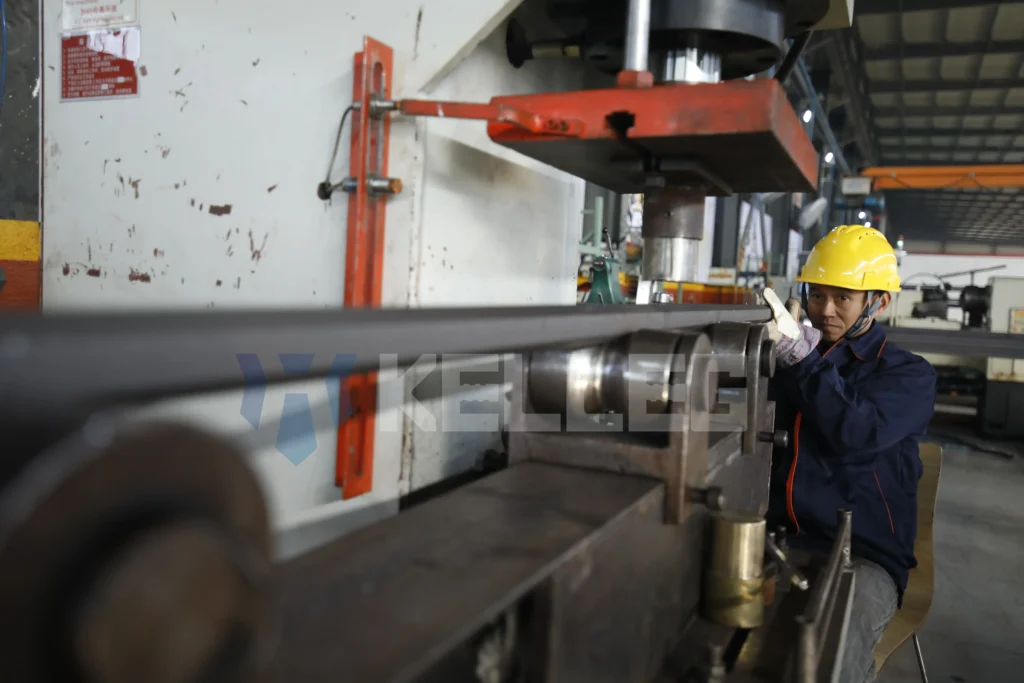
After forging and heat treatment, drill rods often experience slight deformation due to internal stress release and thermal contraction. Straightening is the process used to correct these deviations and ensure the rod meets strict geometric tolerances.
In top hammer drilling, even minor deviations in straightness or concentricity can significantly affect drilling stability and energy transmission efficiency.
Straightening is therefore not a cosmetic step—it is a functional performance control process.
Straightness Tolerance Control #
Straightness tolerance defines how much deviation is allowed along the entire length of the drill rod.
Tight control of straightness ensures:
- Stable rotation during drilling
- Reduced vibration and impact loss
- Uniform energy transmission along the drill rod
If straightness is not properly controlled, the drill rod will behave unpredictably under high-frequency percussive loads.
Runout (Concentricity) Control #
Runout refers to the deviation between the rotational axis of the drill rod and its geometric centerline.
Poor runout control can lead to:
- Uneven rotation during drilling
- Increased wear on threads and couplings
- Reduced energy transfer efficiency
- Localized stress concentration
High-precision runout control ensures that the drill rod rotates smoothly, maintaining consistent contact with connected components in the drilling tools.
Why Straightness and Runout Matter in Real Drilling Conditions #
In actual drilling environments such as mining, tunneling, and quarrying, drill rods are subjected to continuous impact and torsional forces.
If straightness or runout is not properly controlled, the following issues may occur:
- Hole deviation increases significantly
- Coupling joints experience uneven load distribution
- Higher vibration reduces drilling efficiency
- Increased fatigue stress accelerates failure
These issues not only reduce drilling accuracy but also shorten the service life of the entire rock drilling tools.
Engineering Impact Summary #
| Geometric Parameter | What It Controls | Impact on Drilling Performance |
|---|---|---|
| Straightness | Axial alignment | Determines drilling stability and hole deviation |
| Runout (concentricity) | Rotational symmetry | Affects vibration and coupling wear |
| Dimensional correction | Fit accuracy | Ensures proper energy transfer efficiency |
What Happens If Straightening Is Poor? #
Poor straightening is one of the hidden causes of premature drill rod failure. Even if material quality and heat treatment are excellent, geometric defects can still lead to performance degradation.
Typical consequences include:
- Higher drilling vibration
- Accelerated thread wear
- Reduced penetration rate (ROP)
- Early fatigue crack initiation
- Poor coupling connection stability
This is why straightening is considered a final geometric quality gate before machining and threading.
Engineering Insight #
Straightening and dimensional correction ensure that the drill rod’s mechanical strength is aligned with its geometric precision. Without this alignment, even high-strength materials cannot perform effectively in real drilling conditions.
In high-performance top hammer drilling, geometry is as important as material strength.
Straightness and runout control determine whether a drill rod can deliver stable performance under dynamic impact loading. This step ensures that all upstream manufacturing advantages—material quality, forging structure, and heat treatment—are fully realized in actual drilling operations.
Step 7: CNC Machining #
CNC machining is the stage where the forged and heat-treated drill rod is transformed into a high-precision mechanical component. At this stage, dimensional accuracy is no longer about shaping—it directly determines energy transfer efficiency, drilling stability, and connection reliability in the drilling.
Even small machining errors can significantly affect performance under high-frequency top hammer impact conditions.
Outer Diameter Control #
The outer diameter must be precisely controlled to ensure consistent contact behavior and structural balance during rotation and impact.
If the outer diameter is inconsistent, it may cause:
- Uneven stress distribution
- Increased vibration during drilling
- Reduced energy transfer efficiency
- Premature wear of coupling components
Accurate OD machining ensures stable mechanical performance under dynamic load conditions.
Chamfers #
Chamfers are used at connection points and edge transitions to reduce stress concentration.
Proper chamfer design and machining help:
- Prevent crack initiation at sharp edges
- Improve assembly efficiency
- Reduce thread damage during coupling
- Enhance fatigue resistance in high-stress zones
This is a small geometric feature with a significant impact on long-term reliability.
End Machining #
The ends of the drill rod must be precisely machined to ensure perfect fit with couplings, shank adapters, and other rods in the rock drilling tools.
Poor end machining can result in:
- Loose or unstable connections
- Energy loss at joints
- Increased thread wear
- Unexpected connection failure under torque
High-quality end machining ensures stable force transmission through the entire drilling tools.
Concentricity #
Concentricity defines how well the geometric center aligns with the rotational axis of the drill rod.
If concentricity is poor:
- The rod will “wobble” during rotation
- Vibration levels increase significantly
- Thread wear accelerates
- Fatigue cracks may initiate earlier
High concentricity is essential for maintaining smooth rotation and stable impact energy transfer.
Why High Precision Matters #
| Machining Parameter | Functional Role | Impact on Drilling Performance |
|---|---|---|
| Outer Diameter | Structural balance | Controls vibration and load distribution |
| Chamfers | Stress reduction | Prevents crack initiation |
| End Faces | Connection stability | Ensures reliable energy transfer |
| Concentricity | Rotational accuracy | Determines drilling smoothness and fatigue life |
What Happens If Precision Is Not Controlled? #
Even if material quality, forging, and heat treatment are excellent, poor CNC machining can still cause failure.
Common consequences include:
- Increased drilling vibration and instability
- Reduced penetration rate (ROP)
- Faster wear of threads and couplings
- Energy loss at connection interfaces
- Premature fatigue failure under cyclic load
This makes CNC machining a final performance calibration step, not just a shaping process.
CNC machining ensures that the internal strength of the drill rod is effectively converted into usable drilling performance. It is the stage where structural strength becomes operational stability.
Step 8: Thread Manufacturing #
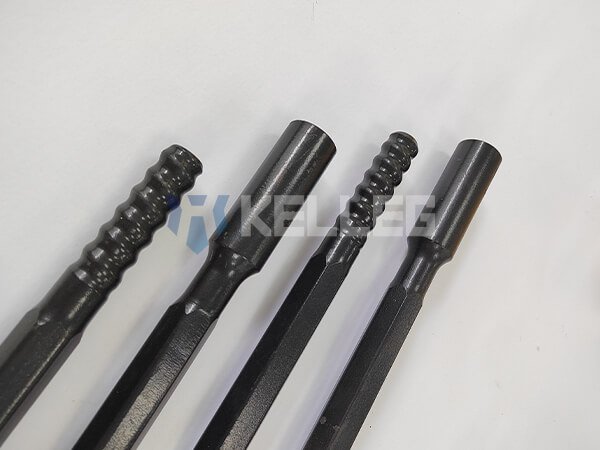
Thread manufacturing is the key process that determines how effectively a top hammer drill rod transfers torque, impact energy, and axial load within the rock drilling tools.
Although the drill rod body carries structural strength, the thread connection is the weakest and most failure-prone interface in the entire rod. In real drilling conditions, most drill rod failures occur at the threaded joints due to fatigue, wear, or improper machining.
Therefore, thread manufacturing directly determines:
- Connection strength
- Energy transfer efficiency
- Service life of the drill rod
- Risk of sudden failure during drilling
Common Thread Types in Top Hammer Drill Rods #
Different thread types are used depending on drilling conditions, equipment, and regional standards.
R Thread Series #
R threads are commonly used in medium-duty drilling applications.
- R25
- R28
- R32
- R38
Characteristics:
- Easy coupling and disassembly
- Suitable for small to medium hole drilling
- Balanced performance for general rock conditions
T Thread Series #
T threads are designed for higher load and more demanding drilling conditions.
- T38
- T45
- T51
Characteristics:
- Higher torque capacity
- Better resistance to fatigue failure
- Suitable for deep-hole and heavy-duty drilling
GT Thread (Special High-Performance Thread) #
GT threads are designed for advanced drilling requiring higher stability and longer service life.
Characteristics:
- Improved load distribution
- Enhanced anti-fatigue design
- Better performance under high-frequency impact loads
Thread Machining vs Thread Rolling #
Thread manufacturing can be achieved through different processes, and the method directly affects fatigue life and durability.
Thread Machining #
- Material is cut away to form thread profile
- Higher flexibility in geometry design
- Slightly lower fatigue strength compared to rolling
Thread Rolling #
- Plastic deformation forms thread without cutting material
- Improves grain flow continuity
- Significantly increases fatigue resistance
- Reduces crack initiation risk
👉 In high-performance drill rods, thread rolling is often preferred due to its superior fatigue performance.
Precision Gauges and Quality Control #
Thread accuracy must be verified using precision measuring systems and standardized gauges.
Key inspection methods include:
- Go/No-Go gauges
- Thread profile inspection
- Pitch accuracy measurement
- Torque fit testing
Strict gauge control ensures:
- Perfect coupling compatibility
- Consistent torque transmission
- Reduced risk of thread loosening or jamming
Even minor deviations in thread geometry can lead to severe operational failures under high-impact drilling conditions.
Why Thread Service Life Determines Drill Rod Life #
| Failure Factor | Root Cause | Impact |
|---|---|---|
| Thread wear | Friction + poor hardness control | Loose connections |
| Thread fatigue | Cyclic impact loading | Sudden breakage |
| Improper fit | Machining tolerance errors | Energy loss |
| Galling or seizure | Surface quality issues | Tool downtime |
In actual drilling operations, the drill rod body rarely fails first. Instead, thread fatigue or wear is the dominant failure mode.
What Happens If Thread Quality Is Poor? #
Poor thread manufacturing leads to:
- Energy leakage at joints
- Increased vibration during drilling
- Rapid coupling wear
- Unexpected detachment under torque
- Reduced drilling efficiency
In extreme cases, thread failure can cause complete rock drilling tools breakdown, leading to costly downtime.
Thread manufacturing is not just a connection process—it is a load transfer engineering system. It determines how impact energy, torque, and axial force are transmitted through the entire drilling tools.
A high-quality thread ensures that the drill rod behaves as a unified system rather than a series of weak connections.
The service life of a top hammer drill rod is largely determined by thread performance. Even with excellent material, forging, and heat treatment, poor thread manufacturing will significantly reduce overall durability and drilling reliability.
Step 9: Surface Finishing and Anti-Corrosion Treatment #
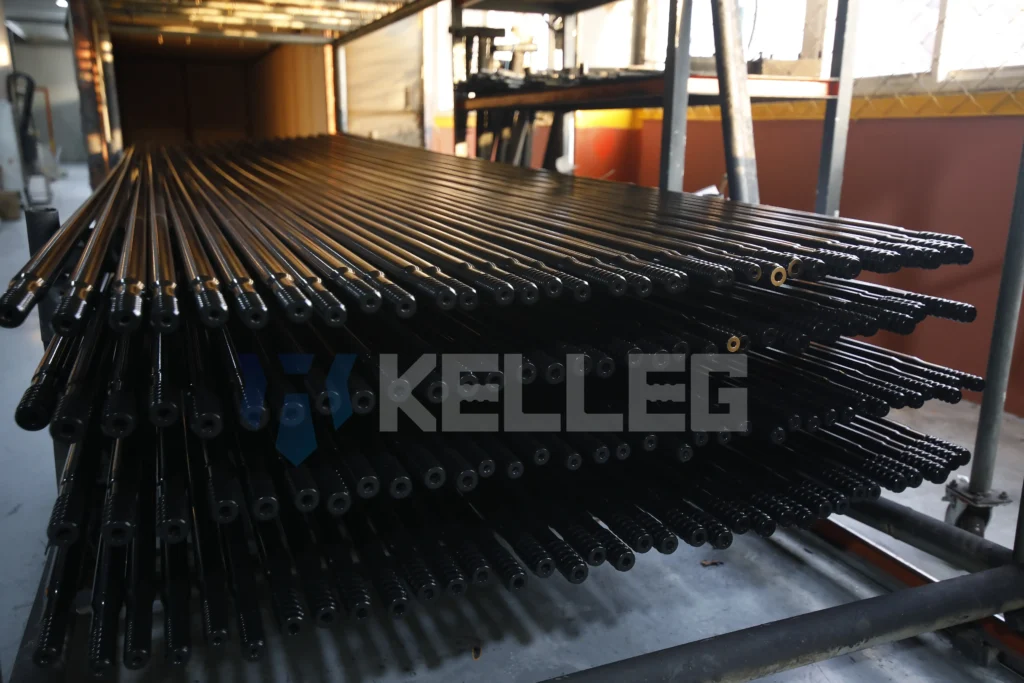
After machining and threading, the drill rod still requires surface finishing and anti-corrosion treatment to ensure long-term stability in performance during storage, transportation, and field operations.
Although surface treatment does not directly increase core strength, it significantly improves:
- Corrosion resistance
- Surface fatigue life
- Thread durability
- Storage stability
- Assembly reliability
In real mining and tunneling environments, drill rods are often exposed to moisture, dust, and corrosive conditions, making surface protection a critical part of overall product quality.
Shot Blasting (Surface Cleaning & Stress Relief) #
Shot blasting is used to clean the surface and remove scale, oxidation layers, and machining residues.
Key benefits:
- Improves surface cleanliness
- Enhances coating adhesion
- Removes minor surface stress
- Prepares surface for further treatment
It also helps improve fatigue resistance by reducing surface micro-defects.
Black Oxide Treatment #
Black oxide is a chemical conversion coating that forms a protective layer on the steel surface.
Benefits include:
- Mild corrosion resistance
- Reduced surface reflectivity
- Improved oil retention
- Minimal dimensional change
Phosphating Treatment #
Phosphating creates a crystalline phosphate layer on the steel surface.
Main functions:
- Strong corrosion resistance base layer
- Improved lubrication retention
- Reduced friction between components
- Enhanced coating adhesion
This is especially important for threaded connections and storage protection.
Rust Preventive Oil Coating #
After surface treatment, rust preventive oil is applied to protect the drill rod during transportation and storage.
Benefits:
- Prevents oxidation in humid environments
- Extends shelf service life before use
- Protects threads and critical interfaces
- Reduces maintenance before deployment
This step is essential for export packaging and long-distance shipping.
Laser Marking #
Laser marking is used to permanently identify each drill rod with traceable information.
Typically includes:
- Model number
- Batch number
- Manufacturer code
- Thread type
Advantages:
- Permanent identification (non-wearable)
- High precision marking
- Supports quality traceability systems
- Prevents counterfeit substitution
Logo Engraving (Brand Identification) #
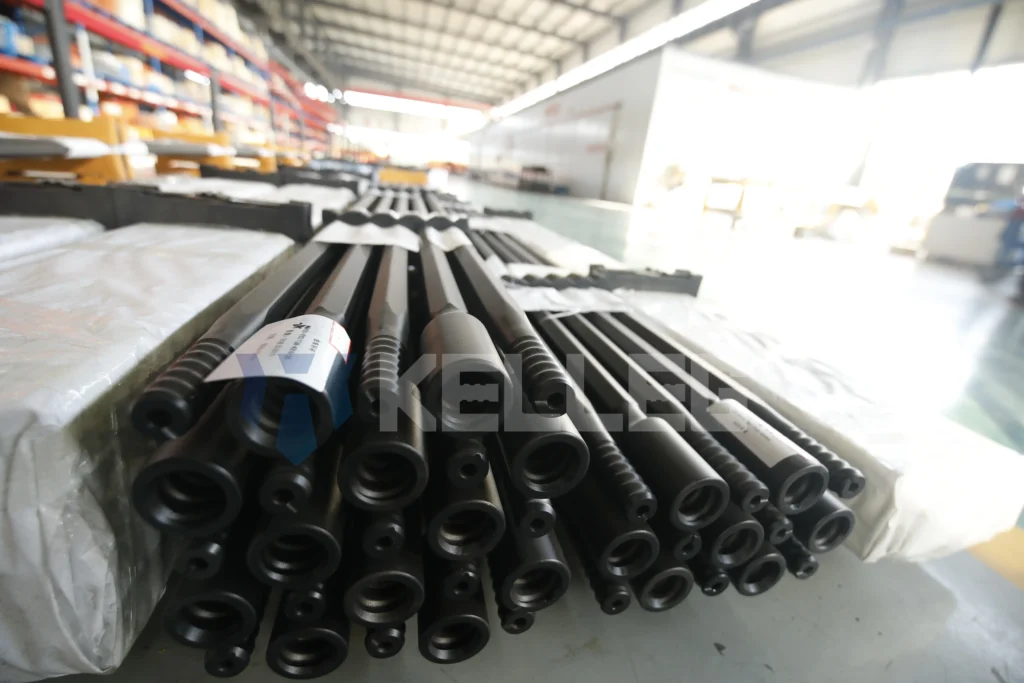
Logo engraving provides visual brand identity and product traceability.
Functions include:
- OEM/ODM branding support
- Product authenticity verification
- Batch tracking
- Market differentiation
Unlike printed marks, engraving ensures long-term visibility even under harsh drilling conditions.
Surface Treatment Functions #
| Treatment Method | Main Purpose | Performance Contribution |
|---|---|---|
| Shot blasting | Surface cleaning | Improves coating adhesion and fatigue resistance |
| Black oxide | Basic protection | Reduces corrosion risk in mild environments |
| Phosphating | Chemical protection layer | Enhances lubrication and corrosion resistance |
| Rust preventive oil | Storage protection | Prevents oxidation during transport/storage |
| Laser marking | Traceability | Enables batch control and quality tracking |
| Logo engraving | Identification | Ensures brand and product authenticity |
What Happens If Surface Treatment Is Ignored? #
Without proper surface finishing and protection, drill rods may experience:
- Thread corrosion before use
- Reduced coupling performance
- Higher friction during assembly
- Shortened storage life
- Increased failure risk in early operation
Even if internal material quality is high, poor surface protection can still reduce overall product reliability.
Surface finishing is the final protective layer that ensures all previous manufacturing advantages—material strength, heat treatment, machining precision, and threading accuracy—are preserved until real-world application.
Surface finishing and anti-corrosion treatment ensure that high-performance drill rods maintain their quality from factory to job site. It protects both functional performance and lifecycle reliability.
Step 10: Quality Inspection and Testing #
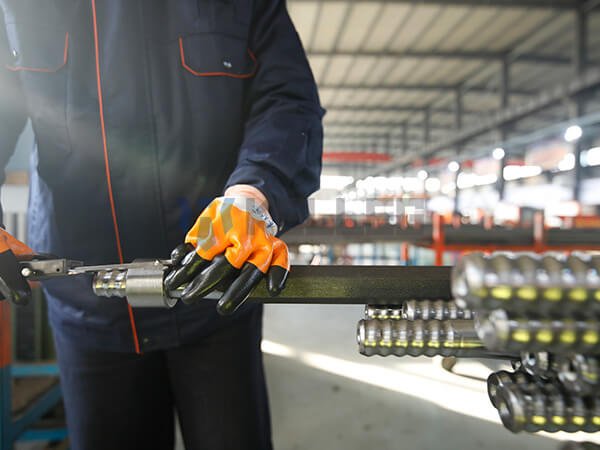
Quality inspection and testing represent the final and most critical stage in top hammer drill rod manufacturing. Even if all previous processes—material selection, forging, heat treatment, machining, and threading—are well controlled, the final product must still pass strict inspection standards before shipment.
This stage ensures that every drill rod meets required specifications in terms of mechanical performance, dimensional accuracy, structural integrity, and fatigue resistance.
In practical terms, quality inspection is the final safeguard that determines whether a drill rod is suitable for real mining, tunneling, or quarrying operations.
Chemical Composition Analysis #
Chemical composition testing verifies the elemental content of the alloy steel.
Key objectives:
- Ensure correct levels of Ni, Cr, Mo
- Maintain material consistency across batches
- Prevent performance deviation due to alloy imbalance
Even small deviations in composition can significantly affect hardness, toughness, and fatigue life.
Hardness Testing #
Hardness testing evaluates the surface and core hardness of the drill rod after heat treatment.
It ensures:
- Proper hardness-toughness balance
- Wear resistance at the surface
- Structural toughness in the core
Incorrect hardness levels can lead to either excessive wear or brittle fracture.
Impact Testing #
Impact testing measures the material’s ability to absorb sudden shock loads.
Importance:
- Simulates real percussive drilling conditions
- Evaluates resistance to sudden fracture
- Ensures performance under high-frequency hammering
This is critical for top hammer drilling applications where repeated impact loading is constant.
Tensile Testing #
Tensile testing determines the strength and elongation properties of the drill rod material.
It helps verify:
- Maximum load-bearing capacity
- Plastic deformation behavior
- Structural reliability under stress
This ensures the drill rod can withstand axial and torsional forces during deep drilling.
Thread Inspection #
Thread gauges are used to verify the accuracy of thread geometry.
Key checks include:
- Pitch accuracy
- Fit tolerance (Go/No-Go gauges)
- Thread profile consistency
Proper thread inspection ensures:
- Stable coupling connection
- Efficient torque transfer
- Reduced risk of thread failure
Straightness Inspection #
Straightness is checked to ensure axial alignment of the drill rod.
It guarantees:
- Smooth rotation during drilling
- Reduced vibration
- Lower deviation in borehole alignment
Even slight bending can significantly reduce drilling efficiency.
Ultrasonic Inspection (Internal Defect Detection) #
Ultrasonic testing is used to detect internal defects that are not visible on the surface.
It identifies:
- Internal cracks
- Inclusions
- Voids or porosity
This ensures structural integrity under high-impact loading conditions.
Magnetic Particle Inspection (Surface Crack Detection) #
Magnetic particle inspection is used to detect surface and near-surface cracks.
It is particularly effective for:
- Thread roots
- Stress concentration zones
- Heat-affected areas
This step helps prevent early fatigue failure in real drilling environments.
Visual Inspection #
Visual inspection checks overall surface quality.
It includes:
- Surface finish condition
- Coating integrity
- Thread appearance
- Marking clarity
Although simple, it is an important final confirmation step.
Dimension Inspection #
Dimensional inspection ensures all geometric parameters meet design specifications.
Key checks include:
- Outer diameter
- Length accuracy
- Thread geometry
- Concentricity
This ensures full compatibility with rock drilling tools.
Quality Inspection System #
| Inspection Type | Purpose | Performance Assurance |
|---|---|---|
| Chemical composition | Material control | Ensures alloy stability |
| Hardness test | Heat treatment validation | Balances strength and toughness |
| Impact test | Shock resistance | Confirms drilling durability |
| Tensile test | Strength verification | Ensures load capacity |
| Thread gauges | Connection accuracy | Prevents coupling failure |
| Straightness | Geometric alignment | Improves drilling stability |
| Ultrasonic test | Internal defect detection | Prevents hidden failure |
| Magnetic particle test | Surface crack detection | Ensures fatigue safety |
| Visual inspection | Surface quality check | Confirms finish integrity |
| Dimension inspection | Size control | Ensures tools compatibility |
What Happens If Quality Inspection Is Weak? #
Without strict inspection control, even well-manufactured drill rods may fail in the field due to:
- Hidden internal cracks
- Thread mismatch or premature wear
- Inconsistent hardness distribution
- Poor straightness is causing drilling deviation
- Unexpected fatigue failure
This leads to:
- Increased downtime
- Higher replacement cost
- Reduced drilling efficiency
- Safety risks in operation
Quality inspection is not just a final checkpoint—it is a risk elimination system that ensures all upstream manufacturing efforts are translated into reliable field performance.
It defines whether a drill rod is production-complete or field-ready.
A high-quality top hammer drill rod is not defined only by manufacturing processes, but by the ability to consistently pass rigorous inspection standards. Quality inspection ensures reliability, safety, and long-term performance in real drilling conditions.
How Manufacturers Ensure Consistent Drill Rod Quality #
In top hammer drilling applications, consistency is as important as performance. Even if a drill rod has excellent mechanical properties, inconsistent quality between batches can lead to unpredictable drilling behavior, premature failure, and increased operational costs.
For mining, tunneling, and quarrying contractors, batch-to-batch consistency directly determines drilling efficiency, equipment safety, and total project cost.
That is why professional manufacturers do not rely on single-process quality control, but instead implement a complete, system-based quality assurance framework.
ISO Quality Management System #
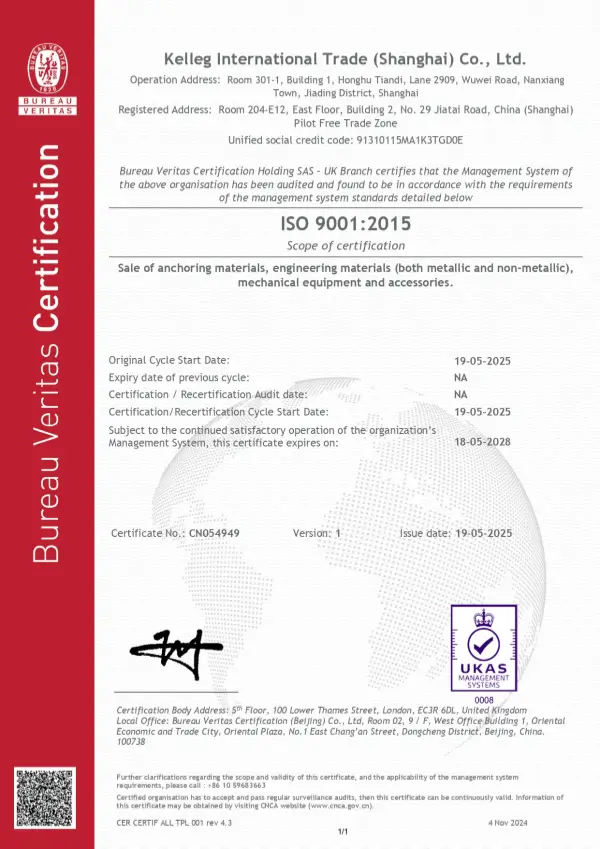
Most professional drill rod manufacturers operate under ISO-certified quality management systems (such as ISO 9001).
This system ensures:
- Standardized production procedures
- Controlled process parameters
- Documented quality workflows
- Continuous improvement mechanisms
ISO systems do not just inspect quality—they control how quality is produced at every stage.
Batch Traceability System #
Batch traceability ensures that every drill rod can be tracked back to its production origin.
Each batch typically includes:
- Raw material heat number
- Production date
- Operator and machine records
- Heat treatment parameters
- Inspection results
Benefits:
- Enables full lifecycle tracking
- Allows fast problem identification if failure occurs
- Ensures accountability in production
- Supports OEM and export quality requirements
This is especially important for large-scale mining projects where safety and reliability are critical.
Heat Treatment Records Control #
Heat treatment is one of the most sensitive processes in drill rod manufacturing. To ensure consistency, manufacturers record all key parameters, including:
- Heating temperature curves
- Quenching medium and timing
- Tempering cycles
- Cooling rates
These records ensure that every drill rod receives the same controlled microstructure transformation, preventing performance variation between batches.
Inspection Reports and Documentation #
Each production batch is accompanied by detailed inspection reports, which typically include:
- Chemical composition analysis
- Hardness test results
- Dimensional inspection data
- Non-destructive testing results
These reports provide transparent proof of quality and allow customers to verify performance specifications before shipment.
Raw Material Certificates #
Raw material certificates confirm that the steel used meets required metallurgical standards.
They typically include:
- Steel grade certification
- Chemical composition breakdown
- Mechanical property data
- Supplier verification information
This ensures that only qualified alloy steel enters the production process.
Factory Testing and Internal Validation #
Before shipment, drill rods undergo internal factory testing to simulate real working conditions.
Typical tests include:
- Load and impact simulation
- Thread assembly testing
- Straightness and rotation testing
- Dimensional verification under tolerance limits
This step ensures that products are not only compliant on paper, but also reliable in real drilling environments.
Integrated Quality Control System Overview #
| Quality Control Element | Purpose | Impact on Consistency |
|---|---|---|
| ISO system | Standardize production process | Ensures stable manufacturing behavior |
| Batch traceability | Full lifecycle tracking | Enables defect identification and accountability |
| Heat treatment records | Process control | Ensures uniform mechanical properties |
| Inspection reports | Quality verification | Provides measurable quality proof |
| Raw material certificates | Material assurance | Prevents material variability issues |
| Factory testing | Performance validation | Confirms real-world usability |
What Happens Without a Quality System? #
Without a structured quality control system, drill rod production may suffer from:
- Inconsistent hardness and strength
- Unstable drilling performance between batches
- Increased risk of unexpected failure
- Difficulty in identifying root causes of problems
- Lack of accountability in production processes
For professional drilling contractors, this leads to unpredictable operating costs and reduced project reliability.
A drill rod is not just a mechanical product—it is a controlled engineering system. Consistent quality can only be achieved when every stage of production is standardized, recorded, and verifiable.
This is why professional manufacturers invest heavily in quality systems rather than relying solely on final inspection.
Consistent drill rod quality is achieved through systematic control, not random inspection. ISO systems, traceability, documented heat treatment, and factory testing together ensure that every drill rod performs reliably under real drilling conditions.
Common Manufacturing Defects That Reduce Drill Rod Service Life #
Even when high-quality alloy steel and advanced manufacturing processes are used, improper process control or lack of precision can still introduce defects that significantly reduce drill rod performance.
These defects often do not appear immediately during production, but they become critical failure points under high-frequency top hammer drilling conditions.
In real applications, most drill rod failures are not caused by overload alone, but by hidden manufacturing defects that evolve under cyclic impact stress.
Poor Heat Treatment #
Cause: #
- Incorrect quenching or tempering temperature
- Uneven heating or cooling rate
- Poor process control during thermal cycles
Performance Impact: #
- Unbalanced hardness distribution
- Reduced toughness in core material
- Increased brittleness
Field Failure Result: #
- Sudden brittle fracture under impact load
- Premature fatigue failure
- Unstable drilling performance
Decarburization #
Cause: #
- Exposure of steel surface to oxygen at high temperature
- Poor furnace atmosphere control during heat treatment
Performance Impact: #
- Reduced carbon content on surface layer
- Lower surface hardness
- Weakened wear resistance
Field Failure Result: #
- Rapid thread wear
- Surface cracking initiation
- Reduced service life in abrasive rock conditions
Wrong Steel Selection #
Cause: #
- Use of low-grade or incorrect alloy composition
- Inconsistent material sourcing
- Lack of chemical verification
Performance Impact: #
- Poor balance between strength and toughness
- Unstable heat treatment response
- Reduced fatigue resistance
Field Failure Result: #
- Early rod bending or deformation
- Low impact resistance
- Frequent unexpected breakage
Thread Inaccuracy #
Cause: #
- CNC machining tolerance deviation
- Tool wear or improper thread cutting parameters
- Lack of gauge inspection
Performance Impact: #
- Poor coupling fit
- Uneven load distribution at joints
- Energy loss during torque transfer
Field Failure Result: #
- Thread loosening during drilling
- Coupling seizure or stripping
- Sudden connection failure
Bent Rods #
Cause: #
- Improper straightening process
- Residual stress after heat treatment
- Handling deformation during production
Performance Impact: #
- Poor rotational stability
- Uneven stress distribution
- Increased vibration
Field Failure Result: #
- Hole deviation
- Reduced penetration rate (ROP)
- Accelerated fatigue damage
Poor Concentricity #
Cause: #
- Machining misalignment
- Forging or heat treatment deformation not corrected
- Inadequate CNC setup control
Performance Impact: #
- Off-center rotation
- Uneven contact stress during drilling
- Increased system vibration
Field Failure Result: #
- Rapid thread wear
- Reduced drilling accuracy
- Early fatigue crack initiation
Surface Cracks #
Cause: #
- Excessive thermal stress during heat treatment
- Improper cooling rate
- Forging or handling damage
Performance Impact: #
- Local stress concentration points
- Weak surface integrity
- Reduced fatigue resistance
Field Failure Result: #
- Crack propagation under cyclic impact
- Sudden rod failure during operation
- Severe downtime risk in drilling projects
Manufacturing Defect Risk Summary #
| Defect Type | Root Cause Category | Failure Mode | Risk Level |
|---|---|---|---|
| Poor heat treatment | Thermal process control | Brittle fracture | 🔴 High |
| Decarburization | Furnace atmosphere | Surface wear failure | 🔴 High |
| Wrong steel | Material sourcing | General performance failure | 🔴 High |
| Thread inaccuracy | Machining control | Connection failure | 🔴 Very High |
| Bent rods | Straightening process | Hole deviation | 🟠 Medium |
| Poor concentricity | Machining alignment | Vibration & fatigue | 🔴 High |
| Surface cracks | Thermal/mechanical damage | Sudden failure | 🔴 Very High |
Most drill rod failures in real field conditions are not caused by a single overload event, but by small manufacturing defects that evolve under repeated impact stress cycles.
This is why professional manufacturers focus not only on design strength, but also on defect prevention and process stability control.
Manufacturing defects directly determine drill rod service life. Even minor deviations in heat treatment, machining, or material selection can significantly reduce fatigue resistance and cause premature failure in real drilling environments.
How to Identify a High-Quality Drill Rod Before Buying #
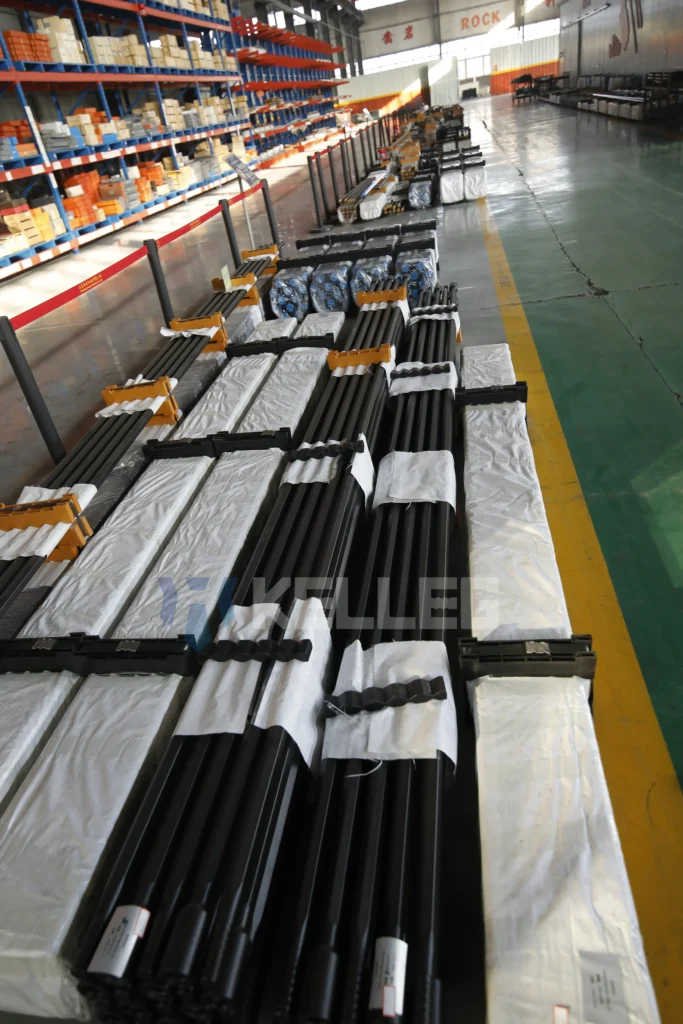
Not all drill rods that look similar deliver the same performance in the field. The difference often lies in manufacturing quality, material consistency, and process control rather than appearance alone.
Before selecting a supplier, buyers should evaluate several key quality indicators to reduce the risk of premature failure, excessive maintenance costs, and inconsistent drilling performance.
The following checklist can help identify whether a drill rod is manufactured to professional standards.
Verify the Material Certificate #
A reputable manufacturer should be able to provide a Material Test Certificate (MTC) or raw material certificate showing the steel grade and chemical composition.
Check whether the certificate includes:
- Steel grade (e.g., 23CrNi3Mo, 25CrMo4, 30CrNiMo8)
- Chemical composition (Ni, Cr, Mo, C, etc.)
- Heat or batch number
- Material supplier information
The correct alloy steel provides the foundation for strength, toughness, and fatigue resistance. Without certified materials, long-term performance cannot be guaranteed.
Confirm the Heat Treatment Process #
Heat treatment has the greatest influence on the mechanical properties of a drill rod.
Ask the manufacturer:
- What heat treatment process is used?
- Is quenching and tempering performed?
- Are heat treatment parameters recorded?
- Is hardness tested after treatment?
A properly heat-treated drill rod achieves the right balance between hardness and core toughness, reducing the risk of premature wear or brittle fracture.
Inspect Thread Quality #
The threaded connection is one of the most highly stressed areas of a drill rod.
Check for:
- Clean and uniform thread profile
- Smooth thread surface without burrs
- Accurate fit with standard thread gauges
- Consistent machining quality
High-quality threads improve torque transmission, reduce wear, and significantly extend the service life of the drill rod.
Examine Surface Finish #
Surface quality reflects the manufacturer’s attention to detail and process control.
Look for:
- Uniform surface appearance
- No rust, scratches, or scale
- Consistent black oxide or phosphating treatment
- Clear and durable laser marking
A high-quality surface finish improves corrosion resistance, protects threaded connections, and helps prevent early fatigue crack initiation.
Check Weight Consistency #
Drill rods from the same model should have consistent weight within the manufacturer’s specified tolerance.
Large weight variations may indicate:
- Inconsistent raw material quality
- Poor machining control
- Internal structural variation
Consistent weight usually reflects stable manufacturing processes and uniform mechanical performance across production batches.
Request a Factory Inspection Report #
Professional manufacturers should provide quality inspection records for each production batch.
Typical reports include:
- Chemical composition analysis
- Hardness testing
- Dimensional inspection
- Thread gauge inspection
- Straightness measurement
- Non-destructive testing (if applicable)
Inspection reports provide objective evidence that the products meet the required specifications before shipment.
Evaluate the Manufacturer’s OEM Experience #
Manufacturing experience is often reflected in a supplier’s ability to support different drilling applications and customer requirements.
Consider whether the manufacturer offers:
- OEM and private-label production
- Customized thread types and dimensions
- Technical support for different rock conditions
- Stable supply for long-term projects
An experienced OEM manufacturer is generally better equipped to maintain consistent quality, optimize production processes, and deliver products that meet international market requirements.
Drill Rod Buyer Checklist #
| What to Check | Why It Matters | What to Ask the Supplier |
|---|---|---|
| Material certificate | Confirms alloy quality | Can you provide the MTC? |
| Heat treatment | Determines hardness and toughness | What heat treatment process do you use? |
| Thread quality | Affects connection life | Are threads inspected with precision gauges? |
| Surface finish | Improves corrosion resistance | What surface treatment is applied? |
| Weight consistency | Indicates process stability | What is your manufacturing tolerance? |
| Inspection report | Verifies product quality | Can you provide a batch inspection report? |
| OEM experience | Reflects manufacturing capability | Do you support OEM/ODM and custom specifications? |
Red Flags When Evaluating a Supplier #
Be cautious if a supplier:
- Cannot provide material certificates or inspection reports
- Cannot explain the heat treatment process
- Offers only price without discussing manufacturing standards
- Shows inconsistent thread quality or poor surface finishing
- Has no batch traceability or quality documentation
These are often signs of inadequate process control, which may result in inconsistent product performance.
Choosing a high-quality drill rod is about more than comparing prices. Buyers should evaluate the manufacturer’s material certification, heat treatment capability, machining precision, inspection system, and production experience. A supplier with documented quality control and consistent manufacturing processes is far more likely to deliver reliable drill rods that reduce downtime and lower total drilling costs.
Conclusion #
A top hammer drill rod is far more than a steel component—it is the result of a precisely controlled manufacturing system. Every stage, from alloy steel selection and material verification to forging, heat treatment, precision machining, thread manufacturing, surface finishing, and final inspection, contributes to the rod’s strength, durability, and drilling performance.
In demanding applications such as mining, tunneling, quarrying, and construction, even small variations in manufacturing quality can lead to increased energy loss, faster thread wear, premature fatigue failure, and higher operating costs. For this reason, evaluating a drill rod should go beyond its appearance or purchase price. Buyers should carefully assess the manufacturer’s production capability, quality management system, inspection procedures, and process consistency to ensure reliable long-term performance.
Ultimately, investing in a well-manufactured drill rod means more than purchasing a product—it means improving drilling efficiency, extending service life, reducing downtime, and lowering the total cost of ownership throughout the project lifecycle.
Looking for Premium Top Hammer Drill Rods? #
Whether you need standard drill rods or customized OEM solutions, our engineering team is ready to help you select the right products for your drilling conditions. Contact us for expert recommendations, detailed technical specifications, material certifications, or tailored manufacturing solutions designed to maximize productivity and reliability.