- Introduction
- What Defines a “Good” Hard Rock Drill Bit in Top Hammer Drilling?
- Best Button Bit Designs for Hard Rock Top Hammer Drilling
- Bit Face Designs and Their Impact on Hard Rock Drilling
- How Carbide Grade Influences Hard Rock Drilling Performance
- Common Hard Rock Drilling Problems and Practical Solutions
- Best Hard Rock Drill Bits for Different Applications
- How to Choose the Right Hard Rock Drill Bit Supplier
- Conclusion
Introduction #
Hard rock drilling is one of the most demanding applications in mining, quarrying, tunneling, and construction projects. Extreme rock hardness, high abrasiveness, and continuous impact loading place tremendous stress on drilling tools and equipment.
Selecting the wrong drill bit can quickly result in:
- Slow penetration rates
- Excessive carbide button breakage
- Poor hole straightness
- Increased downtime and labor costs
- Higher overall drilling cost per meter
In hard rock drilling, the performance of top hammer drilling tools depends heavily on selecting the right drill bit configuration. Factors such as button shape, carbide grade, face design, and flushing structure all directly influence drilling efficiency, service life, and energy transfer performance.
This article explores the Best Hard Rock Drill Bits for Top Hammer Drilling, including the most suitable button bit designs, carbide configurations, and application-based selection strategies to help improve penetration rates, reduce wear, and achieve more cost-effective drilling operations.
What Defines a “Good” Hard Rock Drill Bit in Top Hammer Drilling? #
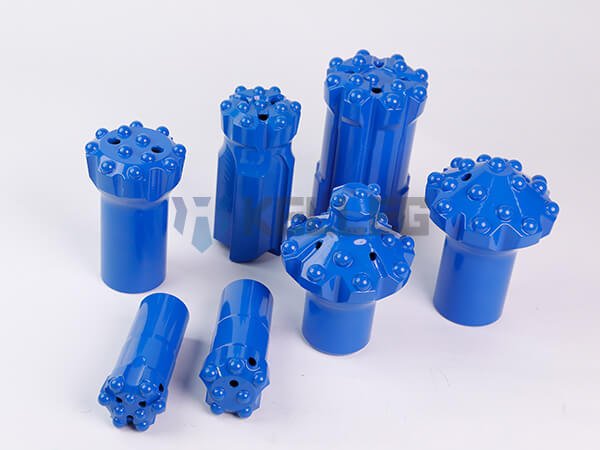
In top hammer hard rock drilling, selecting the right drill bit is not simply about choosing the hardest-looking design. A high-performance drill bit must maintain stable drilling efficiency under extreme impact energy, abrasive rock conditions, and continuous cyclic loading.
The ideal hard rock drill bit should provide a balance between penetration speed, durability, hole quality, and operating cost. In addition, the bit must work efficiently with the entire rock drilling tools, including drill rods, shank adapters, and couplings.
Below are the key factors that define a truly effective hard rock drill bit for top hammer drilling applications.
Penetration Rate Is Not the Only Standard #
Many contractors focus heavily on penetration speed when selecting drill bits. While faster drilling can improve productivity, high penetration alone does not necessarily mean better overall performance.
In hard rock formations, overly aggressive drilling may lead to:
- Faster carbide wear
- Increased button breakage
- Excessive vibration
- Reduced hole straightness
- Shorter drill bit service life
A drill bit that drills slightly slower but maintains consistent performance over a longer operating cycle may ultimately deliver lower drilling costs per meter.
The best hard rock drill bit should achieve a balanced combination of:
- High penetration efficiency
- Drilling stability
- Long service life
- Reduced downtime
- Lower operating cost
For this reason, professional drilling operations typically evaluate total drilling efficiency rather than penetration rate alone.
Why Energy Transfer Efficiency Matters #
Top hammer drilling relies on high-frequency impact energy transmitted from the rock drill to the drill bit through the drill rod. Efficient energy transfer is critical for maintaining penetration performance in hard rock formations.
If the drill bit design is not properly optimized, a significant portion of impact energy can be lost before reaching the rock surface. This often results in:
- Reduced drilling efficiency
- Excessive vibration
- Premature wear of rock drilling tools
- Increased stress on drill rods and couplings
- Higher fuel and maintenance costs
Several design factors directly influence energy transfer performance:
Thread Precision #
Accurate thread manufacturing improves contact stability between drilling components and minimizes energy loss during impact transmission.
Bit Face Stability #
A stable face design helps distribute impact force evenly across the rock surface, improving drilling consistency and reducing localized stress concentration.
Rock Drilling Tools Interaction #
The drill bit must work as part of a complete drilling system. Poor matching between the drill bit, shank adapter, drill rods, and drilling parameters can reduce overall drilling efficiency and accelerate component wear.
In hard rock drilling, optimizing energy transmission often has a greater impact on productivity than simply increasing impact power.
The Relationship Between Rock Conditions and Bit Design #
Different hard rock formations require different drill bit configurations. Rock hardness, abrasiveness, fracturing conditions, and drilling depth all influence the optimal bit design selection.
Choosing the correct button shape, face design, and carbide structure can significantly improve penetration rate, hole stability, and service life.
| Rock Condition | Recommended Bit Design |
|---|---|
| Extremely hard granite | Spherical buttons + flat face |
| Abrasive quartzite | Wear-resistant carbide + retrac design |
| Fractured rock | Retrac button bits |
| Medium-hard limestone | Semi-ballistic buttons |
| Deep hole hard rock | High flushing efficiency design |
For example, spherical button bits are commonly preferred in highly abrasive hard rock because their larger contact area improves wear resistance and reduces carbide fracture risks. In contrast, semi-ballistic buttons may provide faster penetration in less abrasive formations.
Similarly, retrac button bits are widely used in fractured rock conditions where improved guidance and anti-jamming performance are required.
Understanding the relationship between rock conditions and drill bit structure is one of the most important factors in achieving efficient and economical top hammer drilling operations.
Best Button Bit Designs for Hard Rock Top Hammer Drilling #
Button shape is one of the most critical factors affecting drilling performance in top hammer hard rock drilling. Different button geometries influence penetration rate, impact resistance, wear behavior, and overall drilling efficiency.
Selecting the proper button design based on rock hardness, abrasiveness, and drilling conditions can significantly improve tool service life while reducing drilling costs and downtime.
Below are the most commonly used button bit designs for hard rock top hammer drilling applications.
Spherical Buttons #
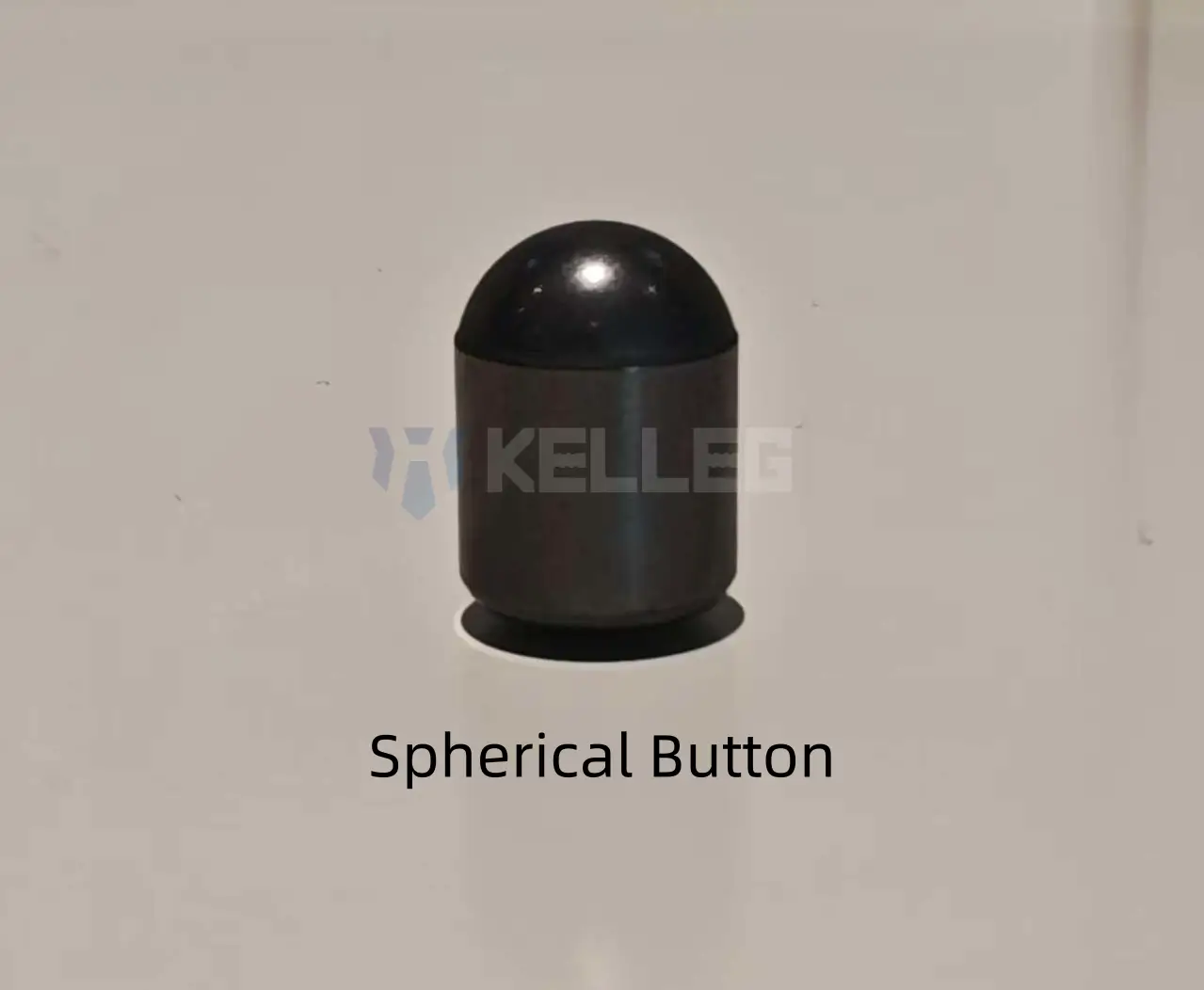
Spherical buttons are widely recognized as the most durable button shape for hard rock drilling. Their rounded geometry distributes impact stress evenly across the carbide surface, greatly reducing the risk of localized stress concentration and button fracture.
Because of their excellent wear resistance and impact strength, spherical buttons are commonly used in extremely hard and highly abrasive rock formations where long service life is the primary requirement.
Advantages #
- Stress is evenly distributed across the button surface
- Highest wear resistance and fracture resistance
- Extremely durable under high-impact drilling conditions
- Longest service life among common button shapes
Best Applications #
- Hard rock formations
- Highly abrasive rock conditions
- Granite and basalt drilling
- Underground mining and quarrying
Limitations #
- Lower rock penetration compared with sharper button designs
- Slightly slower drilling speed
Although spherical buttons may drill more slowly than other button geometries, their exceptional durability often results in lower total drilling cost per meter in demanding hard rock environments.
Ballistic Buttons #
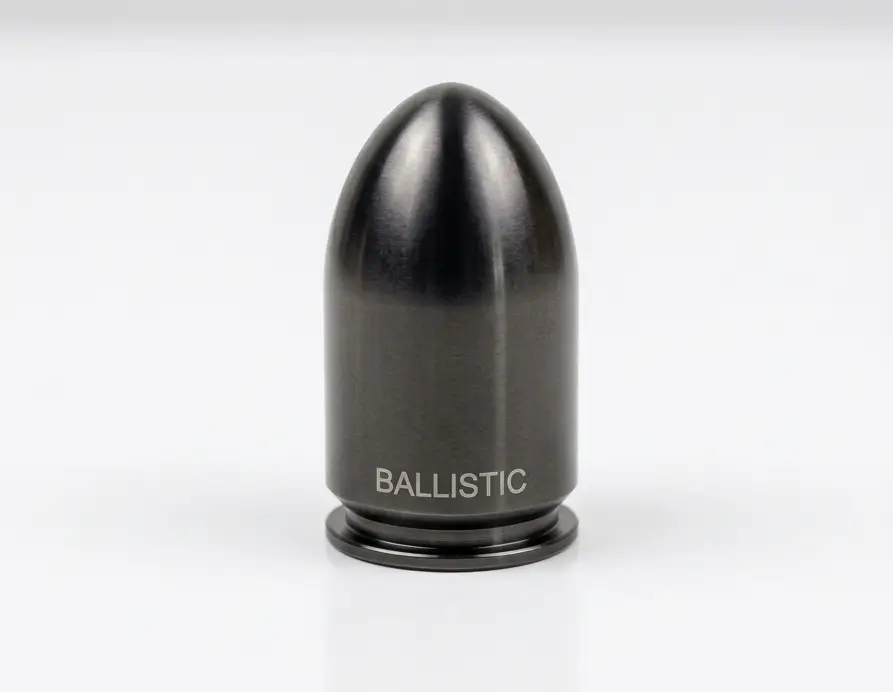
Ballistic buttons are designed with a sharper profile that concentrates impact energy into a smaller contact area. This design improves rock penetration efficiency and allows faster drilling speeds compared with spherical buttons.
Due to their strong cutting ability, ballistic buttons are commonly used in formations where drilling speed is prioritized over maximum wear resistance.
Advantages #
- Higher penetration rate due to concentrated impact force
- Faster drilling speed compared with spherical buttons
- Better flushing performance because of smaller contact area
Best Applications #
- Medium-hard rock formations
- Fractured rock structures
- Applications requiring high penetration rates
Limitations #
- Lower wear resistance than spherical buttons
- Higher risk of edge chipping in very hard or abrasive rock formations
In highly abrasive hard rock, ballistic buttons may experience accelerated wear and carbide damage if drilling parameters are not properly controlled.
Conical Buttons #
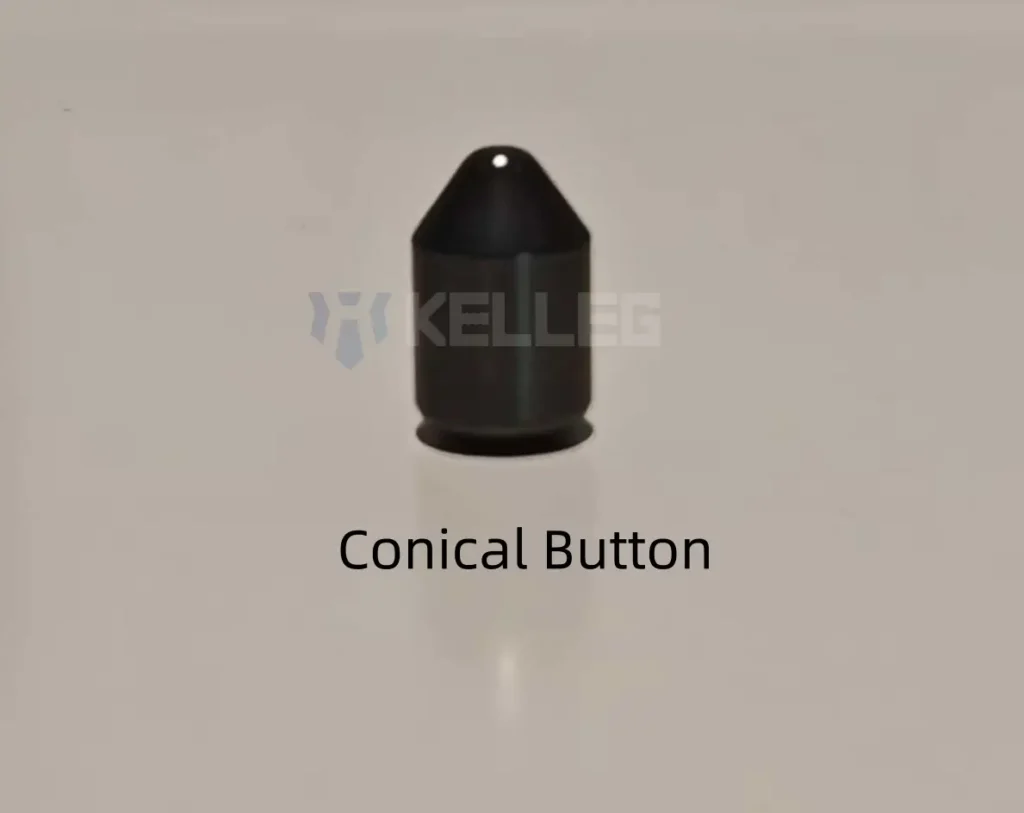
Conical buttons feature a pointed geometry that provides extremely aggressive rock penetration capability. Their concentrated impact area allows efficient rock crushing and rapid drilling performance in softer formations.
While conical buttons can achieve very high penetration rates, they are generally less suitable for severe hard rock drilling because the pointed structure is more vulnerable to wear and breakage.
Advantages #
- Extremely high penetration capability
- Efficient rock crushing performance
- Very fast drilling speed in softer formations
Best Applications #
- Soft rock formations
- Medium-soft rock conditions
- Non-abrasive geological formations
Limitations #
- Shortest service life among common button shapes
- High risk of breakage in hard or abrasive rock conditions
For this reason, conical buttons are rarely recommended for extremely hard or highly abrasive top hammer drilling applications.
Parabolic Buttons #
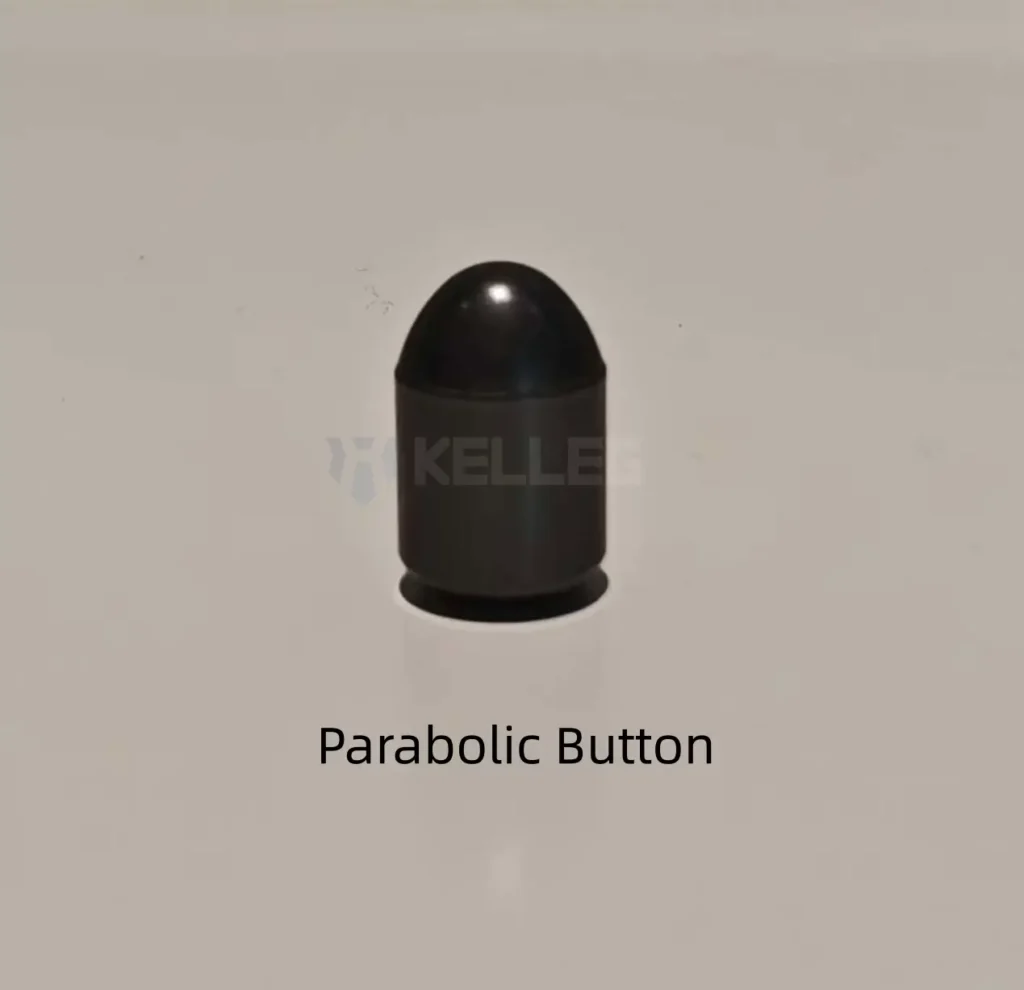
Parabolic buttons are designed to provide a balanced combination of penetration efficiency and wear resistance. Their geometry offers more aggressive cutting action than spherical buttons while maintaining better durability than highly pointed button designs.
Because of their versatility, parabolic buttons are commonly used in mixed geological conditions where drilling performance requirements may vary throughout the operation.
Advantages #
- Excellent balance between drilling speed and tool life
- Good wear resistance
- Stable drilling performance across changing formations
Best Applications #
- Medium-hard rock formations
- Moderately abrasive rock conditions
- Mixed geological environments
Limitations #
- No extreme advantage in either penetration or durability
- May not be optimal for very hard or very soft formations
Parabolic buttons are often selected for contractors seeking stable overall drilling performance without sacrificing either penetration efficiency or service life excessively.
Bit Face Designs and Their Impact on Hard Rock Drilling #
In top hammer drilling, bit face design plays a critical role in determining drilling stability, penetration efficiency, hole straightness, and overall tool service life. Different face geometries distribute impact energy in different ways, directly affecting how the drill bit interacts with hard rock formations.
Selecting the appropriate face design based on rock conditions and drilling requirements can significantly improve drilling performance while reducing wear and hole deviation.
Flat Face #
The Flat Face design is one of the most widely used configurations for hard and abrasive rock drilling applications. Its nearly flat surface allows impact energy from the rock drill to be distributed evenly across all carbide buttons, resulting in stable drilling performance and excellent durability.
Because the load is shared more uniformly, flat-face bits provide strong wear resistance and reduce the risk of uneven gauge button wear. This balanced structure also helps maintain consistent drilling efficiency under high-impact operating conditions.
Key Features #
- Uniform impact energy distribution
- Excellent drilling stability
- Strong wear resistance in abrasive formations
- Reduced uneven gauge button wear
- High durability under heavy impact loads
Best Applications #
- Extremely hard rock formations
- Highly abrasive rock conditions
- Granite and quartzite drilling
- Underground mining and quarry bench drilling
Convex Face #
The Convex Face design features a slightly raised center section that allows the center buttons to contact the rock surface first during impact. This structure concentrates impact energy toward the middle of the bit, improving rock fragmentation efficiency and increasing penetration performance.
Because of this concentrated impact effect, convex face bits often achieve faster drilling speeds in medium-hard formations compared with flatter face designs.
Key Features #
- Concentrated impact force at the bit center
- Improved rock crushing efficiency
- Higher penetration rate
- Faster drilling performance in suitable formations
Best Applications #
- Medium-hard rock formations
- Less abrasive geological conditions
- Applications prioritizing drilling speed
Limitations #
- Reduced hole straightness in deeper holes
- Greater deviation risk during long drilling cycles
- Less suitable for highly abrasive hard rock
When drilling deep holes, the centralized impact force may gradually increase hole deviation, especially in unstable formations or extended drilling operations.
Concave Face #
The Concave Face design incorporates a slightly inward-curved surface that creates a natural self-centering effect during drilling. This geometry helps guide the drill bit toward the center of the hole, significantly improving drilling accuracy and hole straightness.
Because the outer gauge buttons engage the rock surface first, the bit maintains better alignment throughout the drilling process. Concave face bits are therefore commonly used in applications where precise hole direction and drilling stability are essential.
Key Features #
- Self-centering drilling effect
- Improved hole straightness
- Better drilling alignment and stability
- Reduced hole deviation risk
- Consistent gauge protection
Best Applications #
- Underground tunneling
- Long-hole drilling
- Drift development
How Carbide Grade Influences Hard Rock Drilling Performance #

In top hammer hard rock drilling, tungsten carbide quality is one of the most important factors affecting drill bit performance and service life. Even when two drill bits have the same button shape and face design, differences in carbide grade and manufacturing quality can lead to significant variations in drilling efficiency, wear resistance, and durability.
Because hard rock drilling involves continuous high-frequency impact, extreme friction, and elevated temperatures, carbide buttons must withstand severe mechanical and thermal stress throughout the drilling process.
Why Tungsten Carbide Quality Matters #
Tungsten carbide buttons are the primary rock-contact components of a drill bit. Their quality directly determines how effectively the bit can resist wear, absorb impact energy, and maintain stable drilling performance in demanding geological conditions.
High-quality carbide improves drilling reliability in several key areas:
Impact Resistance #
During top hammer drilling, carbide buttons are repeatedly exposed to intense impact loads. Carbide with strong toughness and structural integrity is better able to resist cracking and fracture under high-frequency impact conditions.
Heat Resistance #
Hard rock drilling generates substantial heat due to friction and repeated impact. High-grade carbide maintains its mechanical properties more effectively at elevated temperatures, reducing thermal damage and premature failure.
Wear Resistance #
In abrasive formations such as granite and quartzite, carbide buttons experience continuous surface wear. Superior carbide grades maintain sharper cutting edges for longer periods, helping preserve drilling efficiency and reduce bit replacement frequency.
For hard rock drilling applications, carbide quality often has a greater influence on total drilling cost than initial drill bit price alone.
Fine-Grain vs Coarse-Grain Carbide #
Different carbide grain structures provide different performance characteristics. Selecting the appropriate carbide type depends on rock hardness, abrasiveness, and drilling impact conditions.
| Carbide Type | Advantage | Best Application |
|---|---|---|
| Fine-Grain Carbide | Higher hardness and wear resistance | Highly abrasive formations |
| Coarse-Grain Carbide | Better toughness and impact resistance | High-impact drilling conditions |
Fine-Grain Carbide #
Fine-grain carbide contains smaller carbide particles, creating a denser and harder structure. This improves wear resistance and helps maintain sharp cutting performance in abrasive rock formations.
However, extremely hard carbide may become more brittle under excessive impact loading.
Coarse-Grain Carbide #
Coarse-grain carbide offers greater toughness and fracture resistance, making it more suitable for severe impact conditions commonly encountered in hard rock top hammer drilling.
Although wear resistance may be slightly lower, coarse-grain carbide generally performs better in applications involving high impact energy and strong vibration.
In many drilling operations, manufacturers optimize carbide performance by balancing hardness and toughness according to the target rock conditions.
Common Carbide Failure Modes #
Carbide buttons can fail in several different ways during hard rock drilling. Understanding these failure modes helps operators optimize drilling parameters and improve drill bit life.
Button Cracking #
Button cracking is commonly caused by excessive impact stress, poor carbide toughness, or improper drilling parameters. Repeated high-frequency loading may gradually create internal fractures within the carbide structure.
Carbide Pull-Out #
Carbide pull-out occurs when the carbide button becomes detached from the steel body. This may result from insufficient button retention force, poor insertion quality, or excessive thermal expansion differences between carbide and steel.
Thermal Fatigue #
Continuous heating and cooling cycles during drilling can weaken carbide structure over time. Thermal fatigue often leads to surface cracking and gradual loss of mechanical strength.
Edge Chipping #
Edge chipping occurs when localized impact stress damages the outer edges of carbide buttons. This failure mode is more common in aggressive button shapes operating in highly abrasive hard rock formations.
Proper bit selection, stable drilling parameters, and high-quality carbide manufacturing all help reduce these failure risks.
Heat Treatment and Button Fixing Technology #
In hard rock top hammer drilling, carbide quality alone is not enough to guarantee long service life. The stability of carbide button fixation and the mechanical strength of the drill bit body are equally important. Advanced heat treatment and button fixing technologies help improve impact resistance, reduce carbide loss, and enhance overall drilling reliability under severe working conditions.
Heat Treatment #
Heat treatment has a major influence on the durability and performance of rock drilling tools. Through controlled heating and cooling processes, the steel body can achieve the required balance between hardness, toughness, and fatigue resistance.
Different heat treatment methods are selected based on factors such as:
- tool structure
- steel material composition
- drilling application
- impact load requirements
Proper heat treatment helps the drill bit body withstand continuous high-frequency impact while reducing the risks of cracking, deformation, and premature wear during hard rock drilling operations.
Hot Inserting #
Hot inserting is one of the most commonly used carbide button fixing methods in top hammer drill bit manufacturing. In this process, the drill bit body is heated to a controlled temperature before the carbide buttons are inserted into the button holes.
As the steel body cools and contracts, strong holding force is generated around the carbide buttons, ensuring secure fixation under high-impact drilling conditions.
To achieve reliable button retention, the manufacturing process requires:
- precise hole diameter control
- accurate hole depth
- stable heating temperature
- consistent insertion accuracy
Well-executed hot insertion technology helps reduce the risk of carbide button loosening or pull-out during drilling.
Interference Fit Design #
Interference fit refers to the precise dimensional relationship between the carbide button and the button hole inside the steel body. A properly designed interference fit creates sufficient compressive force to hold the carbide button securely while still allowing the steel body to absorb drilling stress effectively.
Accurate machining tolerances are essential for maintaining long-term button stability in demanding hard rock environments. If the interference fit is too loose, carbide pull-out may occur; if it is too tight, excessive stress may increase the risk of button cracking.
Combined with optimized heat treatment and hot insertion processes, advanced interference fit technology significantly improves drill bit durability, operational stability, and overall drilling performance in top hammer hard rock drilling applications.
Common Hard Rock Drilling Problems and Practical Solutions #
Hard rock drilling environments place extreme stress on top hammer drilling tools. High-impact energy, abrasive formations, and improper operating parameters can all lead to premature drill bit failure and reduced drilling efficiency.
Understanding the most common drilling problems — and how to prevent them — is essential for improving penetration rates, extending tool life, and reducing overall drilling costs.
Why Do Drill Bit Buttons Break? #
Carbide button breakage is one of the most common failures in hard rock top hammer drilling. Once buttons crack or fracture, drilling efficiency decreases rapidly, and the entire drill bit may require replacement.
Excessive Feed Force #
Applying too much feed pressure increases impact stress on the carbide buttons, especially during unstable drilling conditions. This may cause localized stress concentration and button fracture.
Poor Carbide Quality #
Low-quality carbide often lacks sufficient toughness and impact resistance, making the buttons more vulnerable to cracking under repeated high-frequency impact.
Incorrect Button Shape #
Using aggressive button shapes in extremely hard or abrasive formations may increase the risk of edge chipping and carbide breakage.
Insufficient Flushing #
Poor flushing prevents efficient removal of rock cuttings, causing repeated crushing of debris inside the hole. This increases heat generation and impact stress on the buttons.
Practical Solutions #
- Reduce excessive impact overload and feed pressure
- Improve flushing efficiency to remove cuttings effectively
- Use spherical buttons in highly abrasive hard rock formations
- Select high-quality carbide materials with better toughness
- Optimize drilling parameters based on rock conditions
Proper button selection and stable drilling operation can significantly reduce carbide failure risks.
Why Does the Drill Bit Wear Too Fast? #
Rapid drill bit wear increases operating costs and reduces drilling productivity. In hard rock drilling, excessive wear commonly affects both carbide buttons.
Abrasive Rock Formations #
Highly abrasive formations such as quartzite and granite can rapidly wear carbide surfaces and steel bodies during continuous drilling.
Excessive Rotation Speed (RPM) #
Overly high rotation speed increases friction and heat generation, accelerating carbide wear and reducing drilling stability.
Poor Grinding Maintenance #
Failing to regrind worn carbide buttons allows flat surfaces to develop, reducing penetration efficiency and increasing stress on the drill bit.
Practical Solutions #
- Optimize rotation speed according to rock hardness
- Use wear-resistant carbide grades for abrasive formations
- Perform regular button regrinding maintenance
- Maintain stable drilling pressure and rotation balance
- Select suitable face designs for abrasive rock conditions
Routine maintenance and proper parameter control can greatly improve drill bit service life.
Why Does Hole Deviation Occur? #
Hole deviation reduces drilling accuracy and may negatively affect blasting quality, tunnel alignment, and production efficiency. Deep hole drilling operations are especially sensitive to deviation problems.
Worn Gauge Buttons #
When gauge buttons become excessively worn, the drill bit loses its ability to maintain proper hole diameter and drilling direction.
Incorrect Face Design #
Some face designs provide less self-centering capability, increasing the likelihood of hole deviation during long drilling cycles.
Unstable Rock Conditions #
Fractured or uneven formations may deflect the drill bit during drilling, causing alignment instability.
Practical Solutions #
- Use concave face bits for improved hole guidance
- Maintain effective gauge button protection
- Optimize feed pressure and drilling stability
- Replace excessively worn drill bits in time
- Improve drill rod alignment during operation
Proper bit design and drilling control are essential for maintaining accurate hole straightness in hard rock drilling applications.
Why Does the Bit Body Crack? #
Bit body cracking is a serious structural failure that can lead to complete drill bit damage and unexpected downtime. Cracks often develop gradually under repeated impact loading and vibration.
Steel Fatigue #
Continuous cyclic impact loading can gradually weaken the steel body, especially under severe hard rock drilling conditions.
Excessive Vibration #
Poor drilling stability, incorrect drilling parameters, or mismatched drilling components can create excessive vibration and increase stress concentration.
Poor Heat Treatment #
Improper heat treatment may reduce the toughness and fatigue resistance of the steel body, making it more susceptible to cracking.
Practical Solutions #
- Improve drilling alignment and operational stability
- Reduce idle impact during drilling interruptions
- Select higher-grade steel body materials
- Use properly heat-treated drill bits
- Optimize drilling parameters to reduce vibration stress
High-quality manufacturing combined with proper drilling practices can significantly improve bit body durability and reduce structural failure risks.
Best Hard Rock Drill Bits for Different Applications #
Different hard rock drilling applications require different drill bit configurations. Factors such as drilling depth, rock stability, hole accuracy, abrasiveness, and production efficiency all influence the optimal bit design selection.
Choosing the right combination of button shape, face design, and flushing structure can significantly improve drilling performance while reducing downtime and operating costs.
Underground Mining #
Underground mining environments often involve extremely hard and abrasive rock formations combined with limited working space and demanding drilling conditions. Drill bits used in underground operations must provide high durability, reliable hole guidance, and stable drilling performance under continuous impact loading.
Retrac Button Bits #
Retrac bits provide improved hole guidance and reduce the risk of bit jamming in fractured or unstable formations commonly encountered in underground mining.
Spherical Buttons #
Spherical buttons offer excellent wear resistance and fracture resistance, making them highly suitable for abrasive hard rock environments.
Concave Face Design #
Concave face bits help maintain hole straightness and drilling stability, which is especially important for underground drifting and development drilling.
Main Benefits #
- Improved drilling stability
- Better hole straightness
- Reduced carbide breakage
- Longer service life in abrasive formations
Quarry Bench Drilling #
Quarry drilling operations typically prioritize penetration efficiency and productivity. Because bench drilling often involves repetitive production drilling in relatively open environments, drill bits must balance drilling speed and durability.
Semi-Ballistic Buttons #
Semi-ballistic buttons provide a balanced combination of penetration rate and wear resistance, making them suitable for varying quarry rock conditions.
Flat Face Bits #
Flat face designs improve drilling stability and provide strong wear resistance in abrasive bench drilling applications.
Main Benefits #
- Faster penetration rates
- Stable drilling performance
- Good balance between productivity and tool service life
- Reduced uneven gauge wear
Tunnel Development #
Tunnel development drilling often involves fractured rock formations and strict hole accuracy requirements. Drill bits used in tunneling applications must minimize hole deviation while preventing jamming during drilling operations.
Retrac Button Bits #
Retrac designs help improve drilling guidance and reduce the risk of stuck bits in broken ground conditions.
Anti-Jamming Structures #
Special anti-jamming designs improve chip evacuation and maintain stable drilling performance in unstable rock formations.
Main Benefits #
- Reduced bit jamming risk
- Improved drilling continuity
- Better hole alignment
- Enhanced drilling reliability in fractured rock
Construction & Foundation Drilling #
Construction and foundation drilling projects frequently encounter varying geological conditions within the same drilling operation. Drill bits used in these applications must offer versatility and stable drilling control across different rock strengths.
Versatile Bit Structures #
Balanced button geometries and adaptable face designs help maintain stable drilling performance across mixed formations.
Stable Hole Guidance Design #
Face designs with strong self-centering capability improve hole alignment and reduce drilling deviation.
Main Benefits #
- Adaptability to changing formations
- Improved drilling control
- Stable penetration performance
- Reduced operational interruptions
Long-Hole Production Drilling #
Long-hole drilling applications place greater emphasis on hole straightness, flushing efficiency, and long-term wear resistance. As drilling depth increases, maintaining stable energy transmission and effective cuttings removal becomes increasingly important.
High Flushing Efficiency #
Efficient flushing holes help remove rock cuttings quickly, reducing regrinding, heat buildup, and energy loss during deep-hole drilling.
Strong Wear Resistance #
Durable carbide grades and stable face designs help maintain drilling performance over extended drilling distances.
Straightness Control #
Concave face structures improve hole alignment and reduce deviation in long-hole operations.
Main Benefits #
- Improved deep-hole accuracy
- Reduced energy loss
- Lower wear rate during extended drilling cycles
- Better overall drilling efficiency and productivity
How to Choose the Right Hard Rock Drill Bit Supplier #
Selecting the right hard rock drill bit supplier is just as important as selecting the correct drill bit design. A reliable supplier not only provides high-quality rock drilling tools but also helps improve drilling efficiency, reduce downtime, and optimize total drilling cost.
For mining, quarrying, tunneling, and construction projects, long-term drilling performance depends heavily on manufacturing consistency, engineering capability, and application support.
Below are several key factors to evaluate when choosing a hard rock drill bit supplier for top hammer drilling applications.
Consistent Carbide Quality #
Carbide quality directly affects drill bit wear resistance, impact strength, and service life. Inconsistent carbide materials may lead to unstable drilling performance, premature button breakage, and higher operating costs.
A reliable supplier should provide:
- Stable tungsten carbide quality
- Consistent carbide hardness and toughness
- Reliable button retention performance
- Strict quality control during manufacturing
High-quality carbide is especially important in hard and abrasive formations where drill bits operate under severe impact and thermal stress.
Heat Treatment Capability #
Heat treatment quality has a major influence on the durability and fatigue resistance of the drill bit body. Poor heat treatment may cause:
- premature cracking
- excessive wear
- reduced structural strength
- unstable drilling performance
Professional drill bit manufacturers should have advanced heat treatment processes that ensure:
- balanced hardness and toughness
- improved fatigue resistance
- stable impact performance
- reliable structural integrity under high-frequency drilling loads
Consistent heat treatment is essential for maintaining long-term reliability in demanding hard rock drilling environments.
Engineering Support for Rock Matching #
Different geological formations require different drill bit configurations. A qualified supplier should be able to recommend suitable drilling solutions based on:
- rock hardness
- abrasiveness
- drilling depth
- drilling equipment
- hole diameter requirements
Strong engineering support helps customers select:
- proper button shapes
- suitable carbide grades
- optimized face designs
- appropriate flushing structures
Accurate rock matching improves penetration efficiency while reducing unnecessary tool wear and operational downtime.
Customization Ability #
Different drilling projects often require customized drill bit designs to achieve optimal performance. Suppliers with strong customization capability can provide more targeted drilling solutions for specific applications.
Button Configuration #
Customized button layouts help optimize penetration rate, wear resistance, and drilling stability according to rock conditions.
Flushing Design #
Optimized flushing hole arrangements improve cuttings removal efficiency and reduce heat buildup during drilling.
Thread Types #
Professional suppliers should support multiple thread standards such as:
- R25
- R32
- T38
- T45
- T51
Accurate thread manufacturing improves energy transfer efficiency and drilling stability.
Strong customization capability allows drilling contractors to improve operational efficiency and adapt to complex geological conditions more effectively.
Global Mining & Quarry Experience #
Suppliers with extensive international mining and quarrying experience are often better equipped to understand complex drilling challenges across different geological environments.
Experienced manufacturers can provide:
- application-based drilling recommendations
- field-tested product designs
- technical support for difficult formations
- optimized solutions for productivity improvement
Global project experience also indicates stronger manufacturing capability, broader application knowledge, and better understanding of industry drilling standards.
For long-term drilling operations, working with an experienced and technically capable supplier can significantly improve drilling performance, reduce operational risk, and lower total drilling costs.
Conclusion #
Selecting the best hard rock drill bit for top hammer drilling is not simply about choosing the hardest carbide or the most aggressive button design. In demanding drilling environments, overall performance depends on how well the drill bit matches the actual rock conditions and drilling system.
An efficient hard rock drilling solution requires the right balance of:
- Rock condition matching
- Carbide quality
- Button geometry
- Bit face design
- Flushing efficiency
- Drilling parameter optimization
When these factors are properly combined, drilling operations can achieve higher penetration rates, longer tool service life, better hole quality, and lower total drilling costs.
Whether for underground mining, quarry bench drilling, tunneling, or foundation construction, selecting a properly engineered top hammer drill bit can significantly improve operational efficiency and drilling reliability in hard rock formations.
For the best long-term drilling performance, contractors should focus not only on initial drill bit price but also on total cost per meter, drilling stability, and application-specific optimization.