- Introduction
- What Are Non-Metallic Inclusions in 23CrNi3MoA Steel?
- Formation of Oxide Inclusions in 23CrNi3MoA Steel
- Why 23CrNi3MoA Steel Is Sensitive to Inclusion Defects
- Impact of Non-Metallic Inclusions on Drill Tool Performance
- Smelting Process Optimization for Reducing Non-Metallic Inclusions
- Key Process Parameters That Influence Steel Cleanliness
- Quality Inspection Methods for Non-Metallic Inclusions in 23CrNi3MoA Steel
- Conclusion
Introduction #
23CrNi3MoA steel is a high-strength alloy steel widely used in the manufacturing of rock drilling tools, such as drill rods, shank adapters, couplings, and DTH drill bits. Thanks to its excellent strength, toughness, and hardenability, it plays a critical role in mining, tunneling, and infrastructure drilling applications.
As drilling conditions become more demanding, the service life and reliability of rock drilling tools have become key concerns for end users. High-frequency impact loads and complex geological conditions require steel materials with excellent fatigue resistance and structural stability.
However, non-metallic inclusions in steel remain one of the most critical factors affecting fatigue performance. Among them, aluminum oxide (Al₂O₃) inclusions are particularly harmful, as they can act as crack initiation points and significantly reduce fatigue life under cyclic loading conditions.
Therefore, improving steel cleanliness and reducing harmful non-metallic inclusions in 23CrNi3MoA steel has become a key focus in the production of high-performance rock drilling tools.
What Are Non-Metallic Inclusions in 23CrNi3MoA Steel? #
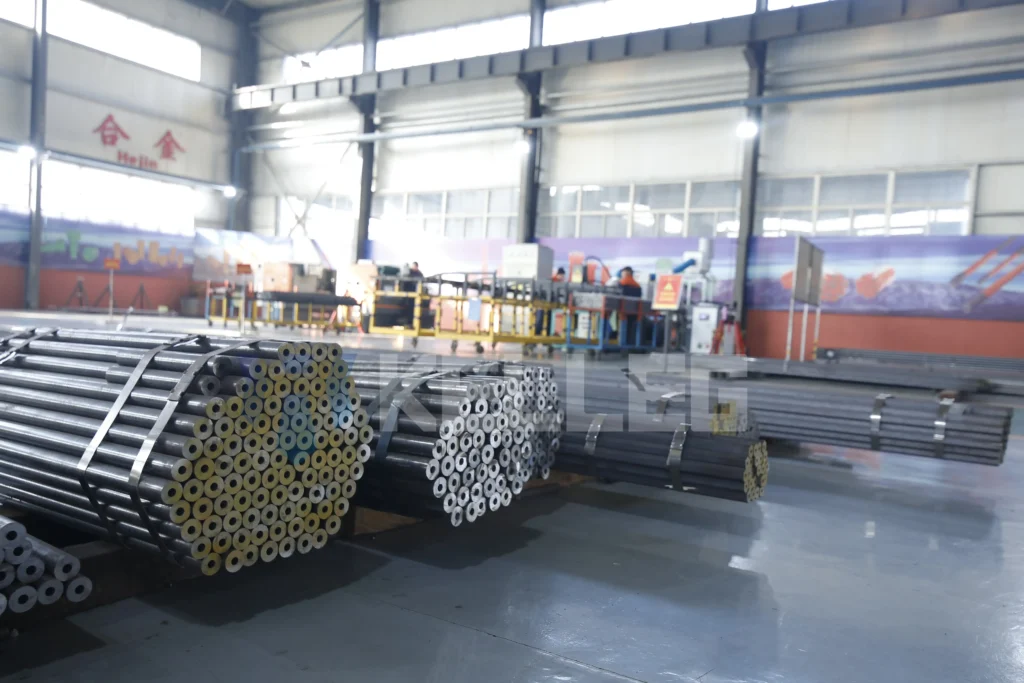
Non-metallic inclusions in 23CrNi3MoA steel refer to internal microscopic particles or compounds that are not part of the metallic matrix. These inclusions are typically formed during the steelmaking and refining process and remain trapped within the steel during solidification. In high-strength alloy steels used for rock drilling tools, such as drill rods, shank adapters, couplings, and DTH drill bits, the presence of these inclusions has a direct impact on fatigue performance and service reliability.
In general, non-metallic inclusions can be classified into several main types, including oxide inclusions, sulfide inclusions, silicate inclusions, and complex compound inclusions. Among them, oxide inclusions are considered the most critical in high-performance drilling steel applications, especially those containing aluminum oxide (Al₂O₃), which is widely recognized as the most harmful type.
In 23CrNi3MoA steel, these inclusions originate primarily from deoxidation reactions during steelmaking. Aluminum is commonly used as the main deoxidizing element to remove dissolved oxygen in molten steel. However, the reaction between aluminum and oxygen inevitably generates Al₂O₃ particles. These particles may remain suspended in the molten steel or become entrapped during solidification, forming dispersed or clustered inclusions.
The morphology and distribution of these inclusions play a key role in determining steel performance. Fine, well-dispersed inclusions may have a limited impact, while larger or chain-like inclusions significantly degrade mechanical properties. In particular, elongated or clustered Al₂O₃ inclusions can act as stress concentration points under cyclic loading conditions, making them critical initiation sites for fatigue cracks.
For rock drilling tools made from 23CrNi3MoA steel, which operate under repeated high-impact and high-frequency stress conditions, even small inclusions can accelerate crack initiation and propagation. As a result, steel cleanliness—defined as the level, size, and distribution of non-metallic inclusions—becomes a key quality indicator in the production of high-performance drilling steels.
Therefore, understanding what non-metallic inclusions are, how they form, and how they are controlled is the foundation for improving the fatigue resistance and service life of rock drilling tools made from 23CrNi3MoA steel.
Formation of Oxide Inclusions in 23CrNi3MoA Steel #
Oxide inclusions in 23CrNi3MoA steel can be broadly classified into two main categories: endogenous (internal) inclusions and exogenous (external) inclusions. These two types differ significantly in their formation mechanisms, morphology, and impact on steel cleanliness and mechanical performance.
Endogenous (Internal) Inclusions #
Endogenous inclusions are formed directly within the molten steel as a result of chemical reactions during steelmaking and refining processes. Based on their formation stage, they can be further divided into primary oxidation products, secondary oxidation products, and tertiary oxidation products.
Primary Oxidation Products #
Primary inclusions are generated during the initial deoxidation stage. When deoxidizing agents—typically aluminum—are added into molten steel, they react rapidly with dissolved oxygen, forming aluminum oxide (Al₂O₃). These early-formed particles are usually fine but numerous, and they represent the fundamental source of oxide inclusions in steel.
Secondary Oxidation Products #
Secondary inclusions are formed during subsequent refining and processing stages. They are mainly caused by reactions triggered by steel flow turbulence, temperature fluctuations, and localized element segregation. During ladle refining or transfer processes, the re-oxidation of molten steel may occur, leading to additional oxide formation and inclusion growth.
Tertiary Oxidation Products #
Tertiary inclusions are formed during the solidification stage. When molten steel comes into contact with the external environment or experiences localized re-oxidation during casting, additional oxide particles may be generated. These inclusions are often associated with casting instability and surface or near-surface defects.
Exogenous (External) Inclusions #
Exogenous inclusions are introduced into the molten steel from external contamination sources. Unlike endogenous inclusions, they are not generated by chemical reactions within the steel but are instead introduced mechanically.
The main sources include:
- Refractory erosion: Wear and degradation of ladle, tundish, and mold refractories release solid particles into molten steel.
- Slag entrainment: Steelmaking slag or refining slag may be entrapped into molten steel due to incomplete separation or turbulent flow.
- Mold flux entrapment: In continuous casting, protective slag in the mold can be drawn into the steel under unstable flow conditions.
The formation of exogenous inclusions is strongly influenced by operational conditions such as steel flow turbulence, stirring intensity, and flow field distribution, in addition to the properties of refractory and slag materials.
Common Types of Oxide Inclusions in Steel #
The type of inclusions formed in steel is closely related to its chemical composition and deoxidation practice. In 23CrNi3MoA steel, the most common inclusion types include:
- Aluminum oxide (Al₂O₃) inclusions
- Calcium aluminate complex inclusions
Al₂O₃ inclusions are primarily generated as direct products of the reaction between aluminum and dissolved oxygen during deoxidation. Calcium aluminate inclusions, on the other hand, are complex compounds composed mainly of Al₂O₃ and MgO, often combined with SiO₂, CaO, and CaS.
These inclusions are governed by both thermodynamic stability and kinetic behavior in molten steel, resulting in different morphologies and distribution patterns.
Morphology and Distribution of Al₂O₃ Inclusions #
Aluminum oxide inclusions in steel typically exist in two main forms:
- Fine single-phase Al₂O₃ particles (<100 μm)
These inclusions are small, widely distributed, and difficult to remove due to their low buoyancy. As a result, they tend to remain trapped in the steel matrix and significantly affect mechanical properties. - Large composite inclusions (100–130 μm)
These inclusions often contain a core of magnesium aluminate spinel (MgAl₂O₄), with surrounding layers of SiO₂, CaO, and CaS compounds. Due to their larger size, they have a higher tendency to float upward and be removed during refining.
Among these, fine Al₂O₃ inclusions are considered more harmful in 23CrNi3MoA steel because their small size, high number density, and poor floatation behavior make them more likely to remain in the final steel product. Under cyclic loading conditions typical of rock drilling applications, these inclusions act as stress concentration sites and significantly reduce fatigue life.
Why 23CrNi3MoA Steel Is Sensitive to Inclusion Defects #
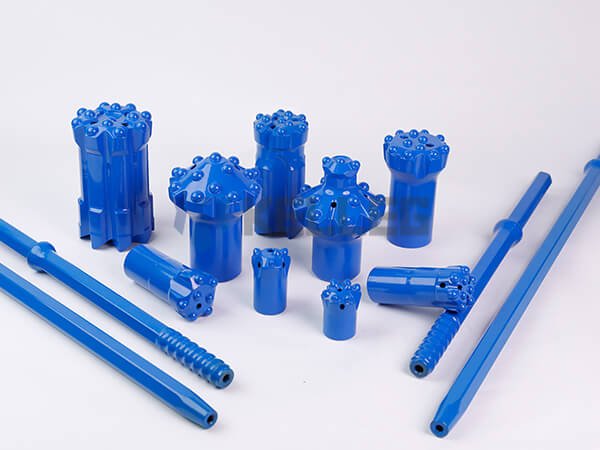
23CrNi3MoA steel is widely used in rock drilling tools due to its high strength, good toughness, and excellent hardenability. However, these same characteristics also make it particularly sensitive to non-metallic inclusion defects. In high-performance drilling applications, even very small inclusions can significantly influence fatigue behavior and service life under cyclic impact loading.
High-Strength Alloy Steel Sensitivity #
As a high-strength low-alloy steel, 23CrNi3MoA achieves its mechanical performance through alloying elements and heat treatment strengthening. While this provides superior hardness and load-bearing capacity, it also reduces the material’s tolerance to internal defects.
In high-strength steels, plastic deformation capacity is relatively limited compared to lower-strength grades. As a result, internal discontinuities such as non-metallic inclusions become more critical, as the material has less ability to redistribute stress around defect zones.
Fatigue Crack Initiation Sensitivity #
In rock drilling tools, failure is predominantly governed by fatigue rather than static overload. Non-metallic inclusions—especially hard oxide particles such as Al₂O₃—act as micro-defect sites where stress concentration occurs.
Under repeated impact and cyclic loading conditions, micro-cracks are most likely to initiate at the interface between the steel matrix and inclusions. Once initiated, these cracks propagate progressively, eventually leading to macroscopic fracture of drill rods, shank adapters, or threaded connections.
Heat Treatment Amplification Effect #
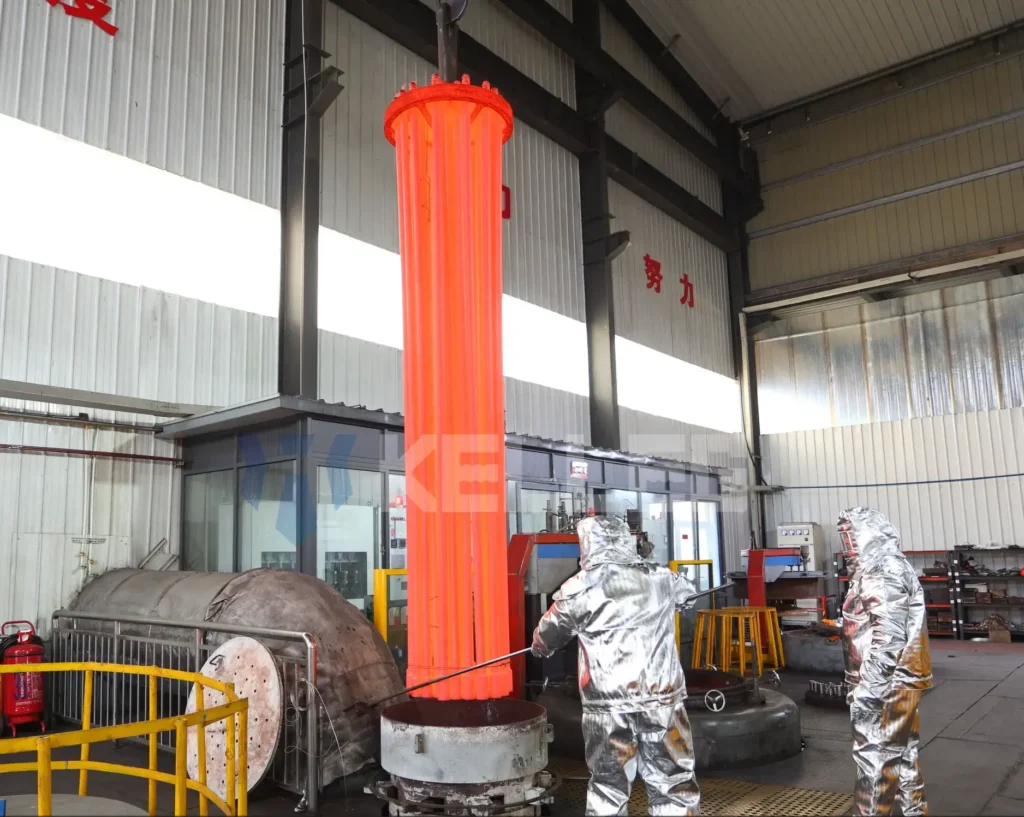
The heat treatment process used to achieve the required strength level in 23CrNi3MoA steel can further amplify the negative impact of inclusions. During quenching and tempering, differences in thermal expansion and transformation behavior between the steel matrix and inclusion particles may generate localized residual stresses.
These stresses increase the likelihood of micro-crack formation around inclusion sites. In addition, hardened microstructures tend to be more sensitive to defect-induced stress concentration, making inclusion-related failures more pronounced after heat treatment.
Cyclic Loading in Rock Drilling Applications #
Rock drilling tools operate under extremely harsh working conditions, characterized by high-frequency impact, alternating stress, and complex loading environments. Each drilling cycle imposes repeated compressive and tensile stresses on the tool body.
Under such cyclic loading conditions, even microscopic inclusions can become active fatigue crack initiation points. The repeated impact load accelerates crack growth, significantly reducing the fatigue life of components made from 23CrNi3MoA steel.
Stress Concentration Effect of Inclusions #
Non-metallic inclusions differ significantly in stiffness and mechanical properties compared to the surrounding steel matrix. This mismatch creates localized stress concentration zones around the inclusion–matrix interface.
Among various inclusion types, brittle oxide inclusions such as Al₂O₃ are particularly harmful because they are hard, non-deformable, and often irregular in shape. These characteristics intensify stress concentration effects, making them ideal initiation sites for fatigue cracks under dynamic loading.
Due to its high strength, heat-treated microstructure, and demanding service conditions, 23CrNi3MoA steel exhibits low tolerance to internal discontinuities. Non-metallic inclusions—especially oxide-based inclusions—significantly increase fatigue crack initiation risk under cyclic impact loading, making steel cleanliness a critical factor in ensuring the reliability and service life of rock drilling tools.
Impact of Non-Metallic Inclusions on Drill Tool Performance #
Non-metallic inclusions in 23CrNi3MoA steel have a direct and critical influence on the overall performance and reliability of rock drilling tools. Although these inclusions may be microscopic in size, their presence can significantly degrade mechanical properties under high-frequency impact and cyclic loading conditions typical in mining and tunneling applications. The main consequences include reduced fatigue life, lower impact resistance, premature failure of drill rods, and increased operational costs.
Reduced Fatigue Life #
One of the most significant effects of non-metallic inclusions is the reduction in fatigue life. During drilling operations, rock drilling tools are subjected to continuous cyclic loading, including repeated compressive and tensile stresses.
Hard inclusions such as Al₂O₃ act as stress concentration points within the steel matrix. Micro-cracks are most likely to initiate at the interface between the inclusion and surrounding steel due to localized stress intensification. Once initiated, these cracks gradually propagate under cyclic loading, ultimately leading to fatigue failure. Even a small number of inclusions can significantly shorten the service life of drill rods and related components.
Lower Impact Resistance #
Rock drilling tools are designed to withstand high-frequency hammering and intense impact energy transfer. However, non-metallic inclusions weaken the material’s ability to absorb and distribute impact energy effectively.
Brittle oxide inclusions do not deform with the surrounding matrix, which creates localized discontinuities in mechanical response. Under high-impact conditions, these weak zones can trigger micro-crack formation or accelerate existing crack growth, resulting in reduced impact resistance and increased susceptibility to brittle fracture.
Premature Drill Rod Failure #
Inclusions are a common contributing factor to premature failure in drill rods, particularly at structurally sensitive locations such as threaded connections and high-stress transition zones.
At threaded joints, stress concentration is already elevated due to geometric discontinuities. When combined with internal inclusions, the likelihood of crack initiation increases significantly. This can lead to thread root cracking, connection loosening, or complete separation of the rod.
Similarly, inclusions located in the rod body may act as internal defect sites, resulting in sudden fracture under operational load conditions, often without significant prior warning.
Reduced Service Life & Higher Cost #
The presence of non-metallic inclusions ultimately leads to a reduction in overall service life of drilling tools. Frequent crack initiation and accelerated fatigue damage result in earlier failure of components, requiring more frequent replacement.
From an operational perspective, this translates into higher maintenance costs, increased downtime, and reduced drilling efficiency. In large-scale mining or tunneling projects, even small reductions in tool lifespan can significantly increase total project costs and operational disruptions.
In summary, non-metallic inclusions in 23CrNi3MoA steel negatively affect multiple performance aspects of rock drilling tools, including fatigue resistance, impact toughness, structural integrity, and service life. Their control is therefore essential for ensuring reliable, cost-effective, and high-performance drilling operations.
Smelting Process Optimization for Reducing Non-Metallic Inclusions #
In 23CrNi3MoA steel production, improving steel cleanliness relies heavily on advanced secondary metallurgy and continuous casting control. Since non-metallic inclusions are formed and modified throughout the entire steelmaking route, a multi-stage smelting optimization strategy is required. The combined application of ladle refining, vacuum treatment, electroslag remelting, argon stirring, and continuous casting control can significantly reduce inclusion content, improve their morphology, and enhance the overall fatigue performance of rock drilling tools.
Ladle Furnace (LF) Refining Optimization #
Ladle Furnace (LF) refining is a key stage for controlling inclusion chemistry and improving steel cleanliness after primary steelmaking.
Key optimization measures include:
- Precise temperature control: Maintaining an optimal superheat level helps ensure stable inclusion flotation conditions and prevents re-oxidation caused by excessive temperature fluctuations.
- Slag composition adjustment: Optimized refining slag with appropriate basicity improves its ability to absorb oxide inclusions such as Al₂O₃ and calcium aluminates.
- Desulfurization improvement: Effective sulfur removal reduces the formation of MnS-type inclusions, contributing to overall inclusion control and improved steel purity.
Through LF optimization, both the quantity and composition of inclusions can be significantly improved before vacuum treatment.
Vacuum Degassing (VD/VOD) Treatment #
Vacuum Degassing (VD/VOD) plays a crucial role in reducing dissolved gases and improving internal steel cleanliness.
Main functions include:
- Hydrogen reduction: Vacuum conditions significantly reduce hydrogen content, minimizing the risk of hydrogen-induced defects and porosity-related inclusions.
- Oxygen removal: Lowering dissolved oxygen levels reduces the potential for further Al₂O₃ formation during subsequent processing.
- Gas content control: Stable control of nitrogen and other dissolved gases improves steel integrity and reduces secondary inclusion formation.
- Inclusion flotation improvement: Vacuum stirring promotes the upward movement of inclusions, allowing them to be absorbed by slag more effectively.
Overall, VD/VOD treatment enhances the purity of molten steel and prepares it for high-quality casting.
Electroslag Remelting (ESR) for Ultra-Clean Steel #
Electroslag Remelting (ESR) is an advanced refining process used to produce ultra-clean steel with extremely low inclusion content, particularly suitable for high-end drilling tools.
Key advantages include:
- Directional solidification: Controlled solidification improves internal structure uniformity and reduces segregation-related defects.
- Inclusion filtration effect: As molten steel passes through the molten slag layer, many non-metallic inclusions are trapped and removed.
- Uniform microstructure: ESR significantly refines the steel structure, improving toughness and fatigue resistance.
For critical applications requiring extremely high reliability, ESR-treated 23CrNi3MoA steel offers superior performance.
Secondary Refining and Argon Stirring #
Secondary refining through argon stirring enhances both chemical and physical uniformity of molten steel.
Key effects include:
- Inclusion flotation mechanism: Argon bubbles promote collision and aggregation of inclusions, increasing their buoyancy and facilitating removal.
- Molten steel homogenization: Stirring improves temperature and composition uniformity, reducing localized inclusion formation caused by segregation or stagnation zones.
This stage is essential for controlling inclusion size distribution and improving steel cleanliness consistency.
Continuous Casting Control #
Continuous casting is the final critical stage where inclusion entrapment can still occur if process control is not optimized.
Key optimization strategies include:
- Mold flux optimization: Proper selection and control of mold flux improve lubrication and reduce inclusion entrapment at the solidification front.
- Prevention of re-oxidation: Protecting molten steel from air exposure during transfer and casting minimizes secondary oxide formation.
- Inclusion entrapment reduction: Stable flow control in the mold and tundish reduces turbulence, preventing slag and inclusions from being captured into the solidifying steel.
Proper continuous casting control ensures that the cleanliness achieved in previous refining stages is preserved in the final steel product.
Through coordinated optimization of LF refining, VD/VOD vacuum treatment, ESR processing, argon stirring, and continuous casting control, the quantity, size, and harmful morphology of non-metallic inclusions in 23CrNi3MoA steel can be significantly reduced. This integrated smelting approach is essential for producing high-cleanliness steel that meets the demanding fatigue resistance requirements of rock drilling tools.
Key Process Parameters That Influence Steel Cleanliness #
The cleanliness of 23CrNi3MoA steel is not determined by a single factor, but by the combined control of multiple critical process parameters throughout the steelmaking and continuous casting route. These parameters directly influence the formation, removal, size distribution, and morphology of non-metallic inclusions. Precise control of these variables is essential to achieve ultra-clean steel with high fatigue resistance for rock drilling tools.
Oxygen Content (ppm Level Control) #
Oxygen content is one of the most critical indicators of steel cleanliness. Excess dissolved oxygen in molten steel directly contributes to the formation of oxide inclusions, especially aluminum oxide (Al₂O₃) during deoxidation reactions.
In high-performance 23CrNi3MoA steel, oxygen is typically controlled at the ppm (parts per million) level. Lower oxygen content reduces the driving force for secondary inclusion formation and improves overall steel purity. Precise oxygen control also minimizes re-oxidation risks during refining and casting stages.
Sulfur Content Control #
Sulfur is a key element responsible for the formation of manganese sulfide (MnS) inclusions. These inclusions can elongate during plastic deformation and negatively affect fatigue performance.
By controlling sulfur content through desulfurization in the ladle furnace refining stage, the number of sulfide inclusions can be significantly reduced. Lower sulfur levels also improve hot workability and reduce anisotropy in mechanical properties, contributing to more uniform performance in drilling tools.
Slag Basicity Ratio #
The slag basicity ratio (typically defined as CaO/SiO₂ ratio) plays a decisive role in inclusion absorption capacity. Proper slag design enhances the ability of refining slag to capture and remove oxide inclusions such as Al₂O₃ and complex calcium aluminates.
A well-optimized high-basicity slag system improves inclusion absorption efficiency, promotes inclusion transfer from molten steel into slag, and stabilizes chemical reactions during refining. However, excessive basicity may increase slag viscosity, reducing inclusion flotation efficiency, so precise balance is required.
Vacuum Time & Pressure Level #
Vacuum degassing parameters significantly affect gas removal and inclusion control efficiency.
- Vacuum time: Longer vacuum treatment allows more complete removal of dissolved hydrogen, oxygen, and nitrogen.
- Vacuum pressure level: Lower pressure improves gas diffusion and promotes inclusion flotation and removal.
Proper control of vacuum conditions in VD/VOD processes reduces gas-related defects and enhances inclusion removal by facilitating their upward movement into the slag phase.
Casting Speed Control #
Continuous casting speed has a direct impact on steel flow stability and inclusion entrapment risk.
If the casting speed is too high, turbulent flow increases the likelihood of slag entrainment and inclusion entrapment in the solidifying shell. If too slow, productivity decreases, and temperature loss may affect steel quality. Therefore, an optimized and stable casting speed is essential to maintain smooth flow patterns and minimize inclusion defects.
Argon Flow Rate #
Argon stirring is widely used in ladle refining to improve steel homogeneity and promote inclusion flotation.
The argon flow rate must be carefully controlled:
- Too low: insufficient stirring, poor inclusion flotation
- Too high: excessive turbulence, risk of slag entrainment and re-oxidation
An optimized argon flow promotes collision and aggregation of fine inclusions, increasing their size and buoyancy, which helps them float into the slag layer for removal.
Steel cleanliness in 23CrNi3MoA production is the result of precise multi-parameter control across refining and casting processes. Key variables such as oxygen and sulfur content, slag basicity, vacuum conditions, casting speed, and argon flow rate collectively determine the final inclusion level. Careful optimization of these parameters is essential for producing high-performance, fatigue-resistant steel for rock drilling tools.
Quality Inspection Methods for Non-Metallic Inclusions in 23CrNi3MoA Steel #
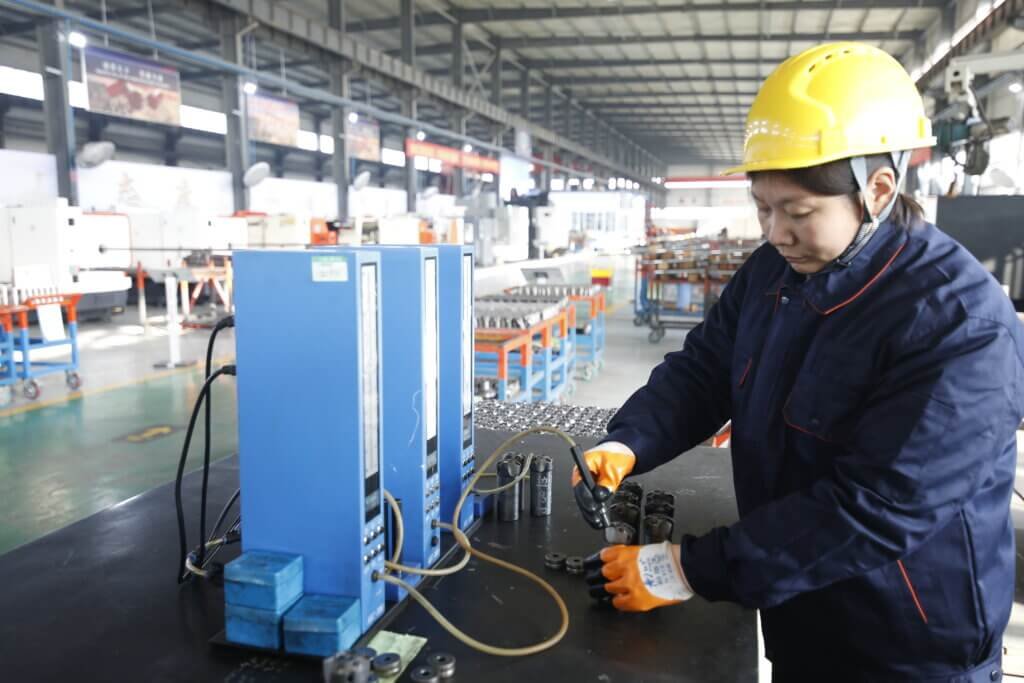
Quality inspection of non-metallic inclusions is a critical step in ensuring the cleanliness and performance reliability of 23CrNi3MoA steel used in rock drilling tools. Since inclusions are often microscopic and internally distributed, multiple complementary testing methods are required to evaluate their size, distribution, morphology, and overall impact on steel performance. These inspection techniques help ensure that the steel meets strict requirements for fatigue resistance and service life.
Metallographic Analysis #
Metallographic analysis is one of the most fundamental and widely used methods for evaluating non-metallic inclusions in steel.
This method involves preparing polished steel samples and observing them under an optical or electron microscope to identify inclusion characteristics such as:
- Inclusion size and shape
- Distribution within the steel matrix
- Morphology (spherical, elongated, or clustered forms)
- Type identification (oxide, sulfide, or complex inclusions)
Through microscopic inspection, engineers can directly assess steel cleanliness and determine whether harmful inclusions such as Al₂O₃ clusters or chain-like structures are present. This method is particularly effective for evaluating surface and near-surface inclusion distribution.
Ultrasonic Testing (UT) #
Ultrasonic Testing (UT) is a non-destructive testing method used to detect internal defects in steel, including large inclusions, voids, and discontinuities.
High-frequency sound waves are transmitted into the steel, and reflections from internal interfaces are analyzed to identify abnormal signals. Inclusions with significant size or clustering can reflect ultrasonic waves differently from the surrounding matrix, allowing for internal defect detection.
UT is especially important for ensuring the structural integrity of drill rods and other critical components, as it provides a fast and reliable way to screen for hidden internal defects before machining or heat treatment.
Inclusion Rating Standards #
To ensure consistency in steel quality evaluation, standardized inclusion rating systems are widely used in industry.
Common standards include:
- ASTM E45 (Standard Practice for Determining the Inclusion Content of Steel)
- ISO inclusion rating standards
These standards classify inclusions based on their type, size, and distribution, allowing for quantitative comparison of steel cleanliness across different production batches.
By applying standardized rating methods, manufacturers can ensure that 23CrNi3MoA steel meets the required cleanliness level for high-performance rock drilling applications and maintains consistent quality control across production processes.
Cleanliness Index Evaluation #
Cleanliness index evaluation provides a quantitative assessment of the overall inclusion content in steel, focusing on statistical characteristics such as:
- Inclusion size distribution
- Inclusion density (number of inclusions per unit area or volume)
- Maximum inclusion size
- Area fraction of inclusions
This method is often used to evaluate the effectiveness of smelting and refining processes, as well as to compare different production techniques such as LF refining, VD treatment, or ESR processing.
A lower inclusion density and smaller size distribution generally indicate higher steel cleanliness and improved fatigue performance, which directly contributes to longer service life of rock drilling tools.
A combination of metallographic analysis, ultrasonic testing, standardized inclusion rating systems, and cleanliness index evaluation provides a comprehensive approach to assessing non-metallic inclusions in 23CrNi3MoA steel. These methods ensure that the steel meets stringent quality requirements for high-strength, fatigue-resistant applications in rock drilling tools.
Conclusion #
Non-metallic inclusion control is a fundamental factor in determining the overall performance of 23CrNi3MoA steel used for rock drilling tools. Although these inclusions are often microscopic in size, their influence on fatigue behavior, crack initiation, and structural integrity is significant and cannot be ignored in high-performance drilling applications.
The analysis in this article clearly shows that steel cleanliness is not achieved by a single improvement step, but through systematic smelting and refining process optimization. Advanced metallurgical technologies such as LF refining, vacuum degassing, ESR processing, and precise control of casting parameters all play a critical role in reducing inclusion content and improving inclusion morphology.
Among all influencing factors, smelting optimization remains the most important technical pathway for achieving ultra-clean steel. By controlling oxygen and sulfur levels, optimizing slag systems, improving deoxidation practices, and enhancing inclusion flotation efficiency, the overall cleanliness of 23CrNi3MoA steel can be significantly improved.
For rock drilling tools, steel cleanliness directly determines service life, fatigue resistance, and operational stability. Higher purity steel reduces the probability of premature crack initiation and extends the working life of critical components such as drill rods, shanks, and couplings. As a result, it also contributes to lower maintenance costs and improved drilling efficiency.
Looking forward, the development of 23CrNi3MoA steel will continue to move toward higher purity and stricter inclusion control standards. With continuous advancements in secondary metallurgy and process automation, ultra-clean steel production will become more stable and efficient, further enhancing the reliability and performance of rock drilling tools in increasingly demanding engineering environments.