Introduction #
Drill rods are essential components in rock drilling tools, serving as the critical link between the rock drill and the drill bit. Their primary function is to transfer impact energy, rotational torque, and flushing media to the drilling face, enabling efficient rock penetration and accurate hole formation.
From surface mining and underground tunneling to quarrying, slope stabilization, and geotechnical anchoring, drill rods play a direct role in drilling performance. The right drill rod can improve penetration rates, reduce energy loss, maintain hole straightness, and extend the service life of both drilling equipment and consumables. Conversely, selecting an unsuitable rod can lead to reduced productivity, premature wear, increased downtime, and higher operating costs.
Because drill rods are available in different designs, materials, lengths, diameters, and strength grades, choosing the most suitable option can be challenging—especially for buyers comparing products from multiple suppliers.
In this comprehensive guide, you’ll learn what a drill rod is, how it works, the main types available, common materials and sizes, key application scenarios, and the most important factors to consider when selecting a drill rod for your drilling project in 2026.
What Is a Drill Rod? #
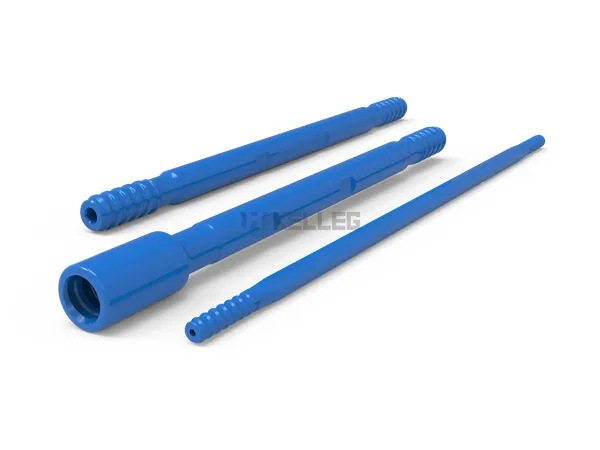
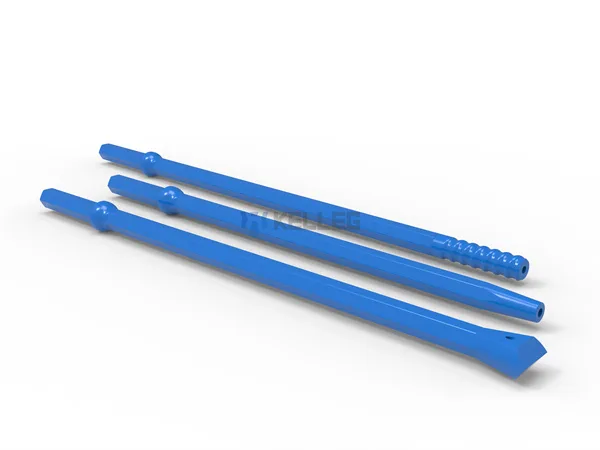
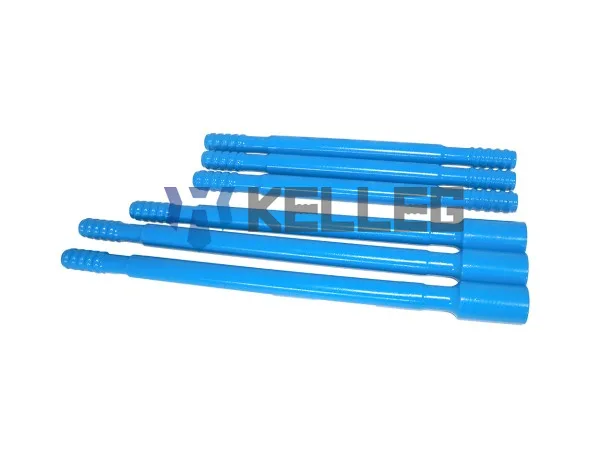
A drill rod is a critical component of rock drilling tools that connects the drill bit to the drilling equipment and transfers impact energy, rotational torque, and flushing media to the drilling face. It serves as the primary energy transmission element between the rock drill and the drill bit, directly influencing drilling efficiency, hole accuracy, and tool life.
Drill rods are typically manufactured from high-strength alloy steel and undergo specialized heat treatments to withstand repeated impact loads, torsional stresses, bending forces, and abrasive operating conditions. They are widely used in mining, quarrying, tunneling, construction, geotechnical anchoring, and slope stabilization projects.
In a typical top hammer drilling system, the drill rod is positioned between the coupling sleeve and the drill bit:
Rock Drill → Shank Adapter → Coupling Sleeve → Drill Rod → Drill Bit
While many people view a drill rod simply as a connecting component, its actual role is far more important. Every impact generated by the rock drill must travel through the shank adapter, coupling, and drill rod before reaching the drill bit. Any energy loss during this transfer process can reduce penetration rates, increase drilling costs, and accelerate wear on drilling tools.
For this reason, modern drill rods are designed not only for strength and durability but also for efficient energy transmission, ensuring maximum drilling performance under demanding rock conditions.
How Does a Drill Rod Work? #
A drill rod functions as the primary transmission medium within a drilling tool. During drilling operations, it transfers impact energy, rotational force, and flushing media from the rock drill to the drill bit while helping maintain hole alignment. Understanding how a drill rod works is essential for selecting the right rod and maximizing drilling efficiency.
Impact Energy Transmission #
In top hammer drilling, the rock drill generates high-frequency impact waves that travel through the shank adapter, coupling sleeve, and drill rod before reaching the drill bit. These impact waves are converted into crushing energy at the bit face, allowing the drill bit to break and penetrate rock efficiently.
Because energy loss can occur at every connection point, the quality, straightness, material strength, and heat treatment of the drill rod have a direct influence on drilling performance. A well-designed drill rod minimizes energy loss and delivers more impact power to the rock.
Rotation Torque Transfer #
In addition to transmitting impact energy, the drill rod transfers rotational torque from the drilling machine to the drill bit. As the bit rotates between impacts, fresh rock surfaces are continuously exposed, allowing the next impact cycle to break rock more effectively.
The drill rod must withstand repeated torsional loads throughout the drilling process. High-strength alloy steel and precision-manufactured threads help ensure reliable torque transmission and reduce the risk of thread wear or rod failure.
Flushing Medium Delivery #
Most drill rods contain an internal flushing hole that allows compressed air or water to pass through the rod and reach the drill bit.
The flushing medium serves several important functions:
- Removes rock cuttings from the bottom of the hole
- Prevents regrinding of broken rock fragments
- Reduces drilling resistance
- Improves drilling speed and efficiency
- Helps cool drilling tools during operation
Without effective flushing, cuttings can accumulate inside the hole, resulting in slower penetration rates, increased wear, and possible drilling interruptions.
Hole Direction Control #
A drill rod also contributes to maintaining drilling accuracy and hole straightness. During drilling, the rod acts as a guide between the drilling machine and the drill bit, helping keep the bit aligned with the intended drilling direction.
The rigidity, diameter, and overall quality of the drill rod influence its resistance to bending and deviation. For deep-hole drilling applications, selecting the correct rod length and strength is particularly important for minimizing hole deviation and achieving accurate drilling results.
In summary, a drill rod does far more than connect drilling components. It simultaneously transfers impact energy, rotational torque, and flushing media while supporting hole guidance, making it one of the most critical elements in the overall drilling system.
Main Components of a Drill Rod #
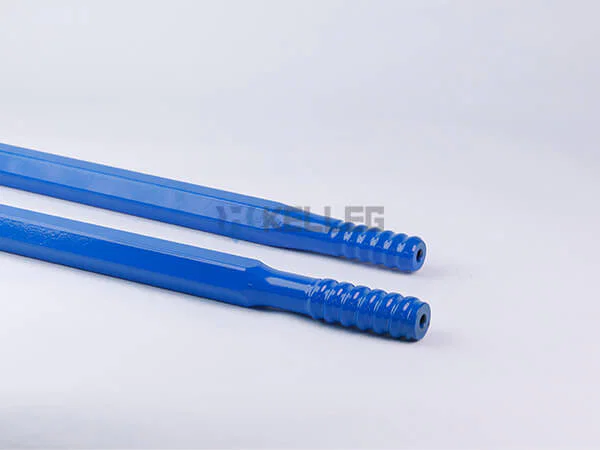
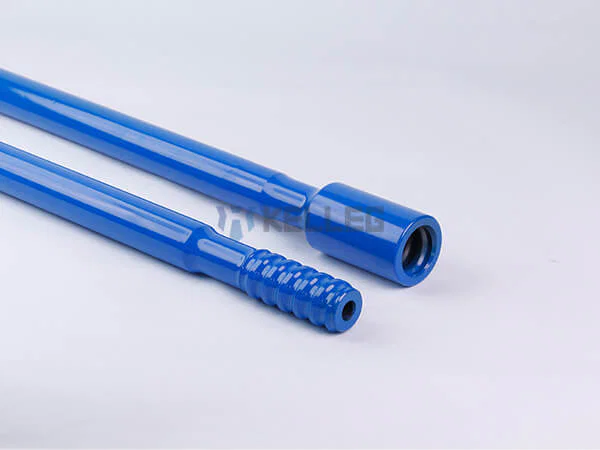
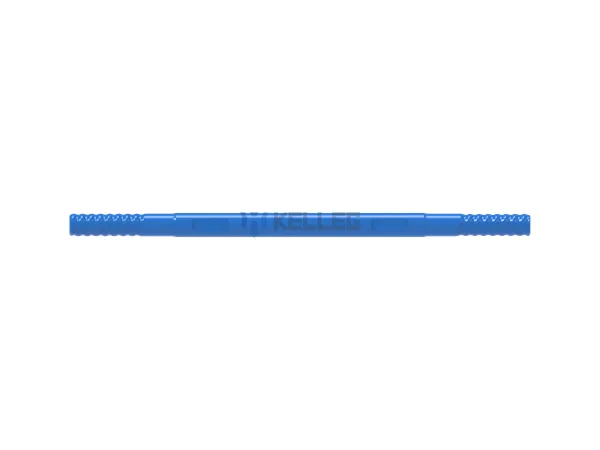
Although drill rods are available in different designs and specifications, most modern drill rods share four essential components: the rod body, threaded ends, an internal flushing hole, and a heat-treated surface. Each component plays a critical role in drilling performance, durability, and energy transmission efficiency.
Rod Body #
The rod body is the main structural section of the drill rod and accounts for most of its length. It is responsible for transmitting impact energy and rotational torque from the drilling machine to the drill bit while withstanding continuous bending, compression, and torsional stresses during operation.
To achieve high strength and fatigue resistance, rod bodies are typically manufactured from premium alloy steels and undergo specialized heat treatment processes. The diameter and shape of the rod body also influence drilling stability, hole straightness, and resistance to deviation.
Threaded Ends #
The threaded ends connect the drill rod to other drilling components, such as couplings, shank adapters, or drill bits. These connections allow multiple rods to be assembled into longer drill strings for deeper drilling applications.
Because impact waves and rotational forces pass directly through the threads, thread quality is critical to overall drilling performance. Precision-machined threads help ensure efficient energy transfer, reduce vibration, and minimize wear during repeated make-and-break cycles.
Common thread types used in rock drilling include R-thread and T-thread designs, which are selected based on drilling equipment, hole diameter, and application requirements.
Related Reading: Drill Rod Thread Types
Internal Flushing Hole #
Most drill rods contain a central flushing hole that runs through the entire length of the rod. This internal channel allows compressed air or water to travel from the drilling machine to the drill bit.
The flushing hole performs several important functions:
- Removes rock cuttings from the bottom of the hole
- Prevents cuttings from being crushed repeatedly
- Improves penetration efficiency
- Reduces drilling resistance
- Helps cool drilling tools during operation
An appropriately sized flushing hole is essential for maintaining effective debris removal, particularly in deep-hole drilling applications.
Heat-Treated Surface #
The outer surface of a drill rod is typically strengthened through advanced heat treatment processes such as quenching and tempering. Heat treatment enhances hardness, fatigue resistance, wear resistance, and overall structural durability.
A properly heat-treated drill rod can withstand millions of impact cycles while maintaining reliable performance under demanding mining, quarrying, tunneling, and construction conditions.
High-quality heat treatment also helps reduce the risk of common failures such as thread wear, surface cracking, deformation, and premature rod breakage.
Why These Components Matter #
The performance of a drill rod depends on the combined effectiveness of all four components. The rod body provides structural strength, the threaded ends ensure secure connections, the flushing hole enables efficient debris removal, and the heat-treated surface improves durability. Together, these elements determine how efficiently a drill rod transfers energy, maintains drilling accuracy, and withstands harsh operating conditions.
Types of Drill Rods #
Drill rods are available in several structural types to suit different drilling methods, rock conditions, and equipment configurations. Each type is designed with specific connection methods and application scenarios, ranging from shallow-hole drilling to deep-hole blasting and anchoring projects.
Understanding the basic types of drill rods helps users quickly identify the right product category before selecting detailed specifications such as thread type, material, and length.
Below are the most common types of drill rods used in rock drilling operations.
Tapered Drill Rod #
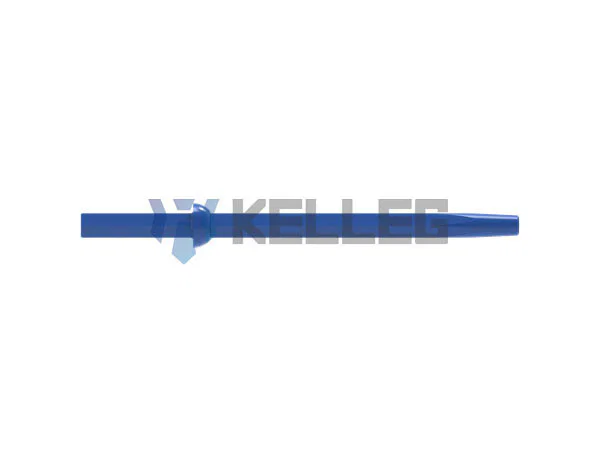
A tapered drill rod is a hexagonal hollow rod designed with a tapered end (shank structure). The shank connects directly to the rock drilling equipment, while the front end is tapered to match a tapered drill bit.
This type of drill rod is mainly used in small-scale drilling applications, especially where simplicity, speed, and cost-efficiency are important.
Typical applications include:
- Small-scale mining
- Soft to medium rock drilling
- Short hole drilling operations
Shank Rod #
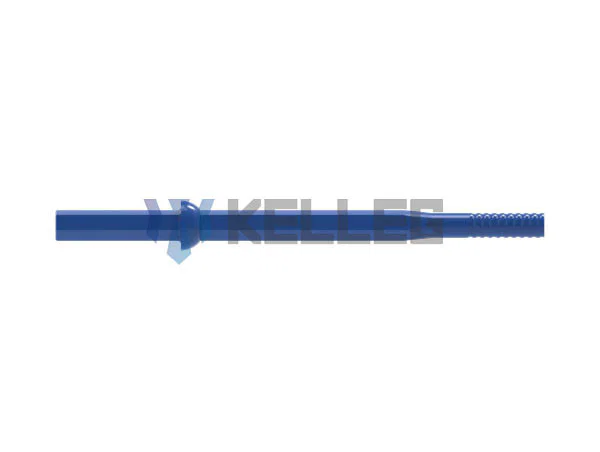
A shank rod is a hexagonal hollow drill rod with a shank connection structure at the rear end. The shank connects to the rock drilling machine, while the front end is threaded and designed to connect with a threaded drill bit.
This structure provides a more secure connection compared to tapered systems and is commonly used in more stable and controlled drilling environments.
Typical applications include:
- Medium-depth drilling
- Construction and foundation work
- Quarrying operations
Integral Drill Rod #
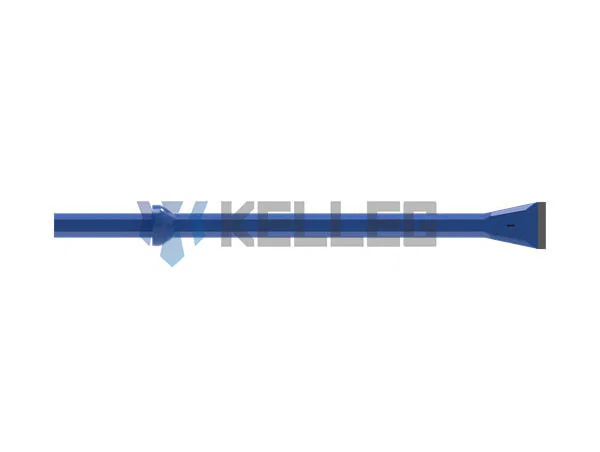
An integral drill rod is a single-piece drilling tool that combines the shank adapter, rod body, and drill bit into one integrated structure. Unlike other rods, it does not require separate coupling or bit connections.
This type of drill rod is mainly used for small-diameter, shallow-hole drilling in relatively soft or fractured rock conditions.
Typical applications include:
- Broken or weathered rock
- Shallow hole drilling
- Small-scale tunneling and maintenance work
Extension Rod #
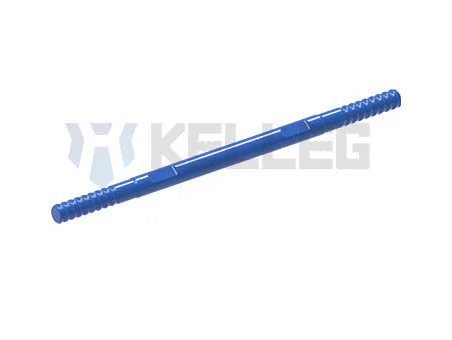
An extension rod is a drill rod with external threads on both ends. It is designed to extend the drilling depth by connecting multiple rods together through coupling sleeves.
This type is widely used in deeper drilling applications where longer drill strings are required.
Typical applications include:
- Bench blasting in mining
- Deep hole drilling
- Tunnel excavation
MF Rod (Male–Female Rod) #
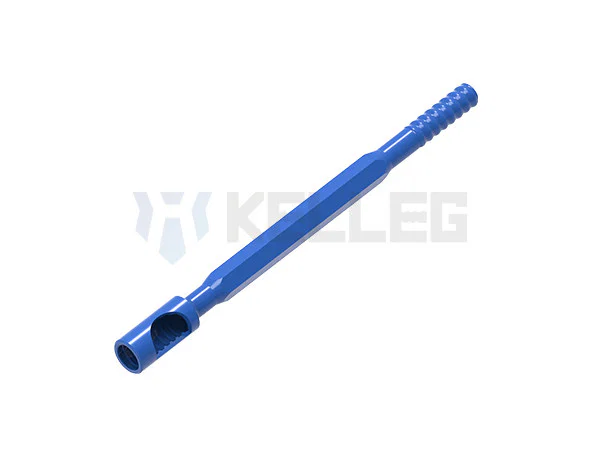
An MF rod is a drill rod with an external thread on one end and an internal thread on the other end, allowing direct rod-to-rod connection without the need for a separate coupling sleeve.
This design improves energy transmission efficiency and reduces connection losses in long-hole drilling applications.
For a detailed comparison of MF rods and extension rods, see our guide:
Top Hammer Drill Rods Guide: MF Rods vs Extension Rods – Differences, Advantages & Best Practices
Different types of drill rods are designed to match different drilling methods and operational requirements. Choosing the correct type at the early stage helps improve drilling efficiency, reduce tool wear, and ensure stable performance in various rock conditions.
What Materials Are Drill Rods Made From? #
The performance, durability, and service life of a drill rod largely depend on the material used in its manufacture. Different drilling conditions—such as rock hardness, hole depth, and impact intensity—require different material grades to ensure optimal strength, toughness, and fatigue resistance.
Most modern drill rods are made from high-strength carbon and alloy steels that undergo advanced heat treatment processes to enhance mechanical properties and extend service life.
Below are the most commonly used materials in drill rod manufacturing.
Carbon Steel #
Carbon steel is one of the most basic materials used in drill rod production. It offers moderate strength and is typically used in low-demand drilling environments.
Characteristics:
- Basic strength and hardness
- Lower cost
- Limited wear resistance under high-impact conditions
Typical applications:
- Light-duty drilling
- Soft rock formations
- Short-term or low-budget projects
Alloy Steel #
Alloy steel contains additional elements such as chromium, nickel, and molybdenum, which significantly improve strength, toughness, and fatigue resistance.
Characteristics:
- Higher strength than carbon steel
- Better resistance to impact and wear
- Improved service life under harsh conditions
Typical applications:
- Mining and quarrying
- Medium to hard rock drilling
- General construction drilling
23CrNi3Mo #
23CrNi3Mo is a high-performance alloy steel widely used in professional rock drilling tools. It provides an excellent balance between strength and toughness.
Characteristics:
- High impact resistance
- Excellent fatigue performance
- Stable performance in deep-hole drilling
Typical applications:
- Underground mining
- Tunnel excavation
- High-frequency impact drilling
25CrMo #
25CrMo is a chromium-molybdenum alloy steel known for its strong hardenability and wear resistance after heat treatment.
Characteristics:
- High strength after quenching and tempering
- Good resistance to deformation
- Reliable performance in medium-to-hard rock
Typical applications:
- Bench blasting
- Quarry drilling
- Medium-depth holes
40CrMnMo #
40CrMnMo is a high-strength alloy steel designed for demanding drilling environments where both toughness and wear resistance are critical.
Characteristics:
- Excellent fatigue resistance
- High hardness after heat treatment
- Strong resistance to cracking and bending
Typical applications:
- Hard rock mining
- Deep-hole drilling
- Heavy-duty tunneling projects
High-Strength Heat-Treated Steel #
This refers to premium-grade steels that undergo optimized quenching and tempering processes to achieve maximum performance.
Characteristics:
- Extremely high strength-to-weight ratio
- Superior fatigue and impact resistance
- Long service life under extreme conditions
Typical applications:
- Large-scale mining operations
- High-intensity blasting environments
- Projects requiring maximum productivity
Material Comparison Table #
| Material | Strength | Toughness | Typical Application |
|---|---|---|---|
| Carbon Steel | Low | Low | Soft rock, light-duty drilling |
| Alloy Steel | Medium | Medium | General mining and quarrying |
| 23CrNi3Mo | High | High | Underground mining, tunneling |
| 25CrMo | High | Medium-High | Bench blasting, medium-hard rock |
| 40CrMnMo | Very High | Very High | Hard rock, deep-hole drilling |
| Heat-Treated Steel | Very High | Very High | Heavy-duty, high-performance drilling |
Selection Insight #
In practical drilling operations, material selection should not be based on cost alone. Instead, it should be matched with rock hardness, drilling depth, and impact frequency. High-performance alloy steels such as 23CrNi3Mo and 40CrMnMo are generally preferred for demanding mining and tunneling projects due to their superior durability and fatigue resistance.
Standard Drill Rod Sizes #
Drill rod sizes are standardized to match different drilling rigs, hole depths, and rock conditions. Selecting the correct rod length and diameter is essential for ensuring drilling efficiency, stability, and tool life.
In general, drill rod dimensions are defined by two key parameters: length and diameter. Each directly influences drilling performance and operational cost.
Common Drill Rod Lengths #
Drill rod length determines how deep a drilling system can reach and how flexible the drilling operation is in different working conditions.
Common standard lengths include:
- 0.6 m
- 1.2 m
- 1.5 m
- 2.4 m
- 3.0 m
- 3.7 m
- 4.3 m
- 4.9 m
- 6.1 m
Selection Insight:
- Short rods (0.6–1.5 m): Used for shallow drilling, confined spaces, and precise control operations
- Medium rods (2.4–3.7 m): Common in general mining and quarrying applications
- Long rods (4.3–6.1 m): Used for deep-hole drilling and large-scale blasting operations
Longer rods reduce the number of connections required, but require higher rigidity and better alignment control.
Common Drill Rod Diameters #
The diameter of a drill rod affects its strength, rigidity, and ability to transmit impact energy efficiently.
Common diameters include:
- Hex 22
- Hex 25
- Hex 28
- Hex 32
- Round 32
- Round 39
- Round 45
- Round 51
Selection Insight:
- Smaller diameters: Better for light-duty drilling and soft rock formations
- Medium diameters: Balanced performance for general mining and quarrying
- Larger diameters: Higher strength and stability for deep-hole and hard rock drilling
Hexagonal rods generally provide better torque transmission, while round rods are often preferred for high-strength, deep drilling applications.
How Drill Rod Size Affects Drilling Performance #
The size of a drill rod has a direct impact on drilling efficiency, accuracy, and operating cost. Even small changes in length or diameter can significantly influence overall performance.
Penetration Rate #
Proper rod sizing improves energy transmission efficiency, allowing the drill bit to break rock more effectively and increase penetration speed. Oversized or mismatched rods can reduce impact efficiency and slow down drilling progress.
Hole Deviation (Accuracy) #
Rod stiffness plays a key role in maintaining straight hole drilling. Larger diameters generally provide better rigidity and reduce the risk of hole deviation, especially in deep drilling applications.
Service Life #
Incorrect rod sizing can lead to excessive bending stress, vibration, and thread wear. Properly matched rods reduce fatigue load and extend overall service life.
Drilling Cost #
Rod size directly affects the total cost per meter drilled. While larger and stronger rods may have higher initial cost, they often reduce downtime, replacement frequency, and overall operating cost.
Drill rod size selection should be based on drilling depth, rock conditions, and rig capacity rather than cost alone. Properly matched length and diameter combinations significantly improve drilling performance, reduce energy loss, and ensure stable operation in mining, quarrying, and tunneling applications.
Drill Rod Applications #
Drill rods are widely used across multiple rock drilling and geotechnical engineering fields. Their primary role is to transmit impact energy, torque, and flushing media in different drilling environments, making them essential in both surface and underground operations.
Below are the most common application areas of drill rods in modern drilling projects.
Surface Mining #
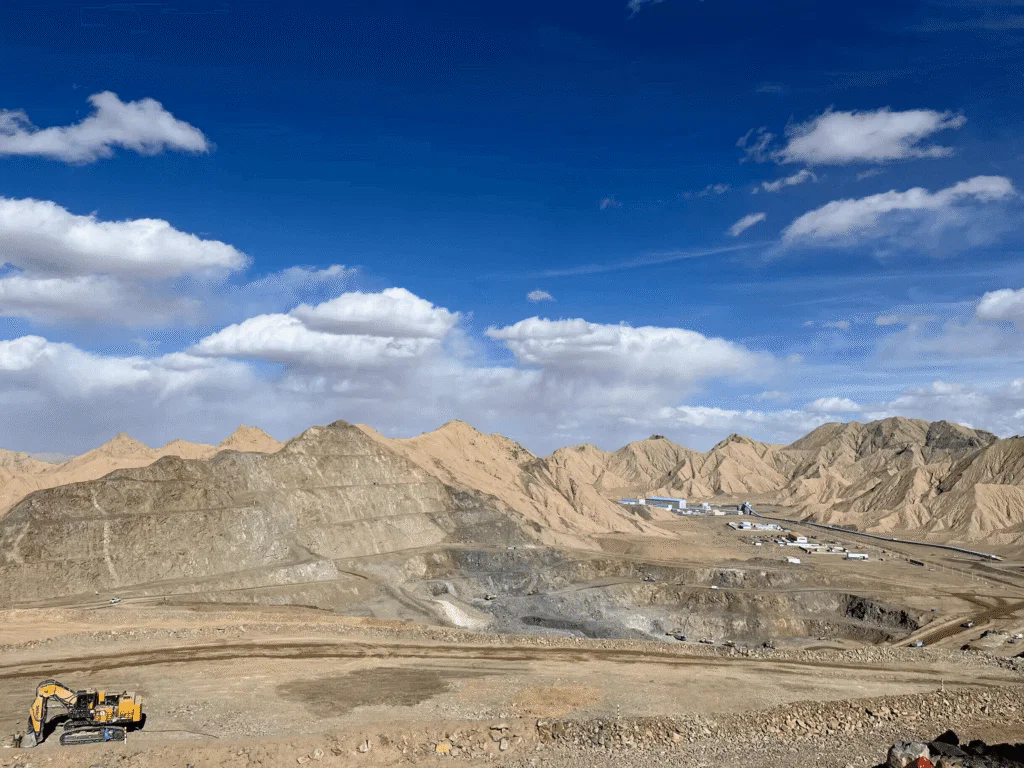
In surface mining operations, drill rods are used for bench blasting and production drilling. They help achieve efficient rock fragmentation by enabling deep and accurate blast hole drilling in hard rock formations.
Underground Mining #
In underground mining, drill rods are used for long-hole drilling, development drilling, and ore extraction. Their durability and energy transmission efficiency are critical for maintaining productivity in confined and high-stress environments.
Quarrying #
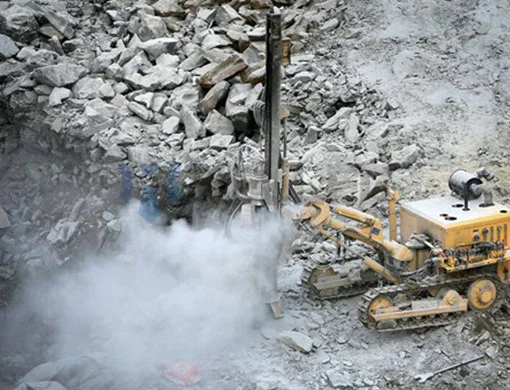
Quarrying applications require stable and consistent drilling performance for stone extraction. Drill rods are used to create blast holes that ensure controlled fragmentation of rock for construction materials.
Tunneling #
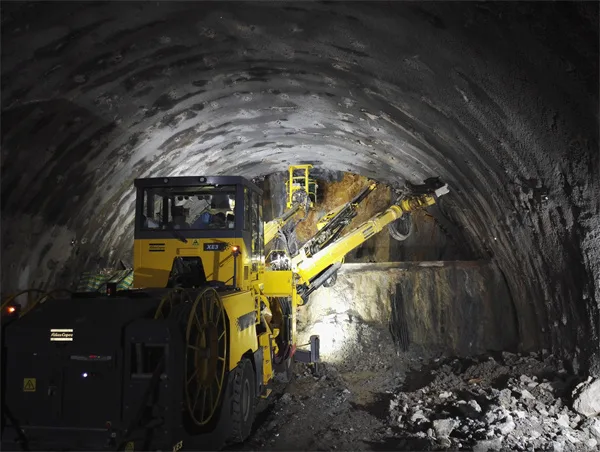
In tunnel construction, drill rods are used for advance drilling and support installation. Accuracy and straightness are particularly important to ensure proper tunnel alignment and structural safety.
Hydropower Projects #
In hydropower construction, drill rods are used for dam foundation treatment, slope reinforcement, and underground excavation. High-strength rods are preferred due to complex geological conditions and deep drilling requirements.
Construction Foundation Engineering #
In civil construction, drill rods are used for foundation piling, micro-piling, and geotechnical anchoring. They help ensure structural stability in buildings, bridges, and infrastructure projects.
Across all applications, drill rods serve the same core function—efficient energy transmission in rock and soil drilling, but their performance requirements vary depending on depth, rock hardness, and project scale. Selecting the right drill rod type and specification is essential for ensuring safety, efficiency, and cost control in any drilling operation.
How to Choose the Right Drill Rod #
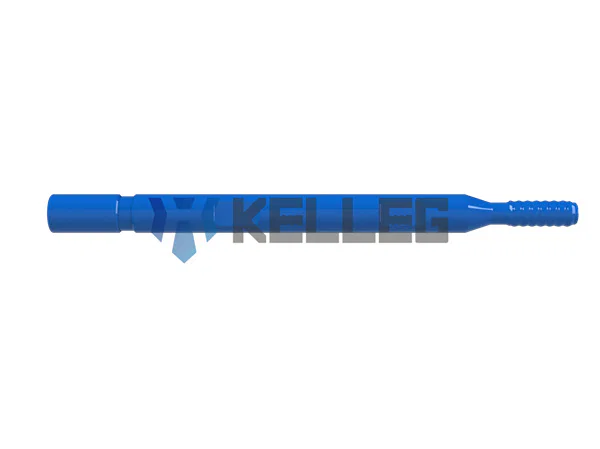
Selecting the right drill rod is one of the most important decisions in any rock drilling project. The correct choice directly affects penetration rate, hole accuracy, tool life, and overall drilling cost. To ensure optimal performance, drill rod selection should be based on a structured evaluation of rock conditions, drilling depth, equipment compatibility, mechanical strength, and total cost efficiency.
Below is a practical step-by-step guide used in mining, quarrying, tunneling, and geotechnical drilling applications.
Step 1: Identify Rock Conditions #
Rock hardness is the primary factor that determines the required drill rod strength and durability.
- Soft Rock: Requires standard-strength rods with higher drilling speed and lower impact resistance requirements
- Medium Hard Rock: Requires balanced rods with good strength and wear resistance
- Hard Rock: Requires high-strength alloy steel rods with excellent impact and fatigue resistance
- Abrasive Rock: Requires premium heat-treated rods with superior wear resistance and surface durability
👉 The harder and more abrasive the rock, the higher the material grade and heat treatment requirements of the drill rod.
Step 2: Determine Hole Depth #
Drilling depth directly influences rod length selection and connection strategy.
- Short-hole drilling: Requires shorter rods for better control and accuracy
- Bench drilling: Typically uses medium-length rods for stable production drilling
- Long-hole drilling: Requires longer rods or rod combinations for deep penetration and reduced connection loss
👉 As hole depth increases, rod rigidity and connection efficiency become more critical to prevent deviation and energy loss.
Step 3: Match the Drill Rod to the Drill Rig #
Drill rods must be fully compatible with the drilling equipment to ensure safe and efficient operation.
Different rock drilling rigs may require specific:
- Thread types (R-thread or T-thread)
- Rod diameters and connection types
- Impact energy capacity and torque requirements
👉 Incorrect matching between drill rig and drill rod can lead to poor energy transfer, increased wear, and even equipment failure. Always confirm machine specifications before selecting rod types.
Step 4: Consider Rod Strength and Fatigue Resistance #
Drill rods operate under repeated high-frequency impact, torsional stress, and bending loads. Therefore, fatigue resistance is a key performance factor.
High-quality drill rods should provide:
- Stable performance under continuous impact cycles
- Resistance to thread wear and cracking
- High structural integrity in deep-hole drilling
👉 In practice, rods made from high-grade alloy steels with proper heat treatment significantly reduce the risk of premature failure and downtime.
Step 5: Evaluate Total Cost per Meter Drilled #
One of the most common mistakes in procurement is focusing only on unit price instead of drilling efficiency.
A lower-priced drill rod may result in:
- Faster wear
- Higher replacement frequency
- Lower penetration rate
- Increased downtime
Instead, the correct evaluation metric is:
👉 Cost per meter drilled (not cost per rod)
This includes:
- Drilling speed
- Rod lifespan
- Replacement frequency
- Energy efficiency
👉 In most mining and tunneling operations, higher-quality drill rods deliver lower overall drilling costs despite higher initial investment.
The right drill rod is not selected by a single factor but through a systematic evaluation of rock conditions, drilling depth, rig compatibility, mechanical strength, and total cost efficiency. A well-matched drill rod improves productivity, reduces operational risks, and significantly lowers long-term drilling costs.
What Factors Affect Drill Rod Service Life? #
The service life of a drill rod is influenced by multiple operational, geological, and manufacturing factors. In real drilling environments, drill rods are continuously exposed to high-frequency impact, torsional stress, and abrasive wear. Therefore, their lifespan depends not only on product quality but also on how they are used and maintained in the field.
Understanding these factors helps operators extend service life, improve drilling efficiency, and reduce overall operational costs.
Rock Hardness #
Rock hardness is one of the most important factors affecting drill rod service life. Harder and more abrasive rock formations generate higher impact and wear forces during drilling, which accelerate material fatigue and surface wear.
In highly abrasive conditions, even high-quality drill rods experience faster degradation due to continuous mechanical stress and friction.
Operator Practices #
Drilling performance is highly dependent on operator behavior. Improper drilling pressure, excessive feed force, or inconsistent operation can significantly increase stress on the drill rod.
Good operating practices help maintain stable impact transmission and reduce unnecessary mechanical loading, thereby extending service life.
Drill Alignment #
Correct alignment between the drilling rig, drill rod, and drill bit is essential for stable energy transmission. Misalignment creates uneven stress distribution along the rod body and threads.
Over time, this leads to increased fatigue load, vibration, and accelerated wear, especially in deep-hole drilling applications.
Flushing Quality #
Effective flushing plays a critical role in removing cuttings from the borehole. Poor flushing efficiency allows debris to accumulate, increasing resistance at the drill bit and indirectly raising stress on the drill rod.
Proper air or water flushing also helps reduce heat buildup and minimizes abrasive wear inside the drilling system.
Heat Treatment Quality #
The mechanical performance of a drill rod is strongly influenced by its heat treatment process. Proper quenching and tempering improve hardness, toughness, and fatigue resistance.
Poor or inconsistent heat treatment can lead to reduced structural integrity, lower impact resistance, and significantly shorter service life under demanding drilling conditions.
Thread Maintenance #
Threaded connections are critical stress concentration areas in a drill rod. Regular inspection and proper maintenance of threads help ensure stable energy transfer and reduce wear.
Damaged or poorly maintained threads can lead to energy loss, vibration, and increased localized stress, which shortens overall service life.
Related Reading
For a detailed analysis of structural and operational failure patterns, see:
Common Drill Rod Failures: Causes, Identification & Practical Troubleshooting Guide
The service life of a drill rod is determined by a combination of geological conditions, operational practices, equipment alignment, flushing efficiency, manufacturing quality, and thread maintenance. Optimizing these factors not only extends tool lifespan but also improves drilling efficiency and reduces overall cost per meter drilled.
Conclusion #
A drill rod is far more than a simple connecting component in rock drilling. It is a critical energy transmission element responsible for transferring impact energy, rotational torque, and flushing media while ensuring drilling stability, hole accuracy, and overall operational efficiency.
In practical applications, drill rod selection should never be based on a single factor. Instead, it requires a systematic evaluation of rock conditions, hole depth, drilling method, material strength, heat treatment quality, and rod dimensions. Each of these factors directly influences drilling performance, tool lifespan, and operational stability.
Choosing the right drill rod can significantly enhance penetration rate, reduce energy loss, extend service life, and lower the total cost per meter drilled—making it a key factor in overall project efficiency and profitability.
For mining, quarrying, tunneling, and geotechnical engineering projects, investing in high-quality, properly matched drill rods is one of the most effective ways to achieve stable drilling performance, reduce downtime, and maximize long-term operational value.