- Introduction
- What Is a Shank Adapter?
- How Does a Shank Adapter Work?
- Types of Shank Adapters
- Common Shank Adapter Sizes & Specifications
- How to Choose the Right Shank Adapter
- Common Problems & Solutions
- Impact marks, chipped corners, or mushroomed ends (caused by worn bushings)
- Failure 25mm from strike face (worn chuck driver)
- Spline top failure (lack of lubrication)
- Spline top failure (excessive feed force)
- Spline top failure (worn chuck driver / front bushing)
- Splines fail due to heavy rotational torque
- Wear on spline shoulder during retraction
- Front head failure due to misalignment (worn front bushing)
- Thread failure above is due to hole deviation
- Thread body failure due to repeated coupling with worn sleeves
- Chipped thread end due to improper coupling
- Chipped thread end due to non-square drill rod end
- Pitting and galling on splines (soft/broken ground)
- Conclusion
Introduction #
Shank Adapters are a critical component in top hammer drilling tools, directly connecting the rock drill to the drill rod and enabling efficient energy transfer throughout the drilling system. Choosing the correct type, size, and compatibility can improve impact energy transmission efficiency by 15–25%, while significantly reducing thread wear and the risk of premature breakage.
In high-frequency rock drilling operations, the shank adapter plays a vital role. It must withstand continuous impact loads, transmit rotational torque smoothly, and protect the rock drill piston from excessive stress and misalignment. In essence, it acts as the core link that ensures stability, performance, and durability across the entire drilling setup.
However, selecting the wrong shank adapter remains a common issue in the field. Mismatched specifications or poor compatibility can lead to energy loss, reduced drilling efficiency, accelerated component wear, and ultimately higher operating costs. For contractors and mining operators, understanding how to properly select and match a shank adapter is essential to achieving consistent and cost-effective drilling performance.
What Is a Shank Adapter? #
Definition #
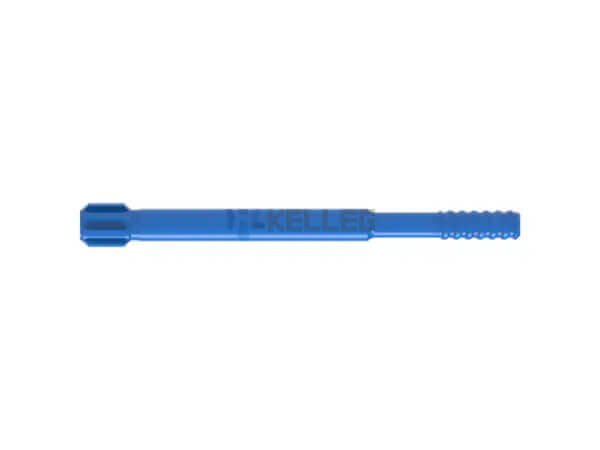
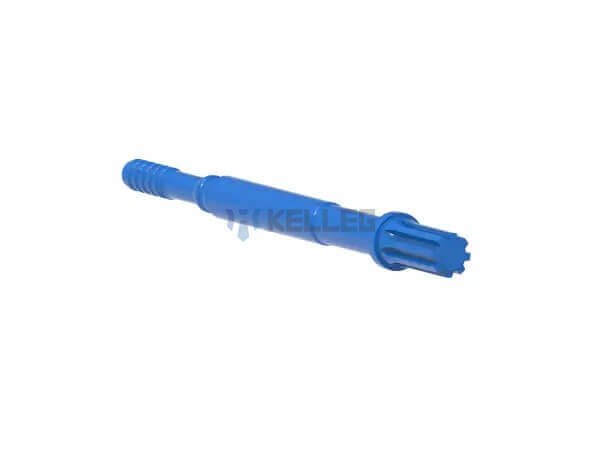
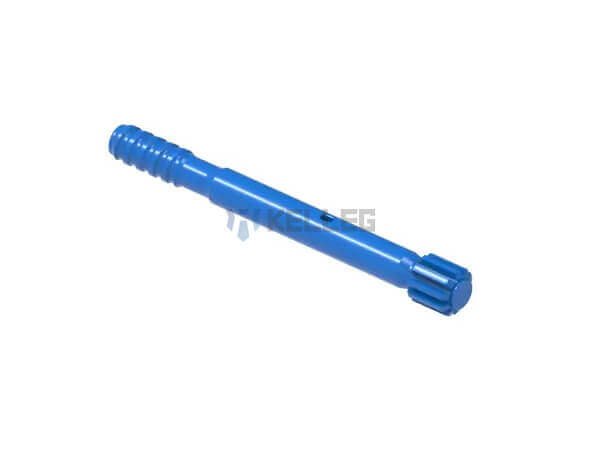
A shank adapter is a critical connection component in top hammer drilling, linking the rock drill at one end and the drill rod at the other. It serves as a key interface within the drilling system, ensuring that energy generated by the rock drill is effectively transmitted to the drilling tools.
Widely used in mining, tunneling, quarrying, and construction applications, shank adapters are typically manufactured from high-quality alloy steel to withstand extreme working conditions. To enhance durability and performance, they undergo advanced processes such as overall carburizing, precision CNC machining, and uniform heat treatment. These processes ensure accurate spline geometry, reliable internal and side flushing holes, and optimal straightness—critical factors for maintaining drilling efficiency and tool life.
Given the harsh operating environment—characterized by high-frequency impact, heavy loads, and abrasive conditions—shank adapters must meet strict quality and performance standards to prevent premature failure and ensure consistent operation.
Core Function #
The shank adapter plays several essential roles in the drilling system:
- Transfer Impact Energy: Efficiently transmits high-frequency impact energy from the rock drill piston to the drill rod and ultimately to the drill bit.
- Transmit Rotation Torque: Ensures smooth and continuous rotation from the rock drill to the drill rod, enabling effective rock penetration.
- Ensure Alignment & Stability: Maintain precise alignment between the rock drill and the drill rod, reducing vibration, minimizing wear, and improving overall drilling accuracy.
By combining strength, precision, and durability, the shank adapter acts as the central transmission hub of the entire top hammer drilling system.
How Does a Shank Adapter Work? #
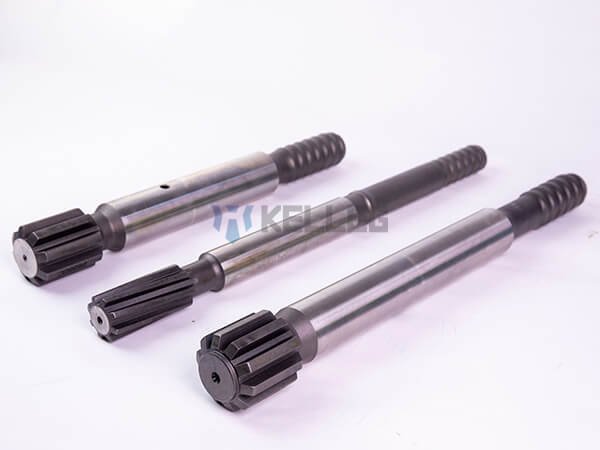
During rock drilling operations, the shank adapter acts as the core energy transmission bridge between the rock drill and the drilling string. It transfers both impact energy and rotational torque generated by the rock drill directly to the drill rod and ultimately to the drill bit, enabling efficient rock fragmentation.
When the system is in operation, the rock drill piston delivers continuous high-frequency impacts into the shank adapter. At the same time, rotational force is transmitted through the same component. This combined action allows the drill bit to crush and break rock formations effectively while maintaining drilling stability and penetration efficiency.
However, the working environment of a shank adapter is extremely harsh. In addition to enduring repeated high-impact loads and strong torsional forces, it is also exposed to abrasive cuttings, mineral-rich water, and corrosive slurry generated during drilling. These factors contribute to gradual wear, fatigue, and potential failure if the component is not properly selected or maintained.
As a critical supporting component in the drilling system, the shank adapter must also ensure precise compatibility with connecting threads and associated drilling tools. Its thread structure and machining accuracy directly influence assembly efficiency and operational reliability. A well-designed shank adapter should provide:
- Easy installation and removal
- Labor-saving connection and disassembly
- Secure and reliable engagement with drill rods
- High wear resistance under continuous impact
- Long service life in demanding geological conditions
In summary, the shank adapter is not only a transmission component, but also a durability-critical interface that directly affects drilling efficiency, tool life, and overall operational cost in rock drilling systems.
Types of Shank Adapters #
By Rock Drill Brand #
Shank adapters are primarily designed to match specific rock drill brands and models. Each manufacturer uses unique spline configurations, dimensions, and impact characteristics, making compatibility critical.
- Epiroc (Atlas Copco) Known for high-performance top hammer systems, requiring precise spline matching and high fatigue resistance.
- Sandvik is widely used in mining and tunneling, with robust shank designs for heavy-duty operations.
- Furukawa Popular in Asian and global markets, offering stable performance in various rock conditions.
- Montabert Known for advanced hydraulic rock drills and precise energy transfer systems.
Always match the shank adapter exactly to the rock drill model—a mismatch can lead to severe energy loss and rapid wear.
By Thread Type #
Thread type determines how the shank adapter connects to the drill rod. Choosing the correct thread ensures secure connection and efficient energy transmission.
R Thread (Rope Thread)
- Sizes: R25, R32, R38
- Easier coupling but lower load capacity
T Thread (Trapezoidal Thread)
- Sizes: T38, T45, T51
- Stronger connection, better resistance to wear and deformation
By Application #
Different drilling environments require different shank adapter designs to optimize performance and lifespan.
Tunneling: Requires high precision and durability due to confined spaces and continuous operation.
Mining: Demands strong impact resistance and long service life under extreme conditions.
Quarrying: Focuses on productivity and cost efficiency, often involving repetitive drilling cycles.
Construction: Includes foundation drilling and anchoring, where versatility and compatibility are key.
By understanding these classifications, users can quickly narrow down the correct shank adapter based on equipment compatibility, thread connection, and working conditions—three critical factors that directly impact drilling efficiency and tool longevity.
Common Shank Adapter Sizes & Specifications #
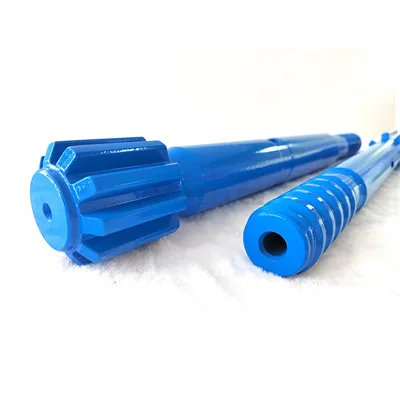
Shank adapters are available in different dimensions and configurations to match various rock drill models and drilling conditions. While exact specifications may vary depending on manufacturer and equipment compatibility, most designs follow consistent engineering parameters.
The key specifications of a shank adapter typically include length, thread size, spline configuration, and material grade, all of which directly influence performance, durability, and energy transmission efficiency.
Key Specification Breakdown #
- Length: Shank adapter length affects energy transmission stability and overall drilling performance. Longer designs are generally used for deeper or more demanding drilling conditions, while shorter types are preferred for compact rigs.
- Thread Size: Thread compatibility is critical for system matching. Common standards include:
- R threads: R25, R32, R38
- T threads: T38, T45, T51. Correct thread selection ensures a secure connection and prevents energy loss or premature wear.
- Spline Configuration: The spline design connects the rock drill and shank adapter, enabling efficient torque transfer. Precision machining of spline geometry is essential to reduce vibration and improve impact stability.
- Material (Alloy Steel): High-quality alloy steel is used to withstand extreme impact loads and abrasive environments. Through carburizing and heat treatment processes, the material achieves high surface hardness while maintaining a tough core structure for fatigue resistance.
Typical Shank Adapter Specification Overview #
| Rock Drill Brands | Thread | Length |
| Atlas Copco BBC 51, BBC 52, BBC 54, BBC 120 | R32 T38 | 380 390 |
| Atlas Copco COP 125, COP 130, COP 131 | T38 | 380 |
| Furukawa HD 609 | T38 T45 | 620 690 |
| Ingersoll-Rand YH 65,YH 80 | T38 T45 | 500 |
| Montabert HC 40 | R32 R38 | 270 320 |
| Montabert HC 200 | T51 T60 | 840 |
| SIG HBM 50, HBM 100, HBM 120 | R32 | 340 |
| Tamrock HL 500-38, HL 510-38 | R32 T38 | 550 |
A well-designed shank adapter must balance strength, precision, and fatigue resistance. Even small deviations in spline accuracy or heat treatment quality can significantly affect drilling efficiency and tool lifespan. Therefore, selecting a properly matched specification is essential to ensure stable performance and reduce operational cost.
How to Choose the Right Shank Adapter #
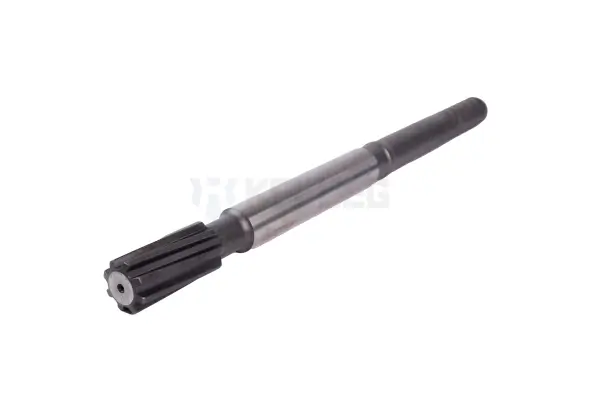
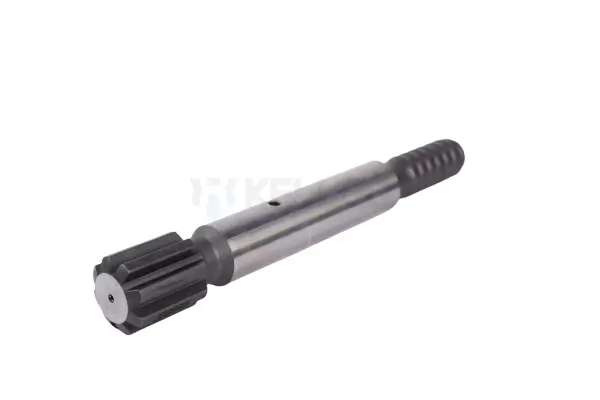
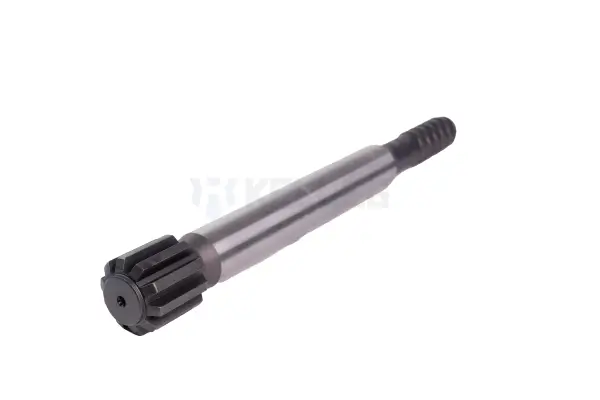
Selecting the correct shank adapter is essential for ensuring stable energy transmission, reducing wear, and maximizing drilling efficiency. A mismatch can lead to energy loss, premature failure, and higher operating costs.
Match Your Rock Drill Model #
Most critical selection factor #
Each rock drill model has a specific spline design, impact energy output, and interface structure. The shank adapter must be fully compatible with the rock drill to ensure proper energy transfer and mechanical stability.
Different brands (e.g., Epiroc, Sandvik, Furukawa, Montabert) use different shank designs. Even within the same brand, models may require different adapters
Key rule: Always match by exact rock drill model, not just brand.
Select Correct Thread Type #
The thread type determines how the shank adapter connects to the drill rod. Correct matching ensures safe torque transfer and minimizes wear. Always ensure the shank adapter thread matches the drill rods used in your system.
Consider Rock Conditions #
Different geological conditions place different demands on the shank adapter.
- Soft to medium rock → Standard wear resistance is sufficient
- Hard rock (granite, basalt) → Requires higher fatigue strength and wear resistance
- Highly abrasive formations → Needs enhanced heat-treated and carburized materials
Harder and more abrasive rock conditions significantly increase stress on the shank adapter.
Check Heat Treatment & Material #
Material quality and heat treatment directly determine service life and failure resistance.
- Made from high-strength alloy steel
- Carburizing process improves surface hardness
- Core remains tough for impact resistance
- CNC machining ensures precise geometry and alignment
Poor heat treatment often leads to early fatigue cracking and thread failure. A correct shank adapter selection depends on machine compatibility, thread matching, geological conditions, material quality, and supplier reliability. Proper selection not only improves drilling efficiency but also significantly reduces downtime and total operating cost.
Common Problems & Solutions #
Shank adapter failures are usually not random—they are closely related to wear parts condition, drilling parameters, lubrication, and alignment accuracy. Identifying the root cause early can significantly extend service life and reduce downtime.
Impact marks, chipped corners, or mushroomed ends (caused by worn bushings) #
Cause: Misalignment due to worn bushings
Solution: Replace worn components (front bushing/guide bushings) in time
Failure 25mm from strike face (worn chuck driver) #
Cause: Excessive wear of chuck driver.
Solution: Replace worn components and ensure correct fitment
Spline top failure (lack of lubrication) #
Cause: Insufficient or inconsistent lubrication
Solution: Regularly grease the rock drill and shank adapter interface
Spline top failure (excessive feed force) #
Cause: Over-high feed pressure during drilling
Solution: Monitor coupling temperature and adjust feed force according to manufacturer recommendations
Spline top failure (worn chuck driver / front bushing) #
Cause: Component wear is causing misalignment and stress concentration
Solution: Replace worn chuck driver or front bushing promptly
Splines fail due to heavy rotational torque #
Cause: Excessive rotational load beyond design limits
Solution: Adjust drilling parameters to reduce torque load
Wear on spline shoulder during retraction #
Cause: Excessive rotation during rod withdrawal
Solution: Reduce rotation speed and adjust drilling operation settings
Front head failure due to misalignment (worn front bushing) #
Cause: Guide component wear leading to deviation
Solution: Replace front bushing and ensure alignment correction
Thread failure above is due to hole deviation #
Cause: Drilling hole deviation causing abnormal stress
Solution: Use straight hole drilling systems or guidance devices
Thread body failure due to repeated coupling with worn sleeves #
Cause: Damaged coupling sleeves repeatedly used in assembly
Solution: Replace worn coupling sleeves; never pair worn sleeves with new rods or shank adapters
Chipped thread end due to improper coupling #
Cause: Incorrect or loose connection with drill rod
Solution: Replace damaged coupling sleeves and ensure proper tightening
Chipped thread end due to non-square drill rod end #
Cause: Poor machining or uneven rod end surface
Solution: Send for inspection and analysis; replace defective rods
Pitting and galling on splines (soft/broken ground) #
Cause: Excessive rotation in unstable or soft formations
Solution: Adjust drilling pressure and optimize rotation parameters
Most shank adapter failures are not caused by the part itself, but by system-level issues, including:
- Worn bushings and chuck drivers
- Incorrect drilling parameters
- Poor lubrication practices
- Misalignment or hole deviation
Proper maintenance and parameter control can significantly extend shank adapter life and reduce drilling cost per meter.
Conclusion #
A shank adapter plays a vital role in the performance and reliability of any Top Hammer drilling. Its efficiency and service life are directly determined by three key factors: proper matching, manufacturing quality, and correct maintenance practices.
First, accurate equipment and thread matching ensure smooth energy transmission and prevent unnecessary stress or wear caused by incompatibility. Second, high-quality materials and advanced heat treatment processes guarantee that the shank adapter can withstand high-frequency impact, torque loads, and harsh working conditions. Finally, consistent maintenance and correct operational practices, including proper lubrication and parameter control, significantly reduce failure risks and extend service life.
In summary, when these three factors—matching, quality, and maintenance—are properly managed, the shank adapter can deliver stable performance, higher drilling efficiency, and lower overall operating costs in mining, tunneling, and construction applications.