- Introduction
- What causes premature wear of DTH drill bits?
- How does rock formation affect DTH drill bit lifespan?
- Which DTH bit face design is best for blast hole drilling?
- Why is air pressure important in DTH drilling?
- What happens if flushing is insufficient?
- How often should DTH drill bits be sharpened?
- Can incorrect rotation speed damage a DTH drill bit?
- How does feed pressure influence bit service life?
- What are the signs that a DTH drill bit should be replaced?
- Does compressor size affect DTH bit performance?
- What role does lubrication play in DTH drilling?
- Can drilling practices reduce total operating cost?
- Best Practices for Longer DTH Drill Bit Service Life
- Conclusion
Introduction #
In blast hole drilling, DTH (Down-the-Hole) drill bits operate under extremely demanding conditions, including continuous high-impact loading, abrasive rock formations, and long drilling cycles. Premature bit wear not only increases tooling costs but also reduces penetration efficiency, affects hole quality, and causes costly downtime in mining and quarry operations.
Extending DTH drill bit service life is not simply about purchasing harder bits. It requires the correct combination of drilling parameters, air management, bit selection, maintenance routines, and operator practices. Even small adjustments in rotational speed, flushing efficiency, or feed pressure can significantly improve bit durability and reduce cost per meter drilled.
This FAQ guide answers the most common questions about DTH drill bit wear, maintenance, operating practices, and troubleshooting methods to help drilling contractors and mining operators achieve longer tool life and better drilling performance.
What causes premature wear of DTH drill bits? #
Several factors can shorten DTH bit service life, including:
- Incorrect drilling parameters
- Insufficient air pressure
- Poor flushing performance
- Abrasive or fractured rock formations
- Excessive rotation speed
- Improper feed force
- Delayed button grinding
- Low-quality carbide buttons
In most cases, premature wear results from multiple operational issues rather than a single cause.
How does rock formation affect DTH drill bit lifespan? #
Rock conditions directly influence wear patterns and drilling stress.
For example:
- Hard rock increases impact loading on carbide buttons
- Abrasive formations accelerate gauge wear and steel erosion
- Fractured ground may cause button chipping or cracking
- Water-bearing formations can reduce flushing efficiency
Matching the bit design to the geological conditions is essential for improving durability.
Which DTH bit face design is best for blast hole drilling? #
Different face designs are suitable for different drilling environments.
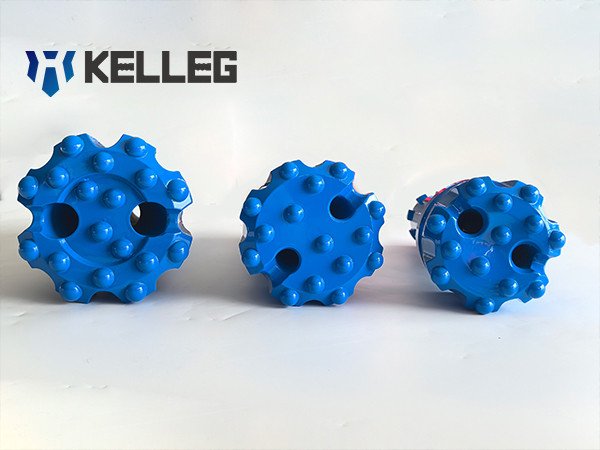
Common options include:
Flat Face #
Best for:
- Hard rock
- Abrasive formations
Advantages:
- Strong wear resistance
- Good hole stability
Concave Face #
Best for:
- Medium-hard rock
- General blast hole drilling
Advantages:
- Improved hole cleaning
- Better penetration balance
Drop Center Face #
Best for:
- Fractured formations
- Broken ground
Advantages:
- Better hole centering
- Improved drilling control
Selecting the correct face design helps reduce uneven wear and improve drilling efficiency.
Why is air pressure important in DTH drilling? #
Compressed air powers the hammer and removes rock cuttings from the hole. Proper air pressure is critical for:
- Efficient rock breaking
- Cooling the bit
- Preventing cutting recirculation
- Maintaining penetration rate
Low air pressure often causes overheating and accelerated wear, while excessively high pressure may increase fatigue stress and button breakage.
What happens if flushing is insufficient? #
Poor flushing allows cuttings to remain at the bottom of the hole, where they repeatedly circulate between the bit and the rock.
This may result in:
- Rapid carbide wear
- Steel body erosion
- Higher operating temperature
- Reduced drilling speed
- Increased fuel consumption
Maintaining adequate airflow and clean flushing holes is essential for long-term bit performance.
How often should DTH drill bits be sharpened? #
Button sharpening intervals depend on:
- Rock abrasiveness
- Drilling hours
- Wear rate
- Penetration performance
In general, carbide buttons should be reground before they become excessively flat. Regular sharpening:
- Restores cutting efficiency
- Reduces heat buildup
- Minimizes stress concentration
- Extends overall bit lifespan
Ignoring flat buttons often leads to cracking and premature failure.
Can incorrect rotation speed damage a DTH drill bit? #
Yes. Improper RPM is one of the most common causes of accelerated wear.
Excessive Rotation Speed May Cause: #
- Flat button wear
- Carbide overheating
- Reduced impact efficiency
Insufficient Rotation Speed May Cause: #
- Uneven wear patterns
- Lower penetration rate
- Repeated impact on the same contact area
The ideal RPM depends on rock hardness, bit size, and hammer type.
How does feed pressure influence bit service life? #
Feed force controls the contact pressure between the bit and the rock surface.
Excessive Feed Pressure Can Cause: #
- Broken buttons
- Bit face cracking
- Excessive vibration
Insufficient Feed Pressure Can Cause: #
- Bit bouncing
- Shock loading
- Reduced drilling efficiency
Consistent and balanced feed pressure improves both drilling speed and tool durability.
What are the signs that a DTH drill bit should be replaced? #
Common indicators include:
- Significant reduction in penetration rate
- Excessive gauge wear
- Missing or cracked buttons
- Visible face cracking
- Excessive vibration
- Enlarged flushing holes
- Poor hole quality
Continuing to use heavily worn bits may damage the DTH hammer and increase drilling costs.
Does compressor size affect DTH bit performance? #
Yes. An undersized compressor may not provide sufficient pressure or airflow for effective drilling.
This can lead to:
- Poor flushing
- Lower DTH hammer efficiency
- Excessive bit heating
- Faster wear rates
Compressor capacity should match:
- Hole diameter
- DTH hammer size
- Drilling depth
- Operating pressure requirements
What role does lubrication play in DTH drilling? #
Although lubrication primarily protects the DTH hammer, it also influences bit life indirectly.
Proper lubrication helps:
- Maintain stable DTH hammer performance
- Reduce vibration
- Prevent internal DTH hammer wear
- Improve energy transfer efficiency
Using suitable DTH hammer oil improves overall drilling reliability and tool longevity.
Can drilling practices reduce total operating cost? #
Absolutely. Extending DTH drill bit life helps:
- Reduce tool replacement frequency
- Lower downtime
- Improve penetration efficiency
- Decrease fuel consumption
- Maintain better hole accuracy
Longer-lasting bits contribute directly to lower cost per meter and higher production efficiency.
Best Practices for Longer DTH Drill Bit Service Life #
To maximize drill bit durability in blast hole drilling operations:
- Match the bit design to the rock formation
- Maintain proper air pressure and airflow
- Use balanced rotation speed and feed pressure
- Ensure efficient hole cleaning
- Regrind buttons regularly
- Inspect bits daily for early wear signs
- Use high-quality carbide and reliable drilling tools
- Maintain correct DTH hammer and bit compatibility
Consistent operational control is often more important than simply increasing drilling power.
Conclusion #
DTH drill bit service life plays a major role in the productivity and profitability of blast hole drilling operations. Premature wear can reduce penetration efficiency, increase maintenance costs, and create unnecessary downtime, especially in demanding mining and quarry environments.
By selecting the correct bit design, optimizing drilling parameters, improving flushing performance, and following preventive maintenance practices, operators can significantly extend drill bit service life and improve overall drilling efficiency. Regular inspection, timely sharpening, and proper equipment matching are all essential for achieving stable long-term performance.
As drilling conditions continue to become more demanding, combining high-quality DTH tools with proper operational practices remains the most effective strategy for reducing drilling costs and maximizing productivity.