- Introduction
- What Makes Some Rock Drill Bits Last Twice as Long as Others?
- Body Steel Quality: The Foundation of Drill Bit Durability
- Heat Treatment: Creating the Right Balance Between Hardness and Toughness
- Body Hardness: Why Higher Hardness Does Not Always Mean Longer Life
- Tungsten Carbide Buttons: The Cutting Performance Determines Wear Resistance
- Manufacturing Precision: Small Details Create Big Differences
- Drilling Conditions: Even the Best Drill Bit Can Fail in the Wrong Application
- Comparison of Materials Used in Different Types of Top Hammer Drill Bits
- Threaded Button Bits – Premium Materials for Maximum Performance
- Tapered Button Bits – Flexible Material Options for Different Budgets
- Tapered Cross Bits – Improved Stability for Harder Rock
- Tapered Chisel Bits – Economical Choice for Light-Duty Drilling
- Material Matching Is More Important Than Material Grade Alone
- Why Matching Steel and Carbide Matters More Than Steel Grade Alone
- How to Choose the Right Drill Bit Material for Your Application
- Conclusion
Introduction #
At first glance, two rock drill bits may appear almost identical. They may have the same diameter, similar button layout, and even comparable dimensions. Yet in real drilling operations, one bit may drill twice as many meters as another before requiring replacement.
The difference is rarely caused by appearance alone. Instead, the service life of top hammer drill bits depends on a combination of factors, including rock drill bit material, body steel quality, heat treatment, tungsten carbide buttons, manufacturing precision, and drilling conditions. Even small differences in steel cleanliness or carbide quality can significantly affect wear resistance, impact strength, and overall drilling efficiency.
Not all drill bits are manufactured to the same standard. Threaded button bits, tapered button bits, tapered chisel bits, and tapered cross bits are designed for different drilling applications, and they often use different steel grades, hardness specifications, carbide materials, and production processes. These differences directly influence durability, penetration rate, maintenance frequency, and ultimately the cost per meter drilled.
In this guide, you’ll learn how drill bit materials affect performance, compare the characteristics of the four most common top hammer drill bit types, and understand why choosing the right material is often more important than simply choosing the lowest purchase price.
What Makes Some Rock Drill Bits Last Twice as Long as Others? #

Two rock drill bits from different manufacturers may have similar designs and dimensions, but their service lives can differ significantly. A longer-lasting drill bit is not created by one single factor. Instead, its performance is determined by the combined effect of steel quality, heat treatment, hardness balance, carbide selection, manufacturing precision, and drilling conditions.
For top hammer drill bits, every component must work together to withstand repeated impact loads, abrasive wear, and harsh drilling environments. A small difference in material quality or manufacturing process can lead to major differences in drilling meters, downtime, and overall cost per meter.
Body Steel Quality: The Foundation of Drill Bit Durability #
The steel body is the structural foundation of a rock drill bit. During top hammer drilling, the bit is continuously exposed to high-frequency impact loads, torsional stress, and vibration. Poor-quality steel may cause premature cracking, plastic deformation, or fatigue failure even if the carbide buttons remain in good condition.
The performance of drill bit steel mainly depends on three aspects:
Alloy Composition #
High-quality rock drill bits usually use specially developed alloy steels with optimized contents of:
- Carbon (C)
- Chromium (Cr)
- Nickel (Ni)
- Molybdenum (Mo)
These alloying elements improve:
- Strength
- Toughness
- Hardenability
- Fatigue resistance
For premium top hammer drilling tools, alloy steels such as 45CrNiMo1V are commonly selected because they provide an excellent balance between hardness and impact toughness.
Steel Cleanliness #
Steel cleanliness directly affects fatigue life.
During repeated impact drilling, internal defects such as:
- Non-metallic inclusions
- Microcracks
- Porosity
can become starting points for fatigue failure.
Cleaner steel provides:
- Better crack resistance
- Longer fatigue life
- More stable performance under heavy impact loads
Forging Quality #
The forging process influences the internal structure of the steel.
Proper forging improves:
- Grain refinement
- Material density
- Mechanical strength
A well-forged drill bit body can better withstand repeated impact energy compared with a poorly processed steel body.
Summary:
High-quality alloy steel provides better fatigue resistance and crack resistance than conventional steels, creating a stronger foundation for longer drill bit life.
Heat Treatment: Creating the Right Balance Between Hardness and Toughness #
Heat treatment is one of the most important processes determining drill bit performance.
A rock drill bit must be:
- Hard enough to resist wear
- Tough enough to absorb impact
This balance is achieved through controlled heat treatment processes, mainly:
- Hardening
- Tempering
Hardening #
Hardening increases surface hardness and improves resistance against:
- Abrasive wear
- Plastic deformation
- Surface damage
However, excessive hardness can make the material brittle.
Tempering #
Tempering reduces brittleness and improves toughness after hardening.
A properly tempered drill bit body can better withstand:
- Impact stress
- Vibration
- Repeated loading cycles
A high-quality manufacturer does not simply maximize hardness. Instead, the goal is to achieve an optimized combination of:
Hardness + Toughness + Fatigue Resistance
Summary:
The best drill bit is not the hardest one, but the one with the best balance between wear resistance and impact toughness.
Body Hardness: Why Higher Hardness Does Not Always Mean Longer Life #
Many buyers believe that a harder drill bit always lasts longer. However, this is not necessarily true.
The ideal hardness depends on:
- Steel grade
- Heat treatment process
- Rock conditions
- Impact energy
A drill bit body that is too soft may suffer from:
- Fast wear
- Thread deformation
- Mushrooming
A drill bit body that is too hard may suffer from:
- Brittle cracking
- Reduced impact resistance
Therefore, premium top hammer drill bits require optimized hardness rather than maximum hardness.
Typical hardness ranges vary depending on design and application, but many high-performance drill bit bodies are controlled within approximately:
HRC 45–55
Summary:
Long service life comes from the right hardness level, not simply the highest hardness value.
Tungsten Carbide Buttons: The Cutting Performance Determines Wear Resistance #

The carbide buttons are the actual cutting elements of a rock drill bit. Their quality directly affects penetration rate and wear resistance.
Key carbide factors include:
Carbide Grade #
Different carbide grades provide different performance characteristics.
Important properties include:
- Hardness
- Transverse rupture strength
- Impact resistance
- Wear resistance
Hard rock applications usually require carbide grades with higher impact resistance.
Binder Content #
The cobalt binder content influences carbide performance.
Higher binder content:
- Better toughness
- Better impact resistance
Lower binder content:
- Higher hardness
- Better wear resistance
The correct balance depends on drilling conditions.
Grain Size #
Carbide grain size affects performance.
Fine grain carbide:
- Higher hardness
- Better wear resistance
Coarse grain carbide:
- Higher toughness
- Better impact resistance
Summary:
High-quality tungsten carbide buttons allow drill bits to maintain sharp cutting performance and resist premature wear in demanding rock formations.
Manufacturing Precision: Small Details Create Big Differences #
Even with premium steel and carbide, manufacturing quality determines the final performance of a drill bit.
Important factors include:
Button Hole Accuracy #
Incorrect button hole dimensions may cause:
- Loose carbide inserts
- Poor energy transfer
- Premature button failure
Carbide Brazing Quality #
Poor brazing can lead to:
- Button loss
- Weak bonding
- Reduced drilling efficiency
Concentricity and Machining Accuracy #
Precise machining ensures:
- Stable rotation
- Even wear distribution
- Reduced vibration
Thread Accuracy #
For threaded button bits, thread quality directly affects:
- Connection strength
- Energy transmission
- Service life of the drilling system
Summary:
Manufacturing precision ensures that materials can perform as designed and prevents early failures caused by production defects.
Drilling Conditions: Even the Best Drill Bit Can Fail in the Wrong Application #
Material quality is important, but drilling conditions also have a major influence on service life.
The same drill bit may achieve very different results depending on operating parameters.
Important factors include:
Rock Hardness #
Hard and abrasive rocks require:
- Higher-grade carbide
- Better impact resistance
- Optimized bit design
Impact Energy #
Excessive impact energy can accelerate:
- Carbide damage
- Body fatigue
- Thread wear
Rotation Speed #
Incorrect rotation speed may cause:
- Excessive carbide wear
- Overheating
- Poor hole cleaning
Flushing Efficiency #
Poor flushing causes:
- Cuttings accumulation
- Regrinding
- Increased bit wear
Summary:
A premium drill bit can only achieve maximum performance when the material, design, and drilling parameters are properly matched to the rock formation.
A rock drill bit lasts longer not because of one premium material alone, but because every component works together. From the alloy steel body and heat treatment process to carbide grade, manufacturing precision, and drilling conditions, each factor contributes to wear resistance, impact durability, and overall drilling efficiency.
When comparing different top hammer drill bits, buyers should not focus only on the initial purchase price. The real value comes from longer service life, fewer replacements, reduced downtime, and lower cost per meter drilled.
Comparison of Materials Used in Different Types of Top Hammer Drill Bits #
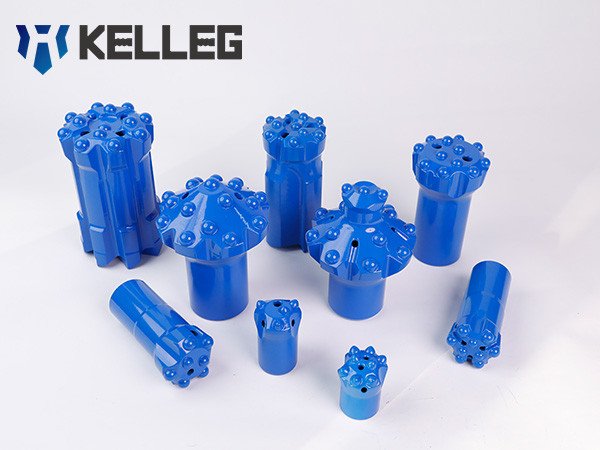
Although all top hammer drill bits are designed to transfer impact energy and break rock efficiently, they are not manufactured from the same materials or to the same performance standards. Different bit types serve different drilling applications, and their steel body, hardness, carbide grade, durability, and price point are selected accordingly.
For example, a premium threaded button bit used in underground mining typically features high-strength alloy steel and premium tungsten carbide for maximum service life. In contrast, tapered chisel bits and tapered cross bits are often optimized for lower investment costs and light- to medium-duty rock drilling.
The following comparison summarizes the typical material configurations used in the four most common top hammer drill bit types.
| Bit Type | Body Material | Typical Hardness | Carbide Grade | Key Characteristics | Price Level |
|---|---|---|---|---|---|
| Threaded Button Bit | 45CrNiMo1V | 42–48 HRC | YK05 | Premium body steel and premium carbide provide excellent wear resistance, impact strength, and the longest service life. Suitable for demanding mining and tunneling applications. | High |
| Tapered Button Bit | 45CrNiMo1V / 35CrNiMoV (GQ26) / 35CrMoV / 42CrMo | 32–48 HRC | YK05, KD102H and similar grades | Available in multiple material combinations to balance durability and cost. Widely used in quarrying, construction, and small- to medium-scale mining. | Low–High |
| Tapered Cross Bit | 42CrMo / 40Cr | No heat treatment (typical) | YK20 or YK15.6 | Higher cobalt-content carbide offers improved impact resistance in relatively hard rock. A cost-effective option for general drilling applications. | Low–High |
| Tapered Chisel Bit | 40Cr | No heat treatment (typical) | YK15.6 | Simple structure, economical manufacturing, and suitable for soft to medium-hard rock formations where drilling costs are a priority. | Low |
Note: Material combinations may vary among manufacturers. Premium body steel should always be matched with premium carbide buttons to ensure both components wear at a similar rate. An ideal drill bit reaches the end of its service life with the steel body and carbide buttons wearing together, maximizing drilling efficiency and overall value.
Threaded Button Bits – Premium Materials for Maximum Performance #

Threaded button bits are typically used in high-production mining and tunneling operations where drilling efficiency and service life are critical. Because these bits are subjected to high-frequency impact loads, they generally use the highest-grade material combination.
Typical configuration:
- Body steel: 45CrNiMo1V premium alloy steel
- Body hardness: 42–48 HRC
- Carbide grade: YK05
- Price level: High
Key advantages #
- Excellent fatigue resistance
- High impact strength
- Outstanding wear resistance
- Longest service life among the four bit types
- Lowest drilling cost per meter despite higher initial investment
This material combination is recommended for hard rock formations and continuous drilling environments where maximum productivity is required.
Tapered Button Bits – Flexible Material Options for Different Budgets #
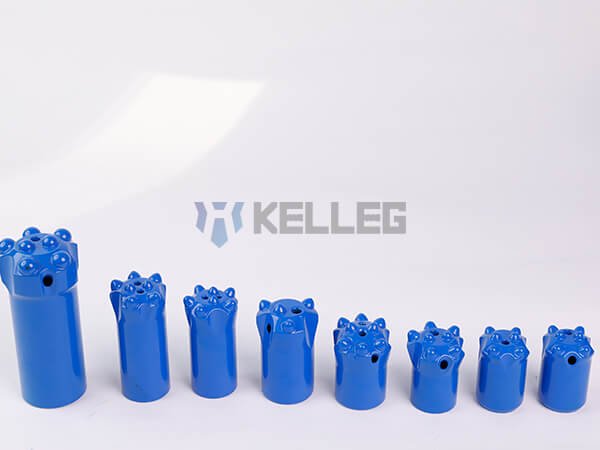
Unlike threaded button bits, tapered button bits are available in several material configurations, allowing users to select an appropriate balance between performance and cost.
Typical body materials include:
| Body Steel | Hardness | Typical Carbide | Features | Price |
|---|---|---|---|---|
| 45CrNiMo1V | 42–48 HRC | YK05 | Premium steel and premium carbide deliver the best overall durability. | High |
| 35CrNiMoV (GQ26) | 32–38 HRC | KD102H or equivalent | A widely used, cost-effective combination offering good service life and value. | Medium-High |
| 35CrMoV | 32–38 HRC | KD102H or equivalent | Similar performance with lower market adoption. | Medium |
| 42CrMo | 32–38 HRC | KD102H or equivalent | Recommended when purchase cost is the primary consideration. | Low |
Material Matching Matters #
Selecting premium steel without matching it to an appropriate carbide grade may not deliver the expected service life. Likewise, using high-quality carbide with a lower-grade steel body can lead to premature body wear while the carbide remains intact.
The most effective combination is one in which the steel body and carbide inserts wear at approximately the same rate, maximizing tool utilization and reducing wasted material.
Tapered Cross Bits – Improved Stability for Harder Rock #
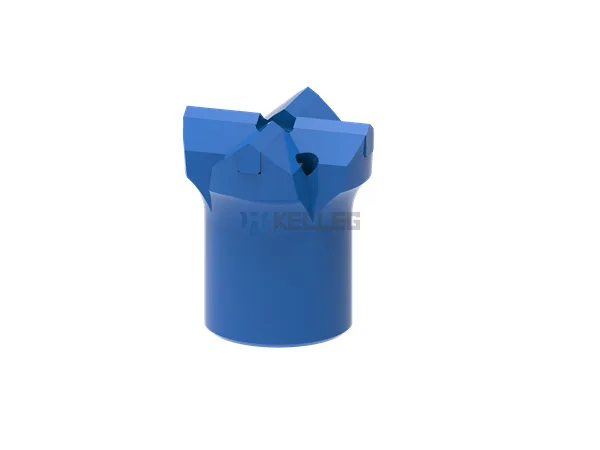
Tapered cross bits are commonly selected for fractured formations and relatively hard rock where drilling stability is important.
Typical configurations include:
| Body Steel | Heat Treatment | Carbide Grade | Features | Price |
|---|---|---|---|---|
| 42CrMo | Typically not heat treated | YK20 or equivalent | Higher cobalt-content carbide provides better toughness and performs well in harder formations. | High |
| 40Cr | Typically not heat treated | YK15.6 or equivalent | Economical configuration for general-purpose drilling. | Low |
Compared with chisel bits, tapered cross bits generally provide better hole guidance, improved wear resistance, and longer service life in abrasive formations.
Tapered Chisel Bits – Economical Choice for Light-Duty Drilling #
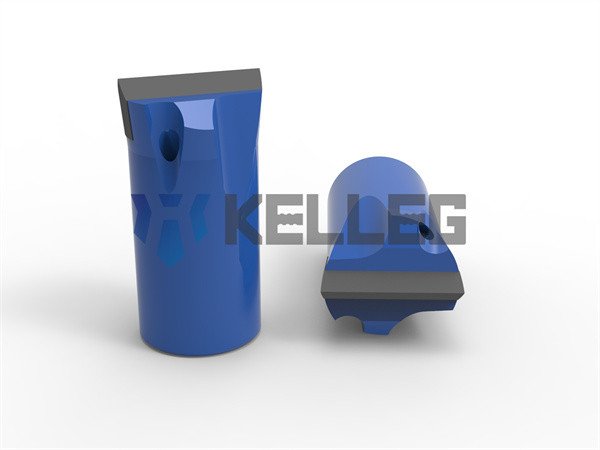
Tapered chisel bits feature a simple structure and relatively low manufacturing cost, making them a popular choice for soft rock, construction projects, and budget-sensitive drilling operations.
Typical configuration:
- Body steel: 40Cr
- Heat treatment: Typically not heat treated
- Carbide grade: YK15.6
- Price level: Low
Key advantages #
- Lowest purchase cost
- Suitable for soft to medium-hard rock
- Ideal for contractors prioritizing initial investment over maximum service life
Material Matching Is More Important Than Material Grade Alone #
One of the most common misconceptions is that selecting the highest-grade steel or the hardest carbide automatically produces the best drill bit. In reality, the steel body and carbide inserts should be engineered as a matched system.
If the steel body wears out long before the carbide inserts, the remaining carbide cannot be fully utilized. Conversely, if the carbide fails while the body is still in good condition, the drill bit must also be discarded prematurely.
The ideal design achieves a balanced wear pattern, allowing both the body and carbide to reach the end of their service life at nearly the same time. This balanced approach not only maximizes drilling efficiency but also delivers the lowest cost per meter drilled, making it the preferred solution for professional mining and construction operations.
Why Matching Steel and Carbide Matters More Than Steel Grade Alone #
When evaluating a rock drill bit, many buyers focus primarily on the steel grade. While high-quality alloy steel is essential, steel alone does not determine the overall performance or service life of a drill bit.
A top hammer drill bit is a complete tool composed of the steel body and the tungsten carbide buttons. These two components must be carefully matched so that they wear at a similar rate and perform as a balanced unit throughout the drilling cycle.
Choosing premium steel with low-grade carbide—or premium carbide with a lower-performance steel body—can reduce overall efficiency and increase drilling costs rather than improve them.
Premium Steel Requires Premium Carbide #
High-strength alloy steels such as 45CrNiMo1V provide excellent impact resistance and fatigue strength.
However, if these premium steel bodies are paired with lower-grade carbide buttons, the carbide may wear or fracture long before the steel body reaches the end of its useful life.
In this situation:
- The steel body still has usable service life.
- The worn carbide buttons reduce drilling efficiency.
- The entire drill bit must often be replaced before the body material is fully utilized.
This results in unnecessary material waste and higher operating costs.
Premium Carbide Cannot Compensate for Poor Steel #
The opposite situation is equally problematic.
Installing high-performance carbide inserts into a lower-grade steel body does not automatically produce a premium drill bit.
If the steel body has insufficient strength or fatigue resistance, it may experience:
- Body wear
- Thread deformation
- Fatigue cracking
- Button hole enlargement
even though the carbide buttons remain in good condition.
Again, the drill bit reaches the end of its service life before all components have been fully utilized.
The Best Drill Bit Wears Evenly #
The ideal drill bit is one in which the steel body and carbide buttons reach the end of their service life at approximately the same time.
When wear is balanced:
- The carbide button maintains effective cutting performance throughout the bit’s life.
- The steel body retains sufficient strength until replacement.
- Neither component is discarded prematurely.
- Material utilization is maximized.
- Drilling performance remains stable.
This balanced design delivers better productivity and reduces unnecessary replacement costs.
Material Matching Improves Cost per Meter #
Although premium material combinations generally have a higher purchase price, they often deliver the lowest cost per meter drilled because they reduce downtime and extend service life.
Conversely, selecting mismatched materials to reduce the initial purchase price may result in:
- More frequent bit replacement
- Lower drilling efficiency
- Higher labor costs
- Increased machine downtime
- Higher total operating costs
For professional mining and tunneling operations, evaluating cost per meter rather than purchase price alone provides a more accurate measure of drill bit value.
Material Matching Recommendations #
The following combinations are commonly selected to balance performance, durability, and investment cost.
| Application | Body Steel | Carbide Grade | Matching Result |
|---|---|---|---|
| Premium mining and tunneling | 45CrNiMo1V | YK05 | Maximum durability and service life |
| General quarrying | 35CrNiMoV (GQ26) | KD102H or equivalent | Balanced performance and cost |
| Hard fractured rock | 42CrMo | YK20 or equivalent | Good toughness and drilling stability |
| Soft to medium-hard rock | 40Cr | YK15.6 | Economical solution for light-duty drilling |
Rather than choosing the highest-grade material for every application, manufacturers should select steel and carbide combinations that match the drilling environment and expected service life.
Key Takeaway #
The longest-lasting rock drill bit is not necessarily the one made from the strongest steel or the hardest carbide. Instead, it is the one in which the steel body, carbide inserts, hardness, and application are engineered as a balanced system.
When steel and carbide are properly matched, both components wear at a similar rate, maximizing material utilization, extending service life, and reducing the overall cost per meter drilled. This balanced approach is what separates a premium top hammer drill bit from one that only appears paper premium.
How to Choose the Right Drill Bit Material for Your Application #

Selecting the right rock drill bit material is not simply about choosing the hardest steel or the most expensive carbide. The best drill bit is the one that matches your drilling conditions, production requirements, and budget.
Different rock formations and drilling methods place different demands on the drill bit body and carbide inserts. Choosing the correct material combination can improve drilling efficiency, reduce tool replacement frequency, and lower the overall cost per meter drilled.
The following recommendations can help you select the most suitable top hammer drill bit for your application.
For High-Production Mining and Tunneling #
Recommended Bit
- Threaded Button Bit
Recommended Material
- Body Steel: 45CrNiMo1V
- Body Hardness: 42–48 HRC
- Carbide Grade: YK05
Why It Works
This premium material combination offers outstanding fatigue resistance, excellent impact toughness, and superior wear resistance. It is ideal for high-frequency drilling in hard and abrasive rock formations where long service life and high penetration rates are essential.
Price Level
High
For Quarrying and General Construction #

Recommended Bit
- Tapered Button Bit
Recommended Material
- Body Steel: 35CrNiMoV (GQ26)
- Body Hardness: 32–38 HRC
- Carbide Grade: KD102H or equivalent
Why It Works
This combination provides an excellent balance between durability and cost. It is widely used in quarrying, road construction, and medium-duty drilling where reliable performance is required without the higher investment of premium threaded bits.
Price Level
Medium
For Hard but Fractured Rock Formations #
Recommended Bit
- Tapered Cross Bit
Recommended Material
- Body Steel: 42CrMo
- Carbide Grade: YK20 or equivalent
Why It Works
The cross-type cutting structure provides better drilling stability in fractured formations. Higher cobalt-content carbide also improves impact resistance under demanding drilling conditions.
Price Level
Medium
For Soft Rock and Budget-Sensitive Projects #
Recommended Bit
- Tapered Chisel Bit
Recommended Material
- Body Steel: 40Cr
- Carbide Grade: YK15.6
Why It Works
For soft to medium-hard rock, a simple and economical material combination is often the most practical choice. Although service life is shorter than premium button bits, the lower purchase cost makes it suitable for small contractors and short-term projects.
Price Level
Low
Quick Selection Guide #
| Drilling Application | Recommended Bit | Body Material | Carbide Grade | Price Level |
|---|---|---|---|---|
| Underground Mining | Threaded Button Bit | 45CrNiMo1V | YK05 | High |
| Hard Rock Tunneling | Threaded Button Bit | 45CrNiMo1V | YK05 | High |
| Quarrying | Tapered Button Bit | 35CrNiMoV (GQ26) | KD102H | Medium |
| Road & Construction | Tapered Button Bit / Tapered Cross Bit | 35CrNiMoV or 42CrMo | KD102H / YK20 | Medium |
| Fractured Hard Rock | Tapered Cross Bit | 42CrMo | YK20 | Medium |
| Limestone & Soft Rock | Tapered Chisel Bit | 40Cr | YK15.6 | Low |
Focus on Total Drilling Cost, Not Just Purchase Price #
Many buyers naturally compare drill bits by their purchase price. However, the lowest-priced bit is not always the most economical choice.
When selecting a drill bit, consider the following factors together:
- Expected service life
- Penetration rate
- Tool replacement frequency
- Machine downtime
- Cost per meter drilled
For demanding mining operations, investing in premium materials often results in lower overall drilling costs because the bit lasts longer and requires fewer replacements. On the other hand, for light-duty construction or soft rock drilling, a more economical material combination may provide the best return on investment.
The best drill bit is not necessarily the most expensive—it is the one whose steel body, carbide grade, and drilling application are properly matched.
Conclusion #
At first glance, many top hammer drill bits appear almost identical. However, their service life, drilling efficiency, and overall value can differ significantly due to the materials and manufacturing processes behind them.
As this guide has shown, no single factor determines how long a rock drill bit will last. Premium alloy steel, optimized body hardness, high-quality tungsten carbide buttons, precision manufacturing, and proper drilling conditions all work together to influence durability and performance. More importantly, the steel body and carbide buttons should be carefully matched so that they wear at a similar rate throughout the drill bit’s service life. This balanced design maximizes material utilization, improves drilling efficiency, and reduces unnecessary replacement costs.
Different drilling applications also require different material combinations. Threaded button bits are the preferred choice for high-production mining and tunneling, where maximum durability and penetration are essential. Tapered button bits provide an excellent balance between performance and cost for quarrying and general construction. Tapered cross bits offer greater drilling stability in fractured or abrasive formations, while tapered chisel bits remain a practical and economical option for soft rock and light-duty applications.
When evaluating a drill bit, buyers should look beyond the purchase price or steel grade alone. Instead, consider the complete material system—including body steel, hardness, carbide grade, manufacturing quality, and application suitability. A well-designed drill bit may cost more initially, but its longer service life, higher drilling efficiency, and lower cost per meter drilled often deliver the greatest long-term value.
Ultimately, the reason some rock drill bits last twice as long as others is not because they use one “better” material, but because every component is engineered to work together as a balanced system. Choosing the right combination for your drilling conditions is the key to maximizing productivity, minimizing downtime, and achieving the best return on investment.