Introduction #
Pneumatic rock drill bits are the cutting tools used with hand-held and air-leg pneumatic rock drills to break rock efficiently in mining, quarrying, tunneling, construction, and foundation engineering. Working together with pneumatic rock drills and tapered drill rods, these bits transfer high-frequency impact energy directly to the rock, making them an essential component of the entire rock drilling system.
Unlike hydraulic top hammer drilling rigs that commonly use threaded drill bits, pneumatic rock drills typically rely on tapered drill bits. Depending on the drilling application and rock conditions, the most common types include tapered chisel bits, tapered cross bits, and tapered button bits, each offering distinct advantages in penetration rate, hole quality, durability, and cost.
Selecting the right pneumatic rock drill bit is not simply about choosing a diameter. Compatibility with the rock drill, drill rod, taper angle, and rock formation all influence drilling performance, tool service life, and operating efficiency.
This guide provides a comprehensive overview of pneumatic rock drill bits, including their common types, how they work within a pneumatic drilling system, compatibility with rock drills and drill rods, typical applications, and the key factors to consider when choosing the right bit for different drilling conditions.
What Are Pneumatic Rock Drill Bits? #
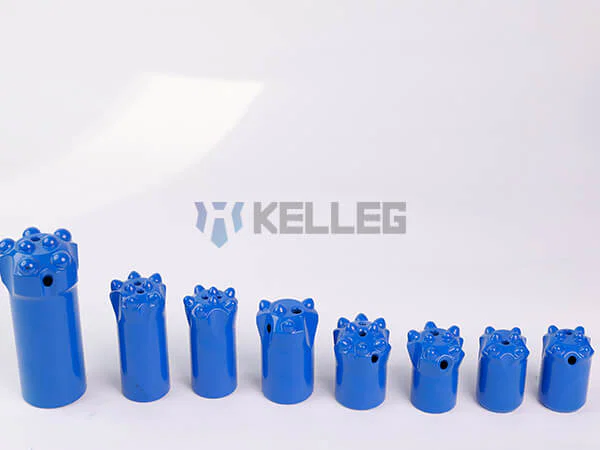
Instead of referring to a single product, “pneumatic rock drill bits” is a general term for all drill bits designed to be used with pneumatic rock drills. Depending on the drilling method and rock conditions, these bits are manufactured in different designs to achieve the required drilling performance.
In modern small-hole rock drilling, most pneumatic rock drill bits use a tapered connection, making tapered drill bits the industry standard for hand-held and air-leg pneumatic rock drills. These bits are available in several designs to suit different rock conditions and drilling applications.
Common Types of Pneumatic Rock Drill Bits #
Although the term pneumatic rock drill bits covers various bit designs, they are generally classified into three main categories according to their cutting structure.
Tapered Chisel Bits #
Tapered chisel bits feature a straight carbide insert and are mainly used for soft to medium-hard rock formations. Their simple construction and low manufacturing cost make them suitable for light-duty drilling and applications where drilling speed is more important than tool service life.
Tapered Cross Bits #
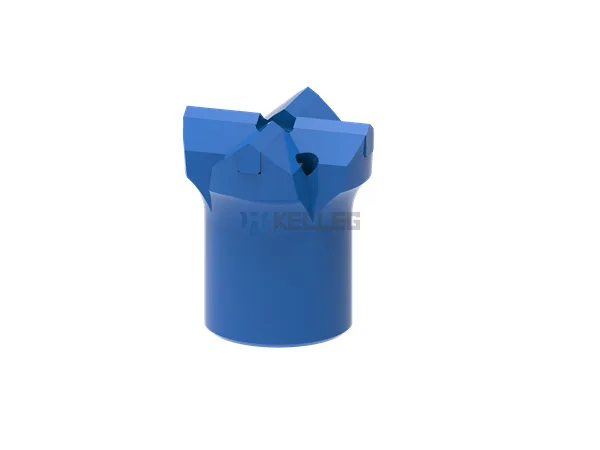
Tapered cross bits use intersecting carbide inserts to improve hole guidance and drilling stability. They perform well in fractured or uneven rock formations where maintaining hole straightness is important and remain a practical choice for many quarrying and underground mining operations.
Tapered Button Bits #
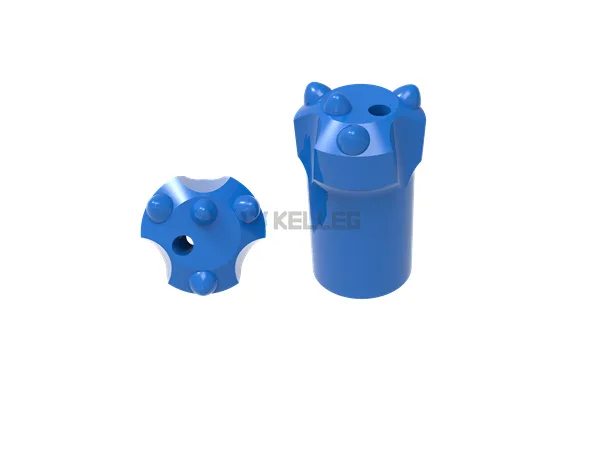
Tapered button bits use multiple tungsten carbide buttons to break rock through concentrated impact. They offer higher penetration rates, longer service life, and better wear resistance than chisel or cross bits, making them the preferred choice for medium-hard to hard rock drilling. Because tapered button bits represent the most widely used pneumatic rock drill bit today, they are often considered the standard solution for modern pneumatic rock drilling.
Quick Comparison of Common Pneumatic Rock Drill Bit Types #
| Bit Type | Best Rock Conditions | Typical Applications |
|---|---|---|
| Tapered Chisel Bit | Soft to medium-hard rock | Construction, light-duty excavation |
| Tapered Cross Bit | Fractured and uneven rock | Quarrying, tunneling, underground development |
| Tapered Button Bit | Medium-hard to hard rock | Mining, quarrying, production drilling |
Related Guide: Looking for detailed information about button shapes, taper angles, bit diameters, and selection methods? Read our complete guide to Tapered Button Bits.
Pneumatic Rock Drill Bits vs. Threaded Drill Bits #
Although both pneumatic rock drill bits and threaded drill bits are designed to break rock, they are intended for different drilling systems and should not be used interchangeably.
| Feature | Pneumatic Rock Drill Bits | Threaded Drill Bits |
|---|---|---|
| Connection Type | Tapered connection | Threaded connection |
| Compatible Drill | Hand-held and air-leg pneumatic rock drills | Hydraulic top hammer drilling rigs |
| Drill rod | Tapered drill rod | Threaded drill rod |
| Typical Hole Depth | Small to medium-depth holes | Medium to deep-hole drilling |
| Bit Replacement | Fast and simple | Requires threading and tightening |
| Typical Applications | Quarrying, tunneling, underground development, construction | Large-scale mining, production drilling, long-hole drilling |
The choice between tapered and threaded drill bits is determined primarily by the drilling system rather than the rock itself. Pneumatic rock drills rely on tapered drill bits because they provide a lightweight, economical, and easy-to-maintain solution for small-hole drilling. Hydraulic top hammer rigs, on the other hand, require threaded drill bits to withstand higher drilling power and provide a more rigid connection during deeper and more demanding drilling operations.
When Should You Choose Tapered Drill Bits? #
Tapered drill bits remain the preferred solution whenever pneumatic rock drills are used for small-hole drilling operations. They are particularly suitable for projects that require lightweight equipment, frequent bit replacement, and economical operating costs.
Typical situations where tapered drill bits are the best choice include:
- Underground mine development and drifting
- Quarry bench drilling
- Tunnel excavation and scaling
- Road and railway construction
- Slope stabilization and foundation engineering
- Remote job sites where portable pneumatic equipment is preferred
For deeper holes, higher drilling power, or large-scale production drilling, hydraulic top hammer systems equipped with threaded drill bits generally provide better performance and durability.
Components of a Pneumatic Rock Drilling System #
Efficient rock drilling depends not only on the performance of the drill bit but also on the compatibility of the entire drilling system. A typical pneumatic rock drilling system consists of three core components: the pneumatic rock drill, the tapered drill rod, and the pneumatic rock drill bit. Each component performs a specific function, and together they ensure efficient energy transfer, accurate drilling, and reliable tool performance.
Pneumatic Rock Drill #
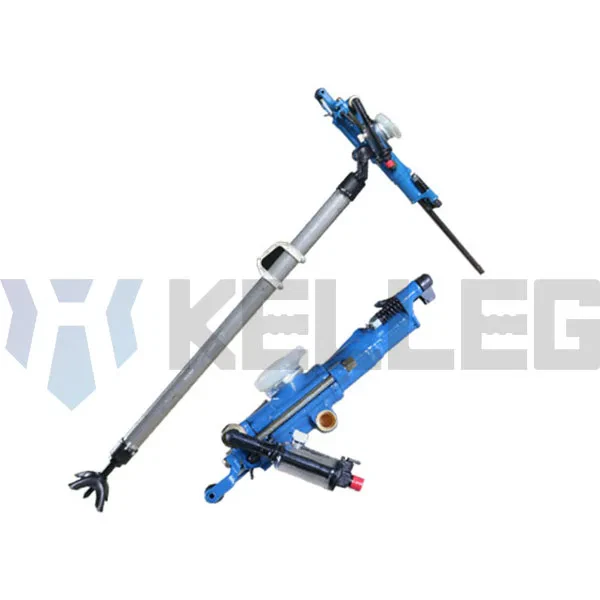
The pneumatic rock drill is the power source of the drilling system. Driven by compressed air, it generates high-frequency impact energy while simultaneously rotating the drill rod. This repeated impact and rotation provide the force required to fracture the rock.
Hand-held and air-leg pneumatic rock drills are widely used in underground mining, quarrying, tunneling, and construction because they are portable, easy to maintain, and well suited for small-hole drilling operations.
Tapered Drill Rod #
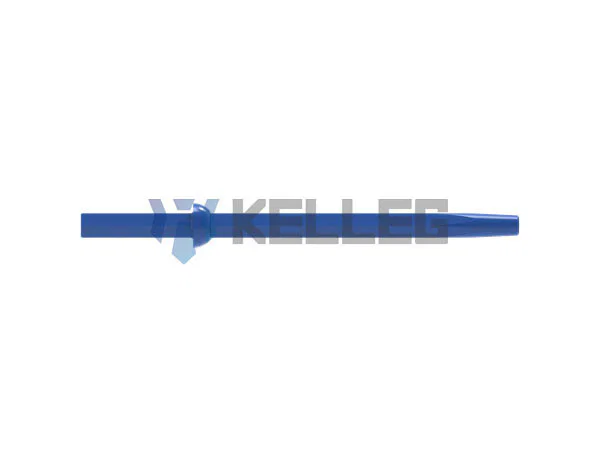
The tapered drill rod serves as the transmission link between the rock drill and the drill bit. Its primary function is to transfer the impact and rotational energy produced by the pneumatic rock drill directly to the drill bit with minimal energy loss.
One end of the drill rod connects securely to the rock drill, while the opposite end features a tapered shank that matches the tapered angle of the drill bit. This connection allows the bit to be installed or removed quickly while maintaining efficient impact energy transfer throughout the drilling process.
Pneumatic Rock Drill Bit #
The pneumatic rock drill bit is the cutting component that comes into direct contact with the rock. It receives impact energy from the drill rod and concentrates it onto the carbide inserts, breaking the rock through repeated percussion and rotation.
Depending on the drilling application and rock conditions, pneumatic rock drill bits are available as tapered chisel bits, tapered cross bits, and tapered button bits. Selecting the appropriate bit type improves penetration rate, hole quality, tool service life, and overall drilling efficiency.
How the Three Components Work Together #
Although each component has a different role, they function as an integrated drilling system. The pneumatic rock drill generates impact energy, the tapered drill rod transfers that energy, and the drill bit converts it into effective rock-breaking force. Any mismatch between these components—such as an incorrect taper angle or incompatible drill rod—can reduce drilling efficiency, accelerate wear, and shorten tool service life.
| Component | Primary Function | Importance |
|---|---|---|
| Pneumatic Rock Drill | Generates impact and rotational energy | Provides drilling power |
| Tapered Drill Rod | Transfers energy from the drill to the bit | Ensures efficient energy transmission |
| Pneumatic Rock Drill Bit | Breaks the rock and forms the borehole | Determines drilling efficiency, hole quality, and tool life |
How Pneumatic Rock Drill Bits Work #
Pneumatic rock drill bits work by converting the high-frequency impact and rotational energy generated by a pneumatic rock drill into concentrated rock-breaking force. During drilling, the rock drill, tapered drill rod, and drill bit function as an integrated system, allowing energy to travel efficiently from the drill to the rock surface. At the same time, compressed air or water removes rock cuttings from the borehole, ensuring continuous and efficient drilling.
Step 1: The Pneumatic Rock Drill Generates Impact Energy #
The drilling process begins when compressed air powers the pneumatic rock drill. Inside the drill, a piston repeatedly strikes the shank of the drill rod at high frequency while the drill also applies a slight rotational motion. This combination of percussion and rotation provides the energy required for effective rock drilling.
Step 2: The Tapered Drill Rod Transfers the Energy #
The impact and rotational forces generated by the rock drill travel through the tapered drill rod with minimal energy loss. A properly matched drill rod ensures efficient power transmission and maintains drilling stability throughout the operation.
Step 3: The Drill Bit Breaks the Rock #
The pneumatic rock drill bit receives the transmitted energy and concentrates it onto its carbide buttons. Each impact creates localized compressive stress that fractures the rock, while the slight rotation positions the buttons onto fresh rock surfaces. Through thousands of impact-and-rotation cycles every minute, the drill bit gradually forms the borehole.
Step 4: Rock Cuttings Are Removed #
As the hole becomes deeper, compressed air or water flows through the flushing holes in the drill bit to remove broken rock fragments. Effective flushing prevents cuttings from accumulating inside the hole, reduces heat generation, minimizes unnecessary wear, and maintains drilling efficiency.
Step 5: Continuous Drilling Cycle #
These four actions—impact, energy transfer, rock breaking, and flushing—occur continuously throughout the drilling process. When all drilling components are correctly matched, the system delivers faster penetration rates, better hole quality, longer tool service life, and lower operating costs.
Rock Drilling Process Overview #
| Step | Component | Function |
|---|---|---|
| 1 | Pneumatic Rock Drill | Generates high-frequency impact and rotational energy |
| 2 | Tapered Drill Rod | Transfers impact energy to the drill bit |
| 3 | Pneumatic Rock Drill Bit | Breaks the rock and forms the borehole |
| 4 | Flushing Holes | Removes rock cuttings and cools the drilling tools |
What Affects Drilling Performance? #
Although the working principle is straightforward, drilling performance depends on several factors, including:
- Compatibility between the rock drill, drill rod, and drill bit
- Correct taper angle for a secure connection
- Appropriate bit type for the rock formation
- Adequate compressed air pressure and flushing efficiency
- Proper operating techniques
Optimizing these factors helps maximize penetration rate, improve hole accuracy, reduce tool wear, and extend the service life of both the drill bit and the entire drilling tools.
Drill Bit Compatibility: Choosing the Right Combination #
Selecting the right pneumatic rock drill bit is about more than choosing the correct bit type. To achieve maximum drilling efficiency, the drill bit must be compatible with the pneumatic rock drill, tapered drill rod, taper angle, and required hole diameter. A properly matched drilling system improves energy transfer, penetration rate, hole quality, and tool service life, while reducing unnecessary downtime and operating costs.
Match the Drill Bit with the Pneumatic Rock Drill #
The first compatibility check is the rock drill itself. Different pneumatic rock drills deliver different impact energy, impact frequency, and drilling power, so the drill bit should always be selected for the specific drill model.
Common pneumatic rock drill models include:
- YT27 Air-Leg Rock Drill – A versatile model widely used for underground mining, quarrying, tunneling, and infrastructure construction. It is suitable for medium-hard rock formations and general-purpose drilling.
- YT28 Air-Leg Rock Drill – One of the most popular pneumatic rock drills for mining and tunneling projects. It delivers higher impact energy and is ideal for medium to hard rock drilling with excellent drilling efficiency.
- YT29A Air-Leg Rock Drill – Designed for heavy-duty drilling applications requiring greater impact power and higher penetration rates in hard rock conditions.
Selecting a drill bit that matches the drilling equipment helps ensure efficient energy transfer, stable drilling performance, and longer service life for both the drill bit and the rock drill.
Match the Drill Bit with the Tapered Drill Rod #
The drill bit and drill rod must be designed to work as a complete system.
When selecting a tapered drill rod, consider:
- Taper angle – The drill rod must match the taper connection of the drill bit.
- Rod length – Choose the appropriate length according to the required drilling depth and working space.
- Rod profile – Hexagonal drill rods provide excellent rigidity and impact resistance, while round drill rods are commonly used in lighter drilling applications.
Using a compatible drill rod minimizes energy loss and improves drilling stability throughout the operation.
Match the Taper Connection #
The taper connection is one of the most critical compatibility factors in a pneumatic rock drilling system.
The taper angle of the drill bit and the drill rod must be identical to achieve a secure friction-fit connection. An incorrect taper match can reduce impact energy transfer, increase vibration, accelerate wear, and cause premature failure of both components.
Note: For a detailed explanation of 7°, 11°, and 12° taper angles and how to select the correct option, see our complete guide to Tapered Button Bits.
Match the Bit Diameter to the Required Hole Size #
The drill bit diameter should always be selected according to the required borehole size and drilling application.
Smaller bit diameters generally provide faster penetration rates and lower air consumption, making them suitable for light-duty drilling. Larger diameters produce wider holes but require greater drilling power and efficient flushing to maintain drilling performance.
Choosing the correct hole diameter helps balance productivity, hole quality, and operating efficiency.
Common Compatibility Mistakes #
Many drilling problems are caused not by the quality of the drill bit, but by incompatible drilling components.
| Compatibility Issue | Possible Cause | Operational Impact |
|---|---|---|
| Incorrect taper connection | Drill bit and drill rod use different taper angles | Poor energy transfer, excessive vibration |
| Loose drill bit | Worn or mismatched taper connection | Reduced drilling efficiency and unstable drilling |
| Drill bit falling off | Improper installation or incompatible taper fit | Frequent downtime and safety risks |
| Excessive energy loss | Poor compatibility between the rock drill, rod, and bit | Lower penetration rate and higher operating costs |
| Premature tool wear | Incompatible drilling components | Shortened service life of both drill rod and drill bit |
Compatibility Checklist #
Before beginning a drilling operation, verify the following:
- ✓ The drill bit matches the pneumatic rock drill model.
- ✓ The drill bit and drill rod use the same taper connection.
- ✓ The drill rod length and profile are suitable for the drilling task.
- ✓ The bit diameter meets the required hole specification.
- ✓ All drilling components are securely installed and show no signs of excessive wear.
A properly matched drilling system not only improves drilling performance but also extends the service life of the rock drill, drill rod, and drill bit while reducing maintenance costs and unplanned downtime.
Typical Applications of Pneumatic Rock Drill Bits #
Pneumatic rock drill bits are widely used in small-hole rock drilling applications where portability, reliable impact performance, and cost-effective operation are essential. Combined with hand-held or air-leg pneumatic rock drills, they provide an efficient solution for drilling blast holes, anchor holes, and development holes in a variety of geological conditions.
Underground Mining #
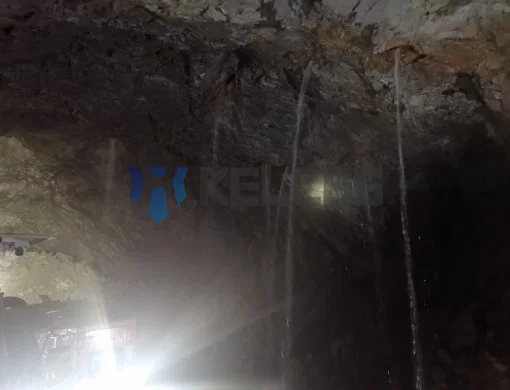
Underground mining is one of the most common applications for pneumatic rock drill bits. They are widely used for mine development, drifting, raise excavation, and production preparation, where operators require lightweight equipment that can perform reliably in confined underground spaces.
Tapered button bits are typically preferred for medium to hard rock formations because they offer high penetration rates and consistent drilling performance.
Quarrying #
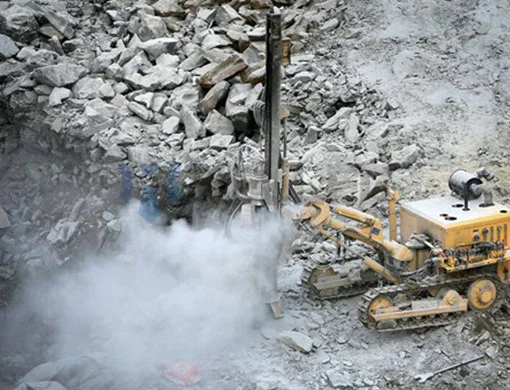
In quarry operations, pneumatic rock drill bits are commonly used to drill blast holes for aggregate and rock extraction. Their simple structure, quick bit replacement, and low operating cost make them well suited for small and medium-sized quarries.
Depending on the rock formation, operators may choose chisel bits, cross bits, or button bits to balance drilling efficiency and tool life.
Tunnel Excavation #
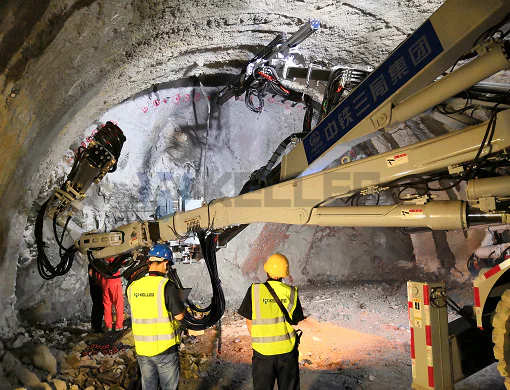
Tunnel construction requires accurate hole positioning and consistent drilling quality for blasting, scaling, and support installation. Pneumatic rock drill bits are frequently used for drilling blast holes, roof bolt holes, and auxiliary holes in transportation tunnels, hydropower projects, and underground infrastructure.
Their compatibility with air-leg rock drills makes them especially effective in restricted working environments where maneuverability is important.
Slope Stabilization #
Slope stabilization projects often require drilling anchor holes for rock bolts, soil nails, and reinforcement systems. Pneumatic rock drill bits provide the flexibility needed to operate on steep slopes, mountainous terrain, and other locations where large drilling equipment may be difficult to deploy.
Their lightweight drilling system enables contractors to complete anchoring work efficiently while maintaining good hole quality.
Road Construction #
During highway, railway, and infrastructure construction, pneumatic rock drill bits are widely used for controlled blasting, foundation excavation, and rock cutting. Portable pneumatic rock drills allow crews to perform drilling in areas with limited access while maintaining reliable productivity.
Their ease of maintenance and low equipment cost make them a practical choice for many civil engineering projects.
Dimension Stone Quarrying #
Dimension stone quarries require precise drilling to minimize unwanted cracking and preserve the value of granite, marble, and other natural stone blocks. Pneumatic rock drill bits are commonly used to drill line holes and splitting holes with high positional accuracy.
Depending on the stone type and drilling requirements, contractors can select different bit designs to achieve clean holes, stable drilling performance, and reduced material waste.
Why Pneumatic Rock Drill Bits Remain Popular #
Despite the increasing use of hydraulic drilling equipment, pneumatic rock drill bits continue to play an important role in many drilling projects because they offer several practical advantages:
- Excellent portability for confined or remote job sites
- Fast drill bit replacement through a simple tapered connection
- Reliable performance in small-hole drilling applications
- Lower equipment and maintenance costs
- Compatibility with a wide range of hand-held and air-leg pneumatic rock drills
These advantages make pneumatic rock drill bits a dependable and economical solution for mining, quarrying, tunneling, construction, and other rock excavation projects around the world.
How to Choose the Right Pneumatic Rock Drill Bit? #
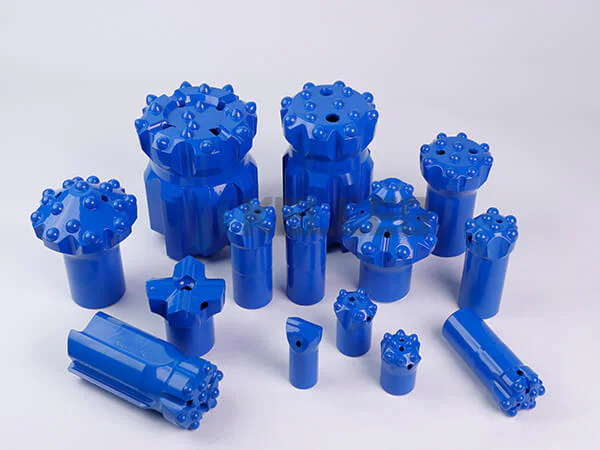
Choosing the right pneumatic rock drill bit requires considering more than just the bit design. A suitable drill bit should match the drilling equipment, rock conditions, hole requirements, and project objectives. The correct selection helps improve penetration rate, maintain hole quality, extend tool service life, and reduce the overall drilling cost.
For pneumatic drilling systems, the best drill bit is the one that provides the right balance between drilling performance, durability, and operating efficiency.
Consider the Drilling Application #
The first step in selecting a pneumatic rock drill bit is identifying the drilling application. Different projects have different requirements for drilling speed, hole accuracy, portability, and tool durability.
| Application | Key Requirements | Recommended Bit Consideration |
|---|---|---|
| Underground Mining | High productivity, reliable performance in confined spaces | Durable button bits for medium to hard rock |
| Quarrying | Efficient blast hole drilling and cost control | Select bit type based on rock hardness and production needs |
| Tunnel Excavation | Stable drilling and accurate hole positioning | Bits with good guidance performance |
| Slope Stabilization | Portability and adaptability to difficult access areas | Reliable tapered bits for anchor hole drilling |
| Road Construction | Flexible operation and economical drilling | General-purpose pneumatic drill bits |
Understanding the working environment helps determine the most suitable bit design before considering detailed specifications.
Match the Drill Bit Type with Rock Conditions #
Rock properties have a direct influence on drilling performance. Different pneumatic rock drill bit designs are developed to handle different geological conditions.
| Rock Condition | Recommended Bit Type | Characteristics |
|---|---|---|
| Soft to medium-hard rock | Tapered Chisel Bits | Simple design, fast penetration, economical operation |
| Fractured or variable rock | Tapered Cross Bits | Improved hole stability |
| Medium-hard to hard rock | Tapered Button Bits | Higher wear resistance and longer service life |
Selecting a bit that matches the rock formation helps prevent excessive wear, poor penetration rates, and premature tool failure.
For detailed information about button shapes, taper angles, and tapered button bit selection, refer to our complete Tapered Button Bits Guide.
Ensure Compatibility with the Pneumatic Drilling System #
A pneumatic rock drill bit must work as part of a complete drilling system. Before selection, always confirm compatibility between:
- Pneumatic rock drill model
- Tapered drill rod
- Taper angle
- Bit diameter
For example, a drill bit designed for a YT28 or YT27 pneumatic rock drill should be matched with the correct drill rod and connection specifications to achieve efficient impact energy transfer.
An incompatible combination may result in:
- Reduced drilling efficiency
- Excessive vibration
- Loose bit connection
- Premature wear
- Increased operating costs
A properly matched drilling system ensures that the energy generated by the pneumatic rock drill is effectively transferred to the rock surface.
Select the Correct Bit Diameter #
The required borehole diameter is another important factor when choosing a pneumatic rock drill bit.
A larger bit diameter can create a larger hole but generally requires:
- Higher impact energy
- Greater air consumption
- More powerful drilling equipment
Smaller diameter bits usually provide:
- Faster penetration rates
- Lower operating requirements
- Better suitability for portable drilling applications
The correct diameter should be selected according to the project requirements, drilling depth, and equipment capability.
Balance Penetration Rate and Tool Service Life #
A common mistake is choosing a drill bit based only on drilling speed. The highest penetration rate does not always mean the lowest drilling cost.
A better selection should consider:
- Penetration rate
- Bit service life
- Regrinding possibility
- Drilling downtime
- Cost per drilled meter
For large-scale mining and quarrying operations, a slightly more durable bit with longer service life may provide better overall economics than a faster-wearing option.
Consider Operating Conditions #
The working environment also affects bit selection and performance.
Important factors include:
- Availability of flushing water or compressed air
- Operator experience
- Drilling angle and accessibility
- Working temperature and underground conditions
Proper flushing, correct operating pressure, and regular inspection are essential for maintaining drilling efficiency regardless of the selected bit type.
Quick Selection Checklist #
Before purchasing or replacing pneumatic rock drill bits, check the following:
✓ What type of pneumatic rock drill is being used?
✓ What drill rod and taper angle are required?
✓ What type of rock formation will be drilled?
✓ What hole diameter is needed?
✓ Is the priority higher penetration rate or longer tool life?
✓ What is the expected drilling environment and workload?
By evaluating these factors together, operators can select the most suitable pneumatic rock drill bit for their specific application and achieve better drilling performance with lower operating costs.
Conclusion #
Pneumatic rock drill bits are essential cutting tools for small-hole rock drilling applications, providing reliable performance in mining, quarrying, tunneling, construction, and slope stabilization projects. As part of a complete pneumatic drilling system, the drill bit works together with the pneumatic rock drill and tapered drill rod to efficiently transfer impact energy and break rock.
Choosing the right pneumatic rock drill bit is not only about selecting a specific bit design. Successful drilling performance depends on multiple factors, including the drilling application, rock conditions, equipment compatibility, taper connection, and required hole specifications.
Chisel bits, cross bits, and button bits each have their own advantages and are suitable for different drilling requirements. By matching the correct bit type with the drilling system and working conditions, operators can achieve higher penetration rates, longer tool service life, improved hole quality, and lower drilling costs.
For projects requiring reliable and economical small-hole rock drilling solutions, pneumatic rock drill bits remain a practical choice due to their portability, simple operation, and adaptability to challenging working environments.
If you need help selecting the right pneumatic rock drill bit, drill rod, or complete drilling solution for your project, contact our technical team for professional recommendations based on your drilling conditions.