- Introduction
- What Is a Reaming Bit?
- Why Use Reaming Bits Instead of Direct Large-Diameter Drilling?
- Types of Reaming Bits
- Reaming Bit vs Normal Button Bit: Key Differences
- Reaming Bit Manufacturing Quality: What Buyers Should Check?
- Conclusion
Introduction #
In modern underground mining, tunneling, and infrastructure construction projects, the demand for large-diameter and highly accurate boreholes continues to increase. Larger holes are often required for applications such as cable installation, anchor reinforcement, ventilation systems, slot raising, and specialized excavation operations. However, drilling large-diameter holes directly in hard rock formations can create significant challenges, including higher impact energy requirements, increased vibration, faster tool wear, and reduced drilling accuracy.
Traditional direct drilling methods become less efficient as hole diameter increases because the drill bit must remove a larger volume of rock during each impact cycle. In abrasive and high-strength formations such as granite, basalt, and quartzite, excessive cutting resistance can lead to reduced penetration rates and shorter service life of rock drilling tools.
To overcome these challenges, pilot hole drilling combined with reaming technology has become an effective solution in top hammer drilling applications. Instead of creating a large hole in a single operation, a smaller pilot hole is drilled first to guide the drilling path, followed by a reaming bit that enlarges the existing hole to the required diameter. This method improves hole accuracy, optimizes energy transfer, reduces drilling resistance, and helps extend the service life of rock drilling tools.
A reaming bit is specially designed for enlarging pre-drilled holes in hard rock conditions. By combining durable carbide buttons, optimized cutting structures, and stable gauge buttons, it provides a reliable solution for mining, tunneling, and underground construction projects where precision and efficiency are critical.
This article provides a complete guide to reaming bits in top hammer drilling, covering their working principles, types, applications, selection factors, common problems, and best practices to maximize drilling performance.
What Is a Reaming Bit? #
Definition of Reaming Bit #
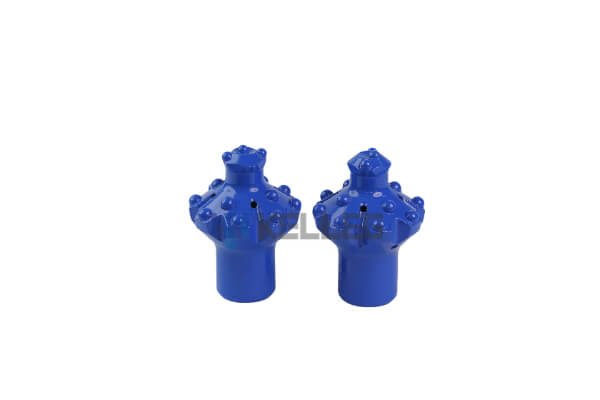
A reaming bit, also known as a reamer drill bit, rock reaming bit, or pilot reamer bit, is a specialized drilling tool designed to enlarge an existing pilot hole to a larger diameter in rock formations. Unlike conventional drill bits that create a borehole from solid rock, a reaming bit works after a smaller-diameter pilot hole has already been drilled, using the existing hole as a guide to achieve the required final diameter.
In top hammer drilling applications, the reaming bit is typically connected to the drill rod. The pilot hole provides accurate guidance, while the reaming bit cuts and removes the surrounding rock to expand the hole size. This two-stage drilling method enables the reaming bit to enlarge an existing hole under controlled drilling conditions.
Reaming bits are widely used in:
- Underground mining
- Tunnel construction
- Long-hole drilling
- Quarrying operations
- Rock excavation projects
- Drill-and-blast construction
- Underground infrastructure projects
Compared with standard button bits, which are designed for initial rock penetration, a reaming bit focuses on controlled hole enlargement. Its cutting structure is optimized with specially arranged carbide buttons and gauge buttons to maintain the final hole diameter, improve borehole accuracy, and reduce excessive wear during drilling.
For hard rock drilling conditions such as granite, basalt, and quartzite, selecting the correct rock reaming bit design is critical. Factors including rock hardness, abrasiveness, hole diameter, drilling equipment capability, and carbide button configuration directly affect penetration rate and service life.
How Does a Reaming Bit Work? #
A reaming bit works through a two-step drilling process: pilot hole creation followed by controlled hole enlargement. Instead of forcing a large drill bit to break the entire cross-section of rock at once, the reaming method reduces cutting resistance by gradually increasing the borehole diameter.
The typical reaming process includes the following stages:
Step 1: Drilling the Pilot Hole #
The drilling operation begins by creating a smaller-diameter pilot hole using a conventional drill bit. The pilot hole determines the drilling direction and provides a stable guide path for the reaming bit.
For example:
Pilot hole: 45 mm
↓
Reaming operation: 76 mm / 89 mm / 102 mm final diameter
A high-quality pilot hole is essential because any deviation or poor alignment will affect the accuracy of the final enlarged borehole.
Step 2: Positioning the Reaming Bit #
After the pilot hole reaches the required depth, the reaming bit is introduced into the existing hole. The pilot section enters the pilot hole, while the larger cutting diameter remains in contact with the surrounding rock.
This design allows the reaming bit to:
- Follow the original drilling direction
- Maintain hole alignment
- Reduce lateral movement and vibration
Step 3: Enlarging the Borehole #
During reaming, the carbide buttons mounted on the reaming bit contact the surrounding rock and remove material through impact and rotation.
The main cutting actions include:
- Impact energy: Breaks rock through repeated hammer blows
- Rotation: Creates continuous cutting and button engagement
- Feed force: Maintains contact between the bit and rock surface
- Flushing air/water: Removes rock cuttings and improves cooling
The cutting structure of the reaming bit is designed to distribute impact energy efficiently across the larger drilling diameter. Compared with direct large-hole drilling, the reaming process requires lower energy per removed volume of rock, resulting in improved drilling performance and longer tool service life.
Step 4: Achieving the Final Hole Diameter #
As the reaming bit advances, gauge buttons maintain the designed diameter and improve borehole quality. Optimized gauge button design is especially important in abrasive rock formations because excessive wear can reduce hole size and affect downstream operations.
A successful reaming operation results in:
- Accurate borehole diameter
- Reduced hole deviation
- Improved wall stability
- Better conditions for blasting, anchoring, casing installation, or other underground applications
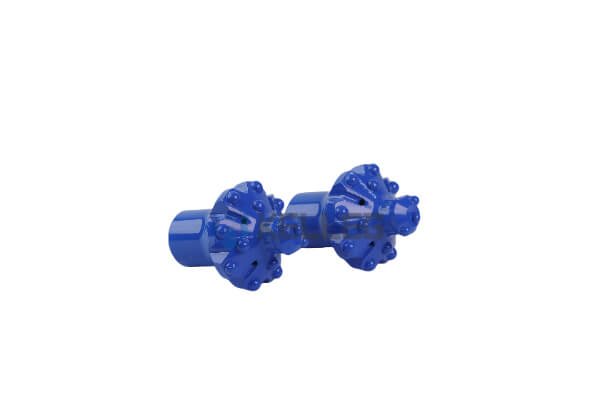
Engineering Summary: Why Use Reaming Technology? #
| Drilling Method | Large Diameter Drilling | Pilot Hole + Reaming |
|---|---|---|
| Cutting resistance | High | Lower |
| Required impact energy | Higher | Optimized |
| Hole accuracy | More difficult to control | Higher accuracy |
| Tool wear | Faster | Reduced |
| Application range | Limited in hard rock | Suitable for demanding rock conditions |
Why Use Reaming Bits Instead of Direct Large-Diameter Drilling? #
When drilling large-diameter holes in hard rock formations, choosing the right drilling method has a significant impact on penetration efficiency, hole quality, and overall operating cost. Although direct large-diameter drilling appears to be a straightforward approach, it requires the drill bit to remove a much larger volume of rock in a single operation, which creates higher mechanical stress on the rock drilling tools.
Using a reaming bit with pilot hole drilling technology provides a more controlled and efficient solution. By separating the drilling process into two stages — creating a smaller pilot hole first and then enlarging it with a reaming bit — operators can reduce drilling resistance, improve borehole accuracy, and extend the service life of rock drilling tools.
Lower Drilling Resistance #
One of the main advantages of using a rock reaming bit is the reduction of drilling resistance during large-hole excavation.
Challenges of Direct Large-Diameter Drilling #
When a large drill bit directly penetrates hard rock, the entire cutting surface contacts the rock at the beginning of drilling. This requires:
- Higher impact energy: More energy is needed to break a larger rock area during each impact cycle.
- Greater vibration: Increased cutting force creates more vibration, which affects drilling stability and equipment performance.
- Higher tool wear: Drill bits, drill rods, and shank adapters experience greater mechanical stress.
In hard and abrasive formations such as granite, basalt, and quartzite, these factors can significantly reduce drilling efficiency and increase the cost per drilled meter.
Advantages of Pilot Hole + Reaming Technology #
With a pilot hole reaming method, the drilling operation is divided into two steps:
Step 1: Drill a smaller pilot hole
↓
Step 2: Use a reaming bit to enlarge the hole diameter
The smaller pilot hole reduces the initial contact area between the tool and rock, allowing the drilling system to work more efficiently.
Key benefits include:
Reduced Rock-Breaking Resistance #
The reaming bit only removes the surrounding rock around the existing pilot hole instead of breaking the entire hole section at once. This lowers cutting resistance and reduces the load on the drill rod.
More Efficient Energy Transfer #
In top hammer drilling, impact energy efficiency is critical. By reducing unnecessary energy loss caused by excessive rock contact, the reaming process allows more impact energy to be transferred directly into rock breaking.
Improved Drilling Stability #
Lower cutting resistance reduces vibration and helps maintain stable contact between the bit, drill rods, and rock surface.
Better Hole Accuracy #
Hole accuracy is a critical requirement in many underground and construction drilling applications. Poor hole alignment can affect blasting performance, bolt installation, casing placement, and overall project efficiency.
Compared with direct large-diameter drilling, ****reaming bits provide better control over borehole direction because the pilot hole acts as a guiding channel.
Main Advantages:
Reduced Hole Deviation #
During deep-hole drilling, maintaining a straight borehole becomes increasingly difficult due to:
- Uneven rock formations
- Natural fractures
- Changing rock hardness
- Side forces on the drill bit
The pilot hole helps stabilize the reaming bit path, reducing lateral movement and minimizing deviation.
Improved Alignment #
Because the reaming bit follows the existing pilot hole, the final borehole maintains better alignment with the original drilling direction.
This is especially important for:
- Underground mining long-hole drilling
- Cable anchor holes
- Tunnel reinforcement projects
- Precision blasting applications
Better Control in Deep-Hole Applications #
For deeper boreholes, drilling accuracy becomes more challenging because small deviations at the beginning can become significant at greater depths.
Pilot hole reaming provides:
- More predictable drilling direction
- Improved hole consistency
- Better control over final borehole geometry
Extended Tool Service Life #
Another major benefit of using a reaming bit is reduced wear on the rock drilling tools.
Direct large-diameter drilling places greater stress on:
- Drill bits
- Drill rods
- Coupling sleeves
- Shank adapters
- Drilling rigs
By reducing cutting resistance and impact load, reaming technology helps improve the service life of drilling components.
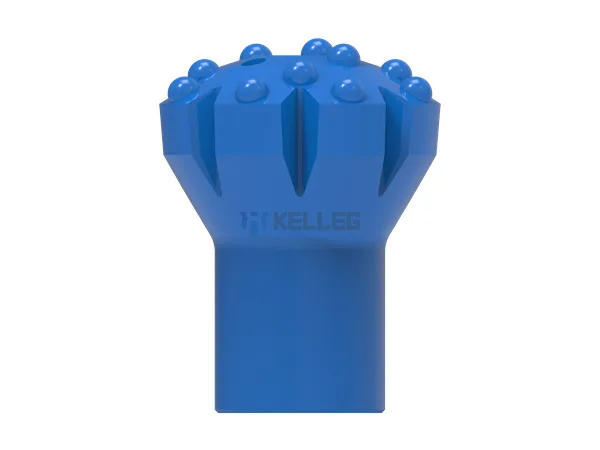
Direct Large Hole Drilling vs Pilot Hole + Reaming #
| Method | Tool Wear | Energy Requirement | Drilling Stability |
|---|---|---|---|
| Direct Large-Diameter Drilling | High | High | More difficult to control |
| Pilot Hole + Reaming | Lower | Optimized | Improved stability |
How Reaming Extends Tool Life #
A properly selected reaming bit reduces wear through:
1. Lower Impact Stress
The drill rod experiences fewer extreme loads because the cutting process is more gradual.
2. Reduced Carbide Damage
Carbide buttons are less likely to suffer from premature breakage or excessive abrasion.
3. Improved Drilling Efficiency
Higher energy utilization means less mechanical stress is required to achieve the same drilling result.
4. Reduced Equipment Maintenance
Longer service life of drilling tools helps reduce downtime and replacement costs.
For hard rock drilling applications requiring large and accurate boreholes, pilot hole + reaming technology offers significant advantages over direct drilling:
- Lower drilling resistance
- More efficient impact energy utilization
- Improved hole accuracy
- Reduced deviation in deep holes
- Longer service life of drilling tools
- Lower drilling cost per meter
As a result, top hammer reaming bits have become an effective solution for mining, tunneling, quarrying, and underground construction projects where drilling efficiency and borehole precision are essential.
Types of Reaming Bits #
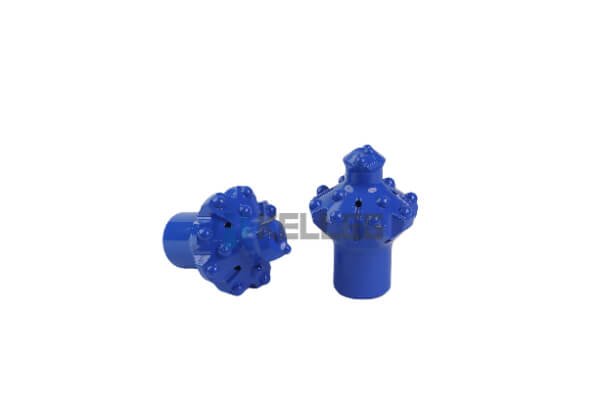
Reaming bits used in top hammer drilling can be classified based on their structural design and drilling function. According to the connection method and guiding structure, top hammer reaming bits are generally divided into two main categories: integrated reaming bits and combination reaming bits.
Each design has different advantages depending on drilling depth, hole diameter requirements, rock conditions, and accuracy requirements.
Integrated Reaming Bit #
An integrated reaming bit combines the cutting structure and guiding section into a single piece. The pilot guide and reaming section are manufactured as one complete tool, providing a simple and reliable drilling solution.
Integrated designs are commonly used where easy operation, quick installation, and cost efficiency are important.
Integrated reaming bits can be further divided into two common designs:
Dome Reaming Bit (Mushroom-Type Reaming Bit) #
A dome reaming bit, also known as a mushroom-type reaming bit, features a dome-shaped cutting head with carbide buttons distributed across the cutting surface.
Its primary function is to enlarge an existing pilot hole to the required final diameter by removing surrounding rock efficiently.
Working Principle
The dome reaming bit follows the pilot hole created during the first drilling stage. The guiding section maintains drilling direction, while the larger cutting surface breaks the surrounding rock.
The drilling process:
Pilot Hole Drilling
        ↓
Pilot Hole Established
        ↓
Dome Reaming Bit Enlargement
        ↓
Final Borehole Diameter
Advantages:
- High rock removal efficiency
- Suitable for larger diameter hole enlargement
- Simple structure and easy operation
- Good performance in medium to hard rock formations
Typical Applications:
- Underground mining
- Tunnel excavation
- Long-hole drilling
- Blast hole enlargement
- Large-diameter anchor holes
Suitable Conditions:
Dome reaming bits are commonly selected when:
- High drilling efficiency is required
- Borehole diameter needs significant enlargement
- Rock formations are relatively stable
Pilot Reaming Bit #
A pilot reaming bit combines the pilot guide and reaming cutting structure into one integrated tool. The front guide section enters the existing hole and helps maintain drilling alignment during enlargement.
Compared with dome reaming bits, pilot reaming bits place more emphasis on hole guidance and accuracy control.
Working Principle:
The front pilot section follows the existing borehole, while the surrounding carbide buttons enlarge the hole diameter.
Advantages:
- Improved hole alignment
- Reduced deviation in deep-hole drilling
- Better directional control
- Suitable for applications requiring higher accuracy
Typical Applications:
- Deep underground drilling
- Tunnel anchoring projects
- Precision hole enlargement
- Long-hole drilling where deviation control is critical
Suitable Conditions:
Pilot reaming bits are preferred when:
- Borehole straightness is important
- Drilling depth is significant
- Geological conditions may cause deviation
Combination Reaming Bit #
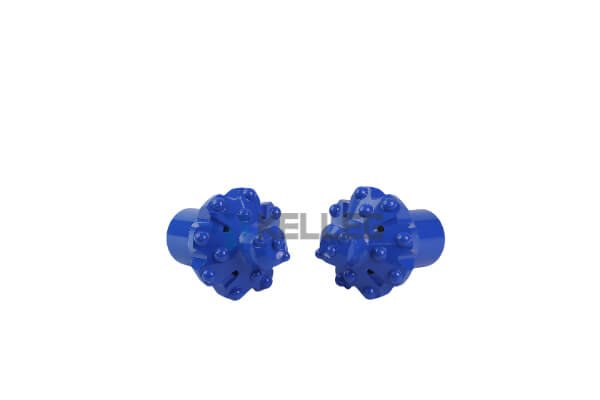
A combination reaming bit consists of two separate components:
- Reaming bit
- Pilot adapter
Unlike integrated designs, the guide section and reaming section can be separated and replaced independently.
This modular design provides greater flexibility for different hole diameters and drilling conditions.
Advantages of Combination Reaming Bits: #
1. Flexible Diameter Configuration
Different reaming diameters can be matched with the same pilot system, reducing inventory requirements.
2. Lower Operating Cost
Because the pilot adapter and reaming bit are independent components, only worn parts need to be replaced instead of the entire tool.
3. Better for Long and Deep Hole Drilling
Combination bits provide improved control in applications requiring:
- Long drilling depth
- High hole accuracy
- Continuous drilling operations
Typical Applications:
Combination reaming bits are widely used in:
- Deep underground mining
- Long-hole blasting
- Hydropower projects
- Tunnel reinforcement
- Large-scale anchoring projects
Pilot Reaming Bit vs Dome Reaming Bit: Key Differences #
The selection between a pilot reaming bit and a dome reaming bit depends mainly on drilling objectives, hole accuracy requirements, and rock conditions.
| Feature | Pilot Reaming Bit | Dome Reaming Bit |
|---|---|---|
| Main Function | Provides guidance and creates controlled hole enlargement | Efficiently enlarges pilot hole to final diameter |
| Drilling Stage | First-stage guidance and enlargement | Second-stage enlargement |
| Cutting Diameter | Smaller pilot diameter + reaming section | Larger final cutting diameter |
| Design Focus | Accuracy and hole alignment | High rock removal efficiency |
| Button Configuration | More focus on guiding and penetration buttons | More cutting and gauge buttons for enlargement |
| Main Advantage | Better deviation control | Faster enlargement performance |
| Suitable Application | Deep holes, precision drilling | General hole enlargement, high productivity drilling |
| Typical Rock Condition | Hard rock with deviation risk | Medium to hard rock requiring efficiency |
How to Choose Between Different Reaming Bit Types? #
When selecting a reaming bit, consider the following factors:
Hole Diameter Requirement #
Large final hole diameters generally require:
- Larger reaming diameter
- Stronger gauge button design
- Higher impact capacity
Drilling Depth and Accuracy #
For deep holes:
Choose:
✅ Pilot reaming bit
or
✅ Combination reaming bit
because they provide better guidance and deviation control.
Rock Formation #
| Rock Condition | Recommended Design |
|---|---|
| Soft to medium rock | Dome reaming bit |
| Hard abrasive rock | Heavy-duty button configuration |
| Complex fractured rock | Pilot-guided design |
Operation Cost Consideration #
For projects requiring frequent diameter changes:
Combination bits provide better flexibility and lower long-term cost.
In top hammer drilling, reaming bits are mainly divided into integrated reaming bits and combination reaming bits. Integrated designs include dome reaming bits and pilot reaming bits, while combination bits use separate reaming bits and pilot adapters.
- Dome reaming bits focus on efficient rock removal and high productivity.
- Pilot reaming bits provide better guidance and hole accuracy.
- Combination reaming bits offer flexibility and cost advantages for complex drilling projects.
Choosing the correct rock reaming bit design based on hole diameter, drilling depth, rock condition, and accuracy requirements is essential for maximizing drilling efficiency and extending tool service life.
Reaming Bit vs Normal Button Bit: Key Differences #
In rock drilling applications, reaming bits and normal button bits may look similar because both use carbide buttons to break rock, but they serve completely different purposes in the drilling process.
A normal button bit is designed to create an initial borehole by directly penetrating intact rock. In contrast, a reaming bit is specifically developed to enlarge an existing pilot hole to a larger diameter. Understanding the difference between these two drilling bits is essential for selecting the right solution for mining, tunneling, and underground construction projects.
Primary Function: Hole Creation vs Hole Enlargement #
The most significant difference between a reaming bit and a standard drill bit is their drilling purpose.
Normal Button Bit #
A conventional top hammer drill bit is used for:
- Creating the first hole in solid rock
- Breaking untouched rock formations
- Achieving the initial borehole diameter
During drilling, the entire cutting surface of the bit contacts the rock face, allowing the bit to penetrate and remove rock material directly.
Reaming Bit #
A top hammer reaming bit is designed for:
- Enlarging an existing pilot hole
- Increasing borehole diameter
- Improving drilling accuracy during large-hole applications
The reaming process uses a smaller pilot hole as a guide, allowing the reaming bit to remove only the surrounding rock instead of breaking the entire cross-section.
Drilling Process Difference #
The drilling sequence is different between the two bits.
Normal Button Bit Process: #
Solid Rock
    ↓
Direct Drilling
    ↓
Initial Borehole Created
    ↓
Required Hole Diameter
Reaming Bit Process: #
Small Pilot Hole Drilling
          ↓
Pilot Hole Established
          ↓
Reaming Bit Enlargement
          ↓
Final Larger Borehole
This two-stage drilling method allows reaming bits to achieve larger and more accurate holes with reduced drilling resistance.
Cutting Structure and Design Differences #
Although both bits use carbide buttons, their designs are optimized for different tasks.
| Feature | Normal Button Bit | Reaming Bit |
|---|---|---|
| Main Purpose | Create initial borehole | Enlarge existing borehole |
| Cutting Action | Full-face rock penetration | Peripheral rock removal |
| Design Focus | Penetration efficiency | Enlargement efficiency and stability |
| Button Arrangement | Optimized for direct rock breaking | Optimized for cutting surrounding rock |
| Gauge Buttons | Maintains initial hole size | Maintains enlarged final diameter |
| Guide Structure | Usually not required | Often includes pilot guide section |
Energy Requirement and Drilling Efficiency #
Normal Button Bit #
When drilling a large-diameter hole directly, the drill bit must break the entire rock area at once.
This results in:
- Higher impact energy demand
- Greater rotation resistance
- Increased vibration
- Higher wear on drilling components
Reaming Bit #
A reaming bit removes rock around an existing pilot hole, which reduces the amount of rock broken during each impact cycle.
Benefits include:
- More efficient impact energy utilization
- Lower drilling resistance
- Reduced stress on drill rods and shank adapters
- Improved drilling stability
This makes pilot hole reaming especially suitable for hard rock drilling conditions.
Hole Accuracy and Deviation Control #
Hole accuracy is another important difference between the two drilling methods.
Normal Button Bit #
Direct drilling of large holes may experience:
- Higher deviation risk
- Greater influence from rock fractures
- Reduced directional control in deep holes
Reaming Bit #
Because the reaming bit follows an existing pilot hole:
- Hole alignment is improved
- Deviation is reduced
- Deep-hole accuracy is increased
This advantage is particularly important in:
- Underground mining long-hole drilling
- Tunnel reinforcement projects
- Anchor hole drilling
- Precision blasting applications
Applications Comparison #
| Application | Normal Button Bit | Reaming Bit |
|---|---|---|
| Initial hole drilling | ✓ | ✕ |
| Large diameter hole enlargement | ✕ | ✓ |
| Production drilling | ✓ | Sometimes |
| Long-hole drilling | Limited | ✓ |
| Tunnel anchoring | ✓ | ✓ |
| Large anchor/cable holes | Limited | ✓ |
| Pilot hole enlargement | ✕ | ✓ |
Which One Should You Choose? #
The choice depends on the drilling objective.
Choose a Normal Button Bit When: #
- You need to create a new borehole
- The required diameter is relatively small
- Direct drilling efficiency is acceptable
- Hole enlargement is not required
Choose a Reaming Bit When: #
- A larger borehole diameter is required
- High hole accuracy is important
- Direct large-hole drilling creates excessive wear
- Working in hard and abrasive rock conditions
- Deep-hole deviation control is required
Summary: Reaming Bit or Normal Button Bit? #
| Factor | Normal Button Bit | Reaming Bit |
|---|---|---|
| Drilling Purpose | Create holes | Enlarge holes |
| Drilling Method | Single-stage drilling | Pilot hole + reaming |
| Rock Contact | Full cutting face | Surrounding rock only |
| Accuracy | Standard | Higher |
| Energy Consumption | Higher for large holes | More optimized |
| Best Application | General drilling | Large diameter and precision drilling |
For top-hammer drilling in mining, tunneling, and underground construction, a reaming bit is not a replacement for a standard drill bit but a specialized solution for creating large-diameter, high-accuracy boreholes. By combining pilot drilling with controlled enlargement, top hammer reaming bits help improve drilling efficiency, reduce tool wear, and achieve better borehole quality in challenging rock formations.
Reaming Bit Manufacturing Quality: What Buyers Should Check? #
When purchasing top hammer reaming bits, many buyers focus primarily on price, size, and delivery time. However, the actual drilling performance and service life of a rock reaming bit depend heavily on manufacturing quality, material selection, heat treatment, carbide button performance, and production control.
A high-quality reaming bit must withstand repeated impact loads, abrasive rock conditions, and complex stress during drilling operations. Poor manufacturing quality can lead to premature button breakage, body cracking, diameter loss, reduced penetration rate, and increased drilling costs.
For mining contractors, distributors, and drilling service providers, understanding the key quality factors of reaming bit manufacturing helps ensure reliable tool performance and lower cost per drilled meter.
Steel Material Quality #
The bit body of a top hammer reaming bit experiences continuous impact, bending stress, and fatigue loading during drilling. Therefore, the quality of the alloy steel directly affects durability and failure resistance.
Key Factors Buyers Should Check: #
1. Alloy Steel Grade
High-performance reaming bits usually use specially selected alloy steels with:
- High toughness
- Good fatigue resistance
- Strong impact resistance
- Stable mechanical properties after heat treatment
Common alloying elements include:
| Element | Function |
|---|---|
| Chromium (Cr) | Improves hardenability and wear resistance |
| Nickel (Ni) | Enhances toughness and impact resistance |
| Molybdenum (Mo) | Improves strength and fatigue resistance |
| Carbon (C) | Controls hardness and strength |
2. Steel Cleanliness
Non-metallic inclusions inside steel can become crack initiation points during repeated impact loading.
High-quality reaming bit manufacturers should control:
- Sulfur and phosphorus content
- Oxide inclusions
- Internal defects
- Material consistency
Cleaner steel helps improve:
- Fatigue life
- Crack resistance
- Service reliability in hard rock drilling
Heat Treatment Quality #
Heat treatment is one of the most important manufacturing processes affecting reaming bit service life.
A properly heat-treated bit body needs to achieve a balance between:
- Surface hardness for wear resistance
- Core toughness for impact resistance
Important Heat Treatment Processes Include: #
Quenching
Purpose:
- Increase hardness
- Improve strength
Tempering
Purpose:
- Reduce brittleness
- Improve toughness
- Stabilize mechanical properties
Why Heat Treatment Matters #
Incorrect heat treatment may cause:
Excessive Hardness:
Problems:
- Increased brittleness
- Higher risk of cracking under impact
Insufficient Hardness:
Problems:
- Faster body wear
- Reduced gauge protection
- Shorter service life
For demanding hard rock drilling applications, the optimized combination of hardness and toughness is essential.
Carbide Button Quality #
Carbide buttons are the primary rock-breaking components of a reaming bit. Their quality directly determines penetration rate and wear resistance.
Buyers Should Evaluate: #
1. Carbide Grade Selection
Different rock conditions require different carbide properties.
| Rock Condition | Recommended Carbide Characteristics |
|---|---|
| Soft to medium rock | Higher wear resistance |
| Hard abrasive rock | High toughness and impact resistance |
| Extremely hard rock | Premium carbide grade with balanced properties |
2. Button Shape and Design
Common carbide button shapes include:
| Button Type | Main Advantage |
|---|---|
| Spherical Button | High impact resistance |
| Ballistic Button | Faster penetration |
| Conical Button | Aggressive cutting performance |
The correct button design improves:
- Rock-breaking efficiency
- Penetration rate
- Bit life
3. Button Retention Strength
The connection between carbide buttons and the bit body is critical.
Poor button installation may cause:
- Button loosening
- Button loss during drilling
- Reduced cutting efficiency
Manufacturing quality should ensure:
- Proper button hole machining
- Strong brazing process
- Consistent button placement
Bit Body Manufacturing Accuracy #
The geometry of a reaming bit directly affects drilling stability.
Important manufacturing factors include:
Cutting Structure Accuracy #
Incorrect button positioning can cause:
- Uneven cutting force
- Increased vibration
- Irregular hole diameter
Gauge Buttons Design #
Gauge buttons control the final borehole diameter.
High-quality gauge design helps:
- Maintain hole size
- Reduce diameter shrinkage
- Improve drilling consistency
Pilot Guide Accuracy #
For pilot-type reaming bits, the guide section is critical.
A precise pilot structure improves:
- Hole alignment
- Deviation control
- Deep-hole drilling performance
Manufacturing Process Control #
A reliable reaming bit manufacturer should have strict quality control throughout production.
Typical inspection processes include:
Raw Material Inspection #
Checking:
- Chemical composition
- Mechanical properties
- Steel quality
Machining Inspection #
Checking:
- Dimensional accuracy
- Button hole position
- Thread or connection accuracy
Heat Treatment Inspection #
Checking:
- Hardness distribution
- Metallographic structure
- Mechanical performance
Final Performance Inspection #
Checking:
- Appearance quality
- Button installation
- Dimensional tolerance
- Functional performance
How to Evaluate a Reaming Bit Supplier? #
Before purchasing reaming bits, buyers should consider:
Manufacturing Experience #
Experienced manufacturers usually have better knowledge of:
- Rock conditions
- Drilling parameters
- Tool optimization
Material Traceability #
Reliable suppliers should provide:
- Material certificates
- Production records
- Quality inspection reports
Customization Capability #
Different drilling projects require different designs.
A professional supplier should support customization based on:
- Hole diameter
- Rock hardness
- Drilling equipment
- Thread connection
- Application requirements
Summary: Quality Determines Reaming Bit Performance #
The performance of a reaming bit is determined by more than its appearance or price. High-quality manufacturing requires:
- Premium alloy steel selection
- Controlled heat treatment
- High-performance carbide buttons
- Accurate machining
- Strict quality inspection
For mining, tunneling, and underground construction applications, choosing a reliable reaming bit manufacturer can significantly improve drilling efficiency, extend tool service life, and reduce overall drilling costs.
When evaluating a reaming bit supplier, buyers should focus on manufacturing capability, material quality, carbide technology, and quality control systems rather than only comparing purchase prices.
Conclusion #
In modern top hammer drilling applications, reaming technology provides an effective solution for creating large-diameter and high-accuracy boreholes, especially in challenging hard rock drilling conditions. Compared with direct large-hole drilling, the pilot hole and reaming method reduces drilling resistance, improves energy utilization, and helps achieve better borehole control.
Selecting the right reaming bit is essential for maximizing drilling performance. Factors such as button design, carbide grade, reaming bit structure, hole diameter, drilling depth, and rock characteristics all have a significant impact on penetration rate and tool service life. A reaming bit optimized for granite, basalt, or other abrasive formations can provide better wear resistance and more stable drilling performance.
In addition, proper drilling operation plays an important role in extending the service life of top hammer reaming bits. Optimized rotation speed, feed pressure, flushing conditions, and regular tool inspection can help reduce premature wear, prevent failures, and lower the overall drilling cost per meter.
Whether for underground mining, tunneling, quarrying, or anchoring projects, choosing the correct reaming solution requires a balance between drilling efficiency, hole accuracy, and operating conditions.
Looking for the right reaming bit for your drilling project? Share your hole diameter, rock condition, drilling equipment, and application requirements. Our engineers can recommend a suitable reaming solution to improve drilling performance and reduce operating costs.