- Quick Guide: Which Rock Drill Bit Is Suitable for Different Rock Types?
- Understand the Rock Properties That Affect Drill Bit Selection
- Choose the Right Drilling Method First
- How to Choose a Rock Drill Bit for Different Rock Types
- Granite: Prioritize Impact Resistance and Wear Control
- Limestone: Balance Penetration Rate and Stability
- Sandstone: Control Abrasive Wear
- Basalt: Evaluate Impact Loads and Button Integrity
- Quartzite: Prioritize Abrasive Wear Resistance
- Shale: Consider Formation Stability and Cuttings Removal
- Mixed or Variable Formations: Seek a Practical Balance
- How to Choose the Right Face Design
- How to Choose the Right Button Shape
- A Practical Checklist Before Ordering a Rock Drill Bit
- Common Mistakes When Selecting a Rock Drill Bit
- How to Improve Drill Bit Service Life
- Frequently Asked Questions
- Get a Rock Drill Bit Recommendation for Your Project
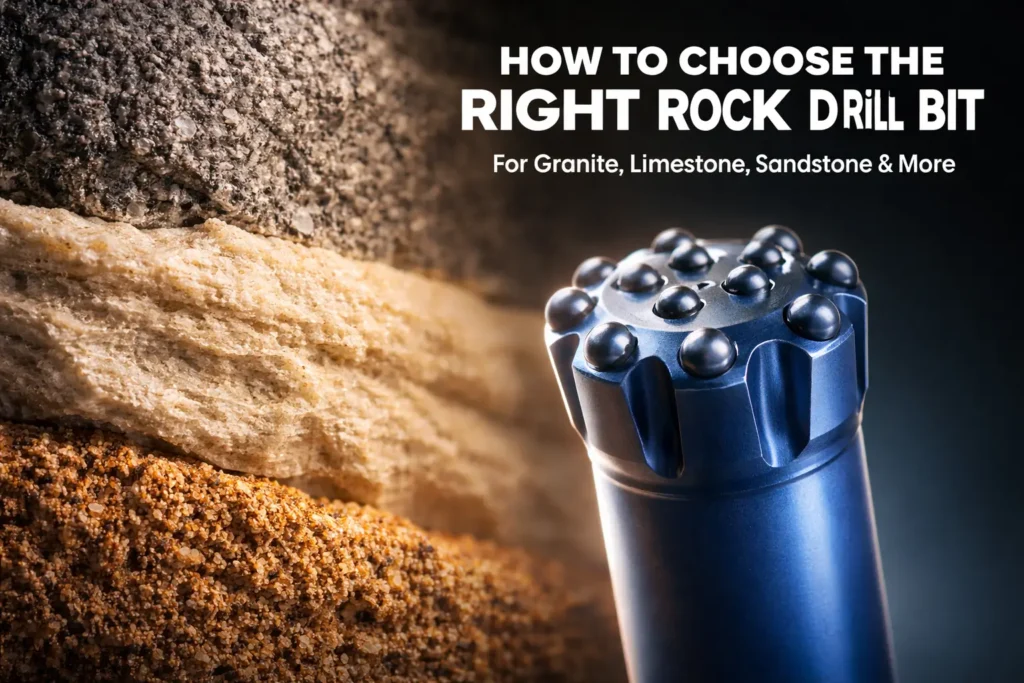
Choosing the right rock drill bit is essential for maintaining penetration rate, extending bit service life, and controlling drilling costs. However, the best bit for granite may not be the best choice for sandstone, limestone, or fractured rock.
Effective rock drill bit selection requires more than identifying the rock type. You also need to consider rock hardness, abrasiveness, geological structure, drilling method, hole diameter, and operating conditions.
This guide explains how to evaluate these factors, compare common bit face designs and button shapes, and select a suitable starting configuration for different rock formations.
Quick Guide: Which Rock Drill Bit Is Suitable for Different Rock Types? #
The table below provides an initial reference for selecting top hammer button bits according to common rock conditions. Final recommendations should be confirmed against the specific bit series, drilling equipment, and site conditions.
| Rock Type | Main Drilling Challenge | Initial Design Consideration | Selection Priority |
|---|---|---|---|
| Granite | High hardness, often abrasive | Spherical buttons; flat face may be considered | Impact resistance and wear control |
| Limestone | Variable hardness and structure | Parabolic or ballistic buttons may be considered in suitable conditions | Penetration rate and hole stability |
| Sandstone | Abrasive grains and possible layering | Wear-resistant buttons; face design matched to formation stability | Gauge retention and service life |
| Basalt | Dense, hard rock and potentially high impact loads | Spherical buttons; stable face design may be appropriate | Button integrity and drilling stability |
| Quartzite | Very hard and often highly abrasive | Wear-resistant configuration with strong button support | Abrasive wear resistance |
| Shale | Variable strength, bedding, and potential instability | Aggressive button geometry may suit softer formations | Penetration and hole cleaning |
| Mixed Formations | Alternating hardness and abrasiveness | Balanced button geometry and a formation-appropriate face design | Performance across changing conditions |
Important: These are starting points, not universal specifications. Rock properties vary considerably within the same geological classification. The correct configuration also depends on the drilling method, bit diameter, machine parameters, and the manufacturer’s recommendations.
Understand the Rock Properties That Affect Drill Bit Selection #
Before choosing a drill bit, evaluate four major characteristics: hardness, abrasiveness, geological structure, and moisture conditions.
Rock Hardness: Understanding UCS #
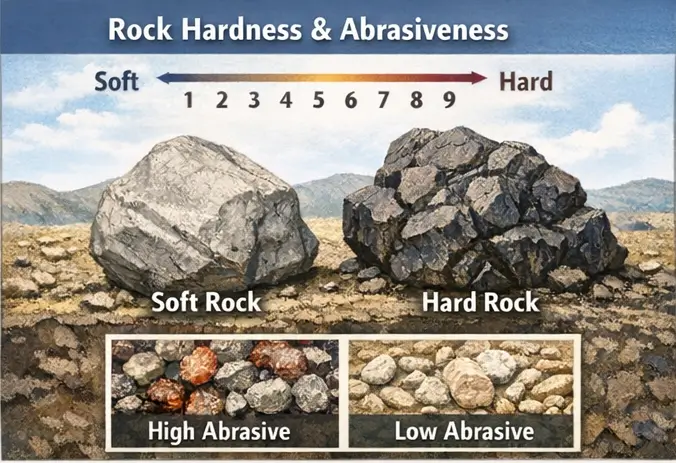
Uniaxial Compressive Strength (UCS), expressed in megapascals (MPa), measures the compressive strength of an intact rock sample.
Harder rock generally requires more effective energy transfer and appropriate button geometry to achieve efficient fragmentation. However, UCS alone cannot determine the correct bit design or operating parameters.
Consider the following when evaluating rock hardness:
- Lower-strength formations: More aggressive cutting geometries may improve penetration when the formation and drilling system permit.
- Higher-strength formations: Button impact resistance and support become increasingly important, particularly under demanding impact loads.
- Variable-strength formations: A design that performs well in one layer may experience excessive wear or reduced penetration in another.
Do not select a bit based on UCS alone. Fractures, mineral composition, abrasiveness, and actual drilling performance also influence the result.
Rock Abrasiveness: Why CAI Matters #
The Cerchar Abrasivity Index (CAI) is commonly used to characterize rock abrasiveness.
Abrasive minerals can wear down tungsten carbide buttons and reduce the effective gauge button diameter of a drill bit. This can happen even when the formation is not exceptionally hard.
For example, sandstone may create substantial abrasive wear because of its mineral composition and grain characteristics. Quartz-rich formations can also be particularly demanding.
When abrasiveness is high, evaluate:
- Tungsten carbide button wear resistance
- Button geometry and support
- Gauge button condition
- Flushing effectiveness
- Actual service life under comparable drilling conditions
Hardness and abrasiveness must be evaluated separately. A hard rock is not necessarily the most abrasive, and a moderately strong rock can still cause rapid bit wear.
Geological Structure: Intact, Fractured, or Layered? #
Rock structure affects hole stability, drilling direction, and the loads applied to the bit.
- Intact formations: Consistent rock properties may allow a more predictable drilling response.
- Fractured formations: Changes in resistance can affect bit guidance and hole straightness.
- Layered formations: Alternating beds may produce uneven wear or changes in penetration rate.
- Highly weathered formations: Weak or unstable material may require particular attention to flushing and hole stability.
Face design should be selected according to the formation and the required hole quality rather than geological classification alone.
Moisture and Flushing Conditions #
Water-bearing or clay-rich formations can create cuttings-removal problems, depending on the drilling method and flushing medium.
Poor flushing may cause recutting, clogging, excessive wear, and reduced penetration.
Before choosing a bit, confirm that the flushing arrangement is appropriate for the hole diameter, drilling depth, and formation conditions.
Choose the Right Drilling Method First #
A rock drill bit must be compatible with the drilling system. A design suitable for top hammer drilling is not automatically suitable for down-the-hole (DTH) drilling.
Top Hammer Drill Bits #

Top hammer drilling transmits impact energy through the drill rod to the bit. It is commonly used in underground mining, tunneling, quarrying, and construction.
The main selection considerations include:
- Required hole diameter and depth
- Rock drill and drill rod compatibility
- Threaded or tapered connection
- Rock hardness and abrasiveness
- Required penetration rate and hole accuracy
For further information, see the Top Hammer Rock Drill Bits FAQ.
DTH Drill Bits #
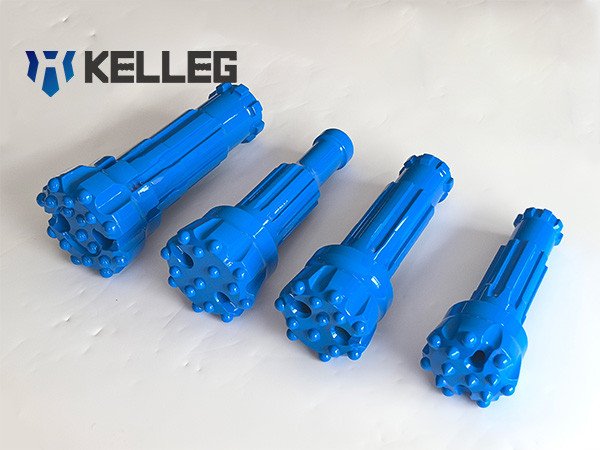
In down-the-hole drilling, the hammer operates near the bit, delivering impact energy close to the rock face. DTH drilling is commonly considered for deep holes, hard formations, and applications requiring good hole straightness.
Selection factors include:
- DTH hammer model and compatibility
- Bit diameter and connection
- Formation hardness and abrasiveness
- Button layout and face design
- Flushing requirements and operating parameters
Explore the Rock Drill Bit Types FAQ for a broader comparison of drilling methods.
Selection rule: Confirm the drilling method, equipment, hole diameter, and connection before comparing button shapes or face designs.
How to Choose a Rock Drill Bit for Different Rock Types #
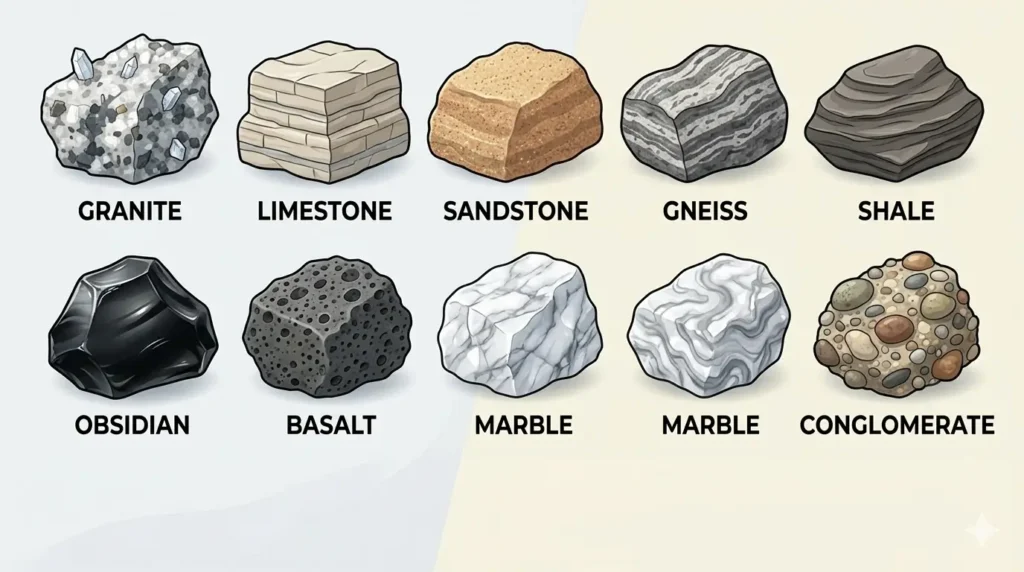
Granite: Prioritize Impact Resistance and Wear Control #
Granite is commonly encountered in mining, quarrying, and construction. Its hardness and mineral composition vary, but many granite formations impose demanding impact and wear conditions.
Initial design considerations
- Button shape: Spherical buttons are often considered for demanding hard-rock applications because of their resistance to impact-related damage.
- Face design: A flat face may be suitable where stability and durability are priorities.
- Operating focus: Maintain suitable flushing and monitor button wear and drilling performance.
What to watch for
Excessive button chipping may indicate a mismatch between button geometry, impact conditions, and the formation. Rapid, relatively uniform wear may indicate an abrasive formation or unsuitable wear resistance.
Do not assume that every granite deposit requires the same configuration. Evaluate the actual rock properties and existing bit performance before finalizing the selection.
Limestone: Balance Penetration Rate and Stability #
Limestone varies widely in strength, mineral composition, and geological structure. Some formations are relatively uniform, while others contain fractures, bedding planes, or harder inclusions.
Initial design considerations
- Button shape: Parabolic or ballistic buttons may be considered when the formation permits a more aggressive cutting action.
- Face design: Concave, convex, or flat designs should be evaluated according to formation structure, hole stability, and the specific bit series.
- Operating focus: Monitor penetration rate, gauge wear, and changes in drilling response across different layers.
What to watch for
A design that penetrates efficiently in uniform limestone may perform differently in fractured or interbedded zones. If penetration decreases or hole deviation increases, investigate formation changes and drilling parameters before changing the bit alone.
Sandstone: Control Abrasive Wear #
Sandstone is not always exceptionally hard, but its abrasive characteristics can cause substantial button wear. Grain composition, cementation, and bedding can vary significantly between deposits.
Initial design considerations
- Button shape: Evaluate wear-resistant geometries and button configurations appropriate for the formation.
- Face design: Choose according to rock stability, abrasiveness, and hole guidance requirements.
- Operating focus: Inspect gauge buttons regularly and maintain effective cuttings removal.
What to watch for
Progressive gauge wear can reduce hole diameter and affect drilling performance. Record the wear pattern and service life of each bit so that future selections can be based on field evidence.
Avoid selecting a highly aggressive button shape solely to increase penetration rate if the resulting wear reduces overall productivity.
Basalt: Evaluate Impact Loads and Button Integrity #
Basalt can be dense, strong, and demanding to drill. However, its strength, texture, and abrasiveness vary by deposit.
Initial design considerations
- Button shape: Consider spherical buttons when impact resistance is a priority.
- Face design: A stable design may be appropriate for demanding hard-rock conditions.
- Operating focus: Match impact, rotation, and feed settings to the bit manufacturer’s recommendations and the actual formation.
What to watch for
Button chipping, fracture, or uneven wear may indicate unsuitable operating parameters, changing geological conditions, or an inappropriate bit configuration.
Increasing impact energy is not automatically the solution to low penetration. Excessive impact loading can damage buttons and reduce service life.
Quartzite: Prioritize Abrasive Wear Resistance #
Quartzite is frequently associated with high hardness and substantial abrasive wear. The actual drilling challenge depends on mineral composition, fractures, and operating conditions.
Initial design considerations
- Evaluate button wear resistance and geometry.
- Confirm that the bit is appropriate for the drilling method and impact conditions.
- Pay particular attention to gauge retention and flushing effectiveness.
- Compare service life and penetration rate using actual site data.
A wear-resistant design may reduce replacement frequency, but validate the best choice against the complete drilling system rather than selecting it by rock name alone.
Shale: Consider Formation Stability and Cuttings Removal #
Shale can range from relatively weak to strong and may contain bedding planes, fractures, or moisture-sensitive layers.
Initial design considerations
- Button shape: More aggressive geometries may be suitable in softer formations, provided the bit remains stable under the operating conditions.
- Face design: Select according to formation stability and the specific bit’s intended application.
- Operating focus: Maintain effective flushing and control feed force according to equipment guidance.
What to watch for
Hole collapse, clogging, and unstable drilling may be caused by the formation itself, not simply by an incorrect bit.
Assess hole conditions, flushing, and the drilling method before assuming that a more aggressive bit will resolve the problem.
Mixed or Variable Formations: Seek a Practical Balance #
Many drilling projects encounter alternating layers of hard, soft, abrasive, and fractured rock.
A design optimized for one layer may wear quickly or lose penetration efficiency when conditions change.
Initial design considerations
- Consider a balanced button geometry rather than optimizing exclusively for maximum penetration.
- Select the face design according to hole stability and formation changes.
- Review wear patterns and penetration rate throughout the drilling interval.
- Adjust operating parameters within the equipment manufacturer’s recommendations.
The objective is consistent overall performance, not necessarily the highest penetration rate in a single layer.
How to Choose the Right Face Design #
Face design influences how the bit interacts with the formation, including stability, cutting action, and the way cuttings move away from the bit face.
The suitability of a design depends on the bit series, drilling method, and geological conditions.
| Face Design | General Selection Consideration | What to Evaluate |
|---|---|---|
| Flat Face | Often considered for demanding hard-rock applications | Impact loading, stability, and wear pattern |
| Concave Face | May be considered when centering and formation conditions favor this design | Hole guidance, flushing, and formation stability |
| Convex Face | May suit particular drilling conditions and bit designs | Penetration behavior, bit guidance, and hole quality |
These are general considerations, not a universal ranking of face designs. Always confirm the manufacturer’s recommendations for the specific product and drilling conditions.
How to Choose the Right Button Shape #
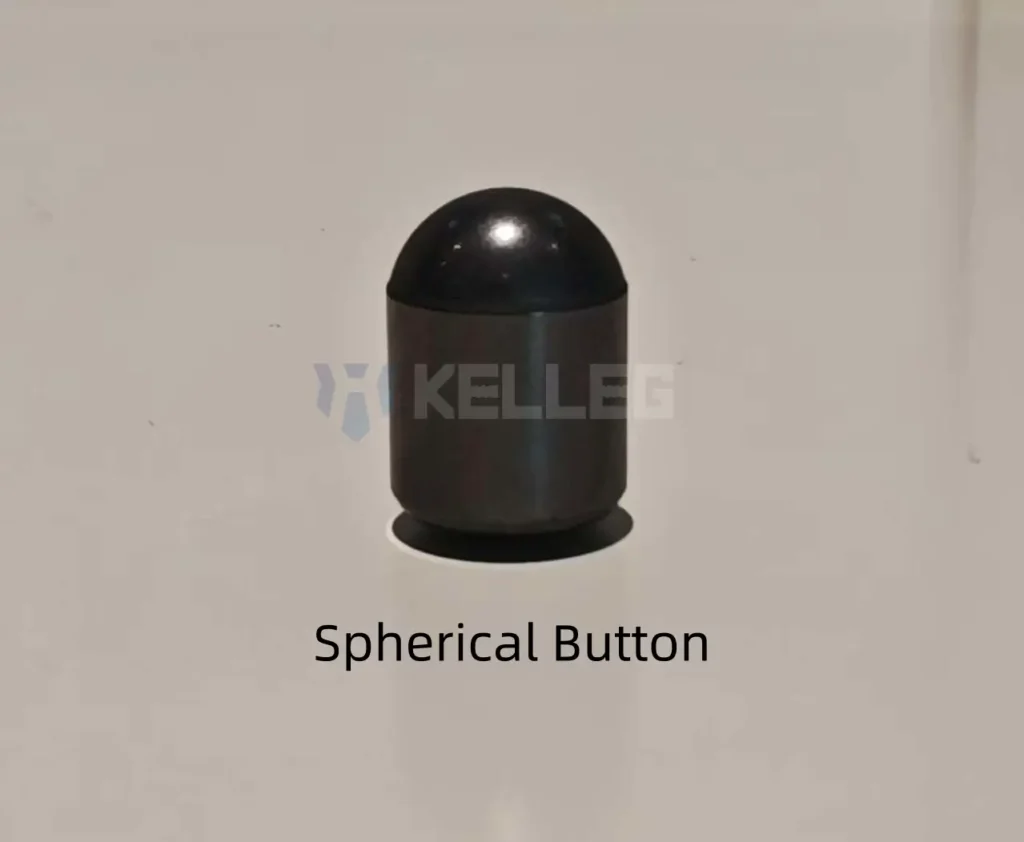
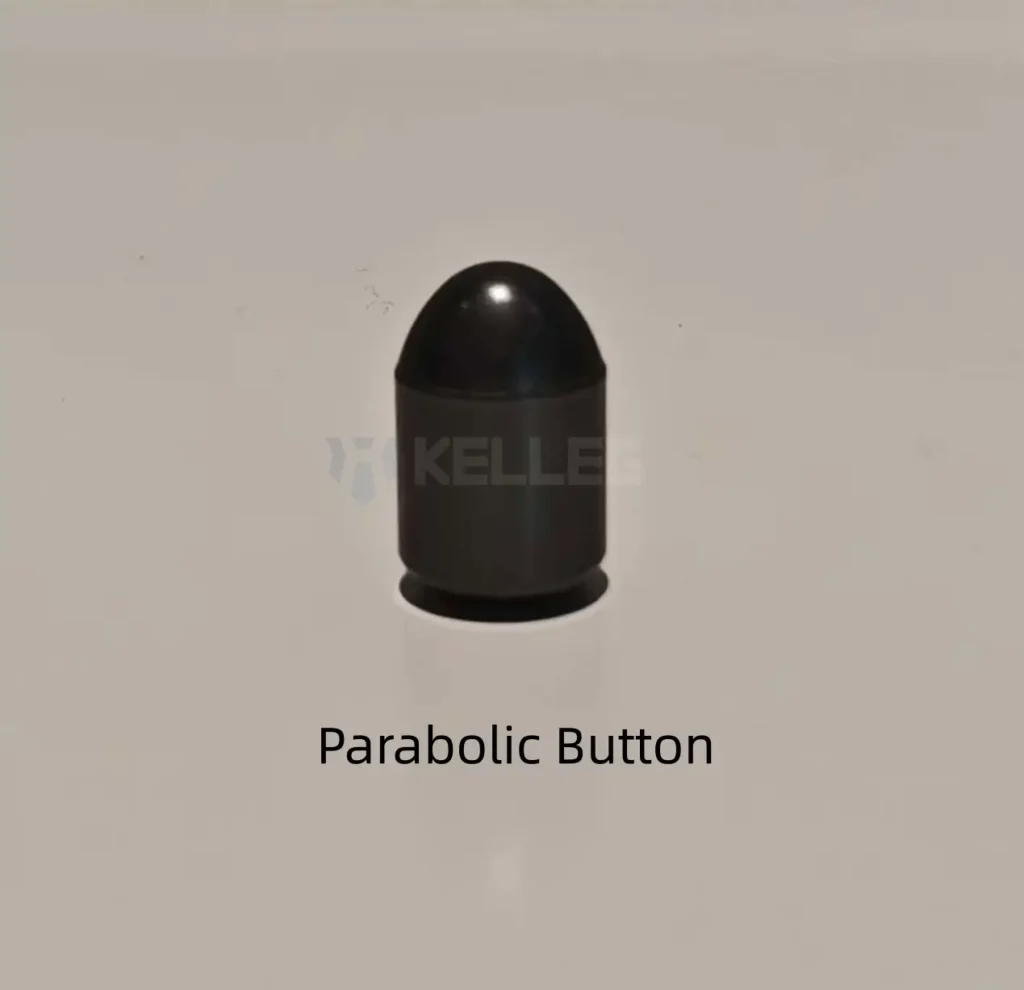
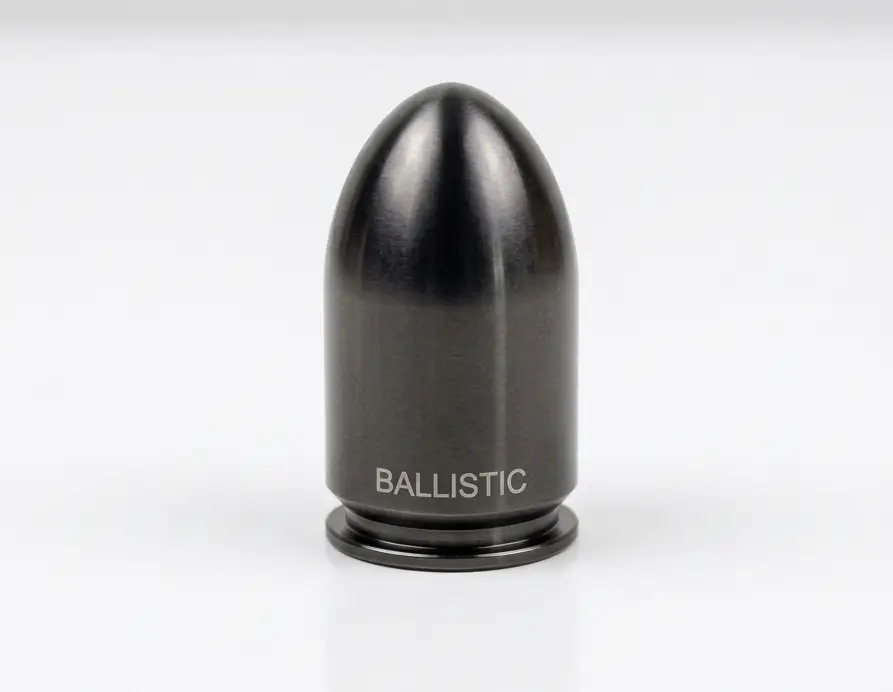
Button geometry affects penetration behavior, resistance to impact-related damage, and wear characteristics.
| Button Shape | General Characteristics | Selection Consideration |
|---|---|---|
| Spherical | Commonly used where impact resistance is important | Demanding hard-rock conditions and button integrity |
| Ballistic | More aggressive geometry in suitable formations | Penetration rate and the risk of damage under high loads |
| Parabolic | Intermediate geometry in many applications | Balancing penetration and durability |
Button shape alone does not determine performance. Carbide grade, button dimensions, button placement, skirt body design, and operating parameters must also be considered.
When comparing designs, evaluate both penetration rate and service life instead of judging performance by drilling speed alone.
A Practical Checklist Before Ordering a Rock Drill Bit #
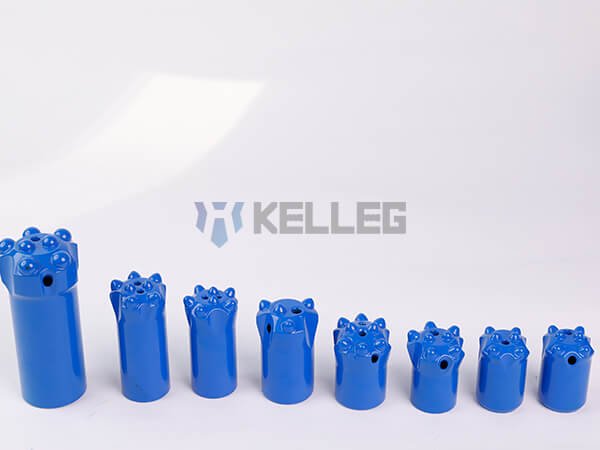
Before requesting a quotation or selecting a replacement bit, prepare the following information.
Geological conditions
- Rock type and approximate hardness
- Abrasiveness, if known
- Fractures, bedding, or mixed formations
- Moisture and flushing conditions
Drilling requirements
- Drilling method: Top Hammer or DTH
- Required hole diameter and depth
- Drill rig, rock drill, or hammer model
- Connection specification
- Target penetration rate and hole-quality requirements
Existing performance
- Current bit configuration
- Average penetration rate
- Service life or total meters drilled
- Button wear, gauge wear, or breakage patterns
- Operating parameters and any recurring drilling problems
Providing this information allows a manufacturer to make a more relevant recommendation than a request based on rock type alone.
Common Mistakes When Selecting a Rock Drill Bit #
Choosing Only by Purchase Price #
A lower purchase price does not necessarily mean a lower drilling cost. Compare bit price, service life, penetration rate, replacement frequency, and downtime.
Ignoring Abrasiveness #
Rock hardness alone cannot predict wear. Abrasive formations may consume buttons quickly even when their compressive strength is moderate.
Using an Aggressive Button Shape in Unsuitable Conditions #
Aggressive geometries may improve penetration in appropriate formations but can experience increased damage under demanding impact conditions.
Ignoring the Drilling System #
A bit must match the drilling method, equipment, diameter, and connection. A mismatch can compromise performance regardless of the bit’s nominal quality.
Changing the Bit Without Checking Operating Conditions #
Low penetration or premature wear may also result from unsuitable rotation, feed force, impact settings, or poor flushing. Diagnose the complete drilling system before attributing every problem to the bit.
How to Improve Drill Bit Service Life #
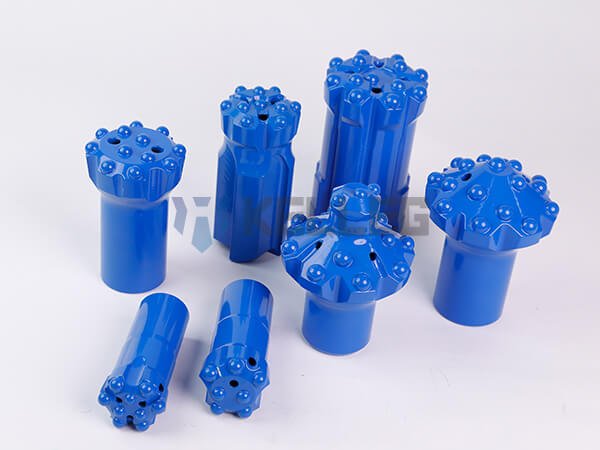
Appropriate maintenance and operating practices help reduce avoidable wear and premature failure.
- Inspect carbide buttons and the gauge area at regular intervals.
- Keep flushing passages clear and check that cuttings are removed effectively.
- Follow the manufacturer’s recommendations for button inspection and regrinding, where applicable.
- Record penetration rate, meters drilled, and the reason for each bit replacement.
- Review operating parameters when button chipping, uneven wear, or declining penetration occurs.
- Compare bit performance under similar geological and operating conditions.
Avoid relying on a single service-life target. Actual results depend on the rock formation, bit design, drilling equipment, operator practices, and maintenance procedures.
Frequently Asked Questions #
What is the best rock drill bit for granite?
Spherical buttons and a flat-face design are often considered for demanding granite applications, particularly when impact resistance and wear control are priorities. The final choice depends on the granite’s properties, drilling method, bit diameter, and operating conditions.
Which rock drill bit is suitable for sandstone?
Sandstone selection should prioritize its abrasive characteristics, button wear resistance, and gauge button. Face design and button geometry should be matched to the formation’s structure and the drilling system.
Is a harder rock always more abrasive?
No. Hardness and abrasiveness describe different rock properties. A moderately strong but abrasive formation can cause substantial button wear, while another harder formation may behave differently.
Can one rock drill bit work in different rock types?
A bit may perform across several formations, but its efficiency and service life can vary. For mixed geology, choose a configuration suited to the dominant drilling conditions and evaluate its performance across the complete interval.
What information should I provide to a drill bit manufacturer?
Provide the rock type, approximate hardness and abrasiveness, drilling method, hole diameter and depth, equipment model, connection specification, current bit design, and any available drilling or wear records. These details help the manufacturer recommend a suitable configuration.
Get a Rock Drill Bit Recommendation for Your Project #
Choosing the right rock drill bit requires matching the bit design to actual geological conditions and the complete drilling system. Rock type provides a useful starting point, but hardness, abrasiveness, formation structure, equipment compatibility, and operating parameters determine the final selection.
Kelleg can evaluate your drilling requirements and help identify a suitable bit configuration for your application.
To request a recommendation, share the following information:
- Rock type and drilling conditions
- Top Hammer or DTH drilling method
- Required bit diameter and connection
- Drill rig, rock drill, or hammer model
- Current bit performance and wear issues, if available
Contact our team to discuss your application and identify a suitable rock drill bit solution for your project.