- Rock Drill Bit Size Chart
- What Does Rock Drill Bit Size Mean?
- Bit Diameter vs. Thread Size: What Is the Difference?
- How to Choose the Right Rock Drill Bit Size
- Top Hammer Bit Size and Thread Compatibility
- Top Hammer vs. DTH Bit Size Selection
- How Bit Wear Changes Effective Diameter
- How to Measure a Rock Drill Bit Diameter
- When Should a Rock Drill Bit Be Replaced?
- Custom Rock Drill Bit Sizes
- What Information Should You Provide When Ordering Rock Drill Bits?
- FAQ
Rock drill bit size mainly refers to the bit diameter, which determines the approximate diameter of the hole drilled into the rock. However, choosing the correct bit is not based on diameter alone. Also consider the drilling method, thread or taper connection, rock formation, hole purpose, equipment capability, and flushing conditions.
For quick reference:
- Top Hammer drill bits commonly cover small to medium hole diameters and use threaded or tapered connections.
- Tapered bits are commonly specified by taper angle, such as 7°, 11°, and 12°.
- DTH bits are selected according to the DTH hammer and shank configuration and are commonly used for deeper and larger-diameter holes.
- Bit diameter determines hole size; thread or taper determines connection compatibility.
Rock Drill Bit Size Chart #
Not Sure Which Bit Size Fits Your Drill Rig?
Send us your required hole diameter, drill rig model, drill rod or hammer specification, and rock type. We can help confirm the appropriate bit diameter and connection.
Top Hammer Rock Drill Bit Sizes #
Top Hammer drilling is widely used in tunneling, quarrying, mining, bench drilling, and other applications where high penetration and accurate drilling are required.
Typical Top Hammer bit configurations include:
| Thread / Connection | Typical Bit Diameter | Typical Applications |
|---|---|---|
| R25 | 33–45 mm | Small-hole drilling |
| R32 | 48–76 mm | Drifting, tunneling and small-hole drilling |
| T38 | 64–89 mm | Quarrying, tunneling and bench drilling |
| T45 | 76–127 mm | Production drilling and quarrying |
| T51 | 89–127 mm | Heavy-duty production drilling |
Actual available diameters depend on the bit type, button configuration, face design, and drilling tool system.
For example, a T45 specification identifies the thread connection, while 89 mm identifies the bit diameter. These are two different specifications and should not be treated as interchangeable terms.
Tapered Drill Bit Sizes #
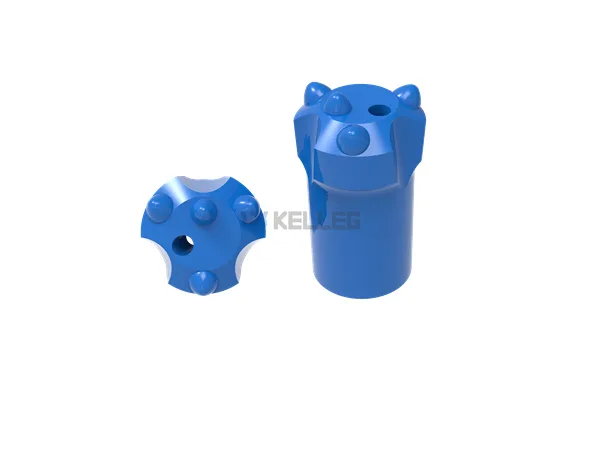
Tapered bits use a tapered connection rather than a threaded connection. Common taper angles include:
| Taper Angle | Typical Diameter Range* |
|---|---|
| 7° | 32–41 mm |
| 11° | 32–41 mm |
| 12° | 28–41 mm |
*Available diameters depend on bit type and configuration.
When selecting a tapered bit, confirm the taper angle, bit diameter, drill rod dimensions, and small-end geometry of the matching rod.
A long-skirt or short-skirt tapered bit should also be selected according to the matching rod geometry rather than simply according to rock hardness.
DTH Drill Bit Sizes #
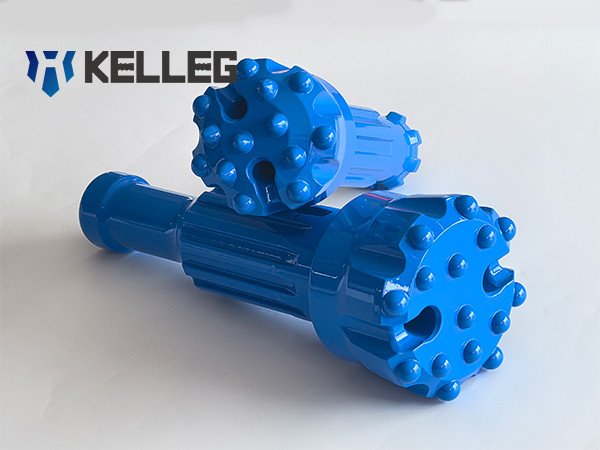
DTH drilling uses a hammer located directly behind the bit. The bit is connected to the hammer through a compatible shank or spline configuration.
DTH bit diameter must therefore be selected together with the hammer model and shank series.
Common DTH bit sizes vary by hammer series and application. Typical applications include:
- Mining production drilling
- Quarry blast holes
- Water well drilling
- Geothermal drilling
- Foundation and construction drilling
For DTH drilling, do not select a bit only by diameter. Confirm the hammer model, shank type, required hole diameter, air pressure, and compressor capacity.
What Does Rock Drill Bit Size Mean? #
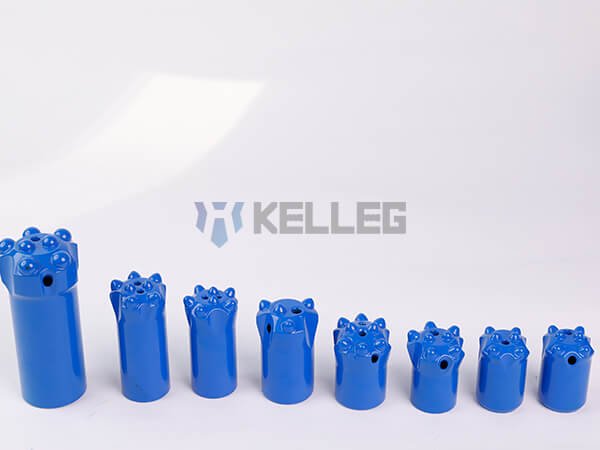
The most important size specification of a rock drill bit is its outside cutting diameter.
For button bits, the gauge buttons around the outer edge help maintain the hole diameter during drilling. As the gauge buttons wear, the effective drilling diameter can gradually decrease.
Three measurements should be distinguished:
Nominal Bit Diameter #
The nominal bit diameter is the specified size of the new bit, such as:
- 64 mm
- 76 mm
- 89 mm
- 102 mm
- 115 mm
- 127 mm
Gauge Diameter #
Gauge diameter refers to the outside diameter maintained by the gauge buttons around the perimeter of the bit.
Gauge buttons help:
- Maintain hole diameter
- Stabilize the bit in the borehole
- Reduce excessive deviation
- Protect the bit body from wear
Actual Hole Diameter #
The actual hole drilled in the rock may differ from the nominal bit diameter because of:
- Gauge button wear
- Formation characteristics
- Drilling parameters
- Flushing performance
- Hole deviation
- Bit condition
Therefore, a bit marked “89 mm” should not automatically be assumed to produce an exactly 89.0 mm hole under every drilling condition.
Bit Diameter vs. Thread Size: What Is the Difference? #
This is one of the most common sources of confusion when purchasing rock drill bits.
Bit diameter determines the hole size.
Thread specification determines connection compatibility.
| Specification | Main Function | Example |
|---|---|---|
| Bit diameter | Determines approximate hole diameter | 76 mm, 89 mm, 102 mm |
| Thread | Connects a threaded bit with compatible drilling components | R32, T38, T45, T51 |
| Taper angle | Determines compatibility for tapered tools | 7°, 11°, 12° |
| DTH shank series | Connects the bit with the DTH hammer | DHD, QL, SD, etc. |
For example, a T45 bit can be available in different diameters. The T45 thread does not mean that the bit is 45 mm in diameter.
This distinction is important when preparing a purchase specification.
A correct inquiry should therefore include both:
Bit diameter + connection specification
For example:
89 mm T45 button bits
rather than simply:
T45 bits
How to Choose the Right Rock Drill Bit Size #
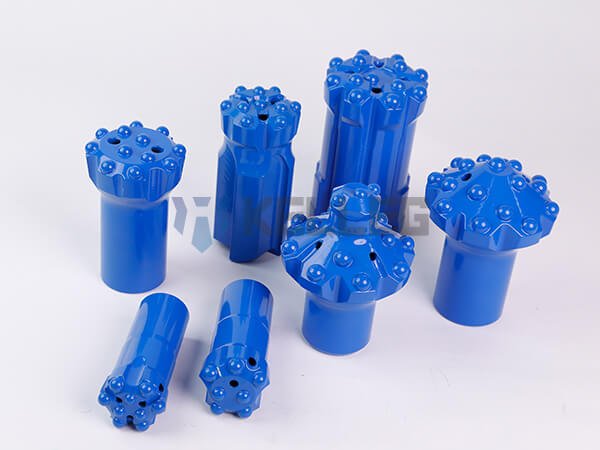
Selecting the correct bit diameter should follow a clear sequence.
1. Start With the Required Hole Diameter #
The required hole diameter should normally come from the engineering or drilling requirements.
For example:
- Blast-hole design
- Rock bolting
- Tunneling
- Quarry production
- Water well construction
- Geothermal drilling
The required hole size should be established before selecting the bit.
2. Select the Drilling Method #
The drilling method determines the available bit configuration.
Top Hammer Drilling
Suitable for many:
- Tunneling applications
- Underground development
- Quarry drilling
- Bench drilling
- Rock bolting
DTH Drilling
Commonly selected for:
- Deeper drilling
- Larger-diameter holes
- Water wells
- Geothermal drilling
- Open-pit production drilling
3. Match the Connection #
For Top Hammer drilling, confirm the required thread or taper configuration.
Common threaded specifications include:
- R25
- R32
- T38
- T45
- T51
For tapered drilling, confirm:
- Taper angle
- Rod size
- Small-end geometry
- Bit diameter
For DTH drilling, confirm:
- Hammer model
- Shank type
- Bit diameter
- Air pressure
- Compressor capacity
4. Consider Rock Formation #
Rock formation does not simply determine the bit diameter. Instead, it influences the bit design and drilling parameters used with the selected diameter.
Important formation characteristics include:
- Rock hardness
- Abrasiveness
- Fracturing
- Moisture or groundwater
- Compressive strength
- Formation variability
For example, hard and abrasive formations may require a different button configuration or face design from softer formations even when the required hole diameter is identical.
5. Consider Drilling Depth #
Drilling depth affects the choice between Top Hammer and DTH drilling tools.
Top Hammer drilling tools are commonly used for short to medium-depth drilling, while DTH drilling tools are often preferred as hole depth increases because the impact mechanism is located directly behind the bit.
However, there is no single depth at which one method becomes universally better. The final choice depends on the drill rig, rock formation, hole diameter, productivity requirements, and operating conditions.
6. Check Flushing Requirements #
Flushing removes rock cuttings from the hole and helps keep the bit face clean.
Poor flushing can cause:
- Cuttings accumulation
- Reduced penetration rate
- Increased bit wear
- Regrinding frequency
- Poor hole cleaning
For DTH drilling, air supply must also be matched to the hammer and drilling conditions.
Top Hammer Bit Size and Thread Compatibility #
Thread selection is an important part of Top Hammer bit sizing.
R32 #
R32 is commonly used for smaller Top Hammer drilling applications, including tunneling, drifting, and related underground drilling.
Available bit diameters depend on the specific bit configuration.
T38 #
T38 is widely used for medium-sized Top Hammer drilling applications.
Typical bit diameters include:
- 64 mm
- 76 mm
- 89 mm
The actual selection should be matched to the drill rod, shank adapter, rock drill, and required hole diameter.
T45 #
T45 is commonly used for production drilling and quarrying.
Typical diameters include:
- 76 mm
- 89 mm
- 102 mm
- Larger configurations depending on the drilling system
T51 #
T51 is used for larger and heavier-duty Top Hammer drilling.
Typical diameters include:
- 89 mm
- 102 mm
- 115 mm
- 127 mm
When ordering a T51 bit, always specify the required diameter rather than only the thread.
Top Hammer vs. DTH Bit Size Selection #
Top Hammer and DTH drilling use different impact systems, so bit size should be evaluated differently.
| Factor | Top Hammer Drill Bit | DTH Drill Bit |
|---|---|---|
| Impact location | Drill rig | Inside DTH hammer |
| Connection | Thread or taper | Shank/spline |
| Typical application | Tunneling, quarrying, underground drilling | Deep holes, water wells, mining |
| Bit size | Small to medium diameters | Medium to large diameters |
| Key compatibility factor | Thread / taper + rod types | Hammer + shank series |
| Important operating factor | Impact, rotation and rod types | Hammer size, air supply and flushing |
A simple rule is:
Choose the hole diameter first, then select the drilling system and compatible bit configuration.
Do not choose a bit solely because its diameter appears suitable.
How Bit Wear Changes Effective Diameter #
A new bit does not maintain the same effective diameter throughout its service life.
The gauge area is exposed to continuous contact with the borehole wall and can gradually wear.
Common signs of diameter loss include:
- Worn gauge buttons
- Reduced carbide height
- Increased hole deviation
- Smaller-than-required hole diameter
- Reduced drilling stability
The acceptable amount of wear depends on the drilling application and required hole tolerance.
A worn bit should therefore be evaluated against the actual drilling requirement rather than a universal “1 mm” or “2 mm” rule.
How to Measure a Rock Drill Bit Diameter #

Correct measurement is important when checking new bits, used bits, or regrinding bits.
Step 1: Clean the Bit #
Remove dust, rock particles, and debris from the bit.
Step 2: Measure the Gauge Area #
Measure across the appropriate gauge buttons rather than the inner cutting buttons.
Step 3: Check Several Positions #
Rotate the bit and take measurements at multiple positions to identify uneven wear.
Step 4: Check the Connection #
For threaded bits, verify the thread specification.
For tapered bits, verify the taper angle and matching rod dimensions.
For DTH bits, verify the shank configuration and hammer compatibility.
Step 5: Compare With the Required Specification #
Compare the measured diameter with the required hole diameter and the acceptable wear tolerance for the project.
When Should a Rock Drill Bit Be Replaced? #
Replacement should be considered when:
- Gauge wear causes unacceptable hole-size reduction
- Gauge buttons are severely damaged
- Buttons are cracked or broken
- The bit body is cracked or deformed
- Drilling performance has deteriorated significantly
- Regrinding can no longer restore acceptable cutting performance
Regrinding can restore button geometry and cutting performance in suitable cases, but it cannot restore material that has already been lost from the gauge diameter.
Custom Rock Drill Bit Sizes #
Standard sizes cover many drilling requirements, but some projects require non-standard configurations.
Custom bit solutions may be considered when:
- The required hole diameter is non-standard
- Existing drilling equipment requires a special configuration
- A specific formation causes excessive gauge wear
- A discontinued size needs to be replaced
- A distributor requires a private-label specification
- The drilling application requires a customized button or flushing layout
Depending on the application, customization may include:
- Bit diameter
- Thread or taper configuration
- Button shape
- Button layout
- Face design
- Gauge buttons protection
- Flushing-hole configuration
- Carbide configuration
For OEM or project-based orders, provide the drilling parameters before requesting a custom size.
What Information Should You Provide When Ordering Rock Drill Bits? #
To avoid incorrect quotations or compatibility problems, provide as much of the following information as possible:
- Required bit diameter
- Thread, taper, or DTH shank series
- Drill rig or rock drill model
- Drill rod specification
- Rock type and formation condition
- Required hole depth
- Drilling application
- Quantity required
For DTH drilling applications, also provide:
- DTH hammer model
- Operating air pressure
- Compressor capacity
- Required hole diameter
- Shank type
If you are not sure which bit configuration is correct, providing a photo of your existing bit and drill rod can also help confirm compatibility.
FAQ #
What is the most common rock drill bit size?
There is no single universal rock drill bit size. The required diameter depends on the drilling application, hole design, drilling method, and equipment. Common top hammer drill bit diameters include 64 mm, 76 mm, 89 mm, 102 mm, 115 mm, and 127 mm.
How do I choose the right rock drill bit diameter?
Start with the required hole diameter, then confirm the drilling method, thread or taper compatibility, rock formation, drilling depth, and flushing requirements.
Is bit diameter the same as thread size?
No. Bit diameter determines the approximate hole diameter, while thread size identifies the connection type. For example, an 89 mm T45 bit has an 89 mm cutting diameter and a T45 thread connection.
What is the difference between T38, T45, and T51 bits?
T38, T45, and T51 identify different Top Hammer thread types. Each type supports specific bit diameter ranges and must match the corresponding drill rod and drilling equipment.
Does rock hardness determine the bit diameter?
Not directly. Hole diameter is primarily determined by the drilling requirement. Rock hardness and abrasiveness are more important when selecting button shape, face design, carbide configuration, and drilling parameters.
How can I confirm which rock drill bit size I need?
Provide the required hole diameter, drill rig model, drill rod or hammer model, connection specification, drilling depth, rock type, and application. These parameters allow the appropriate bit diameter and configuration to be confirmed.