- Introduction
- What Determines the Service Life of a Hard Rock Drill Bit?
- Choose the Right Drill Bit for the Rock Formation
- Optimize Drilling Parameters to Prevent Premature Wear
- Ensure Proper Flushing and Hole Cleaning
- Regrind Carbide Buttons Before Severe Wear Occurs
- Monitor Common Wear Patterns and Failure Modes
- Match the Entire Drilling System for Better Bit Service Life
- Daily Inspection Checklist for Hard Rock Drill Bits
- How Much Longer Can Proper Maintenance Extend Drill Bit Service Life?
- Conclusion
Introduction #
In hard rock drilling operations, rock drill bits represent a significant portion of overall consumable costs. Whether in mining, quarrying, tunneling, or construction projects, the service life of a drill bit directly affects drilling efficiency, equipment utilization, and cost per meter drilled.
However, many hard rock drill bits fail long before reaching their expected wear life. Common causes include carbide button loss, crack propagation, accelerated wear, improper drilling parameters, insufficient hole cleaning, and inadequate maintenance practices. These issues not only increase tool consumption but can also lead to unplanned downtime and reduced productivity.
Maximizing drill bit service life is therefore not simply a matter of using a high-quality bit. It requires a comprehensive approach that includes proper bit selection, optimized drilling parameters, effective flushing, timely maintenance, and a well-matched drilling system.
This article explores the key factors that influence hard rock drill bit lifespan and provides practical strategies to help drilling contractors and mining operators reduce wear, improve performance, and lower overall drilling costs.
What Determines the Service Life of a Hard Rock Drill Bit? #
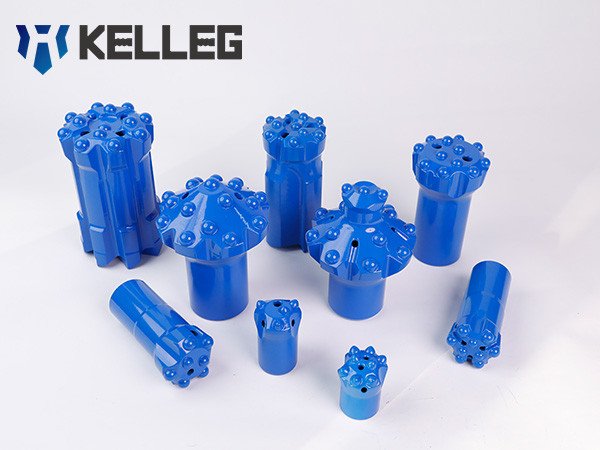
The service life of a hard rock drill bit is influenced by a combination of geological conditions, drilling equipment, operating practices, and maintenance routines. While many operators focus primarily on drill bit quality, field experience shows that bit lifespan is often determined by how well the entire drilling system is optimized.
Even a premium drill bit can experience premature wear or failure if drilling parameters are incorrect, flushing is inadequate, or maintenance is neglected. Conversely, a properly matched drilling setup and disciplined operating practices can significantly extend bit service life and improve overall drilling efficiency.
The following factors have the greatest impact on hard rock drill bit service life:
- Rock hardness and abrasiveness – Hard and highly abrasive formations accelerate wear on carbide buttons and the bit body.
- Drill bit design – Button shape and face design all influence wear resistance and drilling performance.
- Carbide button quality – High-quality carbide inserts offer better resistance to impact, abrasion, and thermal stress.
- Drilling parameters – Feed force, rotation speed, and impact energy must be properly balanced to avoid excessive wear.
- Flushing efficiency – Effective removal of rock cuttings reduces regrinding, overheating, and unnecessary stress on the bit.
- Drill rig condition – Worn shank adaptors, rods, or couplings can cause energy loss and vibration, accelerating bit damage.
- Operator practices – Correct drilling techniques help maintain stable energy transfer and reduce abnormal wear.
- Maintenance frequency – Regular inspection and timely button regrinding can significantly extend service life.
Relative Impact of Key Factors on Drill Bit Life #
| Factor | Impact on Bit Life |
|---|---|
| Rock Abrasiveness | Very High |
| Feed Force | High |
| Rotation Speed | High |
| Flushing Efficiency | High |
| Bit Maintenance | High |
| Operator Skill | Medium to High |
It is important to note that these factors rarely act independently. For example, highly abrasive rock combined with poor flushing and excessive feed force can reduce drill bit life dramatically. Therefore, maximizing service life requires a comprehensive approach that addresses both drilling conditions and operational practices rather than focusing on a single factor.
Choose the Right Drill Bit for the Rock Formation #
Selecting a high-quality drill bit is important, but choosing the right drill bit for the specific rock formation is equally critical. Even the most durable hard rock drill bit can suffer premature wear, button breakage, or reduced penetration rates if its design does not match the drilling conditions.
Proper bit selection helps distribute impact energy more efficiently, reduce unnecessary stress on carbide buttons, and improve resistance to abrasion and fatigue. As a result, the correct bit design can significantly extend service life while lowering the overall drilling cost per meter.
Button Shape Selection #
The shape of carbide buttons plays a major role in determining drilling performance and wear resistance.
Spherical Buttons #
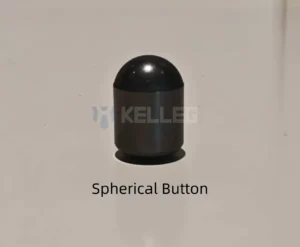
Spherical buttons are widely used in hard and abrasive rock formations because of their superior strength and durability. Their rounded profile distributes impact loads more evenly, reducing the risk of button chipping, cracking, and breakage.
Advantages:
- Excellent resistance to impact and abrasion
- Longer service life in hard rock conditions
- Reduced risk of carbide failure
- Suitable for highly fractured and abrasive formations
Because of their durability, spherical buttons are often the preferred choice when maximizing drill bit lifespan is a priority.
Ballistic Buttons #
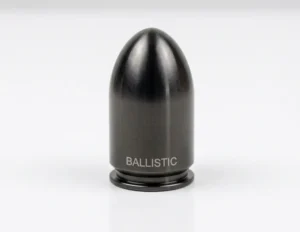
Ballistic buttons feature a more pointed profile that provides faster rock penetration by concentrating impact energy into a smaller contact area.
Advantages:
- Higher penetration rates in softer to medium-hard formations
- Improved drilling speed under suitable conditions
Limitations:
- More vulnerable to wear in abrasive rock
- Higher risk of button chipping in extremely hard formations
While ballistic buttons can improve productivity in certain applications, spherical buttons generally offer better longevity in demanding hard-rock environments.
Face Design Selection #
The face design influences hole straightness, cutting removal, drilling stability, and wear distribution. Selecting the appropriate face profile helps maximize both performance and service life.
Flat Face #
Flat face bits are commonly used in hard, competent, and abrasive rock formations.
Benefits:
- Excellent drilling stability
- Good resistance to gauge wear
- Reliable hole straightness
- Suitable for most hard rock applications
Flat face designs are often considered the most versatile option for challenging rock conditions.
Drop Center Face #
Drop-center face bits feature a recessed center section that improves hole cleaning and centering.
Benefits:
- Enhanced flushing efficiency
- Better hole straightness in fractured formations
- Improved collaring performance
These bits are particularly effective in medium-hard to hard rock where accurate hole alignment is important.
Convex Face #
Convex face designs concentrate impact energy toward the center of the bit and are commonly used in softer or less abrasive formations.
Benefits:
- Faster penetration rates
- Smooth drilling performance
Limitations:
- Less resistant to wear in highly abrasive rock
- May experience increased gauge wear under harsh conditions
Carbide Grade Selection #

The quality and grade of carbide buttons directly impact drill bit durability. Different carbide grades are designed to balance hardness and toughness depending on drilling conditions.
- Harder carbide grades provide excellent wear resistance in abrasive formations but may be more susceptible to impact damage.
- Tougher carbide grades offer greater resistance to cracking and breakage in highly fractured or dynamic drilling conditions.
- Balanced carbide grades combine wear resistance and toughness for general hard rock applications.
Selecting an inappropriate carbide grade can lead to premature button wear, excessive cracking, or unexpected carbide loss. For this reason, carbide selection should always be matched to both rock hardness and rock abrasiveness.
Extending drill bit service life begins with selecting a bit that matches the geological conditions. Button shape, face design, and carbide grade all influence how effectively the bit withstands impact, abrasion, and fatigue during drilling. By optimizing these factors, operators can reduce premature failures, improve drilling consistency, and maximize the return on their drilling tools.
Related Reading: Best Rock Drill Bits for Hard Rock – Learn how different bit designs are selected for specific hard rock drilling applications and operating conditions.
Optimize Drilling Parameters to Prevent Premature Wear #
Even the best drill bit can experience rapid wear if drilling parameters are not properly controlled. In hard rock drilling, feed pressure, rotation speed, and impact energy work together to determine how efficiently energy is transferred from the rock drill to the rock face.
Incorrect settings often result in excessive stress, heat generation, vibration, and uneven wear patterns, significantly shortening drill bit service life. Optimizing these parameters not only extends bit lifespan but also improves penetration rates and overall drilling efficiency.
Avoid Excessive Feed Pressure #
Feed pressure plays a critical role in maintaining effective contact between the drill bit and the rock. However, applying excessive feed force does not necessarily improve drilling performance. Instead, it can overload the drill bit and increase the risk of premature failure.
Common problems caused by excessive feed pressure include:
- Button cracking due to excessive impact stress on carbide inserts
- Carbide chipping caused by concentrated loading and vibration
- Bit body fatigue resulting from repeated high-stress cycles
- Increased vibration throughout the drilling system
- Reduced energy transfer efficiency
To maximize drill bit service life, feed pressure should be adjusted according to rock conditions, drill bit size, and rock drill specifications. A stable and consistent feed force is generally more beneficial than simply increasing thrust.
Control Rotation Speed #
Rotation speed determines how frequently fresh rock is presented to the carbide buttons during drilling. While higher rotation speeds may seem beneficial for productivity, excessive rotation can accelerate wear and reduce drilling efficiency.
Potential consequences of excessive rotation speed include:
- Excessive heat generation at the rock-to-button contact area
- Accelerated button wear due to increased friction
- Poor energy transfer as impact energy is not effectively concentrated on the rock
- Uneven wear patterns across the bit face
- Increased risk of gauge button wear
On the other hand, rotation speeds that are too low may reduce penetration rates and cause uneven button loading. The optimal rotation speed depends on rock hardness, drill bit diameter, and drilling equipment capabilities.
Maintain Proper Impact Energy #
Impact energy is the primary force responsible for breaking hard rock. However, more impact energy is not always better. The key is to match impact energy to the drilling conditions and drilling system.
Factors that should be considered include:
- Rock hardness and strength
- Drill bit diameter
- Rock drill power and operating pressure
When impact energy is too high, the drill bit may experience:
- Increased risk of button breakage
- Higher stress concentrations
- Accelerated fatigue damage
- Excessive vibration
When impact energy is too low, operators may encounter:
- Reduced penetration rates
- Increased drilling time
- Excessive frictional wear
- Lower overall productivity
The most efficient drilling occurs when impact energy is properly balanced with feed force and rotation speed. A well-matched system allows energy to be transferred efficiently into the rock while minimizing unnecessary stress on the drill bit.
Many cases of premature drill bit failure are caused not by the drill bit itself, but by improper drilling parameters. By carefully controlling feed pressure, rotation speed, and impact energy, operators can reduce wear, prevent button damage, improve drilling performance, and significantly extend hard rock drill bit service life.
Ensure Proper Flushing and Hole Cleaning #
In hard rock drilling, flushing and hole cleaning are often underestimated, yet they are among the most critical factors affecting drill bit service life. A significant portion of premature drill bit wear is not caused by impact or rotation alone, but by insufficient removal of cuttings from the borehole.
When rock debris is not effectively evacuated, it remains in the drilling zone and continues to be re-crushed between the drill bit and the rock face. This leads to unnecessary stress, heat buildup, and accelerated wear of carbide buttons and the bit body.
Problems Caused by Poor Cutting Removal #
Inadequate flushing can lead to several damaging effects:
- Regrinding of cuttings between the bit face and rock, increasing abrasive wear
- Overheating of carbide buttons, which reduces material toughness and accelerates failure
- Increased button wear rate due to constant abrasive circulation
- Reduced drilling efficiency, resulting in slower penetration rates
- Higher risk of bit face damage and uneven wear patterns
Over time, these issues significantly shorten drill bit service life and increase overall drilling costs.
Signs of Poor Flushing #
Operators can often identify flushing problems through visible drilling and wear indicators:
- Fine dust accumulation around the hole collar, indicating insufficient cuttings removal
- Reduced penetration rate despite unchanged drilling parameters
- Excessive bit temperature, often noticeable during bit inspection
- Uneven wear patterns on carbide buttons or bit face
- Poor hole cleaning performance, especially in deeper holes
Recognizing these early warning signs allows operators to adjust flushing parameters before serious damage occurs.
Best Practices for Effective Flushing #
To maintain efficient hole cleaning and extend drill bit service life, the following practices are recommended:
- Maintain correct air pressure and airflow volume to ensure consistent cutting evacuation
- Inspect flushing holes regularly to prevent clogging or partial blockage
- Clean blocked passages on the drill bit to restore proper airflow
- Monitor compressor performance, ensuring stable pressure delivery throughout drilling operations
- Match flushing capacity to hole diameter and drilling depth, especially in deep or highly abrasive formations
Proper flushing not only improves drilling efficiency but also significantly reduces thermal and mechanical stress on the drill bit.
Effective flushing is essential for maximizing hard rock drill bit service life. By ensuring continuous removal of cuttings, operators can prevent regrinding, reduce overheating, and minimize unnecessary wear. In many cases, improving flushing performance delivers immediate gains in both penetration rate and overall drilling cost efficiency.
Regrind Carbide Buttons Before Severe Wear Occurs #
Carbide button regrinding is one of the most effective yet often overlooked practices for extending hard rock drill bit service life. Once carbide buttons become excessively flat or develop micro-cracks, the drilling efficiency drops rapidly, and the risk of catastrophic failure increases.
By performing regrinding at the right time, operators can restore the original button geometry, maintain efficient rock breaking performance, and significantly reduce overall drilling costs.
Why Regrinding Matters #
As carbide buttons wear during drilling, their geometry gradually changes from a sharp or spherical profile to a flattened surface. This wear condition has a direct impact on drilling performance:
- Reduced penetration rate, as the worn flat surface is less effective in breaking rock
- Increased energy consumption, since more force is required to achieve the same drilling progress
- Higher risk of crack propagation, especially under repeated impact loading
- Uneven stress distribution, leading to accelerated fatigue damage
If left untreated, these conditions can quickly lead to button failure, loss of efficiency, and premature drill bit replacement.
When Should a Drill Bit Be Reground? #
Timely regrinding is critical. Waiting too long can make recovery impossible and shorten overall bit service life. The following guidelines are commonly used in field operations:
- The flat wear area reaches approximately one-third of the button diameter
- First visible signs of micro-cracking appear on carbide buttons
- Noticeable drop in penetration rate under stable drilling conditions
- Increased vibration or irregular drilling response during operation
Once these conditions are observed, regrinding should be carried out as soon as possible to prevent further damage.
Benefits of Timely Regrinding #
Proper and timely carbide button regrinding provides several important advantages:
- Restores penetration rate, bringing drilling performance closer to original levels
- Reduces stress concentration, minimizing the risk of sudden button failure
- Extends carbide button life, delaying the need for full drill bit replacement
- Improves drilling stability, resulting in smoother and more consistent operation
- Lowers overall drilling cost per meter, by maximizing tool utilization
Regrinding is not just a maintenance task—it is a strategic practice for extending drill bit service life. By monitoring wear conditions and performing regrinding at the right time, operators can significantly improve drilling efficiency, reduce downtime, and maximize the return on every hard rock drill bit used in the field.
Monitor Common Wear Patterns and Failure Modes #
Regular inspection of drill bit wear patterns is essential for understanding drilling conditions and preventing unexpected failures. Different wear modes provide valuable clues about rock formation characteristics, drilling parameter settings, and overall system performance.
By identifying abnormal wear early, operators can adjust drilling practices, reduce damage progression, and extend hard rock drill bit service life.
Uniform Wear #
Uniform wear is considered normal and indicates that the drill bit is operating under balanced and stable drilling conditions.
Characteristics:
- Even reduction of carbide button height across the bit face
- Consistent wear on gauge and face buttons
- Stable penetration rate over time
Uniform wear suggests that drilling parameters, flushing, and rock conditions are well matched to the drill bit design. This is the ideal wear pattern and reflects efficient energy transfer.
Flat Button Wear #
Flat button wear occurs when carbide buttons lose their original geometry and develop a flattened surface.
Causes:
- Delayed regrinding of worn buttons
- Highly abrasive rock formations
Impact:
- Reduced penetration efficiency
- Increased energy consumption
- Higher risk of crack initiation in carbide buttons
If not addressed in time, flat wear can quickly progress into button failure and significantly shorten drill bit service life.
Broken Carbide Buttons #
Carbide button breakage is a serious failure mode that directly affects drilling performance and bit integrity.
Causes:
- Excessive impact energy during drilling
- Poor alignment between drill rods
- Use of inferior or mismatched carbide grades
Impact:
- Sudden loss of drilling efficiency
- Uneven load distribution on remaining buttons
- Increased vibration and instability during drilling
This failure mode often indicates issues with drilling parameters or system matching rather than normal wear.
Bit Body Cracking #
Cracks in the drill bit body typically develop under repeated stress and poor operating conditions.
Causes:
- Excessive vibration during drilling
- Improper heat treatment of the bit body
- Overloading due to incorrect feed pressure or impact energy
Impact:
- Structural weakening of the drill bit
- Risk of catastrophic bit failure
- Reduced drilling safety and stability
Bit body cracking is often progressive and can be detected early through careful inspection.
Lost Buttons #
Button loss occurs when carbide inserts detach from the bit body during operation.
Causes:
- Fatigue damage from prolonged drilling stress
- Overheating due to poor flushing or excessive rotation
- Incorrect drilling parameters are causing uneven load distribution
Impact:
- Severe reduction in drilling efficiency
- Irregular hole quality
- Potential damage to remaining buttons and bit face
Lost buttons are a critical failure mode and often indicate that both operational practices and maintenance routines need immediate adjustment.
Understanding wear patterns and failure modes allows operators to diagnose drilling conditions in real time. Instead of simply replacing worn bits, analyzing wear behavior helps identify root causes such as parameter imbalance, poor flushing, or system mismatch—ultimately enabling longer drill bit service life and lower drilling costs.
Match the Entire Drilling System for Better Bit Service Life #

Drill bit service life is not determined by the bit alone. In hard rock drilling operations, the drill bit is only one component in a complete energy transfer system. The performance and durability of the bit depend heavily on how well the entire drilling system is matched and maintained.
When all components work in proper synchronization, impact energy is efficiently transmitted to the rock face with minimal loss. However, if any part of the system is worn, mismatched, or improperly maintained, it can significantly increase stress on the drill bit and shorten its service life.
Key Components of the Drilling System #
A typical top hammer drilling system consists of several interconnected components:
- Rock drill – Generates impact energy and rotation force
- Shank adaptor – Transfers energy from the rock drill to the drill rod
- Coupling sleeve – Connects drill rods and ensures stable energy transmission
- Drill rod – Transmits impact energy and rotation to the drill bit
- Drill bit – Converts mechanical energy into rock-breaking action
Each component plays a critical role in maintaining stable and efficient drilling performance.
How System Imbalance Affects Drill Bit Service Life #
When any component in the drilling system becomes worn or incompatible, energy transfer efficiency is reduced. This leads to a series of negative effects that directly impact drill bit service life:
- Energy loss within the drill rod reduces effective impact at the bit face
- Excessive vibration caused by worn or mismatched components increases mechanical stress
- Uneven impact loading leads to irregular wear patterns and premature button failure
- Increased heat generation due to inefficient energy transfer
- Reduced drilling accuracy and penetration efficiency
Over time, these conditions place additional stress on the drill bit, accelerating wear and increasing the likelihood of failure.
Importance of System Matching #
Proper system matching ensures that all components operate within their designed performance range. This includes:
- Matching drill rods and couplings to the correct diameter and thread type
- Ensuring shank adaptors are compatible with the rock drill model
- Using drill bits designed for the specific rock formation and drilling conditions
- Regular inspection and replacement of worn components to maintain system integrity
Even small mismatches in the system can create cumulative inefficiencies that significantly reduce drill bit lifespan.
Maximizing hard rock drill bit service life requires a system-level approach. When the rock drill, shank adaptor, coupling sleeve, drill rods, and drill bit are properly matched and maintained, energy transfer becomes more efficient and stable. This reduces vibration, minimizes uneven loading, and ultimately extends the service life of the drill bit while improving overall drilling performance.
Daily Inspection Checklist for Hard Rock Drill Bits #
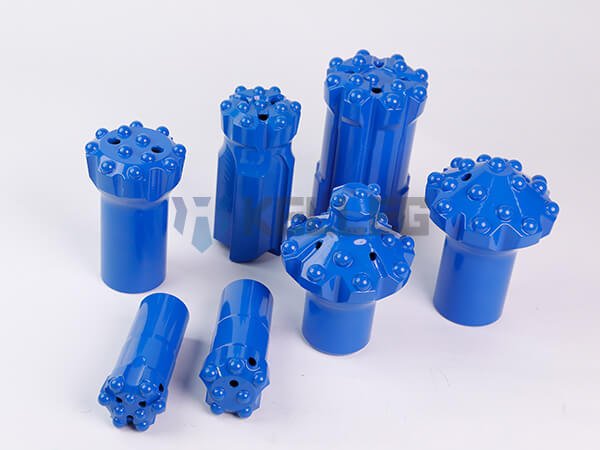
Routine inspection is one of the most effective ways to extend hard rock drill bit service life. Many premature failures can be prevented simply by identifying early warning signs before, during, and after drilling operations. A structured inspection routine helps maintain stable performance, reduce unexpected downtime, and improve overall drilling efficiency.
The following checklist provides a practical guideline for daily drill bit monitoring in field operations.
Before Drilling #
Perform a thorough inspection before starting any drilling operation:
✓ Check button condition – Ensure carbide buttons are intact, with no visible cracks, excessive flat wear, or missing inserts
✓ Inspect flushing holes – Confirm that all flushing channels are clear and unobstructed
✓ Check bit body cracks – Look for any signs of fatigue cracks or structural damage on the bit body
✓ Verify thread condition – Ensure threads are clean, undamaged, and properly engaged with the drill rod
During Drilling #
Monitor drilling performance continuously to detect abnormal conditions:
✓ Monitor penetration rate – A sudden drop may indicate wear, poor flushing, or incorrect parameters
✓ Watch vibration levels – Excessive vibration often signals system mismatch or worn components
✓ Observe flushing performance – Ensure efficient removal of cuttings and stable airflow during drilling
After Drilling #
Proper post-drilling inspection and handling help extend tool service life:
✓ Clean drill bit thoroughly – Remove rock debris, dust, and moisture from the bit surface
✓ Record wear condition – Document button wear patterns, damage, and overall bit status
✓ Schedule regrinding if necessary – Identify flat wear or early cracking and plan maintenance accordingly
✓ Store in dry conditions – Prevent corrosion and protect carbide and steel components from environmental damage
A disciplined daily inspection routine is essential for maximizing drill bit service life. By systematically checking conditions before, during, and after drilling, operators can detect problems early, prevent severe wear, and ensure consistent drilling performance in hard rock environments.
How Much Longer Can Proper Maintenance Extend Drill Bit Service Life? #

While hard rock drill bit service life is strongly influenced by geology and drilling conditions, proper maintenance and operational optimization can significantly extend usable lifespan. In many field applications, drill bits are replaced earlier than necessary to prevent issues such as poor flushing, incorrect drilling parameters, or delayed maintenance.
By implementing structured maintenance practices, operators can improve both drilling efficiency and tool utilization, ultimately reducing cost per meter drilled.
The following table summarizes typical industry experience regarding how different practices can improve drill bit life:
| Practice | Expected Life Improvement |
|---|---|
| Timely Regrinding | 20–40% |
| Proper Flushing | 15–30% |
| Optimized Drilling Parameters | 20–35% |
| System Matching | 10–25% |
| Routine Inspection | 10–20% |
These improvements are not theoretical—they are commonly observed in field operations when drilling systems are properly managed and maintained.
It is important to note that actual results will vary depending on several factors, including rock hardness, abrasiveness, drilling depth, equipment condition, and operator experience. In extremely hard or highly fractured formations, gains may be lower, while in well-controlled environments, improvements can be even more significant.
Extending drill bit service life is not achieved through a single action, but through a combination of maintenance practices and operational control. When timely regrinding, proper flushing, optimized drilling parameters, system matching, and routine inspections are implemented together, the cumulative effect can substantially increase drill bit lifespan and reduce overall drilling costs in hard rock applications.
Conclusion #
Extending hard rock drill bit service life is not achieved by relying solely on high-quality bits. While premium materials and advanced manufacturing play an important role, long-term performance in the field depends on a much broader set of factors.
Proper drill bit selection, optimized drilling parameters, efficient flushing and cuttings removal, timely carbide button regrinding, and a well-matched drilling system all have a direct and significant impact on final bit lifespan.
When these elements are managed together as part of a systematic drilling strategy, operators can greatly reduce premature wear and unexpected failures. This not only extends drill bit service life but also improves drilling stability, enhances penetration efficiency, and reduces overall operational disruptions.
By establishing a structured maintenance and operating process, drilling contractors can achieve more than just longer-lasting tools. They can significantly lower cost per drilled meter, improve productivity, and ensure more consistent and reliable drilling performance across a wide range of hard rock conditions.