- Introduction
- Quick Answer: How Can You Verify Drill Rod Steel Quality?
- Why Drill Rod Steel Quality Matters
- What Steel Is Used for High-Quality Drill Rods?
- Verify the Material Certificate (Mill Test Certificate)
- Check Mechanical Properties
- Verify Heat Treatment Quality
- Hardness Testing
- Non-Destructive Testing (NDT)
- Inspect the Thread Quality
- Field Methods to Identify Poor-Quality Drill Rods
- How to Evaluate a Drill Rod Manufacturer
- Conclusion
Introduction #
Drill rods are among the most critical and heavily stressed components in rock drilling operations. During drilling, they must continuously withstand impact energy, rotational torque, bending forces, and abrasive wear. As a result, the quality of the steel used in a drill rod directly affects its service life, drilling efficiency, thread durability, operational safety, and overall drilling costs.
Unfortunately, many drill rod failures are often blamed on harsh rock conditions or improper drilling practices when the real cause lies elsewhere. Inferior steel, inadequate heat treatment, inconsistent material properties, and poor manufacturing controls can significantly reduce drill rod performance and lead to premature failures such as thread damage, rod bending, fatigue cracking, and unexpected breakage.
For drilling contractors, mining companies, distributors, and procurement professionals, verifying steel quality before purchasing drill rods is essential to minimizing downtime and maximizing return on investment. However, determining whether a drill rod is manufactured from high-quality steel requires more than simply checking the supplier’s specifications.
This guide explains how to verify drill rod steel quality through material certification review, mechanical property evaluation, heat treatment verification, hardness testing, non-destructive inspection methods, and supplier quality assessments. By following these practical checks, buyers can confidently identify reliable drill rods and avoid costly quality issues before they reach the job site.
Quick Answer: How Can You Verify Drill Rod Steel Quality? #
To verify drill rod steel quality, check the material test certificate (MTC), confirm the steel grade and chemical composition, review mechanical properties, verify heat treatment records, inspect hardness values, request non-destructive testing (NDT) reports, examine thread machining quality, and evaluate the manufacturer’s quality control system. A combination of these checks provides the most reliable assessment of drill rod quality and long-term performance.
Why Drill Rod Steel Quality Matters #
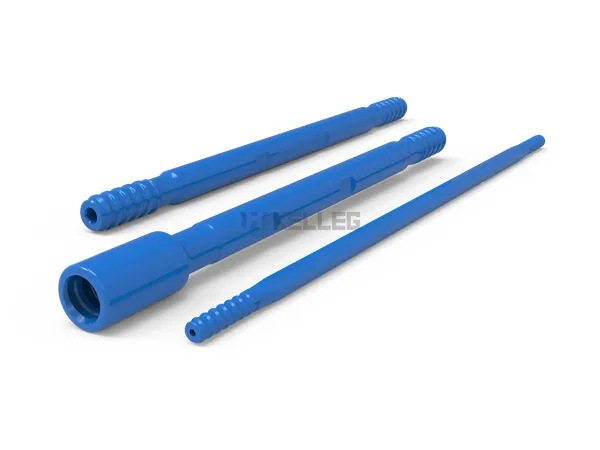
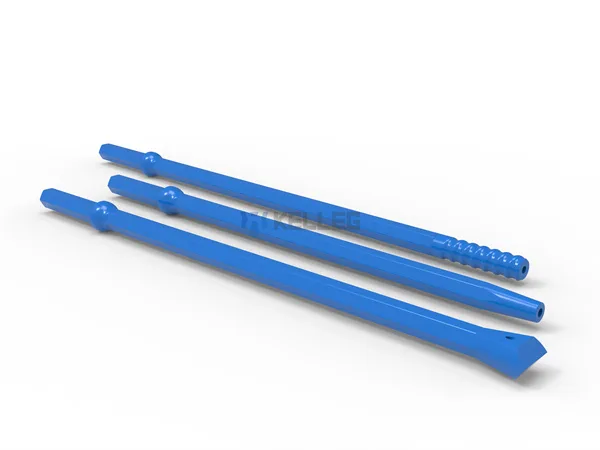
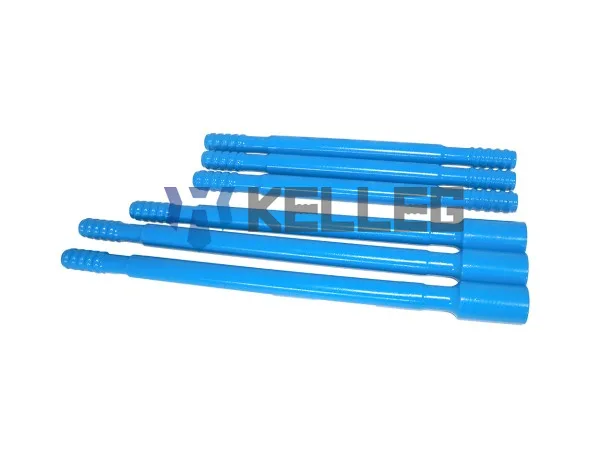
Drill rods operate in some of the most demanding conditions found in mining, tunneling, quarrying, and construction drilling. During operation, they are subjected to repeated impact loads, high rotational torque, abrasive wear, bending forces, and cyclic stress. Every hammer blow generated by the rock drill must be transmitted efficiently through the drill rod to the drill bit while maintaining structural integrity under harsh working conditions.
Because of these extreme demands, steel quality plays a critical role in determining drill rod performance and service life. Even minor variations in material composition, cleanliness, heat treatment, or manufacturing quality can significantly affect reliability in the field.
What Happens When Steel Quality Is Poor? #
Low-quality steel often contains impurities, inconsistent microstructures, inadequate hardness, or insufficient toughness. These deficiencies can lead to a range of premature failures that increase operating costs and reduce drilling productivity.
Common Drill Rod Failures #
Thread Wear
Poor wear resistance accelerates thread degradation, resulting in loose connections, reduced energy transfer efficiency, and shorter service life.
Thread Stripping
Insufficient material strength can cause threads to deform or strip under repeated impact and torque loads, making the drill rod unusable.
Rod Bending
Steel with low yield strength may permanently deform when subjected to excessive drilling forces, causing poor hole straightness and increased stress concentration.
Rod Breakage
Inferior material quality or internal defects can lead to sudden rod fractures, particularly in demanding hard-rock applications.
Fatigue Cracking
Repeated impact cycles create microscopic cracks that gradually propagate through the steel, eventually causing catastrophic failure.
Impact Damage
Steel with inadequate toughness may chip, crack, or fracture when exposed to high-frequency impact loading.
The Business Impact of Poor Steel Quality #
Premature drill rod failures affect more than just replacement costs. They can have a significant impact on overall drilling productivity and project profitability.
Common consequences include:
- More frequent drill rod replacements
- Increased machine downtime
- Higher maintenance costs
- Reduced penetration rates
- Lower drilling efficiency
- Delays in project schedules
- Higher drilling cost per meter
In large-scale mining and infrastructure projects, even a small reduction in drill rod lifespan can translate into substantial operational expenses over time.
The Core Value of High-Quality Drill Rod Steel #
High-quality drill rods are manufactured from premium alloy steels and undergo strict metallurgical and heat-treatment controls. The result is a material that delivers the ideal balance of strength, toughness, wear resistance, and fatigue performance.
Key characteristics of high-quality drill rod steel include:
Uniform Microstructure #
A consistent metallurgical structure ensures predictable mechanical properties throughout the entire rod, reducing the risk of localized weak points.
High Strength-to-Toughness Balance #
Premium drill rod steels provide high yield and tensile strength while maintaining sufficient toughness to withstand repeated impact loading without brittle failure.
Excellent Impact Toughness #
Strong impact resistance helps absorb drilling energy and prevents crack initiation under dynamic loading conditions.
Superior Fatigue Resistance #
High-quality steel withstands millions of impact cycles, significantly extending service life in demanding drilling environments.
Longer Service Life #
The combination of proper alloy composition, controlled heat treatment, and strict quality control results in fewer failures, longer operating intervals, and lower total ownership costs.
Ultimately, investing in high-quality drill rod steel is not simply a material decision—it is a productivity decision. Reliable drill rods improve drilling performance, reduce downtime, and help contractors and mining operators achieve a lower cost per drilled meter.
What Steel Is Used for High-Quality Drill Rods? #

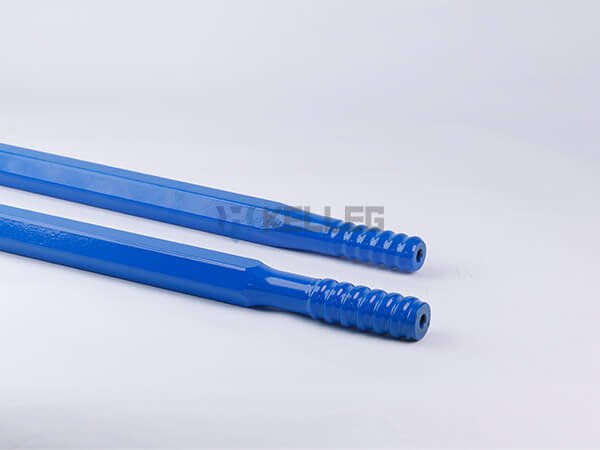
The performance and service life of a drill rod depend heavily on the quality of the steel from which it is manufactured. High-quality drill rods are typically produced from low-alloy, high-strength steels specifically engineered to withstand repeated impact loading, torsional stress, bending forces, and abrasive wear.
Different steel grades offer varying levels of strength, toughness, hardenability, and fatigue resistance. Selecting the right material is essential for achieving reliable drilling performance in different geological conditions.
Common Drill Rod Materials #
The following alloy steels are commonly used in the manufacture of rock drilling rods:
| Material | Strength | Toughness | Typical Use |
|---|---|---|---|
| 35CrMo | Good | Good | Light-duty drilling, general construction applications |
| 42CrMo | Better | Better | Mining, quarrying, and medium-to-heavy-duty drilling |
| 40CrMnMo | Excellent | Excellent | Heavy-duty mining and demanding rock drilling conditions |
| 23CrNi3Mo | Premium | Premium | High-performance drill rods requiring maximum durability and fatigue resistance |
35CrMo Steel #
35CrMo is a chromium-molybdenum alloy steel widely used in general drilling applications. It offers a good balance of strength and toughness at a relatively economical cost. However, its fatigue resistance and impact performance are typically lower than those of more advanced alloy grades.
42CrMo Steel #
42CrMo is one of the most common materials used for mining drill rods. Compared with 35CrMo, it provides higher strength, better hardenability, and improved wear resistance. It performs well in most mining, tunneling, and quarry drilling operations.
40CrMnMo Steel #
40CrMnMo is often considered a premium material for heavy-duty drill rods. The addition of manganese and molybdenum improves hardenability, toughness, and fatigue resistance. This steel is particularly suitable for high-impact rock drilling environments where long service life is critical.
23CrNi3Mo Steel #
23CrNi3Mo is a nickel-chromium-molybdenum alloy steel commonly used in high-end drilling tools. It offers exceptional toughness, impact resistance, and fatigue performance, making it ideal for demanding applications involving deep-hole drilling, hard rock formations, and high-power drilling equipment.
Why Alloy Composition Matters #
The mechanical performance of a drill rod is not determined solely by its steel grade designation. The individual alloying elements within the steel directly influence strength, toughness, wear resistance, fatigue life, and heat-treatment response.
Understanding the role of these elements helps buyers evaluate whether a drill rod material is suitable for their application.
Carbon (C) #
Carbon is the primary strengthening element in steel.
Its main functions include:
- Increasing hardness and tensile strength
- Improving wear resistance
- Enhancing heat-treatment effectiveness
However, excessive carbon content can reduce toughness and increase the risk of brittle fracture. For drill rods, achieving the right balance between strength and toughness is essential.
Chromium (Cr) #
Chromium improves both mechanical performance and heat-treatment characteristics.
Key benefits include:
- Increased hardenability
- Improved wear resistance
- Enhanced corrosion resistance
- Better high-temperature stability
Chromium-containing steels generally provide longer service life in abrasive drilling environments.
Nickel (Ni) #
Nickel is one of the most effective alloying elements for improving toughness.
Its advantages include:
- Increased impact resistance
- Improved fatigue strength
- Better low-temperature performance
- Enhanced resistance to crack propagation
Premium drill rod steels often contain nickel to improve durability under severe impact loading.
Molybdenum (Mo) #
Molybdenum helps maintain strength and toughness after heat treatment.
Its primary functions are:
- Improving hardenability
- Increasing high-temperature strength
- Enhancing fatigue resistance
- Reducing temper brittleness
This element is particularly valuable in drill rods subjected to repeated impact and cyclic stress.
Manganese (Mn) #
Manganese contributes to both strength and toughness while supporting the heat-treatment process.
Key benefits include:
- Improved tensile strength
- Enhanced hardenability
- Better wear resistance
- Increased resistance to impact loading
When combined with chromium and molybdenum, manganese helps create a highly durable alloy steel suitable for heavy-duty drilling applications.
Material Selection Is Only Part of the Equation #
While selecting the correct steel grade is important, material composition alone does not guarantee a high-quality drill rod. The final performance also depends on steel cleanliness, forging quality, heat treatment, machining accuracy, and quality control procedures.
In fact, a properly heat-treated 42CrMo drill rod can often outperform a poorly manufactured rod made from a more expensive alloy. For this reason, buyers should evaluate both the steel grade and the manufacturer’s production capabilities when verifying drill rod quality.
Verify the Material Certificate (Mill Test Certificate) #
Before evaluating hardness reports, heat treatment records, or manufacturing capabilities, the first document every buyer should request is the Mill Test Certificate (MTC), also known as a Material Test Certificate or Material Certificate.
An MTC serves as the steel mill’s official quality record and provides traceability for the raw material used to manufacture the drill rod. It verifies whether the supplied steel meets the required chemical composition and mechanical property standards.
A legitimate MTC should contain the following information:
- Heat Number (Heat ID)
- Steel Grade
- Chemical Composition
- Mechanical Properties
- Manufacturing Batch Number
- Applicable Standards
- Testing Date
- Manufacturer Information
Without a valid MTC, it becomes difficult to verify whether the drill rod has been produced from the specified material grade or whether the steel meets the required performance standards.
Key Information Found on an MTC #
Heat Number #
The heat number is a unique identification code assigned to a specific steel melting batch.
This number allows manufacturers and buyers to:
- Trace raw material origins
- Track production records
- Verify testing results
- Investigate quality issues if failures occur
Every drill rod batch should be traceable back to its corresponding heat number.
Steel Grade #
The steel grade identifies the material specification used to manufacture the drill rod.
Examples include:
- 35CrMo
- 42CrMo
- 40CrMnMo
- 23CrNi3Mo
The listed grade should match the material specified in the purchase contract or technical documentation.
Chemical Composition #
This section lists the percentage of alloying elements contained in the steel.
Typical elements include:
- Carbon (C)
- Silicon (Si)
- Manganese (Mn)
- Chromium (Cr)
- Nickel (Ni)
- Molybdenum (Mo)
- Phosphorus (P)
- Sulfur (S)
These values determine the steel’s strength, toughness, hardenability, and wear resistance.
Mechanical Properties #
The mechanical property section confirms whether the material meets performance requirements.
Common values include:
- Tensile Strength
- Yield Strength
- Elongation
- Reduction of Area
- Impact Toughness
- Hardness (if applicable)
Manufacturing Batch #
Batch information links the material certificate to a specific production lot.
This ensures consistency and enables full product traceability throughout manufacturing and delivery.
How to Read a Drill Rod Material Certificate #
Many buyers receive MTCs but do not know which data points deserve the most attention. Understanding several critical sections can quickly reveal whether the material meets quality expectations.
Example: Chemical Composition Section #
| Element | Result (%) | Typical Range for 42CrMo (%) |
|---|---|---|
| C | 0.41 | 0.38–0.45 |
| Si | 0.28 | 0.17–0.37 |
| Mn | 0.75 | 0.50–0.80 |
| Cr | 1.05 | 0.90–1.20 |
| Mo | 0.22 | 0.15–0.30 |
When reviewing chemical composition:
✔ Values should fall within the standard specification range.
✔ Major alloying elements should be consistent with the declared steel grade.
✔ Phosphorus (P) and Sulfur (S) should remain at low levels because excessive impurities reduce toughness and fatigue life.
Example: Tensile Strength Section #
| Property | Result |
|---|---|
| Tensile Strength (Rm) | 1050 MPa |
Tensile strength indicates the maximum stress the material can withstand before failure.
For mining drill rods, higher tensile strength generally contributes to improved resistance to deformation and breakage.
Example: Yield Strength Section #
| Property | Result |
|---|---|
| Yield Strength (ReL) | 900 MPa |
Yield strength represents the point at which permanent deformation begins.
A higher yield strength helps prevent rod bending under heavy drilling loads.
Example: Impact Toughness Section #
| Property | Result |
|---|---|
| Charpy Impact Energy | 60 J @ -20°C |
Impact toughness is particularly important for drill rods because they operate under repeated shock loading.
Higher impact values typically indicate better resistance to cracking and brittle failure.
How to Verify Certificate Authenticity #
Unfortunately, counterfeit or modified certificates occasionally appear in the drilling tool industry. Buyers should always verify the authenticity of critical quality documents.
QR Code Traceability #
Many steel mills now include QR codes on their material certificates.
Scanning the code may allow buyers to verify:
- Original certificate records
- Production data
- Heat number information
- Steel mill authenticity
A valid traceability system significantly improves confidence in the material source.
Supplier Stamp and Signature #
A legitimate MTC should contain:
- Official steel mill stamp
- Authorized signature
- Inspection department approval
Missing seals or incomplete documentation should trigger further verification.
Third-Party Testing Reports #
For large orders or critical projects, buyers may request independent testing from accredited laboratories.
Third-party verification can confirm:
- Chemical composition
- Mechanical properties
- Hardness values
- Material grade compliance
Independent testing provides additional assurance when evaluating new suppliers.
Red Flags That Buyers Should Never Ignore #
When reviewing an MTC, watch for warning signs that may indicate quality risks or documentation issues.
Significant Composition Deviations #
If alloying elements fall outside the standard specification range, the material may not achieve the expected strength, toughness, or heat-treatment performance.
Missing Heat Number #
Without a heat number, the material cannot be properly traced back to the steel mill.
Generic or Reused Certificates #
Certificates that appear identical across multiple orders may indicate document reuse rather than actual batch testing.
Missing Stamp or Signature #
Official verification marks are essential for confirming document authenticity.
Incomplete Mechanical Property Data #
An MTC that omits tensile strength, yield strength, or impact toughness data should be treated with caution.
No Material Certificate Provided #
If a supplier cannot provide a valid MTC, buyers have no reliable way to verify the steel’s origin, composition, or performance characteristics.
A Mill Test Certificate should never be viewed as a simple formality. It is the foundation of material verification and one of the most important documents in the drill rod purchasing process. Before reviewing heat treatment records or conducting physical inspections, always confirm that the steel’s chemical composition, mechanical properties, and traceability information are fully documented and verifiable.
Check Mechanical Properties #
Mechanical properties define how a drill rod behaves under real working conditions such as high impact, torque, bending stress, and abrasive wear. Even when the steel grade is correct, insufficient mechanical performance can lead to premature failure in the field.
For this reason, verifying mechanical properties from the Material Test Certificate (MTC) or third-party inspection report is a critical step in evaluating drill rod quality.
Below are the most important mechanical properties that buyers should review before purchasing drill rods.
Mechanical Properties Overview #
| Property | Importance |
|---|---|
| Tensile Strength | Load capacity |
| Yield Strength | Deformation resistance |
| Impact Toughness | Shock resistance |
| Elongation | Ductility |
| Hardness | Wear resistance |
Tensile Strength (Load Capacity) #
Tensile strength indicates the maximum stress the drill rod material can withstand before failure.
In drilling applications, higher tensile strength generally means:
- Better resistance to pulling and axial loads
- Improved structural integrity under high drilling pressure
- Reduced risk of rod breakage in deep or hard rock drilling
However, excessively high tensile strength without sufficient toughness may increase brittleness, so balance is essential.
Yield Strength (Deformation Resistance) #
Yield strength defines the point at which the material begins to deform permanently.
In drill rods, high yield strength is critical because it:
- Prevents rod bending during heavy impact drilling
- Maintains straightness of drill holes
- Improves resistance to compressive and torsional loads
Low yield strength often results in permanent deformation, especially in high-pressure or deep-hole drilling conditions.
Impact Toughness (Shock Resistance) #
Impact toughness measures the ability of the steel to absorb sudden energy without fracturing.
This property is especially important in rock drilling because drill rods are exposed to continuous hammering forces.
High impact toughness provides:
- Better resistance to crack initiation
- Reduced risk of sudden brittle fracture
- Improved performance in hard and fractured rock formations
It is often tested using Charpy impact testing at specific temperatures.
Elongation (Ductility) #
Elongation indicates how much the material can stretch before breaking.
Higher elongation values mean the steel has better ductility, which helps:
- Absorb dynamic drilling loads
- Reduce crack propagation
- Improve fatigue resistance under cyclic stress
If elongation is too low, the drill rod may become too brittle and prone to sudden failure.
Hardness (Wear Resistance) #
Hardness reflects the material’s resistance to surface wear and deformation.
In drill rods, hardness is particularly important for:
- Thread durability
- Surface wear resistance during rotation
- Maintaining dimensional stability over time
However, excessive hardness without sufficient toughness can increase the risk of cracking, especially under impact loading.
Balance of Properties Is Critical #
High-quality drill rod steel is not defined by a single mechanical property, but by a balanced combination of strength, toughness, ductility, and wear resistance.
For example:
- High tensile strength alone does not guarantee durability
- High hardness alone does not ensure impact resistance
- Good elongation alone does not prevent wear failure
The best drill rod performance comes from optimized heat treatment and controlled alloy composition that balance all mechanical properties for real drilling conditions.
Verify Heat Treatment Quality #
Why Heat Treatment Is More Important Than Steel Grade #
Many buyers focus heavily on steel grade when evaluating drill rods, but often overlook a more critical factor: heat treatment quality.
Steel grade defines the potential performance of a material, but heat treatment determines how much of that potential is actually achieved.
Even when two drill rods are made from the same steel grade, their performance can vary dramatically depending on the heat treatment process. In real drilling conditions, a properly heat-treated drill rod can last 2–3 times longer than one with improper or inconsistent heat treatment.
This difference directly affects:
- Service life
- Fatigue resistance
- Thread durability
- Impact performance
- Overall drilling cost per meter
Proper vs Improper Heat Treatment #
Proper Heat Treatment #
A correctly heat-treated drill rod typically features:
- Uniform hardness distribution
- Optimized balance between strength and toughness
- Controlled microstructure (fine and consistent grain structure)
- Reduced internal stress
- Improved fatigue resistance
These characteristics ensure stable performance under repeated impact and torque loading.
Improper Heat Treatment #
Poor or inconsistent heat treatment can lead to:
- Uneven hardness along the rod body
- Excessive brittleness or softness
- High residual internal stress
- Microstructural defects
- Early crack initiation and propagation
This significantly increases the risk of:
- Rod breakage
- Thread failure
- Bending deformation
- Sudden fatigue cracking
Heat Treatment Processes to Ask About #
To evaluate drill rod quality, buyers should understand the key heat treatment processes used during manufacturing.
Quenching #
Quenching is the process of rapidly cooling steel after heating to a high temperature.
Its purpose is to:
- Increase hardness
- Improve strength
- Enhance wear resistance
However, improper quenching can introduce high internal stress and increase brittleness, making the rod more prone to cracking.
Tempering #
Tempering follows quenching and involves reheating the steel to a controlled lower temperature.
Its function is to:
- Reduce brittleness caused by quenching
- Improve toughness
- Stabilize mechanical properties
- Relieve internal stress
A well-controlled tempering process is essential for balancing strength and durability.
Induction Hardening #
Induction hardening is a localized heat treatment method that strengthens specific areas of the drill rod, such as the surface or connection zones.
It provides:
- High surface hardness
- Improved wear resistance
- Enhanced durability in high-stress areas
This process is often used to extend the service life of drill rods in abrasive drilling environments.
Thread Surface Hardening #
Thread regions are among the most failure-prone parts of a drill rod. Surface hardening of threads helps to:
- Increase wear resistance
- Prevent thread deformation
- Improve resistance to galling and stripping
- Extend connection life
Proper thread hardening is a key indicator of a high-quality manufacturing process.
Questions Buyers Should Ask Suppliers #
To evaluate heat treatment quality, buyers should ask suppliers the following questions:
- What heat treatment process is used for drill rods?
- Is quenching and tempering fully controlled or partially outsourced?
- What temperature ranges are used during heat treatment?
- Is hardness measured along the full length of the rod?
- Are heat treatment parameters recorded for each batch?
- Is residual stress tested or controlled?
- Can you provide heat treatment process reports for each production batch?
Suppliers that cannot clearly answer these questions may lack consistent process control.
How to Verify Heat Treatment Quality #
Beyond process descriptions, buyers should request objective test evidence to confirm heat treatment quality.
Hardness Distribution Test #
A properly heat-treated drill rod should show:
- Consistent hardness along the rod body
- Controlled higher hardness at wear-critical zones
- No extreme variations between sections
Large hardness fluctuations may indicate uneven heat treatment.
Residual Stress Testing Report #
Residual stress is one of the most important indicators of heat treatment quality.
High residual stress can lead to:
- Crack initiation under impact load
- Early fatigue failure
- Dimensional instability
A reliable supplier should be able to provide:
- Residual stress measurement reports
- Stress relief process documentation
- Heat treatment optimization records
Metallographic Inspection #
Microstructure analysis helps confirm whether heat treatment was properly executed.
It can reveal:
- Grain size uniformity
- Martensite distribution
- Presence of micro-cracks or defects
- Overall structural consistency
Red Flags in Heat Treatment Quality #
Buyers should be cautious if they observe:
- No heat treatment documentation provided
- Only basic hardness values without process details
- Extremely high hardness with no toughness data
- Lack of residual stress or metallographic reports
- Inconsistent performance across batches
These issues often indicate poor process control or incomplete heat treatment.
Heat treatment is not just a processing step—it is the defining factor that determines the real-world performance of a drill rod.
Even with high-grade alloy steel, improper heat treatment can significantly reduce service life and reliability. For this reason, buyers should always evaluate both the material grade and the heat treatment process quality, supported by measurable inspection data.
A well-controlled heat treatment system ensures:
- Longer service life
- Higher fatigue resistance
- Stable drilling performance
- Lower total operating cost
Hardness Testing #
Hardness testing is one of the most direct and practical methods for evaluating drill rod quality, especially in relation to heat treatment performance. While steel grade defines the material’s potential, hardness reflects how effectively that potential has been achieved through quenching, tempering, and surface treatment processes.
In drill rods, hardness is closely linked to:
- Wear resistance
- Thread durability
- Fatigue performance
- Impact resistance (indirectly through toughness balance)
- Overall service life
Because of this, hardness is often used as a quick quality screening indicator in both factory inspection and incoming material verification.
Rockwell Hardness (HRC) #
Rockwell Hardness (HRC) is one of the most commonly used hardness scales for hardened steel components such as drill rods.
Key characteristics: #
- Measures resistance to indentation under a fixed load
- Widely used for heat-treated alloy steels
- Suitable for both body and thread surface evaluation
In drill rods: #
- Higher HRC values generally indicate higher surface hardness and wear resistance
- However, excessively high HRC may indicate over-hardening and reduced toughness
A balanced HRC level is essential to ensure both durability and impact resistance in drilling conditions.
Brinell Hardness (HB) #
Brinell Hardness (HB) is typically used for softer or more uniform steel sections and is often applied during raw material inspection or early-stage testing.
Key characteristics: #
- Uses a larger indentation load and ball indenter
- Provides average hardness over a larger surface area
- Useful for assessing material uniformity
In drill rods: #
- HB values help verify the consistency of the base material before heat treatment
- Significant deviation in HB values across batches may indicate inconsistent raw material quality
Typical Hardness Range for Drill Rods #
Hardness requirements vary depending on application, steel grade, and heat treatment design. However, high-quality drill rods generally maintain a controlled balance between body hardness and thread hardness.
Body Hardness #
The drill rod body must maintain a balance between strength and toughness.
Typical characteristics:
- Moderate hardness level
- Designed to resist fatigue and impact loads
- Avoids excessive brittleness
If body hardness is too low, the rod may deform or bend under load. If too high, it may become brittle and crack under impact stress.
Thread Hardness #
Thread regions are subjected to high torque, repeated assembly/disassembly, and wear.
Typical characteristics:
- Higher hardness than the rod body
- Enhanced wear and galling resistance
- Improved resistance to thread deformation and stripping
A properly designed drill rod usually features a harder surface at the threads while maintaining a tougher core structure in the body.
Warning Signs in Hardness Testing #
Hardness results can quickly reveal potential quality issues in drill rods. Buyers should pay close attention to abnormal patterns or inconsistent data.
Excessively High Hardness #
While higher hardness may seem beneficial, overly high values often indicate improper heat treatment.
Risks include:
- Reduced impact toughness
- Increased brittleness
- Higher risk of sudden fracture
- Poor performance in high-impact rock conditions
Excessively hard drill rods may fail unexpectedly under dynamic loading.
Large Hardness Variation #
Consistency is as important as absolute hardness values.
Significant variation across the rod indicates:
- Uneven heat treatment
- Poor process control
- Inconsistent microstructure
- Higher risk of localized failure points
Common symptoms include:
- One section being significantly harder or softer than another
- Unstable performance between batches
- Premature fatigue cracking in weak zones
Hardness testing is a fast and effective way to evaluate drill rod quality and heat treatment consistency. However, hardness alone should never be used as the only quality indicator.
A reliable drill rod should demonstrate:
- Controlled body hardness for toughness
- Optimized thread hardness for wear resistance
- Stable and uniform hardness distribution
- Balanced performance between strength and impact resistance
When combined with tensile strength, impact toughness, and heat treatment verification, hardness testing becomes a powerful tool for identifying high-quality drill rods and avoiding premature field failures.
Non-Destructive Testing (NDT) #
Non-Destructive Testing (NDT) is a critical quality control process used by professional drill rod manufacturers to detect internal and surface defects without damaging the product. Unlike visual inspection or dimensional measurement, NDT allows manufacturers to evaluate hidden flaws inside the steel that could lead to premature failure in real drilling conditions.
For drill rods, NDT is essential because these tools operate under high impact, torque, and fatigue loading, where even microscopic defects can grow into catastrophic fractures over time.
Ultrasonic Testing (UT) #
Ultrasonic Testing (UT) is one of the most widely used methods for detecting internal defects in drill rods.
UT uses high-frequency sound waves that travel through the steel. When these waves encounter discontinuities inside the material, part of the signal is reflected and analyzed.
What UT Can Detect #
Ultrasonic testing is highly effective for identifying:
- Internal cracks
- Non-metallic inclusions
- Internal voids or porosity
- Laminations inside the steel
- Hidden structural discontinuities
Why UT Is Important for Drill Rods #
Drill rods are subject to repeated stress cycles. Internal defects that are invisible on the surface can significantly reduce fatigue life. UT helps ensure the internal structure is sound and capable of withstanding demanding drilling conditions.
A high-quality drill rod should show no significant internal defect signals during ultrasonic inspection.
Magnetic Particle Testing (MPI) #
Magnetic Particle Inspection (MPI) is a surface and near-surface defect detection method commonly used for critical components such as drill rod threads and connection areas.
The drill rod is magnetized, and fine magnetic particles are applied to the surface. If a surface or near-surface crack is present, the magnetic field will be disturbed, causing particles to accumulate at the defect location and making it visible.
What MPI Can Detect #
MPI is especially effective for detecting:
- Surface cracks
- Thread root cracks
- Manufacturing defects on the rod surface
- Grinding or machining-related flaws
- Near-surface fatigue cracks
Why MPI Is Critical for Threads #
Threaded connections are one of the most failure-prone areas in drill rods. Even small cracks at the thread root can quickly propagate under high torque and impact loading. MPI helps ensure that these critical zones are free from defects before the product is shipped.
Why NDT Is Essential for Drill Rod Quality Assurance #
NDT provides a deeper level of quality verification that cannot be achieved through visual inspection alone. It ensures that both the internal structure and surface integrity meet engineering requirements.
Key benefits include:
- Early detection of hidden defects
- Improved product reliability
- Reduced risk of field failure
- Increased fatigue life under cyclic loading
- Higher consistency across production batches
Common Industry Practice #
Professional drill rod manufacturers typically apply a combination of NDT methods, including:
- Ultrasonic Testing (UT) for internal integrity
- Magnetic Particle Inspection (MPI) for surface and thread quality
- Additional methods such as eddy current testing (in high-end applications)
Together, these methods form a comprehensive quality assurance system.
Red Flags in NDT Reporting #
Buyers should be cautious if:
- No NDT reports are provided
- Only partial inspection is performed (e.g., no thread inspection)
- Reports lack traceability or batch numbers
- Results are overly generic or undocumented
- Supplier cannot explain inspection methods
Non-Destructive Testing is a fundamental part of high-quality drill rod manufacturing. UT ensures internal structural integrity, while MPI confirms surface and thread safety. When combined, these methods significantly reduce the risk of premature failure and ensure consistent performance in demanding drilling environments.
For buyers, requesting complete NDT reports is an essential step in verifying drill rod quality and supplier reliability.
Inspect the Thread Quality #
When evaluating drill rods, many buyers focus primarily on steel grade, chemical composition, or heat treatment. While these factors are important, they do not fully determine the product’s performance under real drilling conditions.
In practice, thread quality is just as critical as steel quality—and in many cases, it becomes the primary cause of field failure.
Drill rod threads are responsible for transmitting torque, impact energy, and axial load between connected rods. Even when the steel is high-grade, poor thread machining or heat treatment can lead to premature connection failure, energy loss, or complete system breakdown.
For this reason, thread inspection is a key step in evaluating overall manufacturing quality.
Key Aspects to Check in Thread Quality #
Thread Profile Accuracy #
Thread profile accuracy refers to how precisely the thread geometry matches engineering design standards.
High-quality drill rod threads should have:
- Correct thread shape and angle
- Accurate flank contact surfaces
- Proper root and crest geometry
- Consistent engagement between male and female threads
Poor profile accuracy can lead to:
- Reduced load transfer efficiency
- Increased localized stress
- Accelerated wear and thread stripping
Surface Finish #
The surface condition of threads directly affects friction, wear resistance, and assembly performance.
A good thread surface should be:
- Smooth and evenly machined
- Free from machining marks or rough edges
- Resistant to galling during repeated connection and disconnection
Poor surface finish increases:
- Friction during assembly
- Risk of galling and seizing
- Wear rate under high torque conditions
Pitch Consistency #
Pitch consistency ensures that threads engage properly along the entire connection length.
Key requirements include:
- Uniform thread spacing
- No deviation in pitch along the thread length
- Proper synchronization between mating parts
If pitch is inconsistent:
- Threads may not fully engage
- Load distribution becomes uneven
- Premature failure may occur under cyclic loading
Thread Concentricity #
Thread concentricity refers to how well the thread axis aligns with the drill rod body axis.
High concentricity ensures:
- Smooth torque transmission
- Reduced vibration during drilling
- Even stress distribution across the connection
Poor concentricity can cause:
- Eccentric loading
- Increased wear on one side of the thread
- Reduced drilling accuracy and stability
Common Thread Quality Problems #
Burrs #
Burrs are small, unwanted metal protrusions left after machining.
They can cause:
- Improper thread engagement
- Increased friction during assembly
- Localized stress concentration
Even minor burrs can significantly reduce connection reliability.
Poor Machining #
Inadequate machining precision leads to irregular thread geometry.
Common issues include:
- Uneven thread depth
- Inconsistent pitch
- Rough cutting surfaces
These defects weaken the connection and increase failure risk under torque and impact loads.
Uneven Hardening #
If heat treatment is not properly controlled, thread areas may exhibit inconsistent hardness.
This can result in:
- Soft zones that wear quickly
- Over-hardened brittle areas prone to cracking
- Reduced fatigue resistance at the connection point
Since threads are high-stress zones, uneven hardening significantly shortens service life.
Why Thread Quality Is a Critical Quality Indicator #
Thread performance directly reflects a manufacturer’s capability in:
- CNC machining precision
- Heat treatment control
- Quality inspection standards
- Dimensional consistency control
Even if a drill rod passes material and mechanical property tests, poor thread quality can still lead to failure in the field.
Therefore, thread inspection should always be considered an essential part of drill rod quality verification.
Thread quality is not just a secondary detail—it is a core performance factor in drill rod reliability.
To ensure high-quality products, buyers should carefully evaluate:
- Thread profile accuracy
- Surface finish quality
- Pitch consistency
- Thread concentricity
And watch for common issues such as burrs, machining defects, and uneven hardening.
A well-manufactured thread ensures stable torque transfer, longer service life, and safer drilling operations in demanding mining and construction environments.
Field Methods to Identify Poor-Quality Drill Rods #
In real procurement scenarios, buyers and site engineers often need to perform fast, practical checks when drill rods arrive on-site. These field inspection methods help identify obvious quality issues before products are accepted and put into operation.
While laboratory testing provides deep validation, field inspection is the first and most critical quality gate to prevent defective products from entering the project.
Visual Inspection #
Visual inspection is the fastest and most fundamental method for identifying surface-level quality problems.
Surface Cracks #
Inspect the entire drill rod surface carefully for:
- Fine hairline cracks
- Longitudinal or transverse fractures
- Signs of fatigue cracking near stress zones
Even small cracks can expand rapidly under impact drilling conditions and lead to sudden failure.
Rust #
Surface rust may indicate:
- Poor storage conditions
- Inadequate surface protection (oil coating or anti-corrosion treatment)
- Long exposure to humidity during transport
While light oxidation may be acceptable in some cases, heavy rust can affect both performance and thread integrity.
Decarburization #
Decarburization appears as a softened surface layer caused by improper heat treatment.
It can result in:
- Reduced surface hardness
- Poor wear resistance
- Early thread damage
- Reduced fatigue life
This is often a sign of poor heat treatment control during manufacturing.
Poor Machining Marks #
Look for irregular or inconsistent machining patterns such as:
- Uneven surface finish
- Tool marks or scratches
- Misaligned turning or grinding patterns
These indicate low machining precision and inconsistent manufacturing standards.
Dimensional Inspection #
Dimensional accuracy directly affects drill rod compatibility, energy transfer efficiency, and connection reliability.
Length #
Verify that the actual rod length matches the specification.
Incorrect length may cause:
- Poor system compatibility
- Improper rig setup
- Reduced drilling efficiency
Diameter #
Check outer diameter consistency along the full rod body.
Issues may lead to:
- Poor fitting with couplings
- Uneven stress distribution
- Increased wear during operation
Thread Dimensions #
Thread inspection is critical for connection reliability.
Measure:
- Thread pitch
- Thread depth
- Thread angle
- Engagement length
Any deviation may cause:
- Poor torque transfer
- Thread stripping
- Connection failure under load
Weight Consistency Check #
Weight is often an overlooked but very effective field verification method.
Compare actual rod weight with standard specification values.
Even small deviations can indicate material or manufacturing issues.
Material Substitution #
If the drill rod is lighter than expected, it may suggest:
- Lower-grade steel used
- Incorrect alloy composition
- Hollow sections or reduced wall thickness
Manufacturing Defects #
If weight is inconsistent between rods of the same batch, it may indicate:
- Inaccurate machining
- Uneven material distribution
- Poor process control
Why Field Inspection Matters #
Field inspection provides immediate insight into product quality without requiring laboratory equipment. It helps buyers quickly eliminate defective or suspicious products before installation.
Key benefits include:
- Preventing low-quality products from entering operation
- Reducing downtime caused by early failures
- Improving supplier accountability
- Supporting faster acceptance decisions on-site
A reliable drill rod should pass three key field inspection checks:
- Visual inspection: no cracks, rust, decarburization, or machining defects
- Dimensional inspection: accurate length, diameter, and thread geometry
- Weight consistency check: uniform mass across the same batch
Together, these simple but effective methods provide a strong first-line defense against poor-quality drill rods and help ensure stable performance in real drilling conditions.
How to Evaluate a Drill Rod Manufacturer #
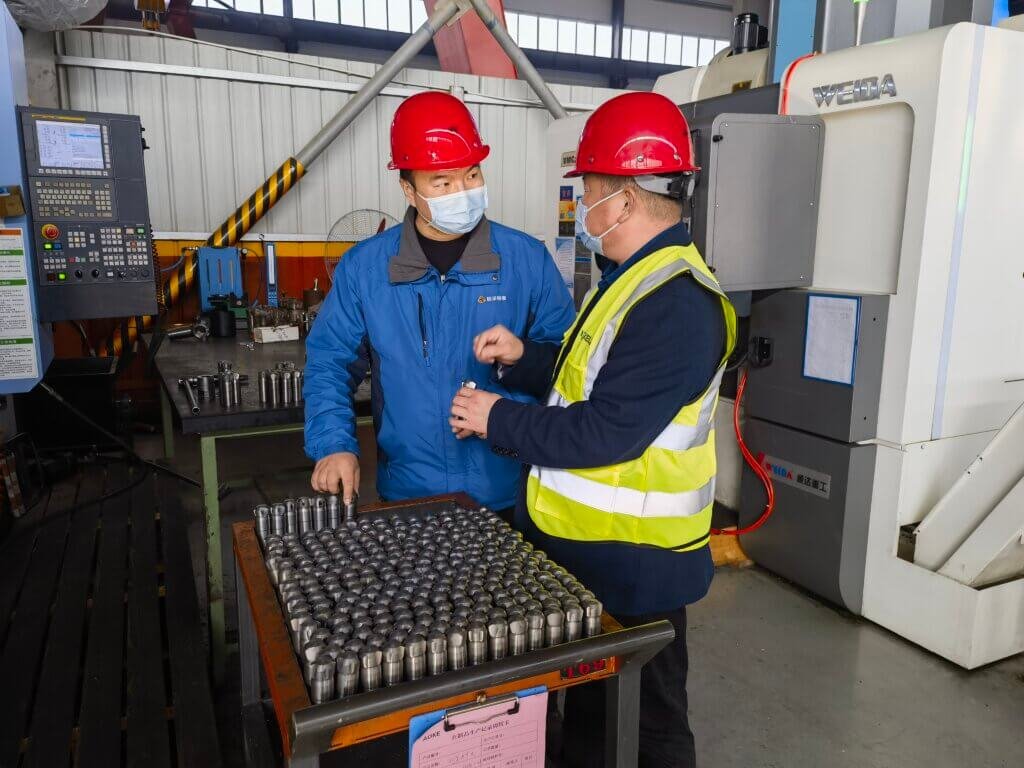
When purchasing drill rods, product specifications alone are not enough to guarantee performance. Even when two suppliers offer the same steel grade and similar technical data, the real-world quality can vary significantly depending on manufacturing capability and quality control systems.
Evaluating a drill rod manufacturer helps buyers identify whether the supplier can consistently produce high-performance products with stable quality, proper heat treatment, and reliable traceability.
Production Capability #
A manufacturer’s production capability directly determines product consistency, precision, and structural integrity.
Forging Equipment #
Forging is the foundation of drill rod production. High-quality forging equipment ensures:
- Dense and uniform internal structure
- Improved mechanical strength
- Reduced internal defects such as voids or inclusions
- Better fatigue resistance
Poor forging capability often results in weak internal structure and early field failure.
CNC Machining #
CNC machining determines the accuracy of drill rod geometry, especially thread quality and dimensional consistency.
Key benefits of advanced CNC systems include:
- High thread precision
- Stable dimensional tolerance
- Consistent batch-to-batch quality
- Improved thread engagement performance
Low-precision machining often leads to burrs, poor thread fit, and premature connection failure.
Heat Treatment Line #
Heat treatment is one of the most critical processes in drill rod manufacturing.
A professional heat treatment line ensures:
- Controlled quenching and tempering
- Uniform hardness distribution
- Optimized strength and toughness balance
- Reduced internal stress and deformation risk
Outsourced or poorly controlled heat treatment often leads to inconsistent performance and reduced service life.
Quality Control System #
A strong quality control system ensures that every production stage is monitored and verified.
ISO Certification #
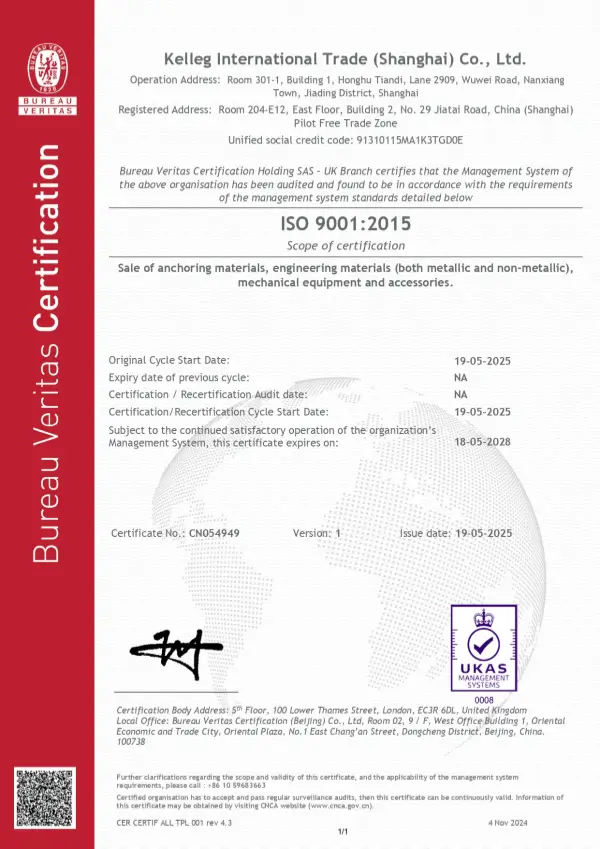
ISO certification (such as ISO 9001) indicates that the manufacturer follows standardized quality management systems, including:
- Documented production processes
- Standardized inspection procedures
- Continuous improvement systems
- Audit-ready quality records
While certification alone does not guarantee product quality, it reflects structured management discipline.
Traceability System #
Traceability ensures that each drill rod can be tracked back to its production data.
A complete traceability system includes:
- Heat number tracking
- Production batch records
- Material source identification
- Heat treatment logs
Traceability is essential for quality control and post-failure analysis.
Inspection Records #
Reliable manufacturers maintain detailed inspection documentation for every batch.
These may include:
- Dimensional inspection reports
- Hardness test results
- Mechanical property data
- NDT inspection reports
Lack of inspection records is a major warning sign of weak quality control.
Testing Equipment #
Advanced testing equipment is essential for verifying material integrity and ensuring consistent product performance.
Spectrometer #
A spectrometer is used to analyze chemical composition.
It verifies:
- Steel grade accuracy
- Alloy element consistency (C, Cr, Mo, Ni, Mn, etc.)
- Impurity levels (P, S control)
Without spectrometric testing, material authenticity cannot be confirmed.
Hardness Tester #
Hardness testers are used to evaluate heat treatment quality and surface performance.
They help determine:
- Body hardness consistency
- Thread hardness level
- Heat treatment uniformity across batches
Reliable hardness testing ensures balanced strength and toughness.
Ultrasonic Testing (UT) Machine #
UT machines detect internal defects that are invisible to the naked eye.
They are used to identify:
- Internal cracks
- Inclusions
- Voids or porosity
- Structural discontinuities
UT is essential for ensuring internal integrity of drill rods.
Magnetic Particle Inspection (MPI) Machine #
MPI equipment is used for surface and near-surface defect detection, especially in threaded areas.
It helps identify:
- Surface cracks
- Thread root defects
- Grinding or machining flaws
- Early fatigue damage
MPI is particularly important for ensuring connection safety.
How to Judge a Reliable Manufacturer #

A trustworthy drill rod manufacturer should demonstrate:
- Complete production chain (forging, machining, heat treatment)
- Advanced CNC and heat treatment equipment
- Certified quality management system (ISO)
- Full traceability of materials and production batches
- Comprehensive inspection and testing reports
- In-house NDT capabilities (UT + MPI)
Manufacturers lacking these capabilities may struggle to maintain consistent product quality across batches.
Evaluating a drill rod manufacturer is not only about checking product specifications but also about assessing their production capability, quality control system, and testing infrastructure.
A high-quality manufacturer will always provide:
- Stable and advanced production equipment
- Strict quality management and traceability
- Comprehensive testing and inspection systems
By carefully evaluating these factors, buyers can significantly reduce procurement risks and ensure reliable drill rod performance in demanding drilling environments.
Conclusion #
Drill rod performance is not determined by a single factor, but by a combination of material selection, heat treatment quality, manufacturing precision, and systematic quality control. Among all these factors, some have a far greater impact on real-world performance than others.
Steel Quality Determines Drill Rod Reliability #
The foundation of every drill rod is its steel. High-quality alloy steel provides the necessary strength, toughness, and wear resistance required for demanding drilling conditions. However, even the best steel cannot guarantee performance without proper processing.
Material Grade Alone Is Not Enough #
While steel grade (such as 35CrMo, 42CrMo, or 40CrMnMo) is an important indicator, it only represents the potential of the material. It does not guarantee final performance. Differences in processing, heat treatment, and quality control can lead to significant variation in service life even within the same material grade.
Heat Treatment Is Often the Deciding Factor #
Heat treatment is one of the most critical processes in drill rod manufacturing. Proper quenching and tempering ensure the right balance between strength and toughness. Poor or inconsistent heat treatment can significantly reduce fatigue resistance and lead to premature failure, even if high-grade steel is used.
Comprehensive Verification Is Essential #
To ensure reliable quality, buyers should systematically verify key aspects of the product and supplier, including:
- Material certificates (MTC)
- Chemical composition and mechanical properties
- Hardness testing results
- Non-destructive testing (UT and MPI reports)
- Heat treatment records
- Manufacturing and quality control processes
Each of these elements provides critical insight into the actual performance potential of the drill rod.
Systematic Quality Verification Reduces Risk #
A structured and systematic approach to quality verification helps buyers avoid common procurement risks. By evaluating both material quality and manufacturing capability, companies can significantly reduce:
- Unplanned downtime
- Frequent drill rod replacements
- Drilling inefficiencies
- Overall cost per meter drilled
In drilling operations, reliability directly translates into productivity and cost efficiency. A well-designed quality verification process ensures that only properly manufactured and fully tested drill rods enter the field, resulting in safer operations, longer service life, and more predictable performance.