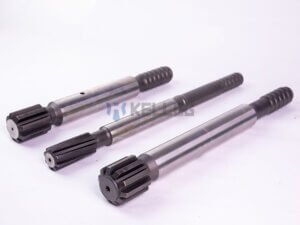

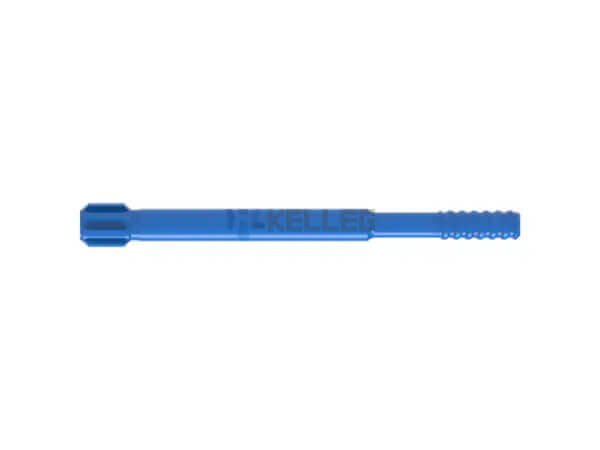
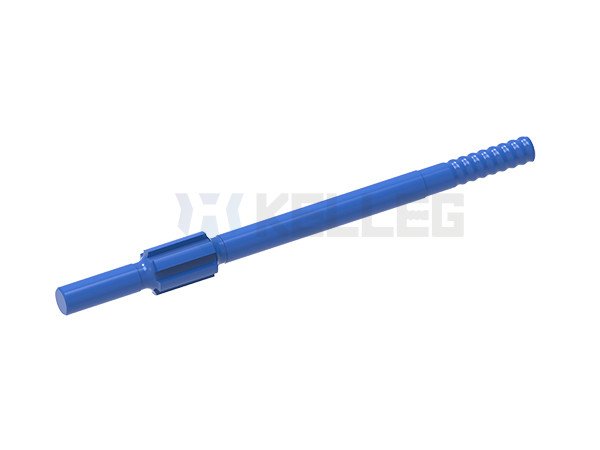
A shank adapter affects drilling performance by controlling how efficiently impact energy is transferred from the rock drill to the drill rod. Spline geometry, the condition and geometry of the striking face, flushing-hole configuration, material, heat treatment, and dimensional accuracy all influence energy transfer, heat generation, alignment, and service life. A correctly designed and matched shank adapter helps minimize energy loss and premature wear, while poor geometry or an incorrect match can increase vibration, heating, spline wear, and the risk of shank failure.
A slow drilling rate does not always mean the rock drill is weak. The shank adapter, drill rod, drill bit, and drilling parameters should be checked as one energy-transfer system.
What Does a Shank Adapter Actually Do in a Rock Drilling System?
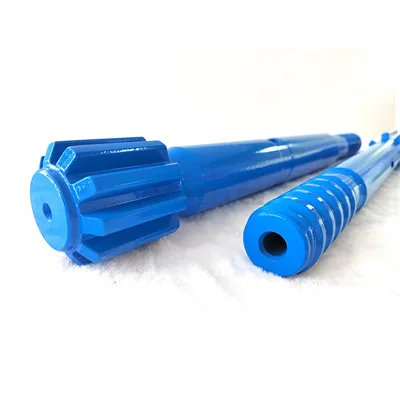
A shank adapter is a relatively small component, but it sits directly between the rock drill and the drill rod. Its geometry and condition therefore have a direct effect on how impact energy, rotation, and alignment are transmitted through the drilling system. If the connection is not working correctly, energy can be lost before it reaches the drill bit, while vibration, heat, and wear can increase.
The Shank Adapter Is the First Link in Impact Energy Transfer
The basic energy-transfer path is:
Rock Drill → Shank Adapter → Drill Rod → Drill Bit → Rock
The shank adapter receives the impact from the rock drill and transfers it into the drill rod. At the same time, it transmits rotary movement and maintains the mechanical connection between the rock drill and the rest of the drilling tools.
Impact energy does not simply “pass through” the shank adapter. It is transmitted through contacting surfaces and mechanical interfaces. This makes the condition and geometry of these interfaces important.
For example, the striking face must maintain good contact with the rock drill. The splines must engage correctly to transmit rotation and maintain alignment. If contact is uneven or the components are not properly aligned, part of the impact energy can be reflected or converted into unwanted vibration and heat rather than being effectively transmitted toward the drill bit.
This is why a shank adapter that looks like a relatively simple steel component can influence the performance of the entire drilling system.
Where Impact Energy Is Lost
Impact energy can be lost when the shank adapter does not maintain proper contact, alignment, or mechanical engagement with the rock drill and drill rod.
Common causes include:
- Poor contact between the striking surfaces
- Incorrect dimensions or an incorrect shank adapter specification
- Spline wear that creates excessive movement or uneven loading
- Misalignment between connected components
- A damaged or deformed striking face
- Excessive heat caused by friction or inadequate flushing
- Worn interfaces between the shank adapter and mating components
These problems do not necessarily appear as an obvious “loss of power.” In the field, they may first show up as slower penetration, increased vibration, abnormal heating, uneven spline wear, or premature component failure.
The practical relationship is straightforward:
More energy lost in the connection → less useful impact energy reaching the drill bit → poorer drilling performance.
That is why the shank adapter should be checked as part of the complete drilling system rather than treated as an isolated component.
5 Shank Adapter Design Factors That Affect Drilling Performance
Shank adapter design directly affects how impact energy and rotary movement are transferred from the rock drill to the drill rod. The spline, striking face, flushing passage, material, heat treatment, and dimensional accuracy all have to work together; a problem in any one of these areas can increase energy loss, vibration, heat, or premature wear.
Spline Geometry and Length
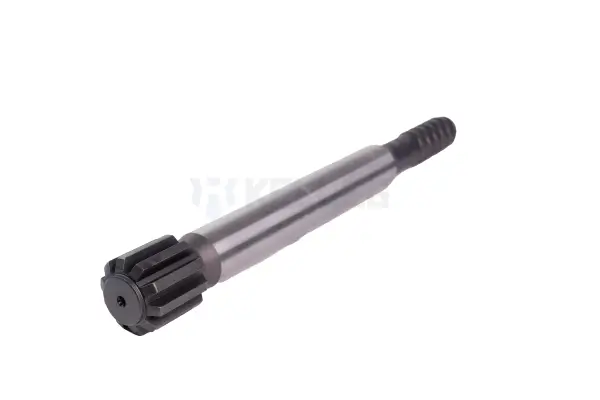
Spline geometry determines how the shank adapter engages with the rock drill and transfers rotary load. Spline profile, spline length, tooth geometry, and contact area all affect how evenly the load is distributed during drilling.
The spline does more than transmit rotation. It also helps maintain the correct position between the shank adapter and the rock drill. If the spline engagement is too short, poorly matched, or heavily worn, the load may become concentrated on a smaller contact area instead of being distributed evenly.
This can lead to:
- Uneven loading on the spline teeth
- Accelerated spline wear
- Excessive rotational play
- Vibration during drilling
- Poor alignment
- Additional heat generation
Spline wear patterns are particularly useful for field diagnosis. If the wear is uneven rather than distributed around the spline, the problem may involve alignment, fit, or the condition of the mating component—not simply the material hardness of the shank adapter.
Check for:
- Abnormal spline wear
- Rounded spline edges
- Uneven contact marks
- Excessive rotational play
A good spline design is therefore not simply a matter of making the teeth stronger. The profile, length, fit, and contact area must be matched to the rock drill and its operating conditions.
Striking Face Geometry and Flatness
The striking face is one of the most critical areas of a shank adapter because it is the contact surface through which the rock drill’s impact pulse enters the drill rod. Its flatness, contact area, and surface condition directly affect how evenly the impact is transmitted.
A striking face should maintain stable and consistent contact with the mating impact surface. If the face becomes uneven, pitted, heavily worn, or plastically deformed, the contact area can change significantly.
Common problems include:
- Uneven contact
- Localized impact loading
- Energy reflection
- Increased vibration
- Higher heat generation
- Accelerated wear of the shank adapter and mating components
For example, if part of the striking face is lower than the surrounding surface, the impact is no longer distributed across the intended contact area. Repeated impact under this condition can further deform the surface and accelerate failure.
A useful field sequence is:
Uneven contact → greater energy reflection and vibration → heat generation → accelerated wear
Mushrooming or other visible deformation on the striking face should not be treated as a cosmetic issue. It can indicate that the contact conditions or impact loading are no longer normal.
Flushing Hole Configuration and Heat Dissipation
The flushing passage in a shank adapter is part of the drilling system’s flushing function. Proper flushing helps remove cuttings, carry heat away from the working area, and protect the drilling components from excessive temperature and contamination.
The practical relationship is:
Flushing → cooling → debris removal → component protection
Several design and operating factors can affect this process, including:
- Flushing-hole diameter
- Hole position
- Internal passage geometry
- Airflow or water flow
- Flushing pressure
- Blockage or restriction
If the flushing passage is blocked or the flushing system is not providing sufficient flow, heat can build up around the working components. Poor flushing can also reduce hole-cleaning efficiency, allowing cuttings to remain in the hole and interfere with drilling.
Possible field symptoms include:
- Excessive heat
- Poor hole cleaning
- Reduced drilling efficiency
- Increased component wear
However, flushing-hole design cannot be evaluated by diameter alone.
Flushing-hole size and configuration must match the rock drill, drilling method, and flushing method. Simply increasing the hole diameter does not automatically improve drilling performance.
The actual flushing hole, available airflow or water flow, pressure, hole conditions, and internal passage design all need to be considered together.
Material and Heat Treatment
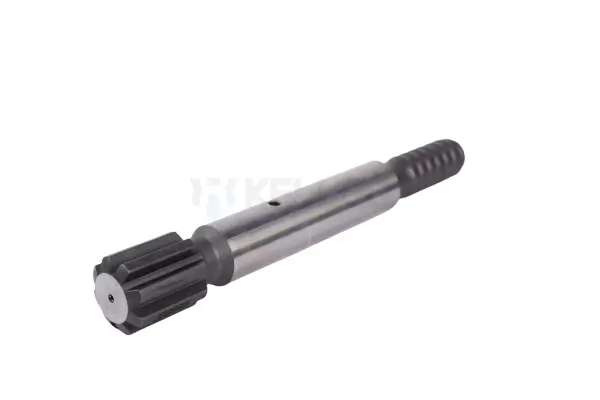
The material and heat treatment of a shank adapter must balance toughness, hardness, fatigue resistance, and wear resistance. These properties determine how the component responds to repeated impact, rotary loading, spline contact, and surface wear during drilling.
A shank adapter that is simply made “harder” is not necessarily better.
If the material is too soft, the spline and contact surfaces may wear too quickly. If the material is excessively hard without sufficient toughness, the shank adapter may become more susceptible to cracking or brittle failure under repeated impact loading.
For this reason, shank adapter performance depends on a combination of:
Surface hardness + core toughness + heat-treatment consistency
The surface needs sufficient resistance to wear, while the core needs enough toughness to withstand repeated impact and cyclic loading. Heat treatment also needs to be consistent throughout production; the same nominal material specification does not guarantee the same service performance if the heat-treatment process is not properly controlled.
When evaluating a shank adapter, it is therefore better to look at the overall material and heat-treatment system rather than asking only, “How hard is it?”
Dimensional Accuracy and Alignment
Dimensional accuracy is critical because the shank adapter must align correctly with the rock drill and drill rod during operation. Even a strong shank adapter can perform poorly if its dimensions, spline fit, concentricity, or contact geometry are not properly controlled.
Important factors include:
- Dimensional tolerance
- Concentricity
- Alignment
- Spline fit
- Contact geometry
Poor alignment can cause the load to concentrate on one side of the contact area instead of being distributed evenly. This creates a typical chain of problems:
Misalignment → uneven load → vibration → wear → energy loss
The effect may become more obvious as the components continue to wear. A small alignment problem can therefore develop into excessive spline wear, abnormal vibration, or premature shank adapter failure.
There is also a useful field clue:
If wear is concentrated on one side rather than evenly distributed, check alignment before changing drilling parameters.
This does not mean alignment is always the root cause. The mating components, spline condition, striking face, and drilling conditions should also be inspected. But uneven one-sided wear is a strong reason to check the mechanical fit and alignment first.
How Shank Adapter Design Affects Actual Drilling Performance
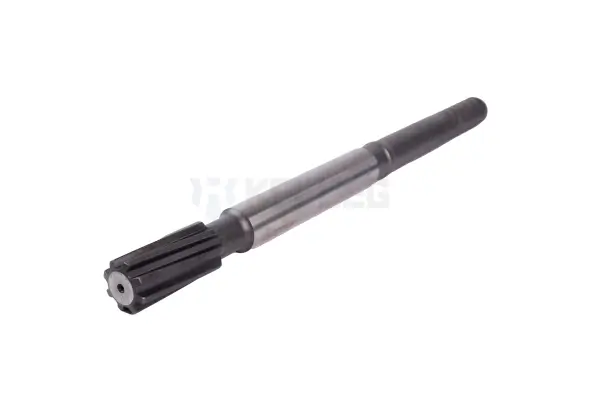
Shank adapter design affects drilling performance mainly through impact energy transfer, drilling stability, vibration, heat, and overall tool performance. A properly matched shank adapter does not create more impact energy; it helps transmit the available impact energy more efficiently from the rock drill toward the drill bit.
The effect is usually not seen as a single specification or measurement. In the field, it appears as changes in penetration rate, drilling smoothness, component temperature, wear patterns, and maintenance frequency.
Impact Energy Transfer Efficiency
A shank adapter is part of the impact-energy path between the rock drill and the drill bit. Its job is not to increase the power produced by the rock drill, but to transfer that available energy through the connected drilling tools with as little unnecessary loss as possible.
A properly matched shank adapter helps transmit the available impact energy more efficiently.
When the connection is working correctly, the impact pulse is transferred through the shank adapter and drill rod toward the drill bit. If the connection is poorly matched or the contact condition has deteriorated, more energy can be consumed by unwanted vibration, friction, deformation, or repeated impact at uneven contact points.
This is why a different shank adapter cannot make a rock drill produce more impact energy than it was designed to produce. The practical goal is to make better use of the energy already available from the rock drill.
Drilling Speed and Penetration Rate
If drilling becomes slower, the shank adapter should be checked—but it should not automatically be identified as the cause.
A low penetration rate does not necessarily mean the shank adapter is defective.
Drilling speed is affected by the entire drilling setup. Before replacing the shank adapter, check:
- Drill bit condition and wear
- Drill rod condition
- Rock type and changes in the formation
- Feed force
- Rotation speed
- Air or water pressure
- Flushing condition
- Rock drill operating condition
For example, a worn drill bit can reduce penetration even when the shank adapter is working normally. A change from softer rock to harder or more abrasive rock can have the same effect.
The shank adapter becomes more relevant when a reduction in drilling performance occurs together with other signs such as abnormal vibration, excessive heat, unusual spline wear, or visible damage to the striking face.
Do not replace the shank adapter based on penetration rate alone. Look for supporting evidence from the rest of the drilling system.
Vibration and Heat During Drilling
Excessive vibration and heat are often early signs that the shank adapter and connected drilling components are no longer operating under normal conditions.
A small amount of vibration and heat is normal during rock drilling. The concern is a noticeable change from the normal operating condition—for example, increased vibration, abnormal noise, excessive temperature, or rapidly developing wear.
These symptoms can affect drilling stability and accelerate wear of connected components. If they appear, check the shank adapter together with the mating components and drilling conditions rather than changing only one parameter.
A practical diagnostic sequence is:
Abnormal vibration or heat → inspect contact and alignment → check component wear → verify drilling and flushing conditions → identify the root cause
This approach helps avoid treating a symptom as the actual fault.
Overall Tool Life
The service life of a shank adapter is only one part of its value. Because it works directly between the rock drill and drill rod, its condition can also influence the operating condition of other drilling components.
Poor transfer conditions or abnormal wear may result in:
- More frequent component inspections
- Premature replacement of the shank adapter
- Increased wear of mating components
- More drilling interruptions
- Shorter maintenance intervals
For this reason, shank adapter performance should be evaluated as part of the complete drilling system rather than by shank life alone.
A good shank adapter should provide stable operation, predictable wear, and reliable energy transfer under the intended drilling conditions. The objective is not simply to select the hardest or longest-lasting component, but to use a shank adapter that is correctly matched to the rock drill, drill rod, drilling method, and working conditions.
How to Diagnose Shank Adapter Problems in the Field
When a shank adapter shows abnormal wear, overheating, vibration, or breakage, do not replace it immediately. The same symptom can result from the shank adapter itself, the mating components, alignment problems, or unsuitable drilling conditions.
A good field diagnosis starts with the wear pattern and operating symptoms, then checks the connected components and drilling parameters before identifying the root cause.
Excessive Spline Wear
Excessive rotational play, uneven spline wear, or visibly damaged spline teeth can indicate a problem with the shank adapter, the mating component, alignment, or operating conditions.
Start by checking the condition of the spline teeth and looking for clear differences between normal and abnormal wear.
Check for:
- Excessive rotational play
- Rounded or damaged spline edges
- Uneven wear from one side to another
- Abnormal contact marks
- Visible cracking or deformation
If the spline wear is relatively even, normal service wear may be the main factor. If wear is heavily concentrated on one side, check alignment and the condition of the mating component before changing drilling parameters.
Also check whether the shank adapter is correctly matched to the rock drill. A worn mating component can produce abnormal wear on a new shank adapter, so replacing only the shank may not solve the problem.
Field diagnosis:
Uneven spline wear → check alignment and mating components → check operating conditions → replace damaged components if necessary
Striking Face Damage
Damage to the striking face can provide useful information about what is happening during impact.
Look for:
- Pitting
- Deformation
- Mushrooming
- Uneven contact marks
- Localized impact damage
- Cracks or chipped areas
The important question is not simply whether the striking face is damaged, but what the wear pattern tells you.
For example, uneven contact marks may indicate that the impact is not being distributed normally. Localized deformation can indicate repeated high loading at a particular area. Cracking requires particular attention because continued operation may lead to further damage or shank failure.
A damaged striking face should therefore be inspected together with the drill rod end, alignment, and other mating surfaces. Do not assume that visible damage on the shank adapter automatically means the shank material or manufacturing quality is the only problem.
Field diagnosis:
Visible striking-face damage → inspect the contact pattern → check mating components and alignment → identify the cause before installing a replacement
Excessive Heat
A shank adapter will normally become warm during drilling. The concern is excessive or abnormal heat, especially when the temperature is noticeably higher than during normal operation.
If the shank adapter becomes excessively hot during drilling, check:
- Flushing condition
- Contact condition
- Alignment
- Spline wear
- Mating component condition
- Lubrication, where applicable
- Drilling conditions
Poor flushing can reduce cooling and debris removal. Abnormal contact or excessive wear can also increase friction and heat.
Do not respond to excessive heat simply by increasing or reducing drilling pressure. First determine where the heat is coming from and whether the shank adapter is actually the source of the problem.
Field diagnosis:
Excessive heat → check flushing → inspect contact and alignment → check wear → verify drilling conditions
Premature Shank Adapter Breakage
A broken shank adapter is often a symptom, not necessarily the root cause.
When a shank adapter breaks much earlier than expected, the fracture itself should be inspected before the replacement is installed.
Check:
- Striking face condition
- Spline condition
- Alignment
- Mating components
- Drill rod condition
- Drilling parameters
- Excessive loading
- Any previous abnormal vibration or overheating
A replacement shank may fail again if the original cause remains unresolved. For example, excessive loading, poor alignment, or a damaged mating component can continue to place abnormal stress on the replacement.
The fracture location and surrounding wear pattern can also provide useful clues. If there is severe wear before the fracture, investigate the operating condition that caused the wear. If the shank breaks without obvious prior wear, inspect loading, alignment, component matching, and drilling conditions more carefully.
The objective is not simply to find a broken part. It is to determine why the part broke and whether the same condition could damage the replacement.
Field diagnosis:
Premature breakage → inspect fracture and wear → check connected components → verify alignment and drilling parameters → correct the root cause before replacement
A Simple Field Diagnostic Sequence
When a shank adapter problem is suspected, use a simple sequence rather than changing components one by one:
Symptom → Visual inspection → Wear pattern → Mating components → Alignment → Drilling conditions → Root cause → Replacement
This approach is especially useful when the same shank adapter fails repeatedly. Repeated failure usually deserves a system-level investigation rather than repeated replacement of the same component.
Shank Adapter Field Diagnosis
| Field Symptom | First Check | Possible Causes |
|---|---|---|
| Excessive spline wear | Spline + alignment | Wear, poor fit, misalignment |
| Uneven spline wear | Wear pattern | Alignment, mating component |
| Striking face damage | Contact marks | Uneven loading, component condition |
| Excessive heat | Flushing + contact | Poor flushing, friction, wear |
| Premature breakage | Fracture + wear pattern | Excessive loading, alignment, component condition |
How to Select the Right Shank Adapter
Before ordering a shank adapter, confirm the rock drill model, drill rod specification, and existing shank dimensions. If you are replacing a failed shank, also provide photos of the worn or broken part.
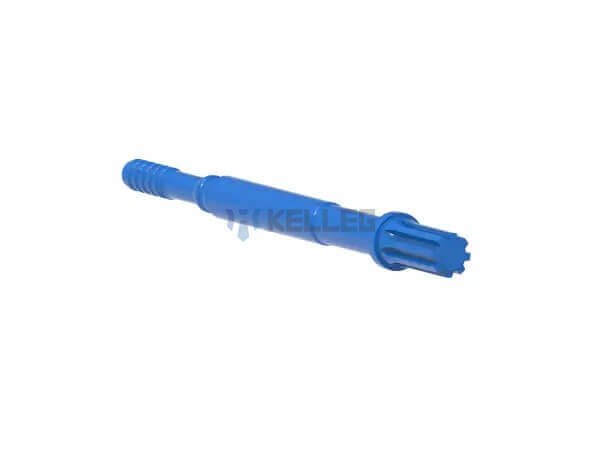
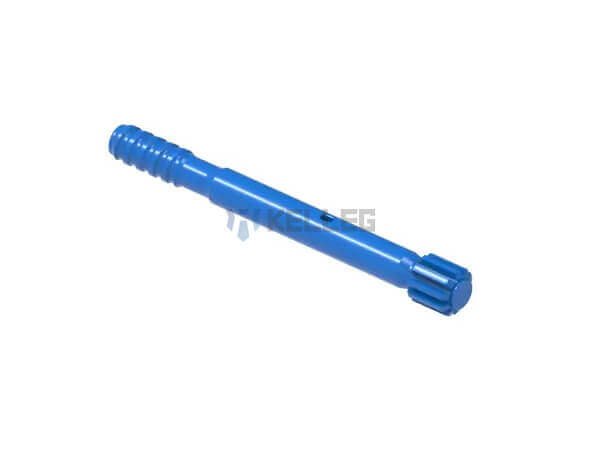
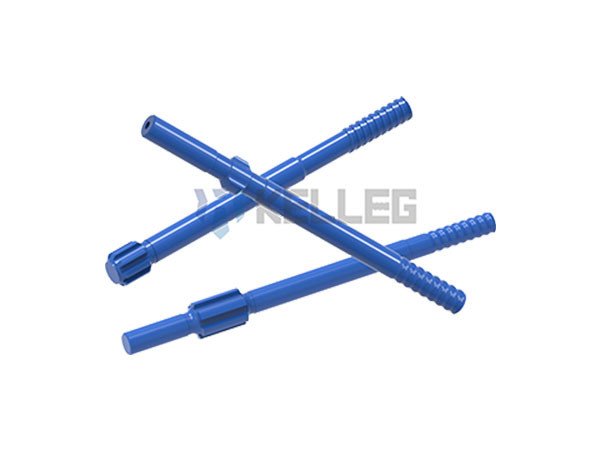
Selecting the right shank adapter starts with the rock drill model and its connection requirements, not with the adapter’s appearance or price. The shank adapter must match the rock drill, drill rod, drill bit, and actual drilling conditions to ensure reliable impact and rotary transmission.
Do not select a shank adapter by appearance alone. Confirm the equipment, connection specifications, and drilling conditions before ordering.
Confirm the Rock Drill Model
The rock drill model is the first piece of information to confirm because different rock drills use different shank adapter dimensions and connection configurations.
Before ordering, provide:
- Rock drill manufacturer
- Rock drill model
- Rock drill series or type, if available
- Existing shank adapter part number, if available
The model number is usually more reliable than measuring the outside appearance of a shank. Two shank adapters may look similar but have different spline dimensions, lengths, connection details, or striking-face dimensions.
If the exact rock drill model is known, use it as the starting point for checking the correct shank adapter specification.
If the model is unavailable, measurements and photos of the existing shank can help identify the required configuration.
Confirm the Shank Adapter Specification
Once the rock drill model is confirmed, check the actual shank adapter specifications.
Important dimensions may include:
- Overall length
- Spline dimensions
- Spline length and profile
- Connection dimensions
- Flushing-hole configuration
- Critical diameters and tolerances
The required specification should come from the rock drill and the complete drilling setup rather than from a general-purpose size chart.
For replacement orders, the safest approach is to compare the proposed shank with the original part specification or the rock drill manufacturer’s requirements.
A dimensional match is more important than simply finding a shank that looks similar.
Check Drill Rod Compatibility
The shank adapter and drill rod must work together as a matched connection.
Check the drill rod specification, including:
- Thread type
- Thread size
- Rod diameter
- Rod length
The shank adapter transfers impact and rotary movement into the drill rod, so an incorrect connection can affect drilling stability and component wear.
Do not assume that a shank adapter is compatible simply because it fits physically. The connection must also be suitable for the intended rock drill and drilling application.
If the drill rod has already been selected, provide its exact specification when asking for a shank adapter.
Match the Drilling Conditions
The same rock drill may be used under different drilling conditions, and the required shank adapter should be selected accordingly.
Consider:
- Drilling method
- Hole diameter
- Hole depth
- Rock type
- Rock hardness and abrasiveness
- Working pressure
- Rotation speed
- Feed force
- Flushing method
- Expected drilling hours
For example, demanding drilling conditions can place greater loads on the shank adapter and connected components. Rock abrasiveness can also accelerate wear.
This does not mean that the solution is simply to choose the hardest or heaviest shank adapter. The shank should be matched to the rock drill and operating conditions as a complete system.
What Information to Send Your Supplier
If you are not certain which shank adapter you need, give your supplier enough information to identify the correct configuration.
At minimum, provide:
| Information | Why It Matters |
|---|---|
| Rock drill brand and model | Identifies the required shank connection |
| Existing shank adapter | Helps verify dimensions and configuration |
| Drill rod specification | Confirms compatibility with the rod |
| Drill bit diameter | Defines the drilling application |
| Hole diameter and depth | Helps evaluate operating conditions |
| Rock type | Indicates the general drilling environment |
| Working pressure | Helps assess operating load |
| Current problem | Helps distinguish selection issues from wear or operating problems |
| Photos of the existing shank | Helps identify visible wear and configuration |
If possible, provide clear photos showing the spline end, striking face, overall shank, and any damaged or worn areas.
This information allows the supplier to check the shank against the actual drilling setup instead of recommending a replacement based only on a general product description.
When in doubt, send the rock drill model, drill rod specification, and photos of the existing shank adapter before placing an order.
Need help identifying the correct shank adapter?
Send us your rock drill model, drill rod specification, and photos of your existing shank adapter. Our engineers can check the required configuration before you order.
FAQ — Shank Adapter Selection and Troubleshooting
How do I know which shank adapter I need?
Start with the rock drill model, then confirm the shank adapter dimensions and connection requirements. You should also check the drill rod specification, drilling diameter, and operating conditions.
If you are replacing an existing shank adapter, provide your supplier with the rock drill model, the old shank adapter, its dimensions if available, and clear photos of the spline and striking face. This is more reliable than selecting a shank based on appearance alone.
Can I use a different shank adapter on my rock drill?
Only if the replacement shank adapter is specifically compatible with the rock drill and the rest of the drilling setup.
A shank adapter that looks similar may have different spline dimensions, length, striking-face geometry, or connection dimensions. An incorrect match can lead to poor contact, excessive wear, vibration, or premature failure.
Before changing to a different shank adapter, confirm the specifications with the rock drill manufacturer or your drilling-tool supplier.
What causes a shank adapter to wear quickly?
Common causes include incorrect matching, poor alignment, excessive rotational play, damaged mating components, unsuitable drilling conditions, and inadequate flushing.
The wear pattern can help identify the cause. For example, uneven spline wear may point to an alignment or connection problem, while striking-face damage may indicate abnormal impact contact.
Do not assume that rapid wear means the shank adapter material is too soft. Check the complete connection and drilling conditions first.
Why does my shank adapter break repeatedly?
Repeated breakage usually means the underlying cause has not been corrected.
Check the striking face, spline condition, alignment, drill rod connection, and mating components. Also review feed force, rotation speed, flushing, and other drilling conditions.
A broken shank adapter is often a symptom, not necessarily the root cause.
If a replacement shank adapter fails in the same location again, compare the fracture and wear pattern with the previous shank adapter before simply installing another one.
How often should a shank adapter be replaced?
There is no single replacement interval that applies to every drilling operation. Service life depends on the rock drill, drilling conditions, rock formation, operating parameters, shank quality, and maintenance practices.
Instead of replacing the shank adapter only by operating hours, inspect it regularly for:
- Excessive spline wear or rotational play
- Striking-face deformation or damage
- Cracks or abnormal wear
- Excessive heat during drilling
- Changes in vibration or drilling performance
Replace the shank when its condition can no longer support reliable impact and rotary transmission.
Can a worn shank adapter reduce drilling speed?
Yes. A badly worn or damaged shank adapter can contribute to reduced drilling performance by affecting impact contact, alignment, and energy transfer.
However, a low penetration rate does not necessarily mean the shank adapter is defective. Worn drill bits, damaged drill rods, changes in rock formation, incorrect feed force or rotation speed, poor flushing, and rock drill problems can produce similar symptoms.
Before replacing the shank, check the complete drilling system and look for supporting evidence such as abnormal wear, vibration, heat, or damaged contact surfaces.