
How to Select Materials for Deep Hole and Large Diameter DTH Drill Bits

To prevent early failure of deep hole and large diameter DTH drill bits, it is inseparable from its material selection and heat treatment process.
What Are the End Face Structures of Medium and High Pressure DTH Drill Bits?
The shape of the end face is directly related to the rock drilling efficiency and service life of DTH drill bit. Commonly used mainly five.
Causes of Failure of High Pressure DTH Drill Bits

There are many benefits for manufacturers to analyze the reasons for the failure of high-pressure DTH drill bits, so what are the reasons?
How to Identify Steel for Rock Drilling Tools?
The identification of steel for rock drilling tools is of great significance, and the main identification methods are spark and fracture identification.
What Are the Steel Principles for the Hot Inserting Process Drill Bit?
The hot inserting process is easy to operate and has good stability. There are mainly 6 steel principles for the hot inserting process.
Effects of Different Alloying Elements in Steels for Rock Drill Bits

The high-quality steel used in rock drill bits contains many alloying elements, and their functions are also different.
What Are the Fixing Processes of 45CrNiMo1V Button Bit?
45CrNiMo1V button bit is a high-quality drill used in the mining industry. There are three fixing processes: cold pressing, hot pressing and hot inserting.
How to Use and Maintain the DTH Hammer?

Reasonable use and maintenance of DTH hammer can effectively prolong its service life, which is important for enterprises.
Failure Modes of DTH Drill Bits
Failure mode of DTH drill bit includes the failure of the main body of the drill bit and carbides. Understanding this can help us drill better.
The Shape of the Main Structure of DTH Drill Bit
DTH drill bit is a tool used for geological exploration and mineral extraction, mainly composed of carbide, exhaust hole, head, spline, and impact end face. Among them, the carbide, the head, and the end face are the main structure of the DTH drill bit, and their shapes influence the performance of the DTH drill bit. Carbides are the cutting part on the DTH drill bit and are usually made of high-hardness carbide to cut and penetrate when it comes into contact with the underground rock. These carbides require frequent replacement to maintain the DTH drill bit’s optimal working condition. Since there are many types of carbides, the shape will vary slightly depending on the manufacturer, so we will only focus on sharing the shape of the drill edge from the DTH drill bit. Drill edge shape According to the shape of the drill edge, DTH drill bits include blade type, button type, and cylindrical mixed type. Blade type Blade drill bis have carbide inserts embedded in the head of the drill bit, and the main features are as follows: 1. Blade drill bit is beneficial to chip removal in the center hole during the drilling process, and the edge angle of the carbide blade is easy to grind. 2. The number of repeated chisel marks is small, which can prevent uneven drilling end faces during drilling and make it suitable for high-speed drilling. 3. The position where the drill edge is far from the center point of the drill bit will bear a higher load during the drilling and is more likely to be worn and damaged. If the side of the blade drill bit wears out, the drill frame becomes wedge-shaped, and it is easy to jam the drill. Button type Button bits have drilling holes in the head of the drill bit. Usually, the carbides are embedded into the drill body by brazing, hot embedding, and cold pressing. The main features are as follows: 1. Button bit can be self-repaired during the drilling process, and the drilling speed is more stable. 2. The arrangement of the buttons of the button bit can make the carbides bear force evenly, which is helpful for rock-breaking drilling. 3. When the carbides part of the button bit is damaged, it can continue to work and have a longer service life. 4. Carbide inlay process is relatively simple. Cylindrical mixed type The cylindrical mixed drill bit has a peripheral insert and a central recess with buttons. It has the following characteristics: 1. During the drilling process, the central crushed rock volume is small, and the peripheral crushed rock volume is large for the cylindrical mixed drill bit. 2. It can better solve the problem of rapid radial wear of the drill bit. 3. The manufacturing process is complex, and its maintenance is difficult. End face shape Crown shape The crown shape of DTH drill bits includes two airfoil, three airfoil, and four airfoil. The selection of the crown shape of the DTH drill bit is closely related to the field working conditions, the depth of the single hole, and the diameter of the hole. 1. Two airfoil drill bit is mainly used for small-diameter DTH hammers with a small number of teeth and high frequency, suitable for medium-hard and below strata, and drilling depth for shallow and medium strata. 2. Three airfoil drill bit is a larger slag discharge space than two airfoil drill bit and is suitable for drilling in hard strata and deep holes. 3. Four airfoil drill bit is the best slag removal effect, but the strength of the airfoils is low. Impact end face shape The arrangement of the carbides of the DTH drill bit mainly depends on the shape of the end face, which directly affects the energy transfer efficiency and strength of the DTH drill bit. The end face shape of the DTH bit contains four types: flat face, convex face, tower type face, and concave face. 1. Flat face drill bits have buttons arranged on the end face perpendicular to the center line of the drill bit, and the gauge button is installed on the beveled surface with a certain inclination angle, which can effectively scrape the rock. It has a simple structure, is easy to process, has a high drilling speed, and is suitable for medium-strength rock formations. 2. Convex drill bits are a convex shape in the middle, which aims to reduce the stress of the gauge button and facilitate the centering of the drilling holes. The end face of the drill head is rounded and has the characteristics of self-sharpening, high speed, and smooth drilling speed, but it is more difficult to process than the flat drill bit, and the buttons wear faster and are suitable for hard strata. 3. Tower type face drill bits are center-leading guide reaming, with buttons arranged at the front end of the drill bit, centering at the front end to maintain the aperture and opening up a free center surface, which can effectively increase the rock drilling speed. But this structure is comparatively complicated, and the carbides of the leading end are easy to wear, and the over-front end of the drill bit is easy to break, so the service life is short. 4. Concave drill bits are a concave shape in the middle, which can produce a central rock pillar with a centering effect during drilling, effectively pre-exhaust holding the drilling from tilting, and the drill frame has high strength. However, the rotary torque of the drill bit is relatively low, and it can be challenging to remove rock chips while drilling, so it is suitable for large-diameter DTH hammers. The above is all about the main structure shape of the DTH drill bit. The main structure shape of the DTH drill bit not only affects the strength and durability of the drill bit but also affects its performance in transmitting pressure in the formation and cutting rock. The factors affecting the main structure shape
Working Characteristics of DTH Drill Bits
DTH drill bit breaks the rock with impact rotation. It creates a crushing pit in one short, then rotates for a second impact and finally forms a blast hole.
How to Choose The Material of DTH Drill Bit?
A well-designed DTH drill bit is highly beneficial in improving rock drilling efficiency, and the selection of materials is an important factor.
What Are The Factors That Affect The Drilling Effect of Hydraulic Rock Drills?

Factors that affect the drilling effectiveness of hydraulic rock drills include rock drilling speed and rock breaking effectiveness.
How to Improve the Service Life of Button Bit?
.126-1.jpg.webp)
The service life of button bit affects the cost and efficiency of rock drilling. The 5 aspects of this article can improve the service life of button bit.
The Selection Principle of Carbide
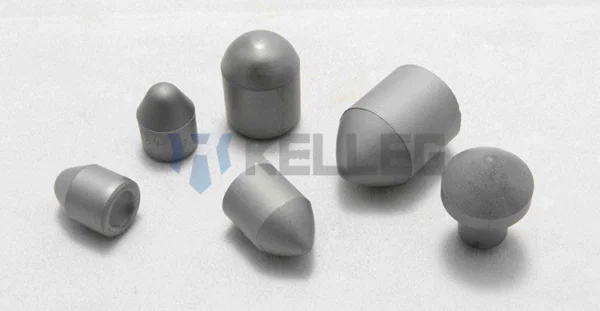
Carbide is an important part of button bit. Understanding of the selection principle of carbide can assist in improving rock drilling efficiency.
The Structure of DTH Drill Bit
This article mainly introduces the structure of DTH drill bit. Manufacturers can further prolong its service life by studying the structure of DTH drill bit.
Development Trend of Rock Drill Bit Welding Technology

Welding technology can be developed and perfected through brazing technology, surface modification technology, rock drill bit materials and brazing automation.
The Development of Rock Drill Bits in Mining Engineering
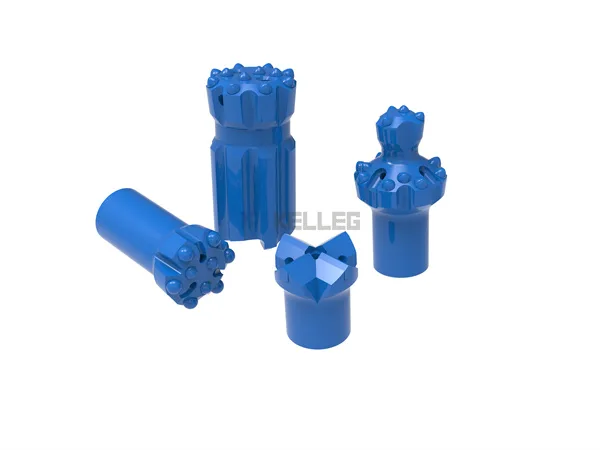
In coal mining engineering, we can choose rock drill bits reasonably according to the geographical environment.
What Are the Important Parameters of Button Bit?
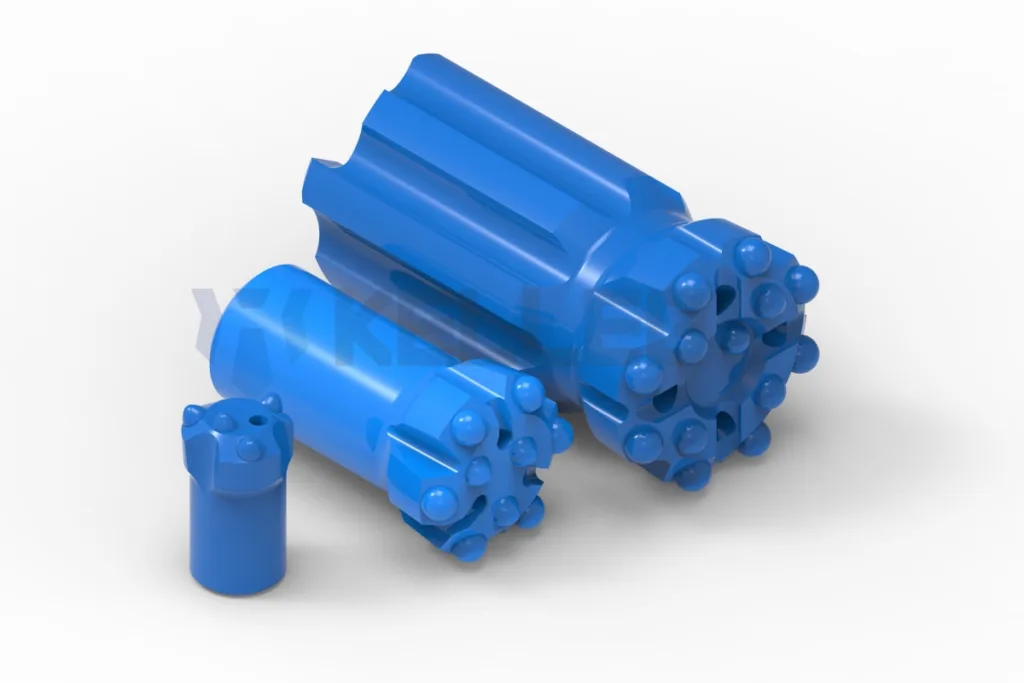
The important parameters of button bits mainly include geometric parameters, determination of powder discharge groove, button parameters and water outlet holes.
How to Manage Rock Drilling Tools Heat Treatment during The Process
The management of the heat treatment process of rock drilling tools can start with the management of employees and equipment.