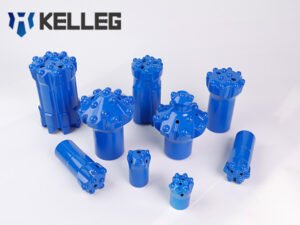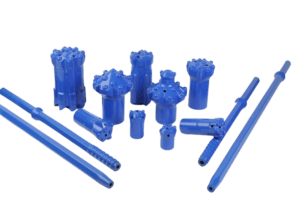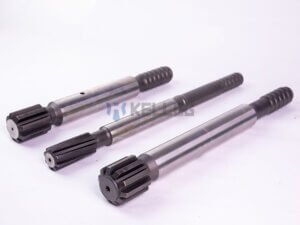

The best way to evaluate top hammer rock drill bits before buying is to match the bit to the rock formation, drilling method, hole requirements, and expected field performance—not simply compare unit prices. A reliable purchasing decision should combine technical compatibility, application suitability, performance evidence, total cost per meter, and supplier support before placing a large order.
For mining contractors, quarry operators, tunneling companies, and drilling-tool distributors, this approach reduces the risk of buying a bit that looks right but performs poorly at the job site.
A top hammer drill bit is a relatively small component in a drilling system, but its design directly affects rock breaking, penetration, wear, flushing, and drilling productivity. The evaluation therefore needs to start with the application, then move through the drilling system, bit configuration, performance evidence, and finally the commercial decision.
What Should You Evaluate Before Buying Top Hammer Rock Drill Bits?
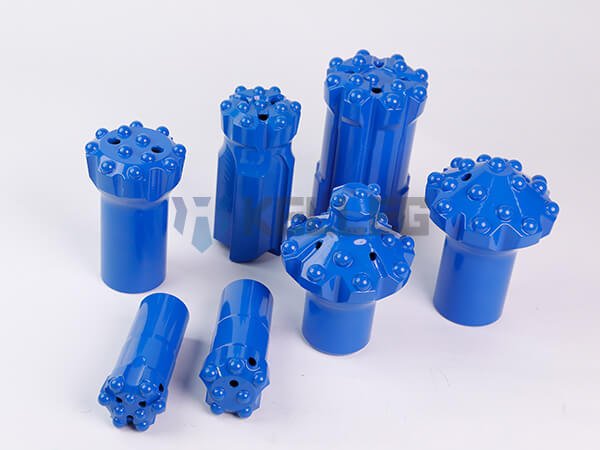
A practical evaluation should answer seven questions before the purchase order is released:
- Where will the bit be used? Mining, quarrying, tunneling, construction, or another application?
- What rock will it drill? Consider hardness, abrasiveness, fracturing, and formation changes.
- What drilling system will use it? Confirm the rock drill, drill rod, connection, and operating parameters.
- What hole does the project require? Verify diameter, depth, hole accuracy, and flushing requirements.
- Which bit configuration is appropriate? Evaluate bit type, carbide button arrangement, face design, and flushing layout.
- What field evidence supports the recommendation? Look for meters drilled, wear behavior, failure rate, and comparable applications.
- What will the bit really cost? Compare cost per meter and downtime impact rather than purchase price alone.
The key is to evaluate these factors together. A bit with excellent carbide quality can still be a poor choice if its connection does not match the drill rod. Likewise, a low-cost bit may become expensive if it drills fewer meters and requires frequent replacement.
Start With the Drilling Application, Not the Product Catalog
Before comparing manufacturers, define the operating conditions for the top hammer rock drill bits. This prevents a common purchasing problem: selecting a standard product first and trying to make it fit the application afterward.
Identify the Main Drilling Application
Different applications place different demands on top hammer drilling tools.
| Application | Typical Requirement | Evaluation Priority |
|---|---|---|
| Underground mining | Consistent drilling, durability, hole accuracy | Wear resistance, stability, service life |
| Quarry bench drilling | High production and penetration rate | Drilling speed, bit life, cost per meter |
| Tunnel drilling | Accurate holes and predictable performance | Hole control, flushing, drilling stability |
| Construction drilling | Versatility and reliable operation | Compatibility, availability, overall value |
| Secondary drilling / small-scale work | Flexible equipment and efficient tool changes | Connection, bit durability, ease of replacement |
The application alone is not enough. A quarry drilling through massive granite requires a different evaluation from a tunnel project working through fractured limestone, even if both use the same nominal hole diameter.
Record the Basic Job-Site Information
Before requesting quotations, prepare at least:
- Rock type
- Approximate rock hardness or compressive strength, if available
- Rock abrasiveness
- Fracture and joint conditions
- Presence of groundwater
- Required hole diameter
- Typical hole depth
- Drilling orientation
- Target penetration rate
- Current drill bit and its performance
- Drill rig and rock drill model
- Drill rod specification
- Flushing hole and operating conditions
This information gives a supplier something useful to work with. A request such as “Please quote 45 mm rock drill bits” is much less informative than “We need 45 mm threaded bits for underground drilling in abrasive granite”.
Evaluate Rock Conditions Before Selecting the Bit Design
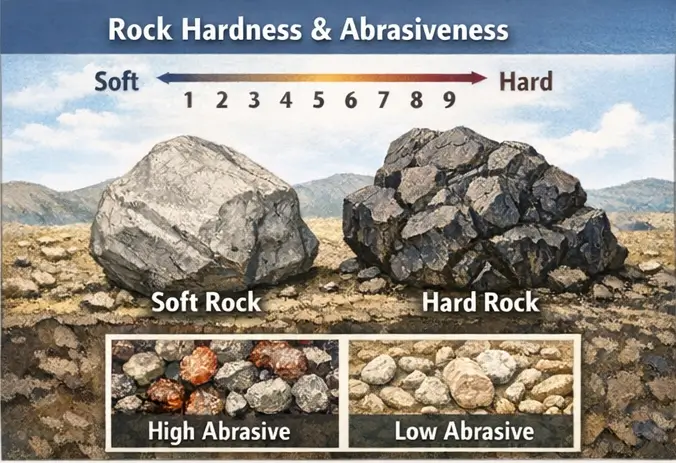
Rock formation is one of the strongest variables affecting the performance of a top hammer drill bit. The same bit can produce very different results when moved from massive abrasive granite to fractured limestone.
Hard and Abrasive Rock
Hard, abrasive formations can accelerate carbide wear and reduce the effective cutting action of the buttons as the bit ages.
When evaluating a bit for these conditions, pay attention to:
- Carbide button wear resistance
- Button shape
- Button layout
- Face design
- Body durability
- Flushing effectiveness
- Expected meters per bit
The objective is not necessarily to maximize the initial penetration rate. A bit that starts fast but loses cutting efficiency quickly may deliver a higher cost per meter than a slightly more conservative design with stable performance.
Soft or Fractured Rock
Fractured formations create a different set of problems. Impact loading can become uneven, and the bit may experience localized damage rather than uniform wear.
Evaluation should focus on:
- Drilling stability
- Button retention
- Edge protection
- Hole straightness
- Resistance to abnormal breakage
- Flushing performance
A bit optimized purely for highly abrasive massive rock may not be the best option when the formation contains frequent fractures or weak zones.
Mixed Geological Formations
Mixed formations deserve particular attention because drilling conditions can change significantly within the same hole or shift.
For example, a hole may pass through:
- Weathered rock
- Hard competent rock
- Fractured zones
- Water-bearing sections
In this situation, choosing a bit based on only one rock type can produce inconsistent results. Buyers should discuss the complete formation profile with the supplier and, where possible, use field trials to verify the proposed design.
Confirm Top Hammer Rock Drill Bit Compatibility
A top hammer drill bit should be evaluated as part of a complete drilling system:
Rock Drill → Drill Rod → Drill Bit → Rock Formation
Physical fit is only the first compatibility check. The drilling system must also transmit impact energy effectively and operate within suitable drilling parameters.
Tapered Bits: Verify the Complete Taper Connection
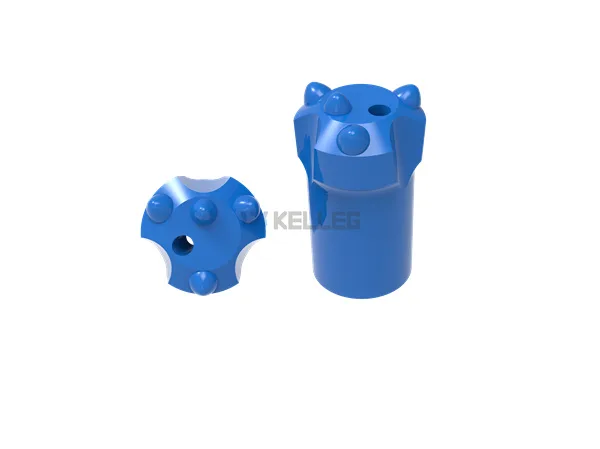
Tapered drill bits are commonly used with pneumatic handheld rock drills and other compatible top hammer equipment.
Before purchasing a tapered bit, confirm:
- Bit diameter
- Taper angle
- Taper length
- Matching drill rod
- Rock drill model
- Required hole diameter
For example, if the drilling tool requires an 11° taper, the bit and corresponding rod should be specified for that connection rather than selected solely by diameter.
A 32 mm bit is not automatically compatible with every 32 mm tapered rod. The taper specification must also match.
Threaded Bits: Verify Thread and Rod Matching
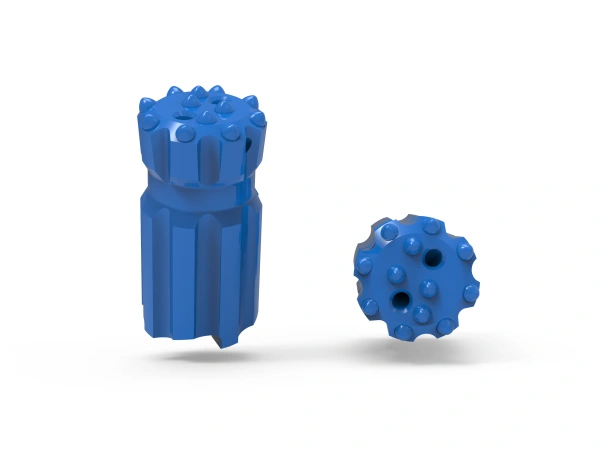
Threaded top hammer bits are commonly used with hydraulic top hammer drilling equipment and production drilling systems.
Common thread families include R-thread and T-thread, with specifications such as R32, R35, R38, T38, T45, and T51 used in different drilling systems.
When evaluating a threaded bit, confirm:
- Thread family
- Thread size
- Drill rod specification
- Shank connection
- Rock drill model
- Hole diameter
- Operating conditions
The thread designation should never be treated as an isolated specification. The bit must match the corresponding rod and drilling equipment.
Check Operating Parameters
Compatibility also includes the operating range of the equipment.
Review:
- Impact energy
- Rotation speed
- Feed force
- Flushing pressure
- Air or water supply
- Drilling depth
A bit designed for a heavy-duty hydraulic top hammer system should not automatically be assumed to perform properly on a smaller pneumatic rock drill simply because the diameter is correct.
Compare Top Hammer Drill Bit Designs by Performance Requirements
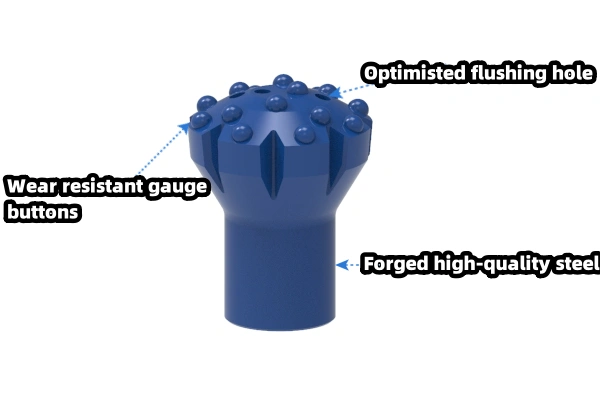
Once the application and equipment are clear, evaluate the actual bit configuration.
The goal is not to identify the most sophisticated design. It is to identify the design that addresses the dominant drilling problem.
Button Configuration
Carbide buttons perform the primary rock-breaking work in many top hammer button bits. Their:
- Shape
- Diameter
- Number
- Spacing
- Distribution
can influence penetration, wear, and drilling stability.
A suitable configuration depends on the formation and drilling objective.
For example, a production drilling application may prioritize penetration and service life, while a fractured formation may place greater emphasis on stability and button protection.
Bit Face Design
The face geometry determines how the cutting structure interacts with the rock and how effectively drilling debris can be removed.
When comparing face designs, consider:
- Expected penetration rate
- Rock abrasiveness
- Fracture conditions
- Hole stability
- Flushing requirements
- Wear distribution
Do not select a face design simply because it is commonly used in your market. Ask why the design is recommended for your particular formation.
Flushing Design
Efficient flushing helps remove cuttings from the hole and maintain effective rock-breaking conditions.
Evaluate:
- Flushing hole arrangement
- Air or water availability
- Hole depth
- Cuttings characteristics
- Risk of regrinding
- Expected drilling environment
A bit that breaks rock efficiently but cannot clear cuttings effectively will not deliver its theoretical penetration performance.
Match Top Hammer Rock Drill Bit Selection to Drilling Requirements
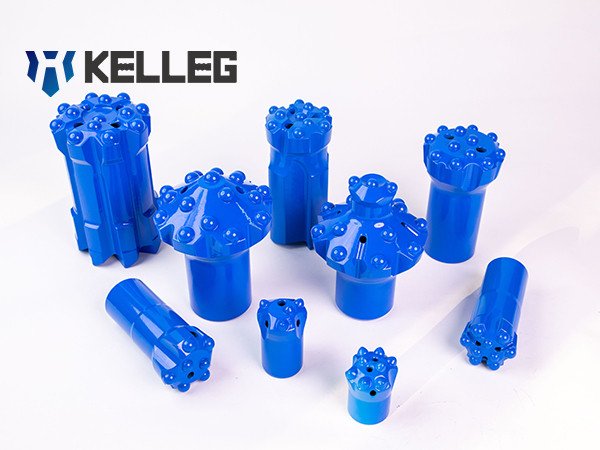
There is no universal best top hammer rock drill bit. A better purchasing method is to match the dominant job requirement with the appropriate design priority.
| Drilling Requirement | What to Evaluate | Typical Selection Priority |
|---|---|---|
| Maximum penetration | Cutting structure and button arrangement | Penetration efficiency |
| Long service life | Carbide and body durability | Wear resistance |
| Abrasive rock | Button wear behavior and face protection | Carbide durability |
| Fractured rock | Stability and button retention | Structural reliability |
| Accurate holes | Face geometry and guidance | Hole control |
| Deep drilling | Flushing and wear behavior | Cuttings removal and durability |
| High production volume | Meters per bit and drilling time | Overall productivity |
| Lower operating cost | Bit life, downtime, and replacement rate | Cost per meter |
The right bit should be selected according to the specific drilling requirements, rather than based on general market popularity. A bit that performs well in one application may deliver very different results under different rock conditions, equipment settings, or hole requirements.
Compare Performance Data, Not Just Technical Specifications
A quotation may list steel grade, carbide specification, hardness, diameter, and thread. These details matter, but they do not tell you how many meters the bit will actually drill.
For purchasing decisions, field performance data should sit alongside the technical specification sheet.
Key Performance Indicators for Top Hammer Rock Drill Bits
Track at least the following:
- Meters drilled per bit
- Average penetration rate
- Bit operating hours
- Number of bit changes
- Carbide button condition
- Thread condition
- Body wear
- Failure mode
- Cost per meter
- Downtime caused by tool replacement
A useful supplier comparison might look like this:
| Evaluation Metric | Supplier A | Supplier B | What to Verify |
|---|---|---|---|
| Unit price | $50 | $80 | Quoted price and order quantity |
| Average meters/bit | 300 m | 700 m | Same or comparable rock |
| Cost per meter | $0.17/m | $0.11/m | Actual field result |
| Replacement frequency | Higher | Lower | Based on production records |
| Similar application | Limited | Strong | Same drilling method and formation |
| Technical support | Basic | Application-based | Selection and troubleshooting |
| Trial availability | Yes/No | Yes/No | Test before bulk order |
The numbers in such a comparison should come from your own records or verified supplier/customer data. Avoid treating a supplier’s best-ever result as a guaranteed average.
Calculate Cost per Meter Before Comparing Quotations
Unit price is easy to compare. Drilling cost is more useful.
A basic calculation is:
Cost per Meter = Drill Bit Price ÷ Meters Drilled per Bit
For example:
- Bit A: $50 and 300 m service life
- Bit B: $80 and 700 m service life
Bit A:
$50 ÷ 300 m = $0.17/m
Bit B:
$80 ÷ 700 m = $0.11/m
The higher-priced bit costs more to purchase, but less for each meter drilled.
For a more realistic purchasing evaluation, include other operating effects:
Effective Drilling Cost = Tool Cost + Replacement Cost + Downtime Impact + Related Operating Costs
A simple cost-tracking sheet can provide a practical basis for comparison. By recording meters drilled, bit price, replacement frequency, and downtime, you can calculate the actual cost per meter and identify which option offers better overall value.
Do Not Ignore Penetration Rate
Cost per meter alone can also be incomplete.
Suppose two bits achieve similar meters per bit, but one maintains a penetration rate of 1.5 m/min while the other averages 1.0 m/min. If the project is production-sensitive, the faster bit may reduce drilling hours and equipment utilization.
Therefore, compare both:
- How long the bit lasts
- How efficiently it drill bits during that service life
Ask Suppliers for Evidence Before Making a Purchasing Decision
A strong supplier should be able to explain why a particular bit is recommended rather than simply sending a catalog page.
Questions to Ask a Top Hammer Drill Bit Supplier
Before placing an order, ask:
- Which bit design do you recommend for our rock conditions?
- What drilling equipment was used to validate the recommendation?
- What rock type was involved in the reference application?
- What average meters per bit were achieved?
- What was the typical penetration rate?
- How did the bit wear during testing?
- What were the main causes of replacement?
- Which drill rod and thread or taper were used?
- Can you provide a sample?
- How will you evaluate the trial results?
- Can the design be adjusted if the first trial does not meet expectations?
The quality of the supplier’s questions can be just as revealing as the quality of its answers.
A reliable supplier should first understand the drilling application before recommending a bit. Rock conditions, equipment, hole diameter, connection type, and operating parameters all affect bit selection and should be confirmed before making a recommendation.
Evaluate the Supplier’s Technical Capability
The supplier evaluation should go beyond price and delivery time.
For application-dependent drilling tools, technical communication can have a direct impact on the final drilling result.
What a Capable Supplier Should Be Able to Provide
- Application-specific bit recommendations
- Knowledge of tapered and threaded top hammer drilling tools
- Understanding of carbide button configurations
- Experience with mining, quarrying, and tunneling
- Technical troubleshooting
- Field-performance analysis
- Product customization where appropriate
- Consistent manufacturing quality
- Responsive after-sales communication
For example, if your current bit shows rapid outer-button wear, a technically capable supplier should help investigate whether the cause relates to rock abrasiveness, button configuration, drilling parameters, flushing, or another factor.
The answer should not simply be “try our more expensive bit.”
Use a Pre-Purchase Checklist
Before approving a new top hammer rock drill bit, work through the following checklist.
Application Checklist
- Drilling application is clearly defined.
- Rock type and approximate hardness are known.
- Rock abrasiveness has been considered.
- Fracture or joint conditions are understood.
- Water and flushing conditions have been identified.
- Required hole diameter and depth are confirmed.
- Target penetration rate is defined.
Equipment Compatibility Checklist
- Rock drill model is confirmed.
- Drill rig type is confirmed.
- Drill rod specification is confirmed.
- Taper angle is verified for tapered bits.
- Thread family and size are verified for threaded bits.
- Bit diameter matches the hole requirement.
- Impact, rotation, feed, and flushing conditions are suitable.
Bit Design Checklist
- Bit type is suitable for the drilling method.
- Button configuration matches the formation.
- Face design matches the drilling objective.
- Flushing design is appropriate.
- Wear resistance requirements are defined.
- Hole accuracy requirements are considered.
Performance Checklist
- Meters per bit are available or can be measured.
- Penetration performance can be compared.
- Failure modes are recorded.
- Wear patterns are documented.
- Cost per meter is calculated.
- Results from similar applications have been reviewed.
Supplier Checklist
- Supplier understands the application.
- Technical recommendations are specific rather than generic.
- Relevant customer or field experience can be demonstrated.
- Trial quantities are available.
- Field feedback can be analyzed.
- Product adjustments or customization are possible when required.
- After-sales technical communication is reliable.
If several boxes remain unchecked, the purchasing decision is probably premature.
Run a Controlled Field Trial Before a Large Order

When introducing a new supplier or bit design, a controlled field trial is usually more useful than making a large initial purchase.
Step 1: Establish the Baseline
Record the performance of the current bit under comparable conditions:
- Bit price
- Meters drilled
- Average penetration rate
- Drilling time
- Number of replacements
- Wear condition
- Downtime
- Cost per meter
Without a baseline, it is difficult to determine whether the new bit actually improves performance.
Step 2: Test Under Comparable Conditions
Whenever possible, compare the candidate bit against the existing product using:
- Similar rock formation
- Same or comparable equipment
- Similar hole diameter
- Similar drilling depth
- Similar operating parameters
- Comparable operator conditions
A trial becomes much more meaningful when major variables remain controlled.
Step 3: Record More Than Service Life
Do not wait until the bit is completely worn out before evaluating it.
Record:
- Initial penetration rate
- Penetration rate after extended drilling
- Button wear
- Button breakage
- Body condition
- Thread condition
- Hole quality
- Flushing performance
- Replacement reason
This can reveal whether the bit is failing through normal wear or through a selection/design problem.
Step 4: Review the Results With the Supplier
A good supplier should be interested in the trial data.
Discuss:
- What improved
- What did not improve
- Where abnormal wear occurred
- Whether drilling parameters were appropriate
- Whether another button or face configuration should be tested
This turns the trial into an engineering evaluation rather than a simple sample test.
Step 5: Scale the Purchase Only After Verification
If the bit demonstrates stable performance and acceptable economics, increase the order volume gradually.
If the result is poor, identify the cause before rejecting the entire product category. Sometimes the issue is not the basic bit quality but an incorrect diameter, connection, face configuration, flushing condition, or operating parameter.
Build a Practical Top Hammer Drill Bit Evaluation Scorecard
For repeated purchasing, it is useful to convert the evaluation into a simple scorecard.
One possible weighting system is:
| Evaluation Category | Suggested Weight |
|---|---|
| Application suitability | 20% |
| Equipment compatibility | 20% |
| Field drilling performance | 25% |
| Cost per meter | 15% |
| Product consistency | 10% |
| Technical support | 10% |
| Total | 100% |
The weighting can change according to the project.
For a high-volume quarry operation, drilling productivity and cost per meter may deserve greater weight. For underground development drilling, hole accuracy, stability, and equipment compatibility may be more important.
The purpose of the scorecard is not to create a complicated procurement system. It is to prevent one attractive factor—usually low price—from dominating the entire decision.
Common Warning Signs During Top Hammer Drill Bit Evaluation
Certain purchasing signals deserve closer attention.
The Supplier Gives a Recommendation Without Asking About the Rock
This usually indicates a generic product recommendation rather than application-based selection.
Performance Claims Have No Test Conditions
“Longer life” or “30% faster drilling” means little without knowing:
- Rock type
- Equipment
- Hole diameter
- Operating pressure
- Test duration
- Comparison product
Always ask for the conditions behind the claim.
The Quotation Lists Specifications but No Application Information
A detailed specification sheet is useful, but it does not replace field evidence.
The Supplier Cannot Explain Wear Problems
If a supplier cannot discuss button wear, body damage, thread wear, or penetration changes, its technical support may be limited.
The Supplier Pushes a Large Order Before a Trial
A large order should follow performance verification, not replace it.
Different Batches Produce Significantly Different Results
Inconsistent service life can increase inventory requirements and make production planning difficult. Ask how the supplier controls raw materials, heat treatment, carbide quality, machining, and final inspection.
A Better Purchasing Workflow for Top Hammer Rock Drill Bits
For recurring purchases, use this sequence rather than starting with a price comparison:
1. Define the application
↓
2. Characterize the rock and drilling environment
↓
3. Confirm rock drill, rod, connection, and hole requirements
↓
4. Select suitable bit type and configuration
↓
5. Request technical evidence and comparable application data
↓
6. Compare cost per meter and productivity impact
↓
7. Conduct a controlled field trial
↓
8. Review wear and drilling data
↓
9. Optimize the bit or drilling parameters if required
↓
10. Approve the supplier for larger-volume purchasing
This process shifts the purchasing decision from “Which bit has the lowest quotation?” to “Which bit provides the most reliable drilling result at an acceptable total cost?”
That is a much stronger basis for long-term procurement.
Selecting top hammer rock drill bits should be treated as a technical purchasing decision, not simply a comparison of quoted prices. The right choice depends on how well the bit matches the rock formation, drilling equipment, connection, hole requirements, and operating conditions, as well as how consistently it performs in the field.
Before committing to a larger order, test the selected bit under conditions that closely reflect the actual application. Track penetration rate, meters drilled, wear patterns, replacement frequency, downtime, and cost per meter. These results provide a much stronger basis for purchasing decisions than catalog specifications or general product claims. A supplier that can interpret the data and adjust the bit configuration or drilling parameters when necessary can also add value beyond the product itself.