
A Split Set rock bolt, also known as a friction bolt or friction rock stabilizer, is a rock reinforcement component used in underground mining, tunneling, and other ground support applications. It consists of a high-strength steel tube with a longitudinal slit and a bearing plate. When the tube is driven into a suitably sized borehole, it compresses against the borehole wall and develops frictional resistance along its embedded length.
Unlike resin-grouted or cement-grouted bolts, a conventional Split Set relies primarily on mechanical friction for anchorage. It can provide immediate support after installation, making it useful in applications where rapid rock reinforcement is required. Its suitability, however, depends on the ground conditions, design requirements, borehole quality, and installation procedure.
This guide explains how Split Set rock bolts work, their main components, typical applications, advantages, limitations, and the factors to consider when selecting them for a mining or tunneling project.
What is a split set?

Split set is a friction-based rock bolt designed to reinforce rock surrounding an excavation. Its main component is a tubular steel section with a continuous longitudinal slot. One end is tapered to facilitate insertion, while the other is designed to accommodate a bearing plate.
The Split Set tube is installed in a borehole selected according to the manufacturer’s specifications. Because the installed tube is compressed within the borehole, it exerts radial pressure against the surrounding rock. Friction at the steel-to-rock interface resists movement and helps reinforce the rock mass.
Split Set rock bolts are commonly considered for underground mine development, tunneling, and other excavation support applications where immediate mechanical anchorage is beneficial.
How Does a Split Set Rock Bolt Work?
The working principle of a Split Set is based on tube compression, radial contact pressure, and friction between the bolt and the borehole wall.
Borehole Preparation
A borehole is drilled into the rock using the diameter, depth, and drilling procedure specified by the Split Set manufacturer and the project design. Borehole diameter is a critical factor because it affects tube compression and the resulting frictional anchorage.
Tube Compression and Radial Pressure
As the slotted steel tube is driven into the borehole, the longitudinal slot allows the tube to compress. The tube presses against the borehole wall, creating radial contact pressure along the embedded section.
Frictional Anchorage
The contact pressure between the tube and the borehole wall generates frictional resistance. This resistance helps prevent the bolt from slipping out and enables it to reinforce the surrounding rock.
Actual anchorage performance depends on factors such as borehole diameter, rock conditions, tube dimensions, steel properties, and installation quality. It should not be assumed that every installation will achieve the same load capacity.
Bearing Plate Support
The bearing plate transfers load from the exposed end of the bolt to the rock surface. When used with suitable mesh or other support components, the plate can help retain loose rock fragments and distribute the applied load over a larger area.
The plate, bolt, and surrounding rock must work together as part of the designed ground support arrangement.
Install the split set in a borehole smaller than the diameter of the pipe. At this time, three forces are acting on the surrounding rock. One is the radial pressure on the hole wall within the entire length of the split set. One is the friction force to prevent the surrounding rock from sliding down, and the other is the supporting force of the split set pallet. These three forces make the surrounding rock more stable.
What Are the Main Components of a Split Set?
Split set includes an anchor rod and tray.
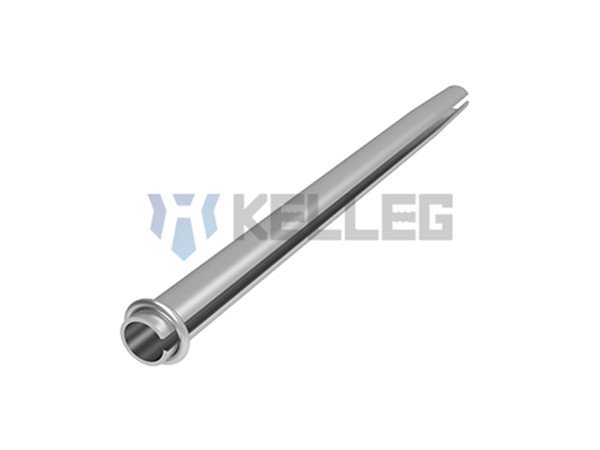
Anchor Rod
The rod is the main load-bearing and anchoring component. It is formed with a longitudinal slot that allows compression during installation.
Depending on the product design, the rod may include:
- A tapered insertion end to facilitate installation.
- A longitudinal slot that allows the rod to compress.
- A formed or reinforced end for tray engagement.
- Steel and surface finish options specified by the manufacturer.
The rod’s dimensions, material properties, and manufacturing quality influence its performance. Buyers should verify these details against the technical requirements of their project.
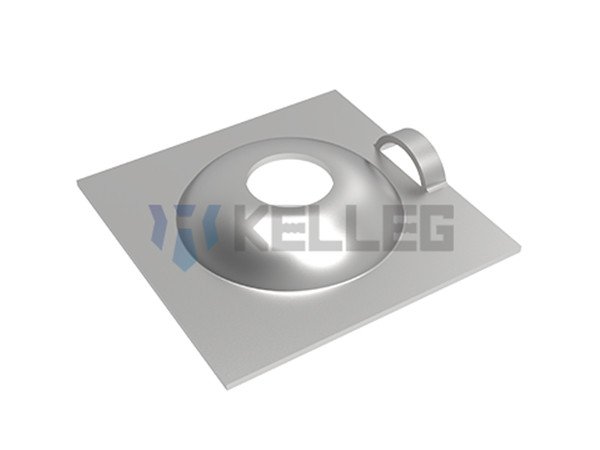
Tray
The tray is equivalent to the plate. It is square with a bowl-shaped protrusion in the middle and is the component that transmits the tensile force received by the anchor bar to the surrounding rock. The tray used for split sets is usually thin plate.
What Are the Applications of Split Set Rock Bolts?
Split Set rock bolts are used in several ground support applications, subject to site-specific engineering requirements.
Underground Mining
In underground mines, Split Sets may be used to reinforce excavation walls and roofs where friction-based anchorage and rapid installation are required.
Tunneling
Split Sets can be considered for selected tunnel support applications, depending on rock quality, excavation conditions, support design, and the required service life.
Rock Reinforcement and Excavation Support
They may also be used in other rock reinforcement projects where the ground conditions and design loads are compatible with friction-bolt support.
Important: Application suitability should be assessed by the project’s geotechnical or ground support engineer. A Split Set should not be treated as a universal replacement for resin-grouted bolts, fully grouted bolts, cable bolts, or other support systems.
What Are the Advantages of Split Set Rock Bolts?
Split Sets offer several practical advantages in suitable ground conditions.
Rapid Installation
Split Sets are mechanically installed and do not normally require resin or cement grout for their primary frictional anchorage. This can simplify installation and reduce waiting time associated with grout curing.
Immediate Frictional Support
The tube develops contact pressure against the borehole wall during installation, allowing frictional support to begin without a separate grouting and curing process.
Simple Assembly
The conventional assembly has a straightforward design, consisting primarily of a slotted steel tube and a compatible bearing plate.
Full-Length Frictional Contact
The tube develops frictional contact along its embedded length rather than relying exclusively on a localized anchoring point. The actual distribution of contact pressure and load transfer depends on the installation and ground conditions.
Potential Installation Efficiency
Where Split Sets are appropriate for the ground support design, their simple installation method may help improve installation efficiency. Actual cost and productivity benefits depend on site conditions, equipment, labor, and the overall support plan.
What Are the Limitations of Split Set Rock Bolts?
Understanding the limitations is as important as understanding the benefits.
Dependence on Borehole Diameter
An oversized or undersized borehole relative to the manufacturer’s specified installation range can affect tube compression and anchorage performance. Borehole diameter should be controlled and verified during installation.
Sensitivity to Ground Conditions
Rock strength, jointing, fractures, borehole stability and the condition of the borehole wall can affect the interaction between the bolt and the surrounding rock.
Load Capacity Must Be Verified
Frictional anchorage does not mean that the bolt cannot slip or fail. Pull-out resistance, tensile capacity and other relevant performance criteria should be verified using the applicable product data, design calculations and field testing where required.
Long-Term Durability
Corrosion exposure, groundwater chemistry, installation damage and the intended service life must be considered when selecting materials and surface finishes. A standard uncoated product should not automatically be assumed suitable for every long-term support application.
Not Suitable for Every Support Design
Weak, highly deformable, or squeezing ground and applications with demanding load or durability requirements may require a different or supplementary support arrangement. The decision should be based on engineering assessment rather than a general product description.
How to Choose the Right Split Set Rock Bolt

For mining contractors, tunneling companies, distributors, and procurement teams, product selection should begin with the project requirements rather than the nominal bolt size alone.
Confirm the Required Diameter and Length
Determine the specified bolt diameter and length from the ground support design. Confirm that the selected model is compatible with the intended borehole diameter and installation method.
Verify Steel Properties and Load Requirements
Review the required steel grade or mechanical properties, tensile capacity, and other relevant performance criteria. Do not compare products based on nominal diameter alone.
Select a Suitable Tray
Check the tray dimensions, shape, thickness, and compatibility with the bolt and any mesh or other support components.
Consider Corrosion Protection
Evaluate groundwater, humidity, chemical exposure, and intended service life. Confirm whether the project requires an uncoated, galvanized, or another specified finish, and verify that the supplier offers the required option.
Check Installation Conditions
Confirm the available drilling and installation equipment, borehole quality requirements, installation procedure, and any site-specific testing requirements.
Request Technical Documentation
Before placing an order, request the relevant product drawing, dimensional specifications, material information, performance data, and quality documentation. These documents help the technical and procurement teams confirm whether the product meets the project requirements.
Looking for Split Set rock bolts for your project? Visit the Kelleg Split Set product page to review the available product information and contact Kelleg regarding your requirements.
Frequently Asked Questions About Split Set Rock Bolts
What is the difference between a Split Set and a resin-grouted rock bolt?
A conventional Split Set develops anchorage mainly through friction between its compressed steel tube and the borehole wall. A resin-grouted rock bolt relies on a resin bonding system to transfer load between the bolt and the surrounding rock. Their installation methods, load-transfer mechanisms, and suitability differ, so the appropriate option depends on the ground support design.
Does a Split Set require grout?
A conventional Split Set does not normally require resin or cement grout for its primary frictional anchorage. Special applications or modified products may have additional requirements, so the relevant manufacturer’s instructions should always be followed.
What affects the anchorage performance of a Split Set?
Important factors include borehole diameter, rock conditions, tube dimensions, material properties, installation quality, and the interaction between the tube and the borehole wall. Project-specific performance should be verified through suitable design calculations and testing.
Can Split Sets be used in soft rock?
Their suitability in soft, fractured, or highly deformable rock depends on the ground conditions and the required support performance. Such applications need careful engineering assessment, and alternative or supplementary support may be necessary.
Are Split Set rock bolts suitable for permanent ground support?
They can be considered in certain support designs, but permanent use should not be assumed appropriate for every project. The engineer should evaluate design loads, ground behavior, corrosion exposure, service life, and the relevant performance requirements.
What information should I provide when requesting a Split Set quotation?
To help a supplier evaluate your requirements, provide the following information where available:
- Required bolt diameter and length.
- Steel grade or mechanical property requirements.
- Bearing plate dimensions and type.
- Surface finish or corrosion protection requirements.
- Intended application and project location.
- Estimated quantity and delivery destination.
- Applicable drawings, technical specifications, or standards.
Providing these details helps the supplier check product compatibility and prepare a more relevant quotation.
Conclusion
Split Set rock bolts are friction-based ground support components designed to provide rapid anchorage through radial contact pressure between a slotted steel tube and a borehole wall. Their simple assembly and immediate frictional support make them useful in selected mining, tunneling, and rock reinforcement applications.
However, performance depends on the relationship between the bolt, borehole, surrounding rock, and installation procedure. Before selecting a Split Set, verify the required dimensions, material properties, bearing plate, corrosion protection, and project-specific support requirements.
For product information or a quotation, visit the Kelleg Split Set Rock Bolts page and share your required specifications, application, and quantity.