
Introduction: Where Can Open-Pit Mines Reduce Operating Costs?
Reducing open-pit mining costs requires more than cutting equipment expenses or purchasing cheaper consumables. The most effective approach is to improve productivity across the entire mining process, from mine planning and drilling to blasting, loading, hauling, and equipment maintenance.
The key is to lower the cost per ton of material moved or ore produced without compromising production targets, equipment reliability, or workplace safety.
For most open-pit mining operations, important cost reduction opportunities include:
- Improving drilling and blasting efficiency to reduce rework and downstream loading costs.
- Selecting rock drilling tools that deliver a lower cost per meter drilled.
- Reducing fuel consumption through better haul road management and fleet utilization.
- Preventing unplanned equipment downtime through effective maintenance.
- Improving workforce productivity and standardizing procurement.
This guide explains eight practical strategies that mine operators can use to identify cost-saving opportunities, measure performance, and improve overall operating efficiency.

Understanding Open-Pit Mining Operating Costs
Before implementing cost reduction measures, mining companies need to understand where their operating budgets are being spent.
Open-pit mining costs vary depending on the mineral deposit, geological conditions, production scale, mine depth, equipment fleet, and processing requirements.
Major Cost Components in Open-Pit Mining
The main operating cost categories generally include:
| Cost Category | Main Cost Drivers |
|---|---|
| Mine planning | Pit design, waste removal, mine development |
| Drilling | Drill rigs, drill bits, rods, fuel, maintenance |
| Blasting | Explosives, accessories, labor, fragmentation |
| Loading | Excavators, shovels, fuel, maintenance |
| Hauling | Truck fuel, tires, haul roads, fleet utilization |
| Equipment maintenance | Spare parts, repairs, downtime |
| Labor | Operators, technicians, engineers, training |
| Energy | Diesel, electricity, compressed air |
| Environmental and safety | Dust control, monitoring, compliance |
These costs are interconnected. For example, poor drilling accuracy or inadequate blast fragmentation can increase digging resistance, fuel consumption, secondary breaking, and crusher wear.
Therefore, reducing one operating expense should not create higher costs elsewhere.
Why Cost per Ton Matters
Total operating expenditure alone does not show whether a mine is becoming more efficient.
A more useful approach is to monitor unit costs.
Cost per ton moved:
Cost per Ton Moved = Total Mining Operating Costs / Total Tons of Material Moved
Cost per ton of ore:
Cost per Ton of Ore = Relevant Operating Costs / Tons of Ore Produced
These two indicators measure different things. Cost per ton moved evaluates the efficiency of mining and material handling, while cost per ton of ore measures expenditure relative to ore production.
Mining companies should also track individual operating indicators, such as drilling cost per meter, fuel consumption per ton, and equipment availability.
8 Practical Strategies to Reduce Open-Pit Mining Costs
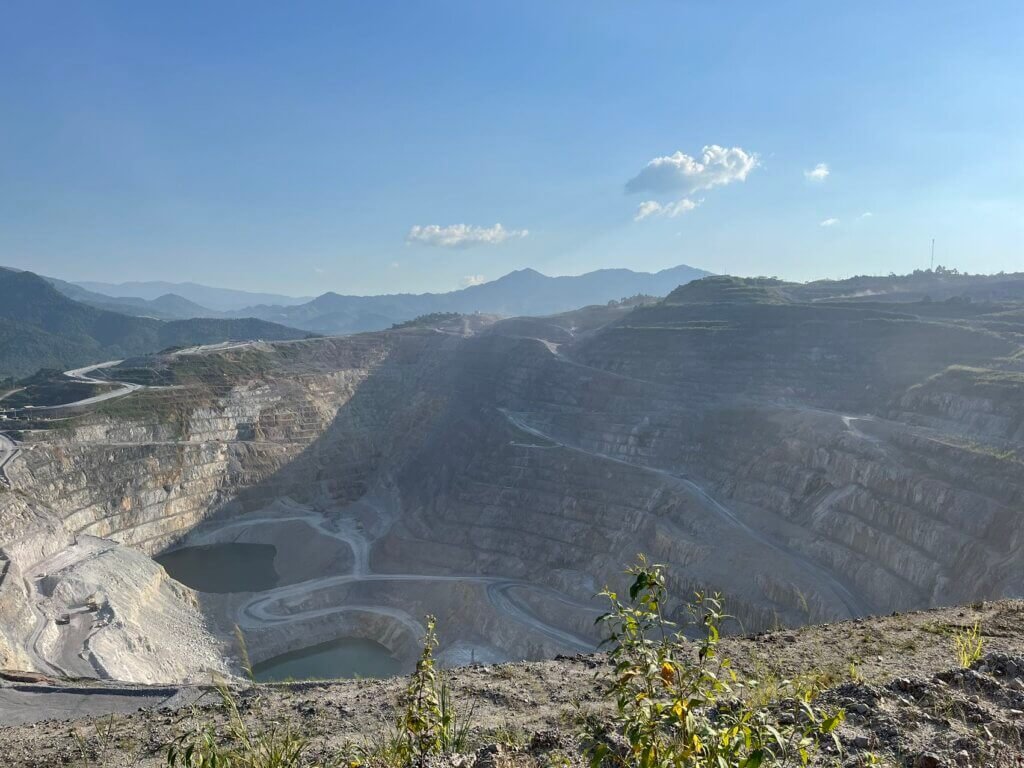
Optimize Mine Planning and Material Movement
Mine planning has a direct influence on how much material must be drilled, blasted, loaded, and transported.
Poor planning can increase waste removal, create unnecessary haul distances, and reduce equipment utilization.
Practical optimization measures:
- Optimize pit design and mining sequences based on geological and production requirements.
- Plan bench heights and drilling patterns to maintain safe and efficient blasting operations.
- Minimize unnecessary waste movement through accurate geological modeling and grade control.
- Optimize haul road layouts to reduce travel distances and excessive gradients.
- Coordinate drilling, blasting, loading, and hauling schedules to avoid operational bottlenecks.
Haul road design deserves particular attention. Road gradients, surface conditions, drainage, and turning areas all influence truck cycle times, rolling resistance, fuel consumption, and tire wear.
Mine planning should also balance short-term production targets with long-term resource recovery and operating efficiency.
Improve Drilling and Blasting Efficiency
Drilling and blasting are important starting points in the open-pit mining production cycle. Their performance affects loading, hauling, and crushing efficiency.
Poor drilling accuracy, excessive hole deviation, or inconsistent blast fragmentation can create additional costs throughout the operation.
Practical ways to improve drilling and blasting efficiency:
- Match drilling methods and equipment to hole diameter, depth, and geological conditions.
- Maintain consistent hole positioning, depth, and alignment.
- Optimize burden, spacing, stemming, and explosive distribution through site-specific blast design.
- Monitor fragmentation quality after blasting.
- Review drilling and blasting performance together rather than evaluating them separately.
Good fragmentation generally improves excavator digging conditions, reduces the need for secondary breaking, and helps maintain consistent crusher feed.
Blast design should always be prepared and reviewed by qualified blasting engineers in accordance with site conditions and applicable safety regulations.
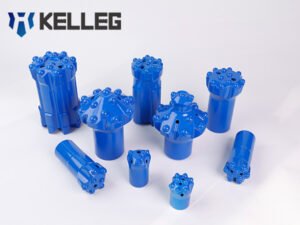
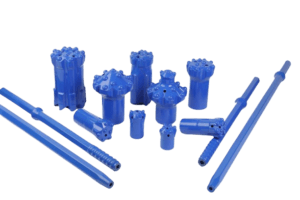
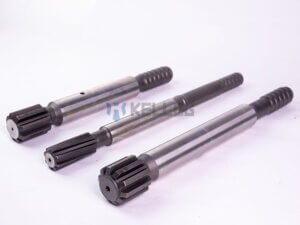
Select Rock Drilling Tools Based on Cost per Meter

The purchase price of a drill bit or drilling rod does not represent its actual operating cost.
For open-pit mines, a more meaningful indicator is the cost per meter drilled.
A lower-priced drill bit may require more frequent replacement, while a higher-quality product may deliver longer service life and more consistent drilling performance.
Drilling cost per meter can be calculated as:
Drilling Tool Cost per Meter = Total Drilling Tool Expenditure / Total Meters Drilled
For a broader comparison, mines should also consider tool-related downtime, replacement labor, and the cost of drilling interruptions.
Choose the Right Drilling Method
Different drilling methods are suitable for different hole sizes, drilling depths, and rock conditions.
| Drilling Method | Typical Applications | Main Considerations |
|---|---|---|
| Top Hammer Drilling | Smaller-diameter holes and suitable for shallow-to-medium-depth applications | Penetration rate, hole accuracy, rod and bit wear |
| DTH (Down-the-Hole) Drilling | Medium-to-large diameter holes, deeper drilling, and hard rock | Air consumption, hammer performance, bit life, hole straightness |
| Rotary Drilling | Large-diameter production blast holes, particularly in suitable formations | Bit selection, weight on bit, rotation speed, formation conditions |
The most suitable method depends on the complete drilling setup rather than one specification alone.
Match Drill Bits to Rock Conditions
Rock hardness, abrasiveness, fracture characteristics, and drilling parameters all influence drill bit performance.
When selecting drill bits, consider:
- Button shape and carbide grade.
- Bit diameter and face design.
- Rock hardness and abrasiveness.
- Drilling pressure and rotation speed.
- Expected penetration rate and service life.
An unsuitable bit design can cause premature button wear, breakage, or reduced penetration rates.
Compare Total Drilling Performance, Not Just Purchase Price
When evaluating drilling tool suppliers, record the following information:
- Purchase price per tool.
- Actual drilling meters per bit.
- Average penetration rate.
- Replacement frequency.
- Tool-related downtime.
- Cost per meter drilled.
For example, if one drill bit costs $120 and drills 600 meters, its tool cost is $0.20 per meter. If another costs $150 but drills 1,000 meters, its tool cost is $0.15 per meter.
This simplified example excludes downtime, labor, and other operating expenses, but it demonstrates why a higher purchase price does not necessarily mean a higher operating cost.
Improve Equipment Utilization and Maintenance
Mining equipment represents a substantial investment. Poor utilization and unplanned downtime increase operating costs and reduce production capacity.
A mine may have sufficient equipment on paper but still experience low productivity because of maintenance delays, poor scheduling, or mismatched fleet capacity.
Practical optimization measures:
- Implement preventive maintenance schedules based on equipment operating hours and manufacturer recommendations.
- Monitor recurring mechanical failures and identify their root causes.
- Keep critical spare parts available to reduce repair delays.
- Track equipment availability and utilization separately.
- Coordinate equipment maintenance with production schedules.
- Match fleet capacity to actual production requirements.
Equipment availability indicates whether a machine is ready for operation, while utilization measures how effectively available equipment is being used.
Both indicators are important when evaluating fleet performance.
For drilling equipment, regular inspection of hydraulic systems, compressors, connections, and drilling components helps prevent avoidable interruptions.
Reduce Fuel Consumption and Haulage Costs
Loading and hauling can create substantial operating expenses in open-pit mines, particularly where pits are deep and transportation distances are long.
Fuel consumption is influenced by haul road conditions, truck payload, travel distance, gradients, idle time, and operating practices.
Practical ways to reduce haulage costs:
- Maintain haul roads to reduce rolling resistance.
- Review road gradients and eliminate unnecessary detours where feasible.
- Optimize truck payload within equipment design limits.
- Reduce excessive engine idling.
- Coordinate loading and hauling schedules to minimize waiting time.
- Monitor fuel consumption by equipment and production shift.
Fuel consumption per ton moved is a useful indicator for comparing haulage performance over time.
However, changes in pit depth, material density, haul distance, and production conditions should be considered when comparing results.
Improve Energy Efficiency
Energy consumption affects drilling, crushing, pumping, ventilation, and other mining activities.
In drilling operations, diesel engines, compressors, and compressed-air systems can contribute significantly to energy expenditure.
Recommended measures include:
- Select compressors with suitable capacity and energy efficiency.
- Inspect compressed-air pipelines and connections for leakage.
- Maintain filters and other components according to operating requirements.
- Avoid operating equipment unnecessarily at excessive power settings.
- Monitor fuel and electricity consumption by production activity.
- Review energy consumption when changing drilling equipment or production methods.
For DTH drilling, compressor capacity and operating pressure should match the hammer and drilling conditions. Insufficient air supply can affect drilling performance and cuttings removal, while unnecessarily high pressure can increase energy consumption.
The objective is to maintain the operating conditions required for efficient drilling without wasting energy.
Increase Workforce Productivity and Safety
The performance of mining equipment depends heavily on the people operating and maintaining it.
Inadequate training, inconsistent operating procedures, and poor workforce allocation can increase tool wear, equipment failures, production interruptions, and safety risks.
Practical improvement measures:
- Provide regular training for drill operators and equipment maintenance personnel.
- Establish consistent operating and inspection procedures.
- Monitor operator performance using relevant production and safety indicators.
- Assign qualified personnel to specialized maintenance and drilling tasks.
- Review shift schedules to reduce fatigue-related errors.
- Encourage reporting of recurring equipment and operational problems.
Safety management should remain a priority throughout every cost optimization program.
Accidents and unsafe operating conditions can lead to equipment damage, production stoppages, medical expenses, and regulatory consequences.
Reducing safety investment is not a sustainable cost reduction strategy. Effective safety procedures help protect workers and maintain production continuity.
Optimize Procurement and Supplier Selection
Purchasing decisions can have a long-term impact on mining operating costs.
Choosing suppliers based only on the lowest purchase price may result in inconsistent product quality, shorter service life, delayed deliveries, or inadequate technical support.
For drilling consumables, these issues can directly affect penetration rates, replacement frequency, and drilling productivity.
Important supplier evaluation criteria:
| Evaluation Factor | What to Check |
|---|---|
| Product quality | Materials, manufacturing processes, quality inspection |
| Product compatibility | Equipment model, dimensions, connection and thread specifications |
| Service life | Actual performance under comparable rock conditions |
| Supply capability | Production capacity, stock availability, delivery reliability |
| Technical support | Product selection, application guidance, troubleshooting |
| Quality consistency | Batch consistency and product traceability |
Evaluate Total Cost of Ownership
Total cost of ownership (TCO) considers more than the initial purchase price.
For drilling tools, procurement teams should consider:
- Purchase and transportation costs.
- Expected service life.
- Replacement frequency.
- Tool-related downtime.
- Maintenance and handling requirements.
- Technical support and delivery reliability.
Standardize Drilling Consumables Where Practical
Standardizing suitable drilling tools and spare parts can simplify inventory management and reduce the number of different products operators need to handle.
However, standardization should not mean using the same drill bit or drilling configuration in every geological condition.
Product selection must still match the drilling equipment, rock formation, hole specifications, and operating requirements.
How to Measure the Effectiveness of Cost Reduction
A successful cost optimization program needs measurable indicators.
Mining companies should establish a baseline before implementing changes and compare results over consistent operating periods.
| KPI | Calculation or Measurement | What It Shows |
|---|---|---|
| Cost per ton moved | Mining operating costs/tons moved | Overall material movement efficiency |
| Drilling cost per meter | Drilling costs/meters drilled | Drilling cost efficiency |
| Tool consumption per meter | Tool expenditure/meters drilled | Drilling consumable efficiency |
| Fuel consumption per ton | Fuel consumed / tons moved | Haulage and energy efficiency |
| Equipment availability | Available operating time / scheduled time | Equipment readiness |
| Equipment utilization | Operating time / available time | Equipment use efficiency |
| Secondary breaking rate | Material requiring secondary breaking / total blasted material | Blast fragmentation performance |
The exact KPI definitions should remain consistent within each mine. For example, equipment availability and utilization should not be treated as interchangeable indicators.
Start with a Practical Cost Review
Rather than attempting to optimize every activity simultaneously, mine operators can follow a structured process:
- Collect operating cost and production data.
- Identify the activities with the highest unit costs or recurring inefficiencies.
- Investigate the operational causes of those costs.
- Select improvement measures with measurable targets.
- Monitor performance after implementation.
- Compare results against the original baseline.
- Standardize successful practices and continue monitoring.
This approach helps mining companies distinguish genuine cost improvements from temporary production fluctuations.
A Practical Checklist for Open-Pit Mining Cost Optimization
Before implementing a cost reduction program, review the following areas:
- Are mining costs measured consistently per ton moved and per ton of ore?
- Are drilling methods matched to hole specifications and geological conditions?
- Is drilling cost per meter monitored?
- Are drill bit service life and replacement frequency recorded?
- Is blast fragmentation meeting loading and crushing requirements?
- Are haul roads maintained to control fuel consumption?
- Are equipment availability and utilization monitored separately?
- Are preventive maintenance procedures followed?
- Are fuel and energy consumption tracked by production activity?
- Are suppliers evaluated using product performance and total cost of ownership?
- Are safety and production performance monitored together?
Regular reviews of these indicators help identify avoidable costs and support continuous operational improvement.
Conclusion
Reducing open-pit mining operating costs requires a coordinated approach across mine planning, drilling, blasting, loading, hauling, maintenance, energy management, and procurement.
The most effective strategy is not simply to spend less, but to improve productivity and reduce unnecessary operating expenses throughout the mining process.
For drilling operations in particular, selecting suitable drilling methods, matching rock drilling tools to geological conditions, monitoring tool service life, and evaluating suppliers based on cost per meter can help improve drilling efficiency and control consumable costs.
By combining reliable equipment, effective maintenance, skilled operators, and data-driven cost management, mining companies can improve operating efficiency while maintaining production reliability and safety.
Frequently Asked Questions
What are the highest operating costs in open-pit mining?
Major operating costs typically include drilling and blasting, loading and hauling, fuel and energy, equipment maintenance, labor, and processing. Their relative importance varies depending on mine size, geological conditions, haul distances, equipment selection, and production requirements.
How can drilling costs be reduced in open-pit mines?
Drilling costs can be reduced by selecting suitable drilling methods, matching drill bits to rock conditions, optimizing operating parameters, maintaining drilling equipment, and monitoring cost per meter drilled. Tracking tool service life and replacement frequency also helps identify opportunities to improve drilling efficiency.
How do you calculate drilling cost per meter?
Drilling cost per meter is calculated by dividing the relevant drilling expenditure by the total meters drilled during the same period.
For a tool-only comparison:
Drilling Tool Cost per Meter = Total Drill Tool Expenditure / Total Meters Drilled
For a complete drilling cost calculation, include relevant equipment, labor, fuel, maintenance, and consumable expenses. Clearly define which costs are included before comparing suppliers or operating periods.
Why is blast fragmentation important for reducing mining costs?
Blast fragmentation affects digging resistance, shovel productivity, secondary breaking requirements, hauling efficiency, and crusher performance. Consistent fragmentation can help reduce rework and improve downstream production efficiency.
How can mining companies reduce equipment operating costs?
Mining companies can improve equipment utilization, implement preventive maintenance, reduce unnecessary idle time, optimize fleet allocation, and maintain critical spare parts. Monitoring fuel consumption and recurring mechanical failures also helps identify avoidable expenses.
How should mining companies select rock drilling tools and suppliers?
Mining companies should evaluate suppliers based on product quality, equipment compatibility, service life, supply reliability, technical support, and total cost of ownership. Comparing actual drilling performance and cost per meter provides a more useful basis for purchasing decisions than comparing unit prices alone.