
Introduction
Choosing the right rock drill bit for hard rock depends on more than rock hardness alone. The drilling method, rock abrasiveness, hole diameter, drilling depth, bit face design, button shape, and equipment compatibility all affect penetration rate, bit life, and cost per meter.
For Top Hammer drilling, tungsten carbide button bits are a common choice for hard and abrasive formations, with spherical or other wear-resistant button designs typically favored when bit life is the priority. For deeper hard-rock drilling, DTH drill bits can provide more consistent impact energy at the bottom of the hole. Other bit types, such as tricone or diamond bits, may be appropriate for specific rotary or exploration applications.
This guide explains the main rock drill bit types, how to match them to hard-rock conditions, and the key specifications to check before buying.
Key Takeaways
- Hard and abrasive rock: prioritize wear resistance, gauge protection, and durable tungsten carbide buttons.
- Top Hammer drilling: match the bit to the drill rod thread, hole diameter, rock conditions, and drilling depth.
- Deep hard-rock drilling: DTH bits can maintain more consistent impact energy because the hammer operates at the bottom of the hole.
- Button shape matters: spherical buttons generally prioritize wear resistance, while more aggressive profiles can provide higher penetration in suitable formations.
- Do not select by price alone: compare penetration rate, service life, and total cost per meter.
- Before ordering: confirm drilling method, hole diameter, rock type, depth, machine/hammer model, and connection type.
What Makes Hard Rock Difficult to Drill?
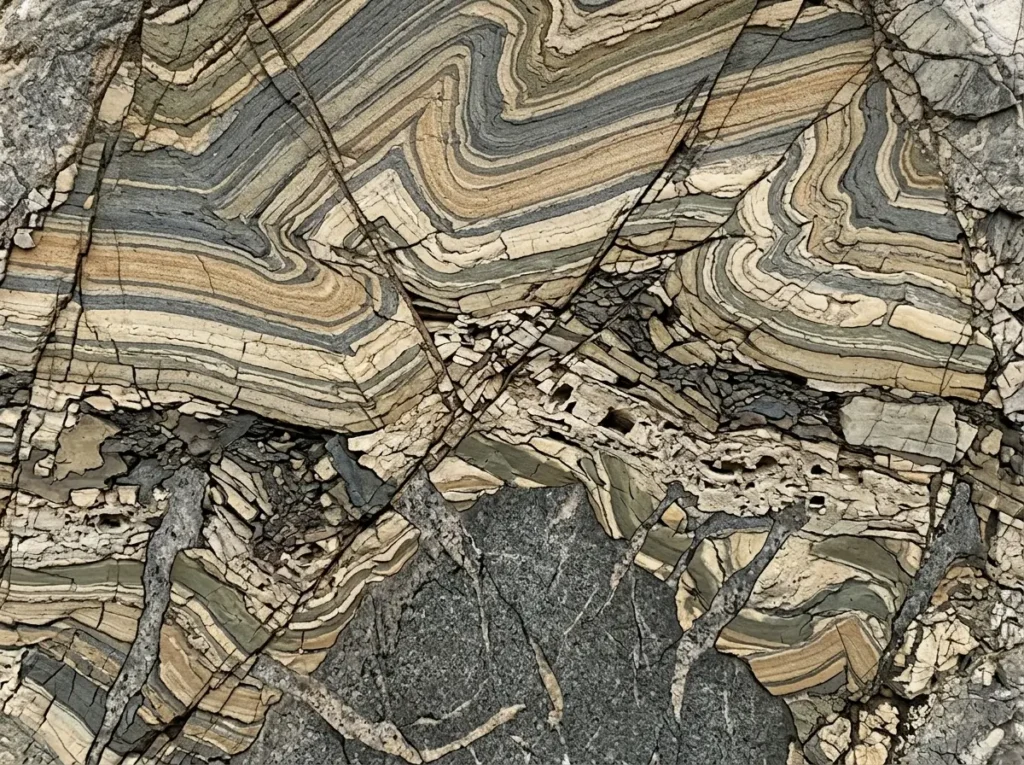
Hard rock drilling is challenging because the drilling tool must break highly resistant rock while maintaining efficient energy transfer, rotation, and flushing. However, rock hardness alone does not determine drilling performance. Abrasiveness, rock structure, fracturing, hole diameter, drilling depth, and drilling method all influence how a rock drill bit performs in the field.
Understanding these factors is the first step toward selecting the right rock drill bits for hard rock applications.
High Rock Hardness Increases Cutting Resistance
Hard formations such as granite, quartzite, basalt, and other strong crystalline rocks require more energy to fracture and penetrate. When the rock offers high resistance to crushing and breaking, penetration can slow down, and the load on the drill bit, rods, and drilling system increases.
For this reason, hard-rock drilling generally requires a bit with:
- High-strength tungsten carbide buttons or cutting elements
- A suitable button profile for the formation
- Strong bit-body construction
- Good resistance to impact and fatigue
- Effective transfer of impact energy into the rock
A bit designed for softer formations may penetrate poorly or suffer accelerated damage when used continuously in hard rock.
Abrasiveness Can Wear the Bit Faster
Hardness and abrasiveness are not the same property.
A rock can be extremely hard, highly abrasive, or both. Abrasive formations can rapidly wear the carbide buttons, gauge area, and cutting structure of a rock drill bit even when the bit still appears structurally intact.
This is particularly important for buyers comparing drill bits by price alone. A lower-cost bit may not provide the lowest drilling cost if it has a shorter service life.
For abrasive hard rock, bit selection should therefore consider:
- Carbide grade and button strength
- Button exposure and shape
- Gauge button protection
- Bit-face design
- Expected drilling meters per bit
The objective is not simply to buy the hardest-wearing bit, but to achieve a suitable balance between penetration rate, bit life, and cost per meter.
Fractured Rock Creates Different Drilling Problems
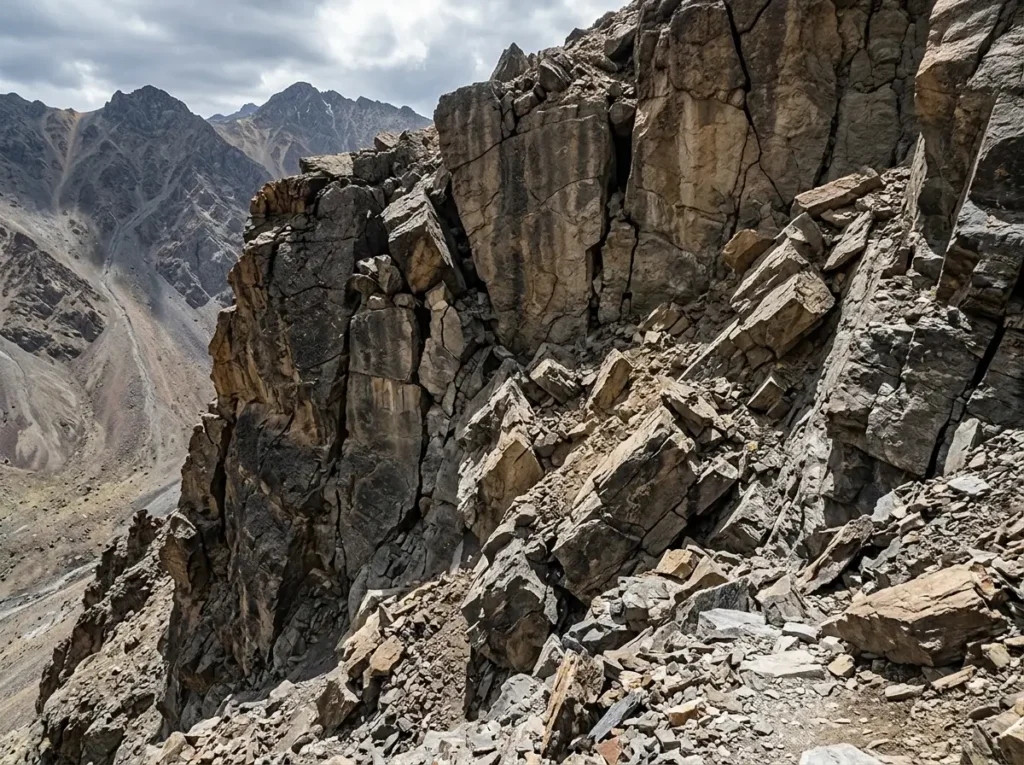
Hard rock is not always massive and uniform. Fractures, joints, cracks, and broken formations can change drilling conditions significantly.
In fractured rock, excessive impact or an unsuitable bit design can contribute to button damage, bit-face wear, hole deviation, or poor drilling stability. A more suitable bit design may be required to maintain stable contact with the rock and improve flushing.
This is why the same rock drill bit may perform differently at different sites, even when the reported rock hardness is similar.
| Rock Condition | Main Drilling Challenge | Bit Priority |
|---|---|---|
| Very hard rock | Low penetration | Impact resistance |
| Highly abrasive rock | Fast gauge/button wear | Wear resistance |
| Fractured rock | Button breakage | Toughness |
| Deep holes | Energy loss | DTH / suitable bit |
| Variable formation | Changing wear pattern | Balanced bit design |
Drilling Method Changes Bit Selection
The term rock drill bit covers different drilling systems, and the correct bit depends heavily on the drilling method.
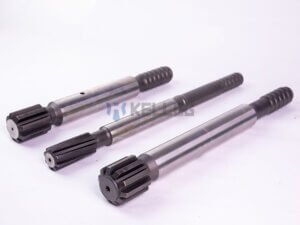
For Top Hammer drilling, impact energy is transferred from the rock drill through the shank adapter and drill rod to the bit. This makes bit-to-rod compatibility, button design, bit diameter, and impact conditions important selection factors.
For DTH drilling, the hammer operates close to the bottom of the hole, delivering impact energy directly to the DTH bit. This can be advantageous for deeper hard-rock drilling where maintaining effective energy transfer down the drill pipe becomes more difficult.
Therefore, there is no single “best rock drill bit” for every hard-rock application. The drilling method, hole diameter, depth, rock condition, and equipment must be considered together.
Deep Holes Increase the Importance of the Complete Drilling System
As hole depth increases, drilling performance depends on more than the bit itself. Energy transmission, rod condition, flushing, rotation, feed force, and hole cleaning can all affect penetration.
A high-quality rock drill bit cannot compensate for an incorrectly matched drilling system.
For this reason, hard-rock bit selection should start with the complete application rather than the bit price or diameter alone.
Key Point: Hard rock drilling performance depends on the interaction between rock hardness, abrasiveness, rock structure, drilling method, bit design, and operating conditions. The right rock drill bit should be selected to match these factors rather than simply choosing the most aggressive or most expensive option.
What Are the Main Types of Rock Drill Bits?
Rock drill bits are designed for different drilling methods, rock conditions, hole diameters, and drilling depths. There is no single rock drill bit that performs best in every formation. The right choice depends on how the impact or cutting energy is delivered to the rock, as well as the hardness, abrasiveness, structure, and application requirements.
For hard rock drilling, the main categories include Top Hammer button bits, DTH button bits, tricone roller cone bits, diamond bits, and PDC bits. Each type has a different operating principle and is suited to specific drilling conditions.
Top Hammer Button Bits
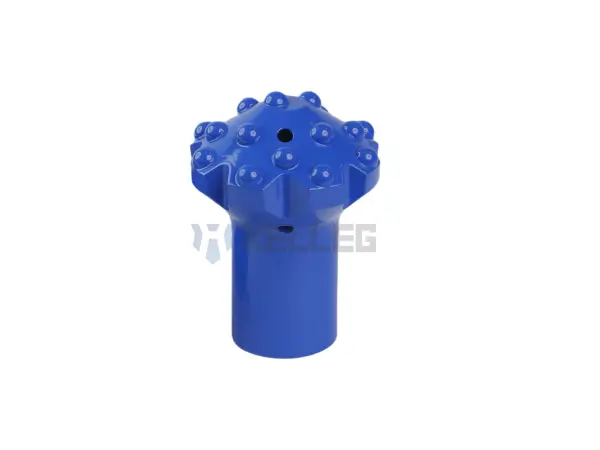
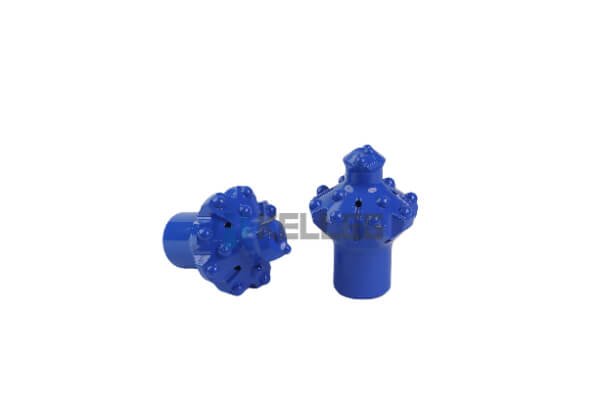
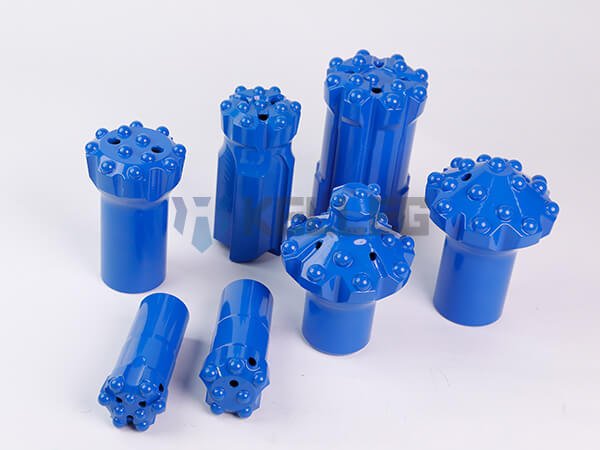
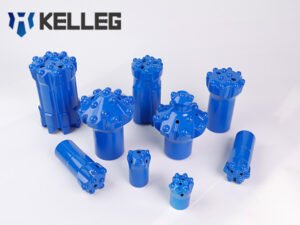
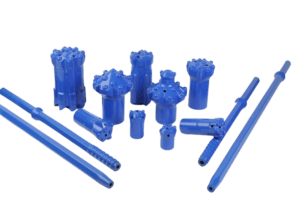
Top Hammer button bits are widely used for surface and underground drilling where the impact mechanism is located behind the drilling tools. Impact energy is transferred from the rock drill through the shank adapter and drill rod to the bit, where tungsten carbide buttons fracture the rock.
They are commonly used for relatively shallow to medium-depth holes and smaller to medium hole diameters in applications such as:
- Mining and quarrying
- Tunneling and underground construction
- Rock bolting and anchoring
- Bench drilling
- Road and infrastructure construction
For hard and abrasive rock, the selection of button shape, carbide grade, bit face design, gauge button protection, and bit diameter can have a significant effect on penetration rate and service life.
Top Hammer button bits are particularly suitable when the drilling system requires efficient drilling in smaller-diameter holes, and the hole depth remains within the practical operating range of the equipment.
Best suited for: shallow to medium-depth hard-rock drilling, especially where compact drilling equipment and relatively small hole diameters are required.
DTH Button Bits
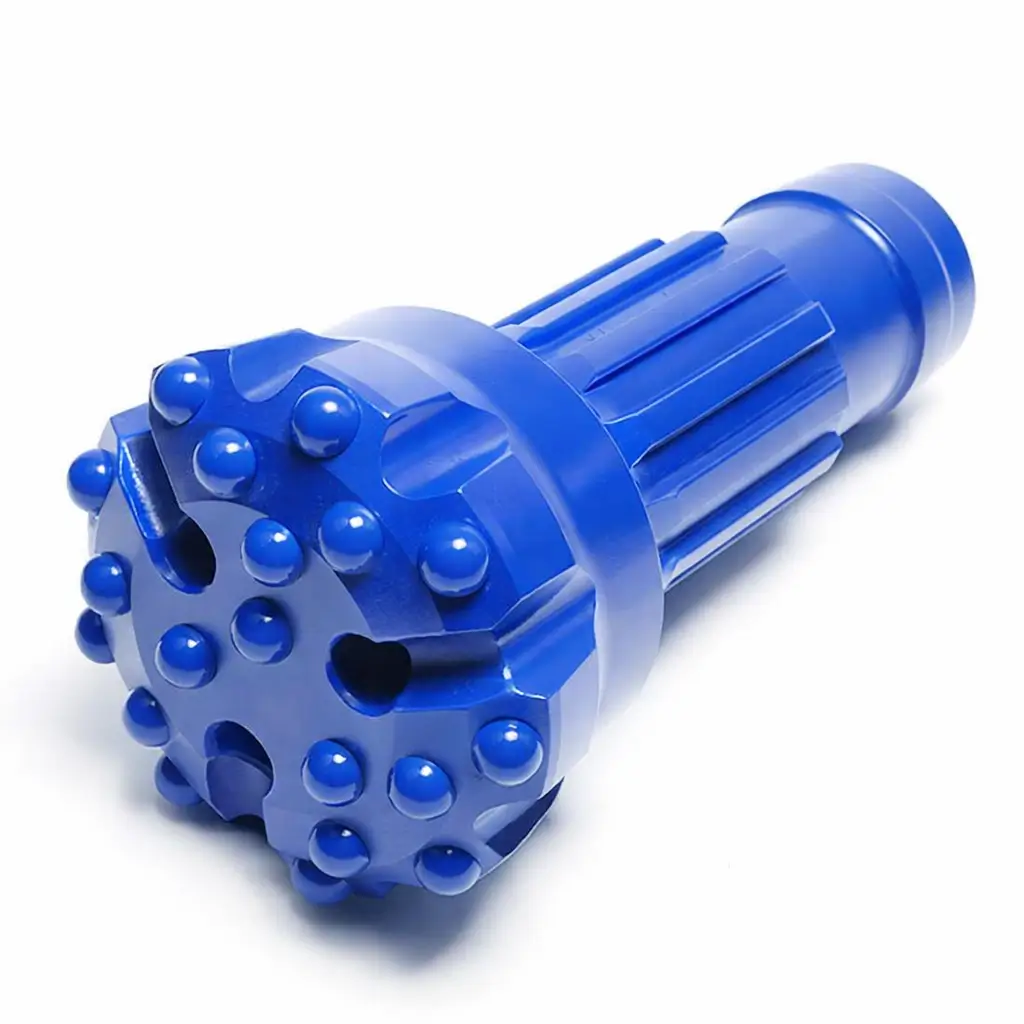
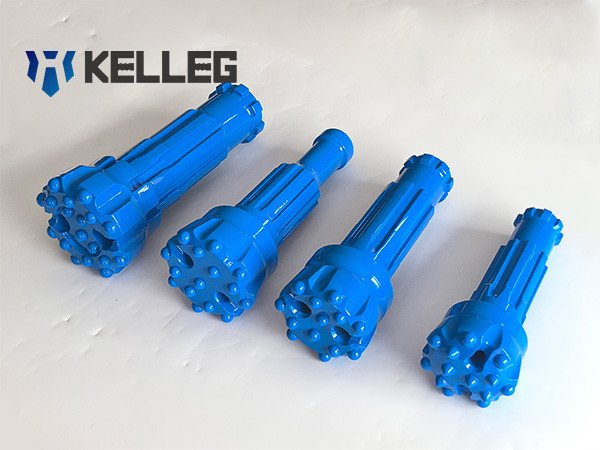
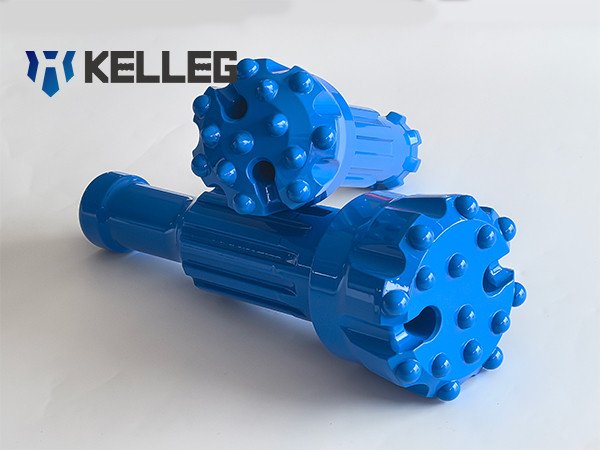
DTH (Down-the-Hole) button bits are used with a DTH hammer positioned directly behind the bit at the bottom of the hole. Unlike top-hammer drilling, the impact energy is generated close to the drilling face, which helps maintain effective impact energy as hole depth increases.
DTH button bits are widely used for:
- Deep-hole drilling
- Mining and quarrying
- Water well drilling
- Foundation drilling
- Construction drilling
- Blasting holes in hard rock
DTH bits are available in different shank configurations, including commonly used types such as DHD, QL, COP, CIR, SD, Mission, and other hammer platforms. The bit must match the DTH hammer, shank configuration, hole diameter, and operating pressure.
For hard and abrasive formations, button configuration and face design should be selected according to the formation rather than simply choosing the most aggressive design.
Best suited for: deeper hard-rock drilling where maintaining consistent bottom-hole impact performance is important.
Cross Bits and Chisel Bits

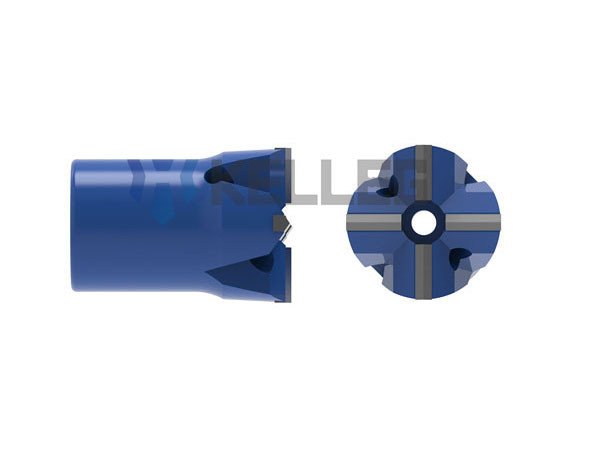
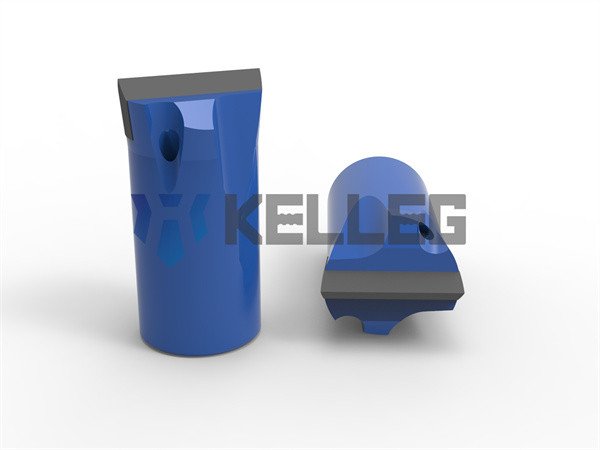
Cross bits and chisel bits are traditional impact drilling tools commonly associated with tapered drilling and certain percussion drilling applications.
A cross bit has cutting edges arranged in a cross pattern, while a chisel bit uses a relatively simple cutting edge. Their designs can provide good rock penetration and are often used in applications where drilling conditions, equipment, or hole sizes favor a simple impact bit design.
Typical applications include:
- Small-diameter rock drilling
- Construction and civil engineering
- Secondary breaking
- Quarrying
- Tunneling and anchoring applications
Their performance depends strongly on the drilling equipment, taper or connection system, rock structure, and operating parameters.
Best suited for: specific small-hole and percussion drilling applications where a tapered, cross, or chisel bit is used.
Tricone Roller Cone Bits

Tricone bits use three rotating cones equipped with cutting structures that crush, chip, and break the formation as the bit rotates.
They are primarily associated with rotary drilling rather than Top Hammer or DTH percussion drilling. Depending on the cutter design and formation, tricone bits can be used across a range of formations from relatively soft rock to hard formations.
Important selection factors include:
- Formation hardness and abrasiveness
- Tooth or insert configuration
- Bit diameter
- Drilling depth
- Rotary speed
- Weight on bit
- Flushing conditions
For hard rock, insert-type tricone bits with suitable carbide cutting structures may be considered where rotary drilling is the selected method.
Best suited for: rotary drilling applications where roller-cone cutting is appropriate for the formation and drilling system.
Diamond Drill Bits
Diamond drill bits use natural or synthetic diamond as the cutting material. Instead of relying primarily on impact buttons, diamond tools remove or grind the formation through abrasive cutting.
They are particularly important in core drilling, geological exploration, and precision drilling, where obtaining a representative rock core is more important than simply achieving the highest possible penetration rate.
Diamond bits are commonly used for:
- Mineral exploration
- Geological investigation
- Core drilling
- Geotechnical investigation
- Precision drilling in hard formations
The appropriate diamond type, matrix, bit profile, and specification depend heavily on the formation and drilling conditions.
Best suited for: exploration and core-drilling applications requiring controlled cutting and rock-core recovery.
PDC Bits

PDC (Polycrystalline Diamond Compact) bits use fixed diamond cutters mounted on the bit face. The cutters shear the formation as the bit rotates, making PDC technology particularly effective in formations where shearing is more efficient than crushing.
PDC bits are widely associated with oil and gas, geothermal, and other rotary drilling applications. Their performance depends strongly on formation characteristics, cutter design, hydraulic conditions, and drilling parameters.
Although PDC technology can provide high penetration rates in suitable formations, it is not automatically the best choice simply because the rock is hard.
Best suited for: rotary drilling applications where formation characteristics allow efficient shearing with fixed diamond cutters.
Rock Drill Bit Types at a Glance
| Rock Drill Bit Type | Drilling Method | Typical Applications | Hard-Rock Suitability |
|---|---|---|---|
| Top Hammer Button Bit | Percussion / Top Hammer drilling | Mining, quarrying, tunneling, anchoring | Excellent for suitable shallow to medium-depth applications |
| DTH Button Bit | Percussion / DTH drilling | Mining, quarrying, water wells, foundations | Excellent for many deep hard-rock applications |
| Cross Bit | Percussion / Tapered drilling | Small-hole drilling, construction, quarrying | Suitable for specific formations and equipment |
| Chisel Bit | Percussion / Tapered drilling | Small-hole and construction drilling | Suitable for specific applications |
| Tricone Bit | Rotary drilling | Mining, construction, oil & gas, drilling | Suitable when rotary roller-cone drilling is appropriate |
| Diamond Bit | Rotary / Core Drilling | Exploration, geotechnical, core drilling | Excellent for hard formations in suitable applications |
| PDC Bit | Rotary drilling | Oil & gas, geothermal, rotary drilling | Formation-dependent; highly effective in suitable formations |
How to Choose Between These Rock Drill Bit Types
The most appropriate rock drill bit should be selected based on the drilling system first, followed by the rock and application.
A practical selection sequence is:
Drilling method → Hole diameter → Hole depth → Rock hardness → Rock abrasiveness → Rock structure → Bit design → Equipment compatibility → Expected bit life and penetration rate
For example, a buyer drilling a relatively small-diameter hole in hard rock with a Top Hammer rig will normally start by evaluating Top Hammer button bits, rather than comparing them directly with PDC or diamond bits.
Similarly, a deep hard-rock application using a DTH hammer should begin with the appropriate DTH bit and matching shank type.
The objective is not to identify the most expensive or most aggressive bit. It is to select the bit that provides the best balance of penetration rate, service life, drilling stability, and cost per meter for the actual application.
Key Point: Rock drill bits should be selected according to the complete drilling system, not rock hardness alone. Top Hammer and DTH button bits are common choices for percussion hard-rock drilling, while tricone, diamond, and PDC bits serve different rotary drilling requirements.
Which Rock Drill Bit Is Best for Hard Rock?
There is no single best rock drill bit for hard rock. The right bit depends on the drilling method, hole diameter, drilling depth, rock hardness, abrasiveness, rock structure, and equipment configuration.
For most hard-rock applications, the selection usually starts with the drilling method:
- Top Hammer drilling: Top Hammer button bits are commonly used for smaller to medium hole diameters and shallow to medium-depth drilling.
- DTH drilling: DTH button bits are often preferred for deeper hard-rock holes because the hammer delivers impact energy directly at the bottom of the hole.
- Rotary drilling: Tricone, PDC, or diamond bits may be appropriate depending on the formation and drilling objective.
The best rock drill bit is therefore not necessarily the most aggressive, most expensive, or longest-lasting bit. It is the bit that provides the right balance of penetration rate, service life, drilling stability, and cost per meter for the actual application.
Top Hammer Drilling vs. DTH Drilling for Hard Rock
The first major decision is whether the application uses Top Hammer drilling or DTH drilling.
| Factor | Top Hammer Button Bit | DTH Button Bit |
|---|---|---|
| Impact mechanism | Rock drill is located above the drilling tools | Hammer operates at the bottom of the hole |
| Typical application | Shallow to medium-depth drilling | Medium to deep-hole drilling |
| Hole diameter | Generally smaller to medium diameters | Wide range depending on hammer and bit |
| Hard-rock performance | Excellent when properly matched | Excellent, especially for deeper holes |
| Energy transfer | Through shank adapter and drill rods | Directly through the down-the-hole hammer |
| Typical applications | Mining, quarrying, tunneling, anchoring | Mining, quarrying, water wells, foundations, blasting |
| Main selection factors | Bit, rod, shank, thread, impact parameters | Hammer, bit shank, air pressure, diameter |
For shallow or relatively small-diameter hard-rock drilling, a properly selected Top Hammer button bit can provide high penetration and efficient drilling.
For deeper hard-rock drilling, DTH drilling can offer an advantage because the hammer operates close to the bottom of the hole. This reduces the effect of energy losses through a long drill string and helps maintain effective impact performance as depth increases.
However, depth alone should not determine the choice. Rig capability, hole diameter, air supply, rock conditions, drilling parameters, and overall operating cost should also be evaluated.
Which Rock Drill Bit Is Best for Granite?
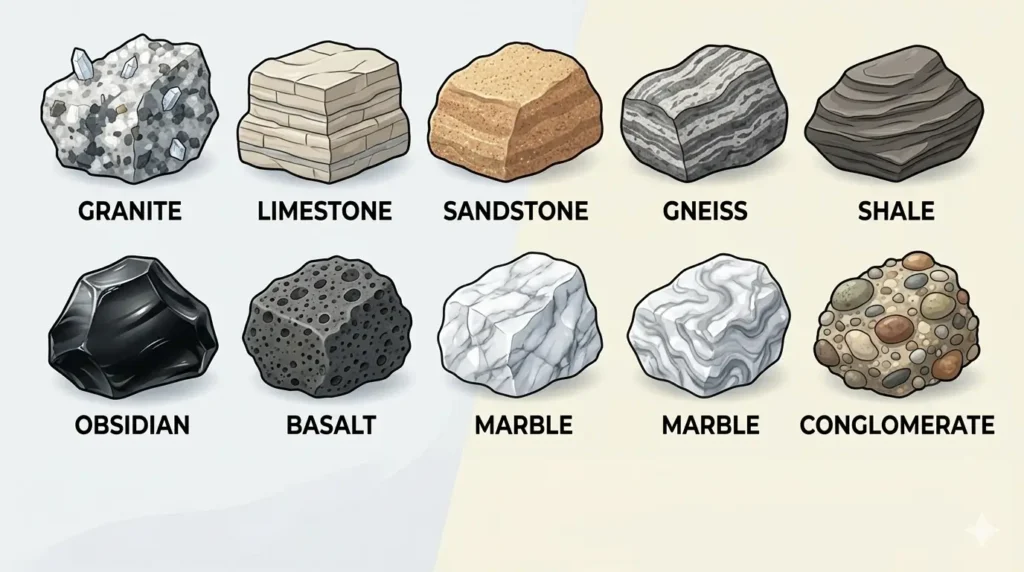
Granite is a useful example because it is generally strong and can also be abrasive, but granite conditions vary significantly from one site to another.
For Top Hammer or DTH drilling in granite, carbide button bits are commonly considered because they are designed to withstand repeated impact while fracturing the rock.
The appropriate bit configuration depends on:
- Granite hardness and abrasiveness
- Degree of fracturing
- Hole diameter
- Drilling depth
- Top Hammer or DTH drilling
- Required penetration rate
- Expected bit life
- Flushing conditions
For highly abrasive granite, a more wear-resistant button configuration may provide better overall performance than an extremely aggressive design.
For fractured granite, drilling stability and button durability may become more important than simply maximizing initial penetration.
This illustrates an important point: “granite” is not enough information to select a rock drill bit. The drilling method and actual field conditions still need to be considered.
How Should Bit Type Be Matched to Rock Conditions?
Rock hardness should be evaluated together with abrasiveness and structure.
| Rock Condition | Main Drilling Challenge | Bit Selection Priority |
|---|---|---|
| Hard and abrasive | Rapid carbide and gauge button wear | Wear resistance and durable carbide |
| Hard and massive | High resistance to rock breakage | Efficient impact transfer and suitable button profile |
| Hard and fractured | Unstable drilling and button damage | Drilling stability and robust bit design |
| Medium-hard and fractured | Irregular contact and flushing problems | Balanced penetration and durability |
| Variable formations | Changing penetration and wear | Versatile bit design and application-specific selection |
For hard, abrasive formations, the objective is usually to control wear without sacrificing too much penetration.
For hard but relatively non-abrasive formations, a more aggressive button profile may provide higher penetration if the drilling system can support it.
For fractured formations, excessive aggressiveness may not always produce better results. Bit stability, button strength, gauge button protection, and flushing can become more important.
Does a More Aggressive Bit Drill Hard Rock Better?
Not necessarily.
An aggressive rock drill bit may increase penetration in suitable formations, but greater aggressiveness can also increase stress on the carbide buttons and bit body.
The ideal balance depends on the formation and drilling parameters.
For example:
More aggressive design → potentially higher penetration → potentially higher button stress and wear
More wear-resistant design → potentially longer service life → potentially lower penetration in some formations
The correct objective is not to maximize one parameter in isolation. A commercial drilling operation should evaluate penetration rate + bit life + drilling stability + cost per meter together.
This is particularly important when comparing two suppliers. A bit with a lower purchase price does not necessarily provide a lower drilling cost.
How Button Shape Affects Hard-Rock Performance
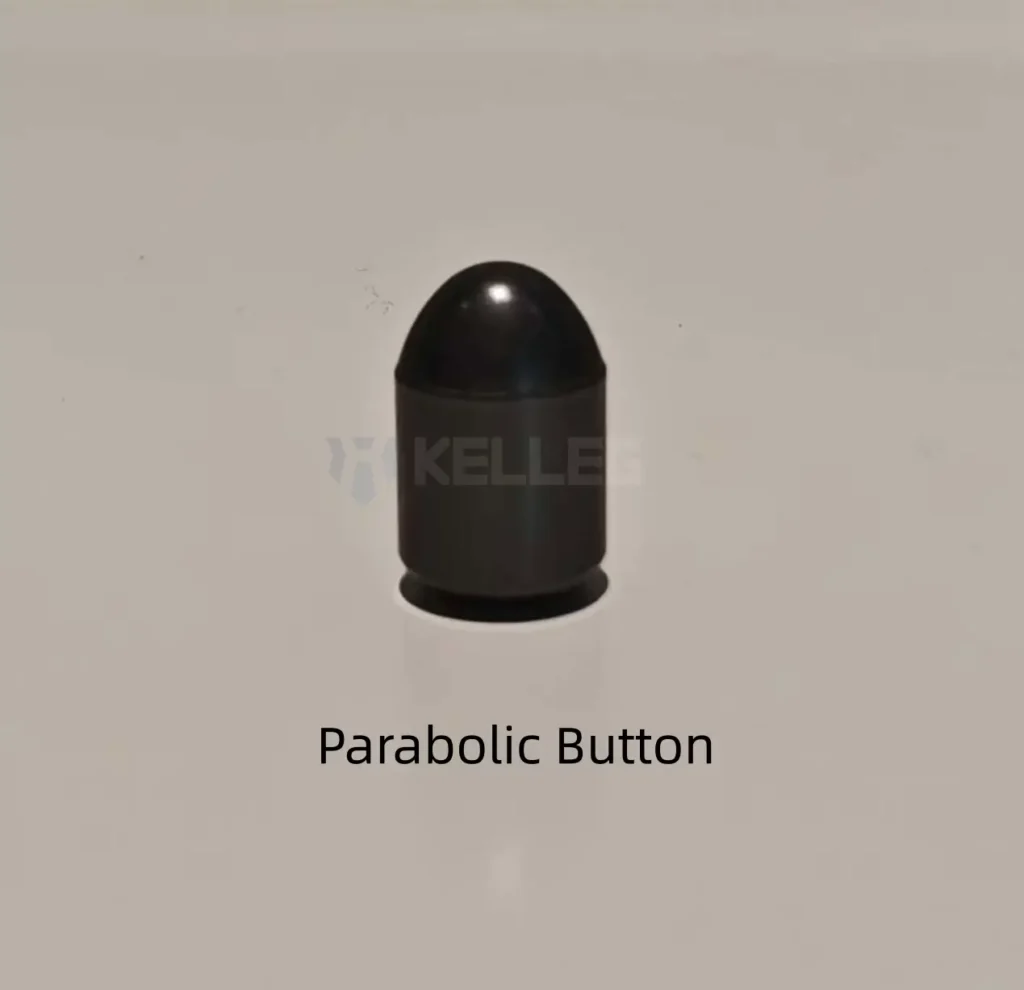
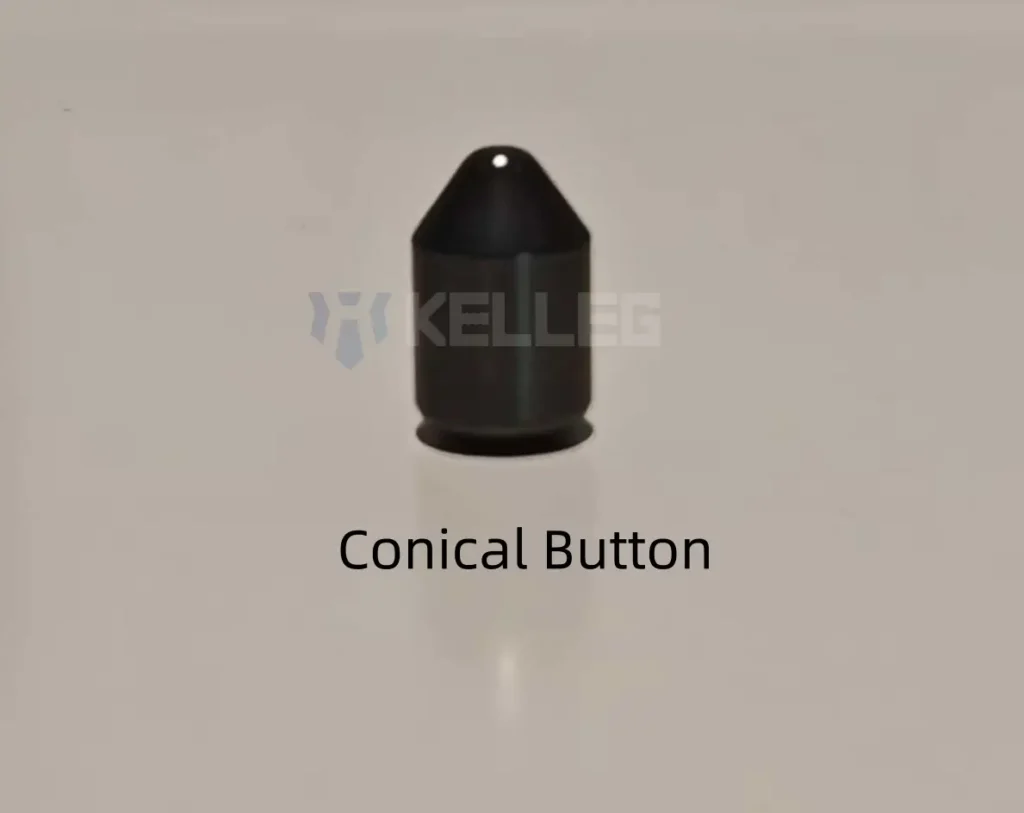
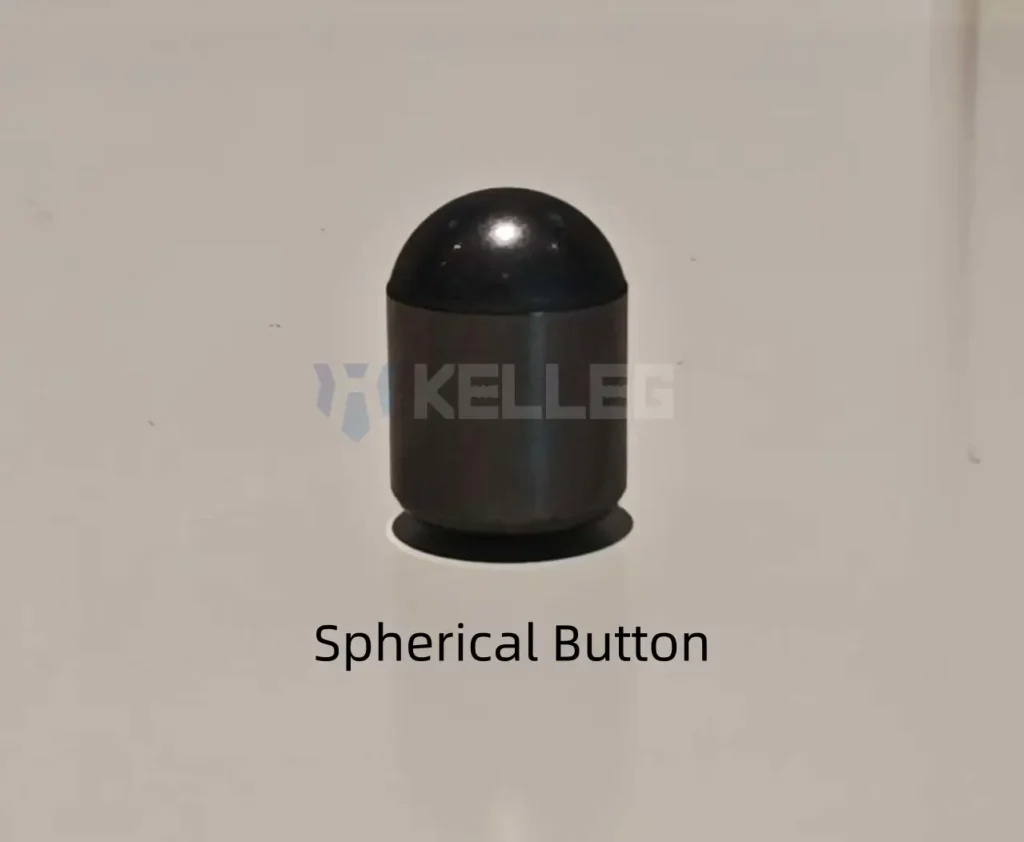
For button bits, button geometry is another important selection factor.
Common button profiles include:
- Spherical buttons: generally prioritize strength and wear resistance and are widely used in hard and abrasive rock.
- Ballistic buttons: provide a more aggressive cutting profile and can offer higher penetration in suitable formations.
- Conical buttons: provide an aggressive cutting action but may require more careful application matching.
- Parabolic buttons: provide a balance between penetration and durability in appropriate formations.
The optimal button profile depends on the rock formation and drilling objective.
For a detailed comparison of spherical, ballistic, conical, and parabolic button designs, see our Button Drill Bits Guide.
What About Tricone, PDC, and Diamond Bits?
Not every hard-rock application should use a button bit.
If the drilling method is rotary rather than percussion, different rock drill bit technologies may be more appropriate.
- Tricone bits use rotating cones to crush and break the formation and are used in rotary drilling.
- PDC bits use fixed diamond cutters to shear the formation and are commonly selected for suitable rotary drilling formations.
- Diamond bits are widely used in core drilling and exploration where controlled cutting and rock recovery are important.
Therefore, comparing a DTH button bit directly with a PDC or diamond bit without considering the drilling method can lead to an incorrect selection.
The question should not simply be:
“Which bit is the strongest?”
A better question is:
“Which bit design is best matched to my drilling method, formation, hole size, depth, and equipment?”
The Best Rock Drill Bit Depends on the Complete Drilling System
A rock drill bit does not work independently. Its performance is affected by the complete drilling system.
Before selecting a bit, check:
- Drilling method — Top Hammer, DTH percussion, or rotary drilling
- Hole diameter — required finished hole size
- Hole depth — total drilling depth
- Rock type — granite, basalt, limestone, quartzite, etc.
- Rock hardness — resistance to crushing and fracturing
- Rock abrasiveness — expected wear on carbide and gauge button
- Rock structure — massive, fractured, layered, or variable
- Bit design — face configuration and button profile
- Connection type — thread, taper, shank, or DTH configuration
- Operating parameters — impact energy, rotation, feed force, air pressure, and flushing
- Expected bit life — meters drilled per bit
- Total drilling cost — cost per meter rather than purchase price alone
A high-quality bit cannot fully compensate for an incorrectly matched rod, shank adapter, hammer, drilling parameter, or flushing system.
Selection Rule: Choose the drilling system first, match the bit to the equipment and hole requirements second, and optimize the button design for the actual rock condition third.
Quick Selection Guide
| Your Drilling Requirement | Recommended Starting Point |
|---|---|
| Small-diameter, shallow hard-rock holes | Top Hammer Button Bit |
| Medium-depth hard-rock drilling | Top Hammer or DTH Button Bit, depending on equipment |
| Deep hard-rock holes | DTH Button Bit |
| Small percussion holes | Cross or Chisel Bit |
| Rotary drilling in suitable formations | Tricone or PDC Bit |
| Geological core drilling | Diamond Bit |
| Highly abrasive hard rock | Prioritize wear resistance, carbide durability, and gauge button protection |
| Fractured hard rock | Prioritize bit stability, button strength, and suitable face design |
Bottom Line
For hard-rock drilling, Top Hammer and DTH button bits are often the most relevant choices for percussion drilling, but neither is universally “the best.”
Top Hammer button bits are well suited to many shallow and medium-depth applications, while DTH button bits are particularly useful for deeper holes where bottom-hole impact delivery is important. Cross and chisel bits serve specific percussion applications, while tricone, PDC, and diamond bits are designed for different rotary drilling requirements.
The final choice should be based on the actual combination of drilling method, hole diameter, depth, rock hardness, abrasiveness, rock structure, equipment compatibility, and cost per meter.
How Rock Hardness and Abrasiveness Affect Bit Selection
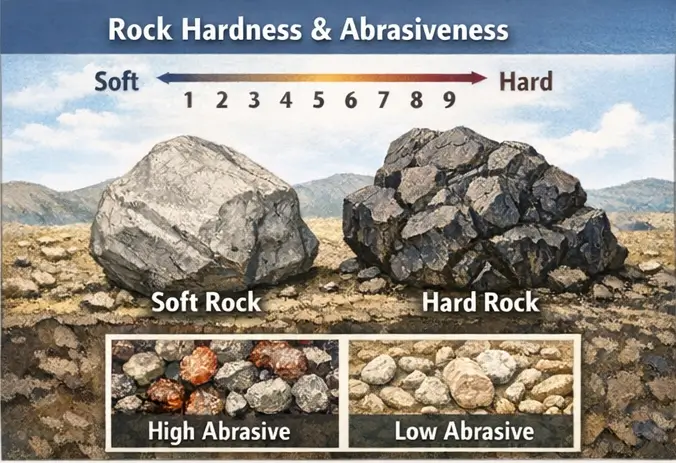
Rock hardness and abrasiveness are two of the most important factors when selecting rock drill bits for hard-rock applications. However, they describe different properties and should not be treated as the same thing.
Hardness describes how strongly the rock resists indentation, crushing, or fracture, while abrasiveness describes how quickly the rock can wear the drilling tool.
A hard rock is not necessarily highly abrasive, and a moderately hard formation can sometimes cause significant bit wear if it contains abrasive minerals such as quartz.
For this reason, selecting a rock drill bit based only on a rock hardness rating can lead to poor penetration, premature bit wear, or unnecessarily high drilling costs.
Hardness and Abrasiveness Require Different Bit Priorities
The relationship can be simplified as follows:
| Rock Condition | Main Challenge | Bit Selection Priority |
|---|---|---|
| Hard + highly abrasive | Slow penetration and rapid wear | Durable carbide, wear resistance, gauge button protection |
| Hard + low/moderate abrasiveness | High resistance to rock breakage | Efficient impact transfer and suitable button profile |
| Medium-hard + highly abrasive | Fast button and gauge button wear | Wear resistance without excessive loss of penetration |
| Medium-hard + low abrasiveness | Penetration can be prioritized | Suitable aggressive button profile and efficient cutting |
| Hard + fractured | Impact stress and unstable contact | Button strength, bit stability, suitable face design |
| Variable formation | Changing penetration and wear | Balanced, versatile bit design |
The objective is not simply to choose the hardest or most wear-resistant bit. The best selection balances penetration rate, bit life, drilling stability, and cost per meter.
How Rock Hardness Affects Bit Selection
As rock hardness increases, more energy is generally required to fracture the formation.
In hard formations, an unsuitable bit may show:
- Low penetration rate
- High impact loading
- Premature button damage
- Increased bit-face wear
- Reduced drilling efficiency
- Higher energy consumption per meter
For Top Hammer and DTH button bits, the carbide buttons must withstand repeated impact while maintaining an effective cutting profile.
When drilling hard rock, buyers should therefore evaluate:
- Carbide button strength
- Button profile
- Button arrangement
- Bit-face design
- Bit-body strength
- Gauge button protection
- Compatibility with the hammer and drilling parameters
A highly aggressive button design may provide faster initial penetration in some formations, but it can also experience higher stress and wear if the formation or operating conditions are unsuitable.
How Rock Abrasiveness Affects Bit Life
Abrasiveness primarily affects how quickly the drilling tool wears, rather than simply how difficult the rock is to fracture.
Highly abrasive formations can wear:
- Carbide buttons
- Bit-face cutting structures
- Gauge buttons
- Bit body surfaces
- Other components exposed to continuous rock contact
Gauge button wear deserves particular attention because excessive wear can reduce hole diameter and affect drilling accuracy or tool performance.
For abrasive hard rock, a bit with stronger wear resistance may produce a better overall result even if its initial penetration rate is not the highest available.
This is why meters drilled per bit should be evaluated together with penetration rate.
For example:
Bit A: $50 and drills 300 m
Bit B: $80 and drills 700 m
The purchase price of Bit B is higher, but the illustrative drilling cost is:
- Bit A: $50 ÷ 300 m = $0.167/m
- Bit B: $80 ÷ 700 m = $0.114/m
The actual performance will vary by formation, drilling equipment, and operating conditions, but the example demonstrates why cost per meter is often more useful than unit price when comparing rock drill bits.
Why Quartz-Rich Rock Can Cause Rapid Bit Wear
Some formations contain highly abrasive minerals, particularly quartz.
Quartz-rich rock can create severe wear on carbide buttons and gauge button areas even when the rock is not the hardest formation being drilled.
This creates an important distinction:
A rock can be easier to penetrate than extremely hard granite but still produce faster bit wear because of its abrasive mineral content.
When drilling abrasive formations, selection should therefore emphasize carbide durability, button geometry, gauge button protection, and expected service life.
Hardness vs. Abrasiveness: A Practical Example
Consider two drilling sites:
Site A: Very hard but relatively low-abrasive rock
Site B: Moderately hard but highly abrasive rock
At Site A, the primary challenge may be breaking the rock efficiently. A suitable bit may therefore require an effective impact-transfer design and a button profile that provides sufficient penetration.
At Site B, the rock may penetrate more easily, but the carbide buttons could wear much faster. A more wear-resistant bit design may therefore produce a lower overall cost per meter.
This means that selecting the same rock drill bit for both sites simply because both are classified as “hard rock” may not produce the best result.
How Rock Structure Changes the Selection
Hardness and abrasiveness are not the only rock properties that matter.
The formation may also be:
- Massive and homogeneous
- Highly fractured
- Jointed
- Layered
- Weathered
- Variable between drilling sections
In massive hard rock, efficient penetration and wear resistance may be the main priorities.
In fractured hard rock, excessive aggressiveness can increase the risk of button damage or unstable drilling. In these conditions, button strength, gauge button protection, bit stability, and suitable face design may become more important.
Therefore, a complete rock description should include both the physical properties of the rock and its structural condition.
How Hardness and Abrasiveness Affect Button Profile Selection
Button profile is another factor that should be matched to the formation.
In general:
- Spherical buttons are often selected when strength and wear resistance are important, particularly in hard and abrasive formations.
- Ballistic buttons provide a more aggressive cutting action and can be suitable when higher penetration is required in appropriate formations.
- Conical buttons offer an aggressive profile for specific drilling conditions but require careful application matching.
- Parabolic buttons can provide a balance between penetration and durability in suitable formations.
The ideal profile depends on the combination of rock hardness, abrasiveness, drilling method, impact energy, rotation, feed force, and flushing conditions.
For a detailed explanation of button geometry, see our Button Drill Bits Guide.
Do Not Select a Rock Drill Bit by Hardness Alone
A common purchasing mistake is to provide a supplier with only the rock name or hardness value and expect a precise bit recommendation.
For example:
“We are drilling granite. Which bit should we buy?”
This information is useful, but it is not enough.
A supplier or drilling engineer should ideally also know:
- Drilling method
- Hole diameter
- Hole depth
- Rock hardness
- Rock abrasiveness
- Rock structure
- Drill rig or rock drill model
- Hammer model, if using DTH
- Drill rod thread or shank configuration
- Working air pressure for DTH drilling
- Current penetration rate
- Current bit life
- Existing drilling problems
The more complete the application information, the more accurately the bit design can be matched to the actual drilling conditions.
Use Field Performance to Confirm the Selection
Laboratory rock classifications are useful for initial selection, but actual drilling performance should ultimately be evaluated in the field.
Track at least these four indicators:
Penetration rate
How quickly the bit advances through the formation.
Bit life
How many meters can be drilled before the bit needs to be replaced or serviced.
Drilling stability
Whether the bit maintains stable penetration without excessive vibration, deviation, or button damage.
Cost per meter
The actual drilling-tool cost based on both purchase price and service life.
If a bit provides high penetration but wears extremely quickly, it may not be the most economical option.
Likewise, a highly wear-resistant bit may not be the best choice if its penetration rate is significantly lower than a better-balanced design.
The goal is not maximum penetration or maximum bit life alone. The goal is the best overall drilling performance at the lowest practical cost per meter.
Practical Selection Rule
When selecting rock drill bits for hard rock, use this sequence:
1. Identify the drilling method
Top Hammer, DTH percussion drilling, or rotary drilling.
2. Assess rock hardness
Determine how difficult the formation is to fracture.
3. Assess rock abrasiveness
Determine how aggressively the formation will wear carbide and gauge surfaces.
4. Identify rock structure
Check whether the formation is massive, fractured, layered, or variable.
5. Select the appropriate bit design
Match face design, button profile, carbide configuration, and gauge button protection to the formation.
6. Check equipment compatibility
Confirm bit diameter, thread, shank, hammer, rod, and drilling parameters.
7. Compare field performance
Evaluate penetration, bit life, drilling stability, and cost per meter.
This approach provides a more reliable basis for selecting rock drill bits than choosing a bit based on rock hardness or purchase price alone.
Key Takeaway: Rock hardness mainly affects how much energy is required to break the formation, while abrasiveness strongly influences tool wear. For hard-rock drilling, both factors must be considered together with rock structure, drilling method, bit design, and equipment compatibility.
How to Choose the Right Button Shape for Hard Rock
Choosing the right button shape is an important part of rock drill bit selection, especially when drilling hard or abrasive formations. The button profile affects how the carbide button penetrates the rock, how impact energy is transferred, how efficiently the rock fractures, and how quickly the buttons wear.
However, there is no universally “best” button shape for hard rock.
A highly aggressive profile may increase initial penetration, but it can also experience faster wear or higher stress in certain formations. A more robust profile may provide longer bit life and better stability, but penetration may be lower.
For this reason, button shape should be selected together with rock hardness, abrasiveness, rock structure, drilling method, impact energy, flushing conditions, and the required balance between penetration rate and bit life.
Button Shape Comparison for Hard Rock
| Button Shape | Main Advantage | Typical Formation | When to Prioritize | Main Trade-Off |
|---|---|---|---|---|
| Spherical | High strength and wear resistance | Hard, abrasive rock | Bit life, durability, and drilling stability | Generally less aggressive |
| Ballistic | Higher penetration potential | Medium-hard to hard, suitable formations | Penetration rate | Can wear faster in highly abrasive rock |
| Conical | Aggressive rock penetration | Selected formations requiring high cutting action | Initial penetration and aggressive drilling | May be less durable under severe impact and abrasion |
| Parabolic | Balanced penetration and durability | Mixed or variable formations | Overall balance | May not provide the maximum performance at either extreme |
The actual performance of each profile also depends on carbide grade, button dimensions, bit-face design, button layout, gauge protection, drilling parameters, and the formation being drilled.
Spherical Buttons — When Durability Matters Most
Spherical buttons have a rounded working surface and are widely used where strength, wear resistance, and impact durability are important.
In hard and abrasive rock, the rounded profile helps distribute impact loading and can provide good resistance to carbide damage. This makes spherical buttons a common choice when the drilling priority is maintaining bit life and hole performance over a longer drilling cycle.
They can be particularly suitable for formations where aggressive button profiles would experience excessive wear or damage.
Consider spherical buttons when:
- The rock is hard and highly abrasive
- Bit wear is a major operating cost
- Button breakage has been a recurring problem
- Drilling stability is more important than maximum initial penetration
- Long service life is a priority
However, spherical buttons should not automatically be selected simply because the rock is hard. If the formation is hard but relatively low in abrasiveness and the drilling system can support a more aggressive profile, another button geometry may provide better penetration.
Practical rule:
If your main problem is rapid wear or button damage in hard abrasive rock, start by evaluating a more durable spherical button design rather than simply choosing a more aggressive profile.
Ballistic Buttons — When Penetration Is a Priority
Ballistic buttons have a more elongated profile designed to provide a more aggressive interaction with the rock.
Compared with a spherical profile, a ballistic button can offer higher penetration potential in formations where the rock can be efficiently fractured by the more aggressive geometry.
They may be suitable for medium-hard to hard formations, particularly where the drilling operation needs to improve penetration without moving to an extremely aggressive button design.
Consider ballistic buttons when:
- Penetration rate is currently too low
- The formation is hard but not extremely abrasive
- The existing bit has good durability but insufficient drilling speed
- The drilling system has adequate impact energy
- Faster drilling is more important than maximum bit life
The trade-off is that increased aggressiveness can also increase carbide loading and wear under severe conditions.
For example, switching from a durable spherical profile to a more aggressive ballistic profile may improve penetration in one formation but shorten bit life in a highly abrasive formation.
Therefore, the correct question is not:
“Is a ballistic button better than a spherical button?”
Instead, ask:
“Can the formation and drilling parameters support the additional aggressiveness without causing unacceptable wear?”
Conical Buttons — For Aggressive Rock Breaking
Conical buttons provide a relatively sharp working profile and are designed for aggressive penetration into suitable formations.
Their geometry can help concentrate the impact and cutting action on a smaller contact area, which can support fast rock breaking when drilling conditions are favorable.
However, aggressive button profiles are not necessarily the best option for extremely hard and abrasive rock.
Higher aggressiveness can increase the stress placed on the carbide and the surrounding bit material. If the formation is highly abrasive, fractured, or produces severe impact loading, a conical profile may wear or be damaged faster than a more robust design.
Consider conical buttons when:
- High penetration is the primary objective
- The formation is suitable for aggressive cutting
- Abrasiveness is not excessive
- The drilling system provides sufficient and stable impact energy
- Field testing indicates that the increased aggressiveness improves productivity
For severe hard-rock conditions, durability should be evaluated alongside penetration. A small increase in drilling speed may not be economically beneficial if it results in significantly shorter bit life.
Parabolic Buttons — A Balance Between Penetration and Wear
Parabolic buttons are designed to provide a balance between penetration capability and durability.
They can be useful when the formation is variable or when the drilling operation needs a compromise between an aggressive profile and a highly wear-resistant profile.
For projects where rock conditions change along the hole or from one drilling location to another, a balanced button geometry can sometimes provide more consistent overall performance than choosing an extreme profile.
Consider parabolic buttons when:
- Rock conditions vary across the project
- Both penetration and bit life are important
- The formation is moderately hard or mixed
- An aggressive profile causes excessive wear
- A more durable profile reduces penetration too much
A balanced profile does not mean it is automatically the best choice for every formation. The optimal design still depends on the complete drilling system and field performance.
Hard Rock Does Not Always Mean “Use the Most Durable Button”
One of the most common mistakes in button selection is treating rock hardness as the only decision factor.
Two formations can have similar hardness but produce very different drilling results because their abrasiveness, fracturing, mineral composition, and structure are different.
For example:
Formation A:
Very hard but relatively low in abrasiveness.
A more aggressive button profile may improve penetration without causing excessive wear.
Formation B:
Moderately hard but highly abrasive because of quartz-rich minerals.
A highly aggressive button may initially drill faster, but rapid carbide and gauge wear can increase the total drilling cost.
This is why button selection should consider at least four formation characteristics:
Hardness + Abrasiveness + Rock Structure + Variability
The button profile is then selected according to the required balance between penetration, durability, and drilling stability.
How to Choose Button Shape Based on Your Drilling Priority
A practical way to select a button profile is to start with the problem you are trying to solve.
If Bit Wear Is Too Fast
Prioritize:
- Button strength
- Wear resistance
- Gauge button protection
- Durable carbide
- Stable bit-face design
A spherical or other wear-resistant design may be worth evaluating.
If Penetration Is Too Slow
First check:
- Impact pressure and energy
- Feed force
- Rotation speed
- Flushing
- Bit condition
- Rock formation changes
If the drilling parameters and equipment are appropriate, a more aggressive button profile may then be considered.
Ballistic, conical, or other aggressive designs may provide higher penetration potential in suitable formations.
If Buttons Are Breaking
Do not immediately assume that the button shape is wrong.
Check:
- Excessive impact energy
- Incorrect feed force
- Poor bit-to-rock contact
- Fractured or unstable formation
- Incorrect rotation speed
- Bit-face design
- Carbide quality
- Manufacturing or brazing quality
In some cases, the problem is caused by drilling parameters or formation conditions rather than the button profile itself.
If Hole Diameter Is Decreasing
Inspect the gauge buttons and surrounding bit body.
Gauge wear can become particularly important in abrasive rock because excessive wear may reduce hole diameter and affect downstream drilling performance.
The solution may involve:
- More durable gauge button protection
- Different carbide configuration
- Improved bit-face design
- A different button profile
- Adjusted drilling parameters
Button Shape Selection for Top Hammer vs DTH Drilling
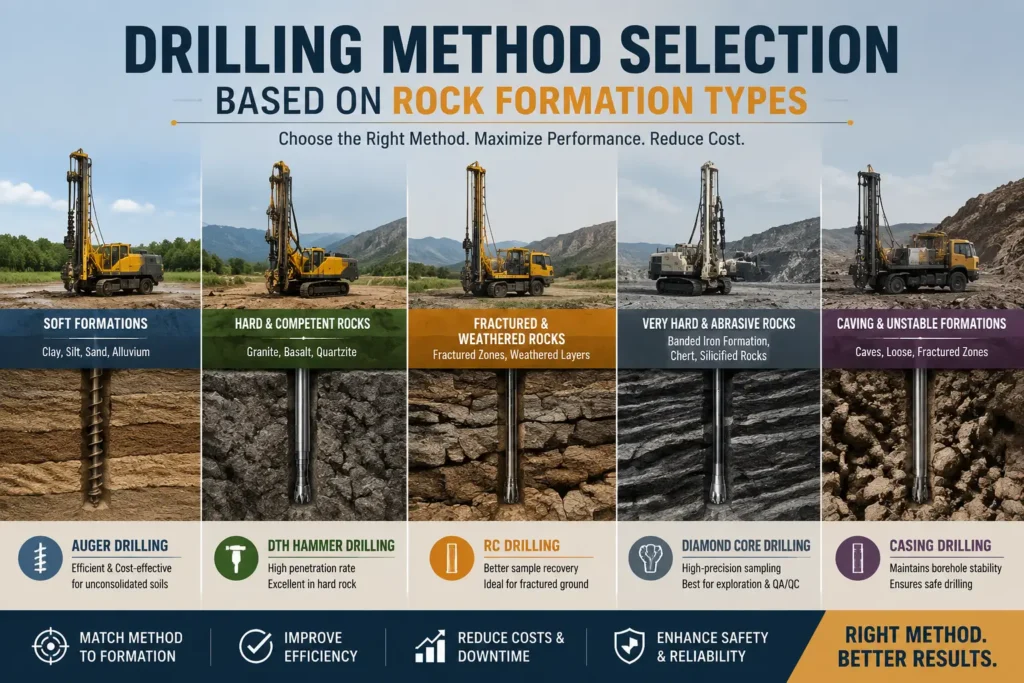
Button profile should also be considered in the context of the drilling method.
Top Hammer Drilling
In Top Hammer drilling, impact energy is transmitted through the shank adapter and drill rod before reaching the bit.
Button selection therefore needs to account for:
- Rock drill impact energy
- Drill rod and shank compatibility
- Hole diameter
- Drilling depth
- Rock hardness
- Abrasiveness
- Button profile
- Bit-face design
For shallow to medium-depth hard-rock drilling, the right balance between penetration and carbide durability is especially important because impact energy, rod condition, bit condition, and rock response all interact.
DTH Drilling
In DTH drilling, the hammer operates at the bottom of the hole, delivering impact energy directly near the bit.
Button selection should therefore be evaluated together with:
- DTH hammer model
- Bit shank configuration
- Hole diameter
- Air pressure
- Rock hardness
- Rock abrasiveness
- Flushing efficiency
- Required penetration rate
- Expected bit life
A button profile that performs well in a Top Hammer application should not automatically be transferred to a DTH application without considering the different impact mechanism and operating conditions.
A Simple Button Shape Selection Guide
For an initial selection, the following decision logic can be useful:
| Drilling Condition or Priority | Button Profile to Evaluate First |
|---|---|
| Very hard + highly abrasive rock | Spherical / wear-resistant design |
| Hard rock + high wear | Spherical |
| Medium-hard to hard rock + penetration priority | Ballistic |
| Suitable formation + aggressive penetration required | Conical |
| Mixed or variable formations | Parabolic/balanced design |
| Frequent button breakage | Robust profile + parameter check |
| Excessive gauge wear | Wear-resistant gauge button design |
| Slow penetration with low wear | Consider a more aggressive profile after parameter checks |
This table should be treated as a starting point, not a universal specification chart. Actual button geometry and carbide selection should be validated against the drilling equipment and field conditions.
Need Help Selecting the Right Button Profile?
Tell us your drilling conditions and current bit performance. Our team can help evaluate the appropriate button shape and bit design for your application.
Please provide:
- Drilling method: Top Hammer or DTH
- Hole diameter and depth
- Rock type and hardness
- Rock abrasiveness
- Drill rig and hammer/rock drill model
- Current bit type and button profile
- Current penetration rate and bit life
- Main drilling problem
Looking for a reliable rock drill bit supplier? Contact Kelleg for technical selection support and a quotation.
How to Match Rock Drill Bit Size, Thread, and Equipment
Selecting the correct rock drill bit size is only the first step. A bit must also match the drill rod, shank adapter, rock drill or DTH hammer, connection type, and drilling application.
A bit with the correct diameter but the wrong thread or connection cannot be used correctly. Even when the connection appears to fit, an incorrect combination can cause poor impact energy transfer, thread damage, excessive vibration, premature bit wear, or drilling instability.
For this reason, rock drill bit selection should be treated as a complete system-matching process, not simply a matter of choosing a hole diameter from a catalog.
A practical matching sequence is:
Drilling method → Hole diameter → Bit type → Thread/connection → Drill rod → Shank adapter or DTH hammer → Rock drill/rig → Operating parameters
Start With the Drilling Method
Before selecting a bit size or thread, identify the drilling method.
The two major percussion drilling methods covered by this article are Top Hammer drilling and DTH (Down-the-Hole) drilling.
The connection requirements are different because the impact mechanism is different.
| Factor | Top Hammer Drilling | DTH Drilling |
|---|---|---|
| Hammer location | Above the drill string | At the bottom of the hole |
| Main impact path | Rock drill → shank adapter → drill rod → bit | DTH hammer → bit |
| Bit connection | Commonly matched with rod/thread type | Matched to DTH hammer shank |
| Key compatibility | Bit + rod + shank + rock drill | Bit + hammer + shank + air supply |
| Typical concern | Thread and impact-energy transfer | Hammer/bit shank and operating pressure |
This distinction is important because a Top Hammer button bit and a DTH button bit are not interchangeable simply because they have the same outside diameter.
For example, a 90 mm bit diameter does not tell you whether the bit is designed for Top Hammer or DTH drilling. The drilling method and connection type must be confirmed first.
Choose the Bit Diameter Based on the Required Hole Diameter
The bit diameter determines the approximate hole diameter produced during drilling, but the nominal bit size should not be selected in isolation.
Consider:
- Required finished hole diameter
- Hole depth
- Rock formation
- Drilling method
- Casing requirements
- Hole deviation tolerance
- Bit wear allowance
- Reaming requirements
- Equipment capacity
For example, if the application requires a specific anchor hole diameter, the selected bit must produce the required hole size while maintaining acceptable gauge wear throughout its working life.
In abrasive rock, a bit can gradually lose gauge button diameter. A bit that initially produces the correct hole may eventually drill undersize if gauge wear is excessive.
Therefore:
Do not evaluate bit diameter only by its new-bit specification. Consider how well the bit maintains gauge diameter under actual drilling conditions.
For applications where hole diameter is critical, gauge button protection and wear resistance can be just as important as the nominal bit diameter.
Match the Bit Thread With the Drill Rod
For Top Hammer drilling, thread compatibility between the bit and drill rod is essential.
The bit thread must match the corresponding rod connection. The thread designation should therefore be confirmed before ordering rather than assumed from the bit diameter.
Depending on the drilling system, buyers may encounter thread specifications such as:
- R25
- R28
- R32
- R35
- R38
- T38
- T45
- T51
The exact thread should be selected according to the drilling method and equipment configuration.
Example
A buyer may know that a 76 mm or 89 mm button bit is required but still not have enough information to place an order.
The supplier may also need to know:
Bit diameter + bit type + thread + drill rod specification + shank adapter + rock drill
The diameter alone is not sufficient.
Why Thread Matching Matters
Incorrect thread matching can result in:
- The bit cannot be properly connected to the rod
- Poor thread engagement
- Loose connection
- Thread damage
- Increased vibration
- Difficulty breaking the connection
- Premature component failure
- Reduced drilling efficiency
The thread should therefore be treated as a specification, not simply a product option.
Match the Bit to the Drill Rod and Coupling Method
For top-hammer drilling, the bit and rod form part of the same drilling tools.
The rod must have the correct:
- Thread type
- Thread size
- Diameter
- Length
- Shank connection
- Application compatibility
The coupling sleeve must also be compatible with the corresponding rod thread.
A mismatch anywhere in the connection chain can affect the way impact energy and rotation are transmitted.
A typical Top Hammer system can be viewed as:
Rock Drill
↓
Shank Adapter
↓
Drill Rod
↓
Coupling Sleeve
↓
Rock Drill Bit
↓
Rock
The components should be selected as a coordinated system.
Consider Hole Depth When Matching Bit and Equipment
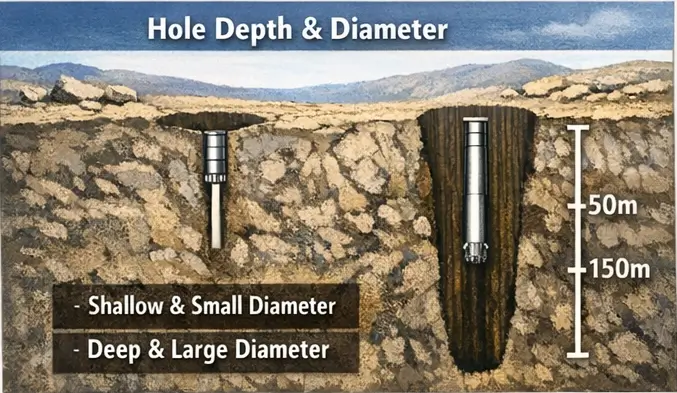
Hole depth is another important factor because drilling depth changes the requirements placed on the complete drilling system.
For relatively shallow holes, the main concerns may be:
- Bit diameter
- Penetration
- Bit life
- Thread compatibility
- Equipment mobility
As hole depth increases, additional factors become important:
- Drill rod rigidity
- Energy transmission
- Rod condition
- Flushing efficiency
- Hole deviation
- Connection reliability
- Equipment capacity
For deeper hard-rock drilling, DTH drilling tools can be advantageous because the hammer operates at the bottom of the hole and delivers impact energy close to the bit.
For Top Hammer applications, increasing drill pipe length means that the condition and compatibility of the shank adapter, rods, couplings, and bit become increasingly important.
Therefore, the correct bit cannot be determined from hole diameter alone.
Match the Bit to the Rock and Drilling Parameters
Even when diameter and connection are correct, the bit design still needs to match the drilling conditions.
- Rock hardness
- Rock abrasiveness
- Rock structure
- Impact energy
- Feed force
- Rotation speed
- Flushing
- Working air pressure for DTH
- Expected penetration rate
- Required bit life
For example, a highly abrasive formation may require greater emphasis on carbide durability and gauge button protection, while a less abrasive formation may allow a more aggressive button profile to improve penetration.
This connects directly with the previous section:
Rock condition → Button profile → Bit design → Operating parameters
A correctly connected bit can still perform poorly if its face design or button configuration is unsuitable for the formation.
What Happens When a Rock Drill Bit Is Poorly Matched?
An incorrectly matched bit may not always fail immediately.
In many cases, the first signs appear as reduced drilling performance.
Common symptoms include:
| Field Symptom | Possible Matching Issue |
|---|---|
| Slow penetration | Incorrect bit design, insufficient impact energy, unsuitable parameters |
| Excessive thread wear | Incorrect or poorly matched thread/connection |
| Bit loosening | Thread mismatch, connection damage, insufficient tightening |
| Rapid button wear | Incorrect button profile, abrasive formation, operating conditions |
| Button breakage | Excessive impact stress, poor contact, formation conditions |
| Gauge button wear | Highly abrasive rock or insufficient gauge button protection |
| Excessive vibration | Poor component matching, damaged threads, drilling parameters |
| Hole diameter loss | Gauge button wear or unsuitable bit design |
| Poor flushing | Bit/hammer/air system or operating-condition issue |
These symptoms should not automatically be attributed to the drill bit itself.
A drilling system should be diagnosed from the bit backward through the rod, shank, hammer/rock drill, and operating parameters.
Top Hammer Rock Drill Bit Matching Checklist
Before ordering a Top Hammer rock drill bit, confirm the following information:
| Specification | Information to Confirm |
|---|---|
| Drilling method | Top Hammer drilling |
| Bit type | Reaming bit, Retrac bit, Tapered button bit, Chisel bit, Cross bit, etc. |
| Bit diameter | Required hole diameter |
| Thread | R25, R28, R32, R35, R38, T38, T45, T51, etc. |
| Drill rod | Diameter and thread |
| Shank adapter | Model/specification |
| Rock drill | Machine/rock drill model |
| Hole depth | Required drilling depth |
| Rock type | Granite, basalt, limestone, etc. |
| Hardness | Approximate hardness or field condition |
| Abrasiveness | Low, medium, high |
| Rock structure | Massive, fractured, layered, variable |
| Current problem | Wear, breakage, slow penetration, etc. |
This information gives a drill bit supplier enough context to recommend a compatible configuration rather than simply quoting a standard diameter.
DTH Drill Bit Matching Checklist
For DTH applications, the required information is slightly different:
| Specification | Information to Confirm |
|---|---|
| Drilling method | DTH drilling |
| Bit diameter | Required hole diameter |
| DTH hammer | Model |
| Bit shank | DHD, QL, COP, CIR, SD, Mission, NUMA, etc. |
| Working air pressure | Operating pressure |
| Hole depth | Required depth |
| Drill pipe | Diameter/thread |
| Rock type | Formation |
| Hardness | Approximate hardness |
| Abrasiveness | Low, medium, high |
| Flushing condition | Air/flushing performance |
| Current bit life | Meters per bit |
| Penetration rate | Current drilling speed |
| Main problem | Wear, breakage, slow drilling, etc. |
For DTH drilling tool buyers, hammer model + bit shank + diameter are particularly important starting specifications.
How to Reduce Cost per Meter in Hard Rock Drilling
The lowest-priced rock drill bit is not always the lowest-cost option.
In hard rock drilling, the actual cost of a bit depends on how many meters it can drill, how quickly it drills, how often it needs to be replaced, and whether it maintains acceptable hole quality.
For this reason, drilling contractors should evaluate cost per meter rather than comparing rock drill bits by unit price alone.
A simple calculation is:
Bit Cost per Meter = Bit Price ÷ Meters Drilled per Bit
For a more complete evaluation, also consider penetration rate and downtime.
Compare Cost per Meter, Not Unit Price
Consider two illustrative rock drill bits:
| Item | Bit A | Bit B |
|---|---|---|
| Bit price | $50 | $80 |
| Meters drilled | 300 m | 700 m |
| Bit cost per meter | $0.167/m | $0.114/m |
Bit B costs more initially, but its longer service life results in a lower bit cost per meter.
This illustrates why:
A higher purchase price does not necessarily mean a higher drilling cost.
Actual results will vary depending on rock conditions, drilling equipment, bit design, and operating parameters.
Balance Penetration Rate and Bit Life
Longer bit life is valuable, but it should not be considered separately from drilling productivity.
A highly durable bit may last longer but drill too slowly. Conversely, a highly aggressive bit may increase penetration while wearing significantly faster.
The practical objective is to find the best balance between:
- Penetration rate
- Bit life
- Drilling stability
- Hole quality
- Replacement frequency
- Cost per meter
For example:
Bit A: Higher penetration + shorter life
Bit B: Moderate penetration + longer life
If Bit B significantly reduces bit consumption without causing unacceptable productivity loss, it may provide better overall economics.
The longest-lasting bit is not automatically the most economical bit.
Match the Bit to the Actual Drilling Conditions
The right bit design can help reduce cost per meter, but the selection should be based on the actual drilling conditions discussed in the previous sections.
Consider:
- Rock hardness
- Rock abrasiveness
- Rock structure
- Hole diameter
- Hole depth
- Drilling method
- Equipment compatibility
For example, highly abrasive rock may require greater emphasis on carbide durability and gauge protection, while a suitable less-abrasive formation may allow a more aggressive design to improve penetration.
The key is to avoid selecting a bit simply because it is marketed as a “hard rock drill bit.”
Reduce Unplanned Bit Changes
Bit replacement creates more than tooling costs.
Frequent or unexpected bit changes can also cause:
- Equipment downtime
- Operator labor
- Lower rig utilization
- Production delays
For this reason, consistent bit life can be as important as maximum bit life.
Instead of tracking only meters per bit, record:
Average meters per bit + replacement frequency + downtime
This provides a more realistic view of drilling economics.
Do Not Replace Bits Too Early or Too Late
Replacing a bit too early wastes usable drilling capacity.
Replacing it too late can result in:
- Reduced penetration
- Excessive gauge wear
- Poor hole quality
- Increased vibration
- Greater risk of component damage
A practical replacement point should therefore consider:
Button wear + gauge condition + penetration rate + hole quality
The objective is to keep the bit productive without continuing to use it after its performance has deteriorated significantly.
Track Real Field Performance
The most reliable way to compare rock drill bits is to collect consistent field data.
At minimum, record:
| Metric | What to Track |
|---|---|
| Bit price | Purchase cost |
| Bit life | Meters drilled |
| Penetration rate | Average drilling speed |
| Rock condition | Type, hardness, abrasiveness |
| Bit design | Type and button profile |
| Equipment | Rig, rock drill or DTH hammer |
| Wear pattern | Buttons, face, skirt body |
| Replacement reason | Wear, breakage, low penetration, etc. |
| Downtime | Time required for replacement |
When comparing different bits, try to keep the drilling conditions as similar as possible.
Comparing a bit used in highly abrasive granite with another bit used in a softer formation will not provide a meaningful cost-per-meter comparison.
Consider Total Drilling Cost
Bit cost per meter is a useful starting point, but it does not represent the entire drilling cost.
For larger drilling operations, consider:
Total Drilling Cost = Tooling Cost + Downtime + Labor + Equipment Operating Cost + Other Related Costs
A bit with a slightly higher cost per meter may still be economically attractive if it provides significantly better penetration or reduces downtime.
Therefore, the final objective is not simply:
Lowest bit price
or even:
Lowest bit cost per meter
but rather:
The lowest sustainable drilling cost while maintaining the required productivity and hole quality.
5 Practical Ways to Reduce Bit Cost per Meter
Choose the Right Bit for the Formation
Match the bit to rock hardness, abrasiveness, structure, and drilling method.
Match the Bit to the Equipment
Confirm diameter, thread or shank, drill rod, shank adapter, rock drill, or DTH hammer before ordering.
Balance Penetration and Bit Life
Do not select the most aggressive or longest-lasting bit without considering overall productivity.
Monitor Wear and Replacement Timing
Replace the bit based on actual performance and wear condition rather than a fixed schedule.
Use Field Data for Purchasing Decisions
Compare meters per bit, penetration rate, downtime, and cost per meter under comparable conditions.
Final Takeaway
Reducing rock drill bit cost per meter is not simply about buying cheaper bits.
The better approach is to optimize:
Bit Selection → Equipment Matching → Drilling Performance → Bit Life → Replacement Timing → Cost per Meter
For hard rock drilling, evaluate penetration rate, service life, drilling stability, hole quality, and downtime together.
A bit that costs more per unit can be the better choice if it delivers more meters, fewer replacements, and lower overall drilling cost.
Measure field performance, compare cost per meter, and select the bit based on the economics of the complete drilling operation—not the purchase price alone.
FAQ
What type of rock drill bit is best for hard rock?
There is no single best rock drill bit for all hard-rock applications. Top Hammer button bits are commonly used for shallow to medium-depth drilling, while DTH button bits are often preferred for deeper hard-rock drilling. The right choice depends on drilling method, hole diameter, rock hardness, abrasiveness, depth, and equipment compatibility.
How do I choose the right rock drill bit size?
Start with the required hole diameter, then confirm the drilling method, thread or shank connection, drill rod, rock drill or DTH hammer, and drilling depth. Bit diameter alone does not determine compatibility. For Top Hammer drilling, the bit must match the rod and thread type; for DTH drilling, the bit must match the hammer shank.
How can I reduce rock drill bit cost per meter?
Compare the bit purchase price with the actual meters drilled per bit. Then consider penetration rate, replacement frequency, downtime, and hole quality. A higher-priced bit may provide a lower cost per meter if it delivers a significantly longer service life under the same drilling conditions.
Why does my rock drill bit wear out too quickly?
Rapid bit wear can result from highly abrasive rock, unsuitable button profiles, excessive drilling parameters, poor flushing, incorrect equipment matching, or abnormal gauge button wear. Check the rock conditions, bit wear pattern, drilling parameters, and complete drilling system before changing to a different bit design.
Should I choose a more aggressive rock drill bit for hard rock?
Not necessarily. A more aggressive bit can improve penetration in suitable formations, but it may also increase button wear or breakage in hard and abrasive rock. The better approach is to balance penetration, durability, drilling stability, and cost per meter for the actual formation.
What information should I provide when ordering rock drill bits?
Provide the drilling method, hole diameter, hole depth, rock type, hardness and abrasiveness, drilling rig or rock drill/DTH hammer model, thread or shank type, and current bit performance. If available, also provide penetration rate, meters drilled per bit, and photos of the worn bit.