
The most efficient mining method depends on orebody depth, geology, deposit shape, recovery targets, and operating costs. Open-pit mining is often suitable for shallow, extensive deposits, while underground mining is generally considered for deeper or more selectively mined ore bodies. In some projects, a combination of both methods offers the best development strategy.
For mining operators and project planners, efficiency means more than extracting ore quickly. It also involves controlling dilution, maintaining safe working conditions, reducing equipment downtime, and managing drilling, loading, hauling, and processing costs.
This guide compares the major mining methods, explains the factors that determine their efficiency, and outlines how to select an approach for different mining conditions.
Mining Methods at a Glance
| Mining method | Typical application | Main advantage | Key limitation |
|---|---|---|---|
| Open-pit mining | Shallow or near-surface deposits | High production capacity and efficient bulk extraction | Stripping requirements and surface disturbance |
| Room-and-pillar mining | Suitable tabular deposits with competent ground | Flexible production and selective layout | Pillars may leave some ore unrecovered |
| Cut-and-fill mining | Steep, irregular, or high-value ore bodies | Good selectivity and ground control | Backfilling and operating costs |
| Sublevel stoping | Steeply dipping, competent ore bodies | High productivity with mechanized operations | Requires suitable rock conditions and careful dilution control |
| Block caving | Large, massive ore bodies suitable for caving | High production potential at scale | High initial development requirements and limited flexibility |
| Combined open-pit and underground mining | Deposits extending from shallow to deeper zones | Allows different mining methods to serve different ore zones | Complex mine planning and transition management |
These methods cannot be ranked by a single efficiency measure. The most suitable option depends on geology, mine design, production targets, capital availability, safety requirements, and the total cost of extracting saleable ore.
Open-Pit Mining
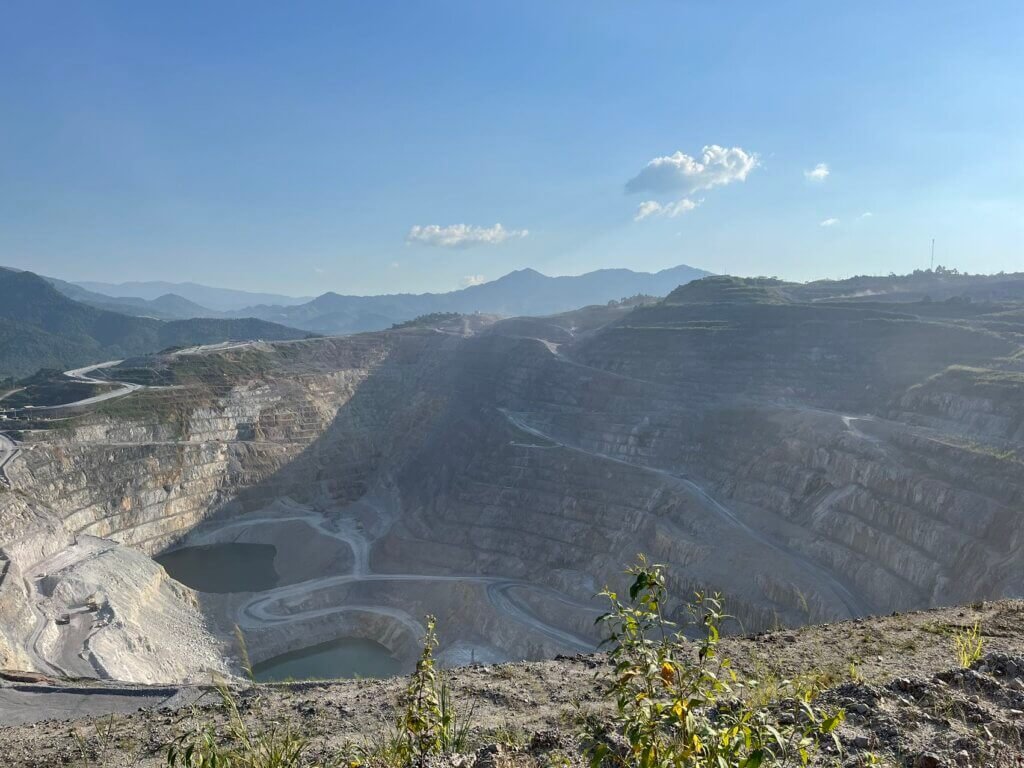
Open-pit mining extracts minerals from a surface excavation, usually through a sequence of benches. It is widely used for deposits that are relatively close to the surface and can be mined economically through large-scale excavation.
Typical operations involve drilling and blasting, loading, hauling, and waste-rock removal. Large excavators, haul trucks, and appropriately selected drilling equipment support high-volume production.
When Is Open-Pit Mining Efficient?
Open-pit mining is often attractive when:
- The deposit is shallow, extensive, or relatively thick.
- Ore can be extracted in large volumes using mechanized equipment.
- The stripping ratio—the amount of waste removed relative to ore mined—remains economically acceptable.
- Haul roads, pit geometry, and material-handling systems can support efficient production.
How to Improve Open-Pit Mining Efficiency
Optimize pit design and mining sequence. Plan benches, haul roads, and extraction sequences around geological information and equipment capabilities. Efficient sequencing helps control waste movement and transportation distances.
Improve drilling and blasting performance. Hole diameter, spacing, depth, drilling accuracy, and rock conditions all affect fragmentation and downstream loading performance. Poorly designed blast holes can increase oversize material, rework, and equipment wear.
Reduce equipment idle time. Coordinate drilling, blasting, loading, and hauling schedules to minimize delays between operations.
Monitor material movement. Track ore and waste volumes, truck utilization, fuel consumption, and equipment availability to identify operational bottlenecks.
Main Limitations
As a pit deepens, stripping requirements and haulage distances may increase. Slope stability, groundwater, dust, and land disturbance also require ongoing management.
Open-pit mining is therefore not automatically the lowest-cost option for every shallow deposit. Its economic performance depends on the geometry of the orebody, waste-removal requirements, and the value of the recoverable mineral.
Underground Mining

Underground mining accesses ore through shafts, declines, tunnels, and other underground openings. It is commonly considered when deposits are too deep for economical surface extraction or when selective recovery is important.
Underground operations may involve drilling, blasting, ground support, loading, and haulage through confined workings. The mining method must account for orebody geometry, rock strength, stress conditions, groundwater, ventilation, and production requirements.
Common Underground Mining Methods
Room-and-Pillar Mining
Room-and-pillar mining creates openings where ore is extracted while pillars of rock remain to support the roof. It is commonly used for suitable tabular deposits, including some coal and industrial mineral operations.
Advantages:
- Relatively straightforward production layouts under suitable ground conditions.
- Potential for mechanized and continuous operations.
- Flexibility in organizing extraction areas.
Limitations:
- Pillars may contain ore that cannot be recovered economically.
- Ground conditions and pillar stability restrict the extraction sequence.
- Recovery depends on mine design and whether pillar recovery is feasible.
Cut-and-Fill Mining
Cut-and-fill mining extracts ore in successive slices and fills mined-out areas with suitable backfill before continuing to another slice. It can be useful for steeply dipping, irregular, or higher-value ore bodies where selectivity and ground control are important.
Advantages:
- Adaptable to irregular orebody shapes.
- Supports selective extraction and dilution control.
- Backfill can provide support for subsequent mining activities.
Limitations:
- Backfill preparation, placement, and curing can add time and cost.
- Production rates may be lower than those of highly mechanized bulk-mining methods.
- The method requires careful coordination of extraction and backfilling.
Sublevel Stoping
Sublevel stoping uses drilling and blasting from sublevels to extract ore from designed stopes. It is often suitable for steeply dipping ore bodies with sufficiently competent rock.
Advantages:
- High production potential with mechanized drilling and loading.
- Efficient extraction from suitably shaped ore bodies.
- Can reduce the need for workers to enter active stopes when remote equipment is used.
Limitations:
- Rock conditions must support the planned stope dimensions.
- Poor drilling accuracy or unsuitable blast design can increase dilution.
- Stope stability and the extraction sequence require careful engineering.
Block Caving
Block caving is a large-scale underground mining method in which a suitable orebody is undercut and allowed to fracture and cave under gravity. Broken ore is then collected and transported through an engineered extraction system.
Advantages:
- High production potential for large, suitable ore bodies.
- Economies of scale after the operation reaches stable production.
- Potentially lower unit operating costs in appropriately designed mines.
Limitations:
- Significant upfront development and infrastructure requirements.
- Production ramp-up can be lengthy.
- Rock-mass behavior and cave propagation must be understood and monitored.
- The method is not suitable for every orebody.
How to Improve Underground Mining Efficiency
Match drilling equipment to the mining method. Different headings, stopes, and ground conditions may require different drilling configurations. Equipment selection should account for hole diameter, hole length, required accuracy, access constraints, and the planned drilling pattern.
Reduce dilution and improve recovery. Accurate drilling and controlled blasting can help maintain designed excavation boundaries and reduce unwanted waste entering the ore stream.
Coordinate drilling with ground support. Rock bolts and other support systems must be selected according to the ground-control design. Efficient development should never come at the expense of required support or worker safety.
Control ventilation, dust, and water. Adequate ventilation and effective dust and water management support safe, reliable production and help reduce operational interruptions.
Measure the full production cycle. Drilling speed alone does not determine mining efficiency. Development progress, blast quality, loading time, equipment availability, and ground-support requirements all affect overall output.
Combined Open-Pit and Underground Mining
Some deposits extend from near-surface zones into deeper mineralized areas. In these cases, a mine may use open-pit mining for the upper portion and underground mining for deeper zones, provided the overall design is technically and economically viable.
This approach is not a separate excavation technique in itself. It is a mine-development strategy that combines methods to suit different parts of the deposit.
Potential Benefits
- Allows the mine plan to respond to changes in orebody depth and geometry.
- May avoid excessive stripping in deeper zones.
- Can extend the productive life of a mineral deposit.
- Allows different production systems to serve different ore zones.
Key Planning Considerations
Evaluate the transition between methods. Pit depth, underground access, remaining reserves, and production schedules must be considered together.
Assess geotechnical interactions. Surface excavations and underground workings can influence ground stability. Engineers must evaluate slope behavior, stress redistribution, subsidence potential, and other site-specific risks.
Coordinate production and infrastructure. Ventilation, haulage, power, water management, and material handling may need to support both surface and underground operations.
The combined approach is most effective when integrated mine planning demonstrates that the benefits outweigh the added design complexity, infrastructure requirements, and operational risks.
What Determines Mining Efficiency?
The choice of mining method is only one part of an efficient operation. The following factors influence productivity, cost, and the amount of saleable ore recovered.
Orebody Geometry and Rock Conditions
Deposit depth, thickness, dip, continuity, and shape influence which mining methods are practical. Rock strength, jointing, faults, and in-situ stress also affect excavation stability, drilling performance, and support requirements.
A method that works well in competent, continuous ore may perform poorly in highly fractured or irregular ground.
Recovery and Dilution
Recovery measures the proportion of the target mineral resource extracted, while dilution refers to unwanted material mixed with the ore.
A mining method that delivers high production rates may still perform poorly if it leaves substantial ore behind or introduces excessive waste. Mine planners should evaluate production volume alongside ore recovery, dilution, and product quality.
Drilling and Blasting Performance
Drilling is a key part of many surface and underground mining operations. Hole diameter, depth, alignment, spacing, and rock conditions influence blast performance and subsequent excavation.
To improve drilling efficiency:
- Select drilling equipment suitable for the rock conditions and required hole specifications.
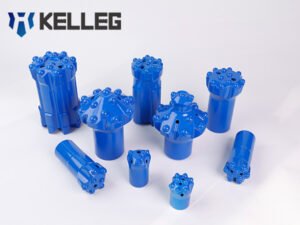
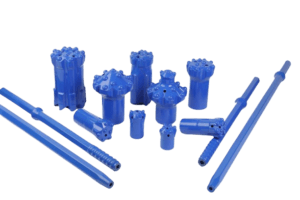
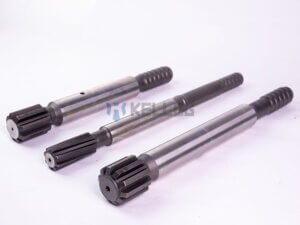
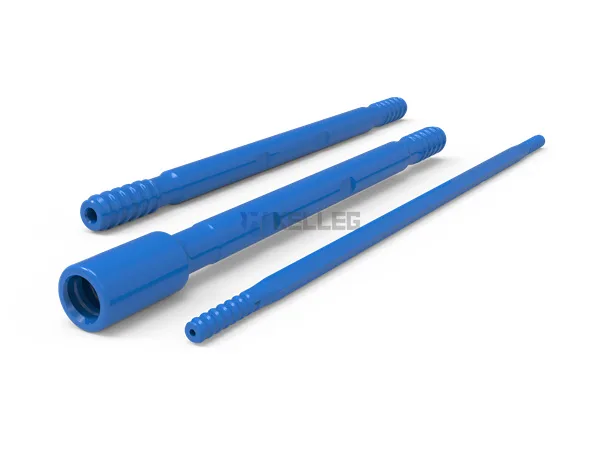
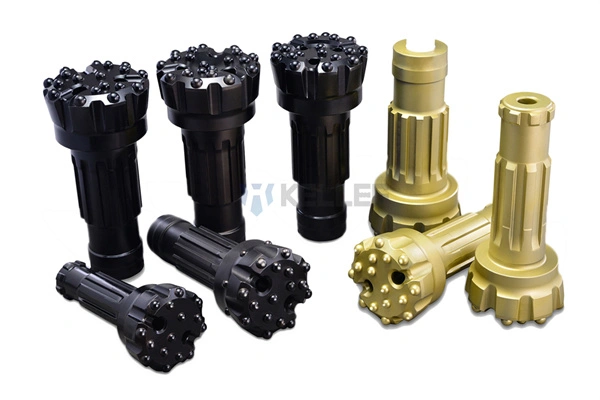
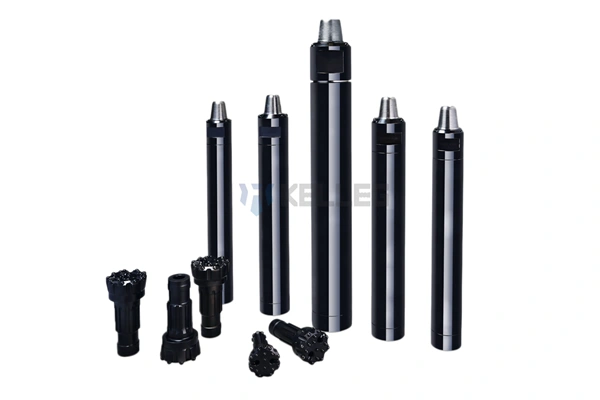
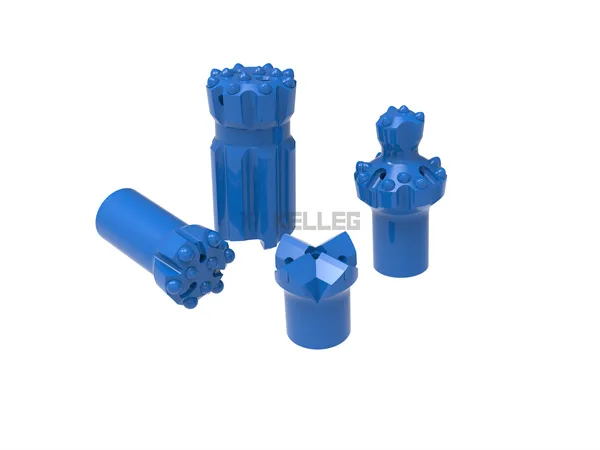
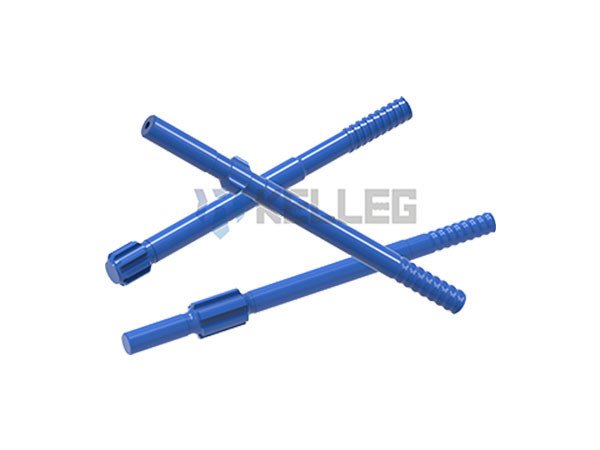
- Match drill bits, rods, and shank adapters to the rock drill and drilling system.
- Monitor penetration rate, bit life, hole deviation, and unplanned tool changes.
- Evaluate fragmentation and downstream loading performance rather than focusing on drilling speed alone.
For underground development and production drilling, the correct combination of drilling equipment and rock tools can help improve hole quality, reduce avoidable downtime, and support more consistent blasting results.

Equipment Availability and Maintenance
Unplanned equipment downtime interrupts production and can affect the entire mining cycle. Preventive maintenance, appropriate spare-parts planning, operator training, and monitoring of wear components can help improve availability.
For drilling operations, recurring tool failures should be investigated through rock conditions, operating parameters, equipment compatibility, and maintenance practices rather than addressed only by increasing drilling force or pressure.
Haulage and Material Handling
Transportation can account for a substantial share of operating costs, particularly in deep open pits or mines with complex underground layouts.
Efficient haulage depends on mine layout, travel distance, equipment capacity, traffic management, loading performance, and coordination between production stages.
Safety and Environmental Management
Ground control, ventilation, dust suppression, water management, and slope monitoring are essential parts of an efficient mine. Safety incidents and uncontrolled environmental impacts can cause significant interruptions and additional costs.
Efficiency improvements must therefore be evaluated alongside safety, regulatory compliance, and long-term environmental obligations.
How to Choose the Right Mining Method
Selecting a mining method requires a structured evaluation rather than relying on production rate or operating cost alone.
Step 1: Assess the Deposit
Determine the depth, thickness, shape, dip, continuity, and distribution of the orebody. Establish whether surface extraction, underground access, or a combination of both is feasible.
Step 2: Evaluate Geological and Geotechnical Conditions
Review rock strength, discontinuities, stress conditions, groundwater, and potential ground-control risks. These factors can eliminate methods that would otherwise appear attractive economically.
Step 3: Define Production and Recovery Targets
Establish the required production rate, acceptable dilution, target recovery, ore quality, and planned mine life.
A high-volume bulk-mining method may suit a large, continuous deposit, while a more selective method may be preferable for irregular or higher-value ore.
Step 4: Compare Total Costs and Capital Requirements
Evaluate development, drilling and blasting, loading and hauling, ventilation, ground support, processing, maintenance, and closure obligations.
Compare the expected cost per unit of saleable ore rather than relying on the lowest initial equipment cost or the highest nominal production rate.
Step 5: Match Equipment to the Mining Plan
Identify the drilling, loading, haulage, and ground-support systems required by the selected method.
For drilling operations, specify hole diameter and depth, rock conditions, required accuracy, machine compatibility, and expected operating intensity before selecting drilling tools.
Step 6: Validate the Plan and Monitor Performance
Use geological models, engineering assessments, operational trials, and production data to validate the proposed method. Once mining begins, monitor production, recovery, dilution, equipment availability, safety indicators, and unit costs.
The mine plan should be reviewed as geological knowledge and operating conditions change.
Technologies That Improve Mining Efficiency
Automation, digital systems, and environmental management can improve performance across several mining methods. They complement the mining method rather than replace the need for sound geological and engineering decisions.
Automation and Remote Operation
Automated haulage, remote-controlled drilling, and mechanized loading can improve consistency and reduce worker exposure to certain hazardous areas.
The benefits depend on equipment compatibility, mine layout, communications infrastructure, operator training, and the ability to maintain the system reliably.
Real-Time Monitoring and Predictive Maintenance
Sensors and equipment-monitoring systems can track machine condition, operating hours, fuel or energy consumption, and maintenance indicators.
When the data is reliable and used effectively, maintenance teams can identify emerging problems, plan interventions, and reduce unexpected downtime.
Digital Mine Planning
Integrated mine-planning and scheduling systems help coordinate extraction, drilling, blasting, loading, and haulage. Better coordination can reduce bottlenecks and improve the use of available equipment.
Energy and Environmental Management
Energy-efficient equipment, water recycling, dust control, waste-rock management, and progressive land rehabilitation can help reduce environmental impacts.
The appropriate measures depend on the mining method, local regulations, site conditions, and the expected life of the operation.
Frequently Asked Questions
What is the most efficient mining method?
There is no universally most efficient mining method. Open-pit mining often supports high-volume production from suitable shallow deposits, while underground methods can be more appropriate for deeper or selectively mined ore bodies. The best option depends on geology, recovery, dilution, capital requirements, safety, and total operating costs.
Is open-pit mining more efficient than underground mining?
Open-pit mining often benefits from larger equipment and simpler material access, but its costs can rise as the pit deepens and more waste must be removed. Underground mining requires access development, ventilation, and ground support, but it can be preferable for deeper deposits. A site-specific economic and technical assessment is needed to compare the two.
Which underground mining method is best for hard rock?
The answer depends on orebody geometry, rock-mass stability, stress conditions, and production targets. Sublevel stoping may suit steep, competent ore bodies, while cut-and-fill may be appropriate for irregular deposits requiring selective extraction. Block caving is considered for large ore bodies with suitable caving characteristics.
How can mining companies improve drilling efficiency?
Companies can improve drilling efficiency by matching equipment and rock tools to the application, maintaining correct operating parameters, controlling hole deviation, and monitoring penetration rate, tool life, and downtime. Drilling performance should also be evaluated in terms of blast quality and the overall production cycle.
Does automation always reduce mining costs?
No. Automation can improve consistency, safety, and equipment utilization, but it may require significant investment in equipment, infrastructure, integration, and training. Its economic value depends on site conditions, operating scale, maintenance capability, and the measurable improvements it delivers.
How should mining equipment be selected for a project?
Start with the mining method, geological conditions, required production rate, hole specifications, site access, and operating constraints. Then evaluate equipment compatibility, reliability, maintenance requirements, and expected operating performance. For drilling tools, confirm the machine and tool specifications before ordering to reduce compatibility problems and avoidable downtime.
Conclusion
The most efficient mining method is the one that fits the deposit and delivers the required recovery, production, safety, and economic performance over the life of the mine.
Open-pit mining can be effective for suitable shallow deposits, while underground methods offer different options for deeper, irregular, or selectively mined ore bodies. Combined mining strategies may be appropriate when the deposit extends across different depth zones.
Beyond method selection, drilling performance, equipment availability, mine planning, and effective ground control all contribute to operational efficiency. Mining companies should evaluate these factors together rather than relying on a single productivity indicator.
For mining projects involving rock drilling, choosing compatible drilling equipment and rock tools is an important part of reliable operation. Kelleg supports mining and other rock-drilling applications with drilling tools and technical support.
Explore our mining application solutions to learn more about rock drilling tools for mining operations, or contact Kelleg to discuss your project requirements.