- Introduction
- What Are Tapered Button Bits?
- Understanding Taper Angles: 7° vs 11° vs 12°
- How Button Shape Affects Drilling Performance
- Choosing the Right Bit Diameter and Button Size
- Skirt Body Design Selection: Short Skirt Body vs Long Skirt Body
- How to Choose the Right Tapered Button Bits
- Common Problems Caused by Incorrect Tapered Bit Selection
- Best Practices to Extend Tapered Button Bit Service Life
- How to Match Tapered Button Bits with Rock Drills and Rods
- Conclusion
Introduction #
Tapered Button Bits, also known as conical button bits, are among the most widely used drilling tools for small-diameter rock drilling applications. Selecting the correct taper angle (7°/11°/12°), button shape, and bit size can significantly improve penetration rate, extend bit service life, and reduce drilling costs in soft to medium-hard rock formations.
Unlike threaded button bits that rely on threaded connections, tapered button bits use a taper connection between the drill rod and the bit. This design allows faster bit replacement, simpler operation, and lower equipment cost, making tapered drilling tools especially popular in quarrying, underground mining, dimensional stone drilling, and construction blasting.
However, improper bit selection can lead to serious drilling problems. An unsuitable taper angle may cause loose connections or difficult bit removal. Incorrect button shapes can accelerate carbide wear or reduce drilling speed, while mismatched bit diameters may result in poor hole straightness, inefficient energy transfer, and excessive drilling tool consumption.
To achieve efficient and stable drilling performance, operators must match the bit design with the rock condition, drilling equipment, and application requirements.
In this guide, we will cover:
- Taper angle selection (7°, 11°, and 12°)
- Button shape selection
- Bit diameter and carbide size selection
- Skirt body design
- Rock condition matching for optimal drilling performance
This article will help you choose the most suitable tapered button bit for higher drilling efficiency, lower operating cost, and longer tool lifespan.
What Are Tapered Button Bits? #
Definition and Basic Structure #
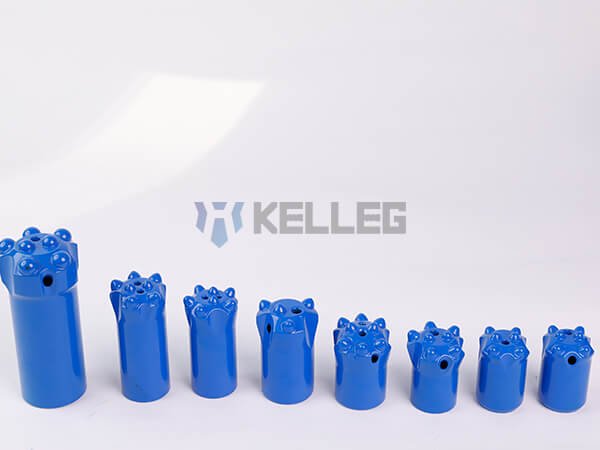
Tapered button bits are widely used in small-hole rock drilling applications together with pneumatic rock drills and tapered drill rods. The drilling operation is achieved through the taper connection between the drill bit and the drill rod, allowing efficient transfer of impact energy from the rock drill to the rock surface.
Tapered button bits are especially suitable for hard rock drilling and are commonly applied in:
- Underground mining
- Quarry drilling
- Secondary rock breaking
- Drifting and tunneling
- Bolting operations
- Construction blasting projects
Compared with traditional chisel bits and cross bits, tapered button bits offer higher drilling efficiency, better hole quality, and longer service life. This improvement mainly comes from the use of tungsten carbide buttons and reinforced skirt body designs, which provide stronger wear resistance and better impact performance in demanding rock conditions.
Conventional taper angles for tapered button bits are typically:
- 7°
- 11°
- 12°
Different taper angles are designed for different rock formations, drilling conditions, and rock drill impact levels.
Main Components of a Tapered Button Bit #
Carbide Buttons #
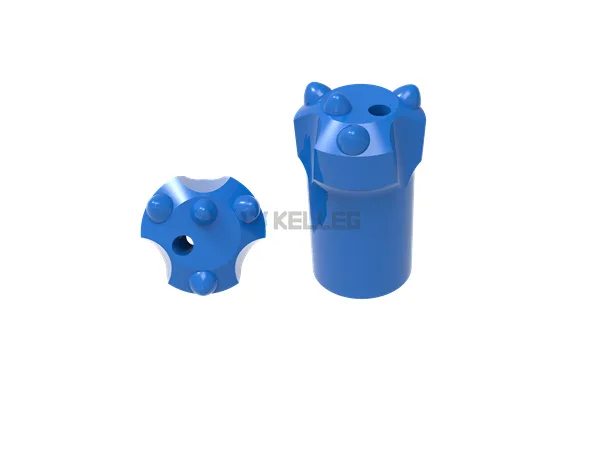
The carbide buttons are made from high-strength tungsten carbide and are the primary rock-breaking elements of the drill bit. During drilling, the buttons repeatedly impact and crush the rock surface.
Different button shapes — such as spherical, ballistic, and semi-ballistic — affect penetration rate, wear resistance, and drilling stability.
Steel Body #
The steel body forms the main structure of the bit and supports the carbide buttons during high-impact drilling operations. It is manufactured from high-quality alloy steel with heat treatment to improve toughness, fatigue resistance, and durability.
Water Holes #
Water holes or flushing holes are designed to remove rock cuttings and dust during drilling. Proper flushing helps:
- Improve drilling speed
- Reduce heat generation
- Minimize button wear
- Prevent hole blockage
Depending on the application, tapered button bits may use air flushing or water flushing systems.
Taper Connection #
The taper connection is the core feature of tapered drilling systems. The tapered shank of the drill bit fits tightly into the tapered drill rod through a self-locking design.
Compared with threaded connections, taper connections offer:
- Faster bit replacement
- Lower equipment cost
- Simpler maintenance
- Reliable energy transmission for light and medium drilling applications
Skirt Body #
The skirt body is the lower part of the bit that helps stabilize the drilling process and guide the bit inside the hole.
Different skirt designs — such as short skirt body and long skirt body — influence:
- Hole straightness
- Drilling stability
- Guidance performance
- Resistance to deviation
Long skirt designs are generally preferred for harder rock and deeper hole drilling.
Relationship Between Tapered Button Bits, Drill Rods, and Pneumatic Rock Drills #
Tapered button bits are designed to work as part of a complete tapered drilling system, including:
- Pneumatic rock drill
- Tapered drill rod
- Tapered button bit
The pneumatic rock drill generates percussive impact energy and rotational force. This energy is transferred through the tapered drill rod to the tapered button bit, which crushes and penetrates the rock.
Because the taper connection creates a tight self-locking fit, the system can efficiently transfer impact energy while allowing quick bit replacement on job sites.
This drilling system is widely used in handheld rock drilling equipment, such as:
- YT27 rock drills
- YT28 rock drills
- Air-leg rock drills
- Jack hammers
Its simple structure, low investment cost, and reliable drilling performance make tapered drilling systems highly popular in mining, quarrying, and construction industries.
Understanding Taper Angles: 7° vs 11° vs 12° #
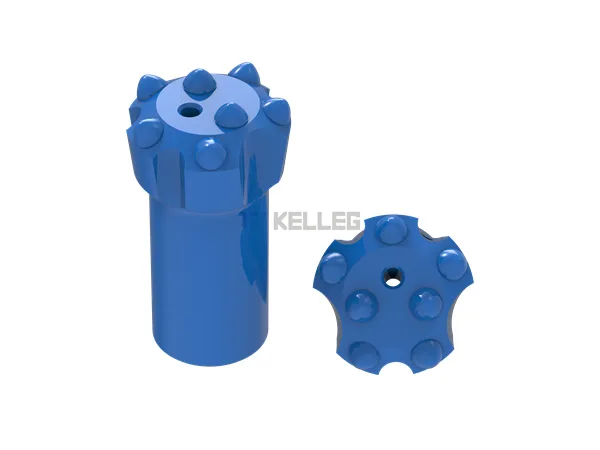
Taper angle is one of the most critical parameters in tapered button bit selection. It directly affects how tightly the bit connects to the drill rod, how efficiently impact energy is transmitted, and how stable the drilling performance remains under different rock conditions. Choosing the wrong taper angle may lead to poor bit retention, energy loss, or difficult bit removal.
What Is a Taper Angle? #
A taper angle refers to the conical angle between the drill bit shank and the tapered drill rod socket. It determines the mechanical locking strength of the connection in a tapered drilling system.
In practical drilling performance, taper angle influences:
- Connection stability: A larger angle generally provides stronger locking force between bit and rod.
- Energy transmission efficiency: Proper fit ensures minimal energy loss during percussion drilling.
- Bit retention ability: Prevents bit slipping or loosening during high-impact drilling.
- Bit removal convenience: Smaller angles are easier to remove but may offer slightly lower holding strength.
In short, taper angle is a balance between holding force and operational flexibility.
7° Tapered Button Bits #
Characteristics #
- Easier bit removal from the drill rod
- Lower connection locking force
- Reduced resistance during drilling operation
Typical Applications #
- Shallow hole drilling
- Soft to medium rock formations
- Small-scale quarrying operations
Advantages #
- Easy maintenance and quick bit changes
- Lower operational fatigue for workers
Limitations #
- Lower bit retention in hard rock conditions
- Not ideal for high-impact or deep-hole drilling
- Higher risk of bit loosening under heavy load
11° Tapered Button Bits #
Characteristics #
- Most commonly used taper angle in the industry
- Stable energy transfer during drilling
- Compatible with a wide range of pneumatic rock drills
Best For #
- Quarry drilling operations
- General mining and construction drilling
Advantages #
- Widely available and industry standard design
- Stable performance across multiple rock conditions
Limitations #
- Slightly less easy to remove compared to 7°
12° Tapered Button Bits #
Characteristics #
- Strongest locking force among standard taper angles
- Designed for high-impact drilling conditions
- Reduced risk of bit slipping or falling off
Advantages #
- Excellent bit retention under extreme impact
- Longer service life in hard rock conditions
- High stability
Limitations #
- More difficult bit removal compared to smaller angles
- Requires more precise matching with drill rod
Quick Comparison Table: 7° vs 11° vs 12° #
| Taper Angle | Holding Force | Penetration Performance | Bit Removal Ease |
|---|---|---|---|
| 7° | Low | High | Easy |
| 11° | Medium | Balanced | Moderate |
| 12° | High | Stable under impact | Difficult |
How Button Shape Affects Drilling Performance #
Button shape is a key factor in determining how a tapered button bit interacts with rock formations. It directly influences penetration rate, wear resistance, flushing efficiency, and overall service life. Different carbide geometries are designed to optimize performance under specific geological conditions, meaning the “best” shape always depends on the rock type and drilling objective.
Spherical Buttons #
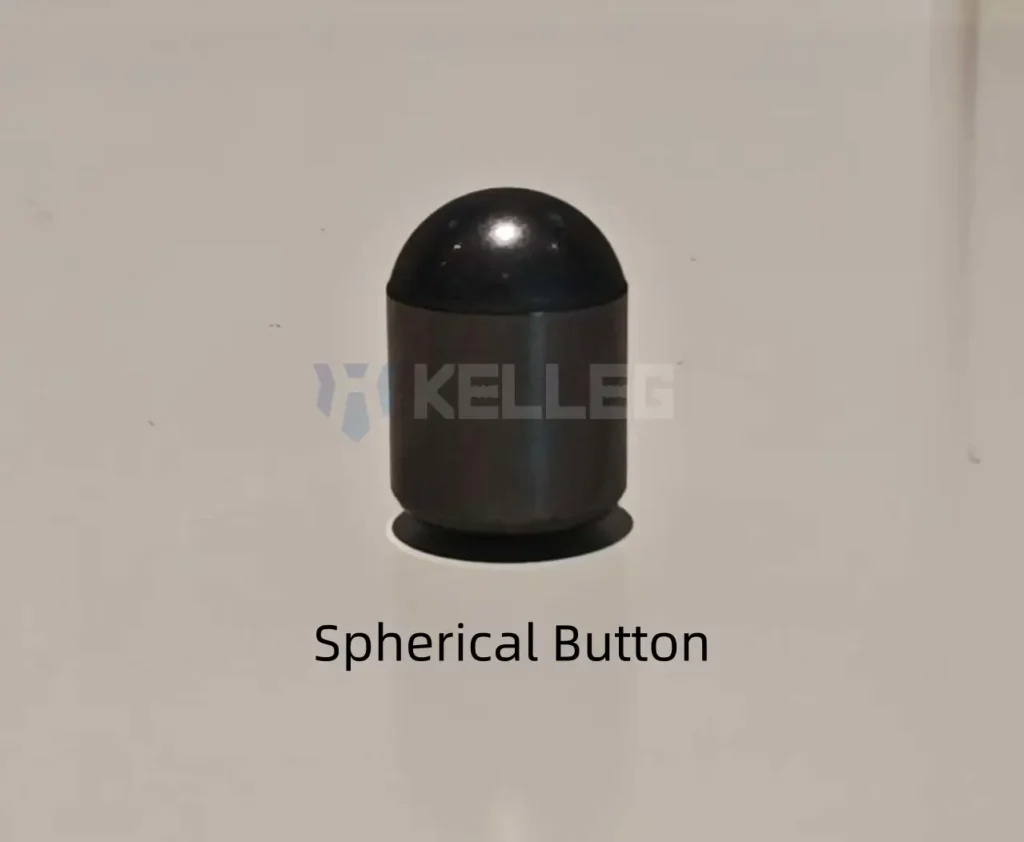
Spherical buttons feature a fully rounded dome structure that provides the highest structural strength and impact resistance in tapered drill bits. Under repeated high-frequency impacts from pneumatic rock drills, spherical buttons distribute stress evenly across the carbide surface, significantly reducing the risk of cracking or chipping.
Key Characteristics #
- Excellent stress distribution under high-impact drilling
- Maximum resistance to wear and carbide fracture
- Very stable performance in continuous hard rock drilling
- Best suited for high-energy percussion environments
Best Rock Conditions #
- Hard rock formations
- Highly abrasive rock
- Long-duration drilling operations require maximum tool life
Performance in Tapered Bits #
- Longest service life among all button types
- Highly stable under air-leg rock drills and jack hammers
- Ideal when durability is more important than drilling speed
Ballistic Buttons #
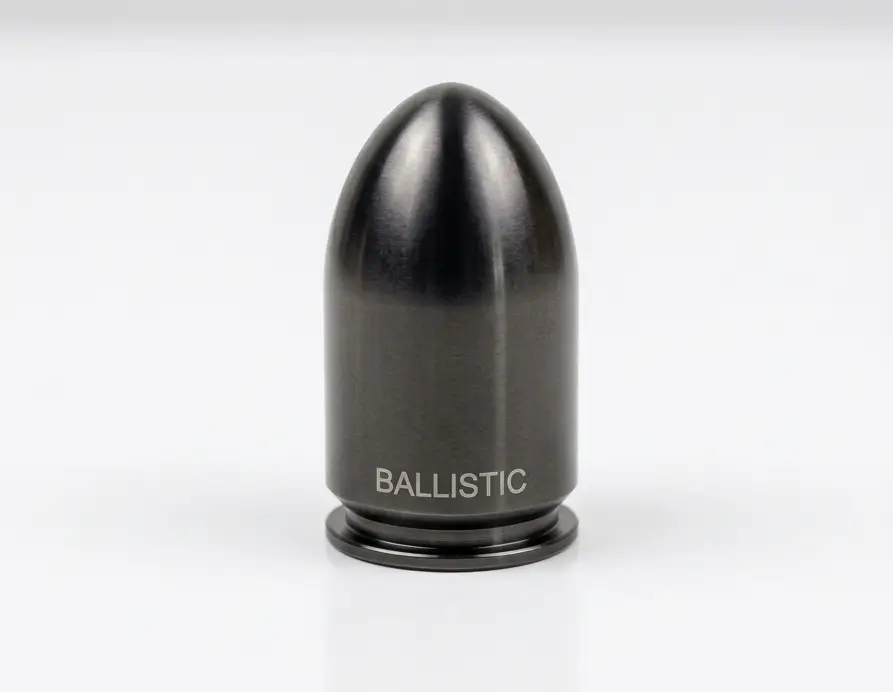
Ballistic buttons feature a pointed dome profile that concentrates impact energy into a smaller contact area. In tapered drill bits, this results in significantly improved penetration efficiency, especially in medium-hard rock formations.
However, due to the concentrated stress, wear resistance is lower compared to spherical buttons.
Key Characteristics #
- High penetration rate due to concentrated impact force
- Faster drilling speed in suitable rock formations
- Improved flushing efficiency due to reduced contact area
- Optimized for medium-impact drilling
Best Rock Conditions #
- Medium-hard rock
- Fractured or jointed rock formations
- Moderately abrasive geological conditions
Performance in Tapered Bits #
- Higher drilling speed compared to spherical buttons
- Widely used in quarrying and general mining applications
Conical Buttons #
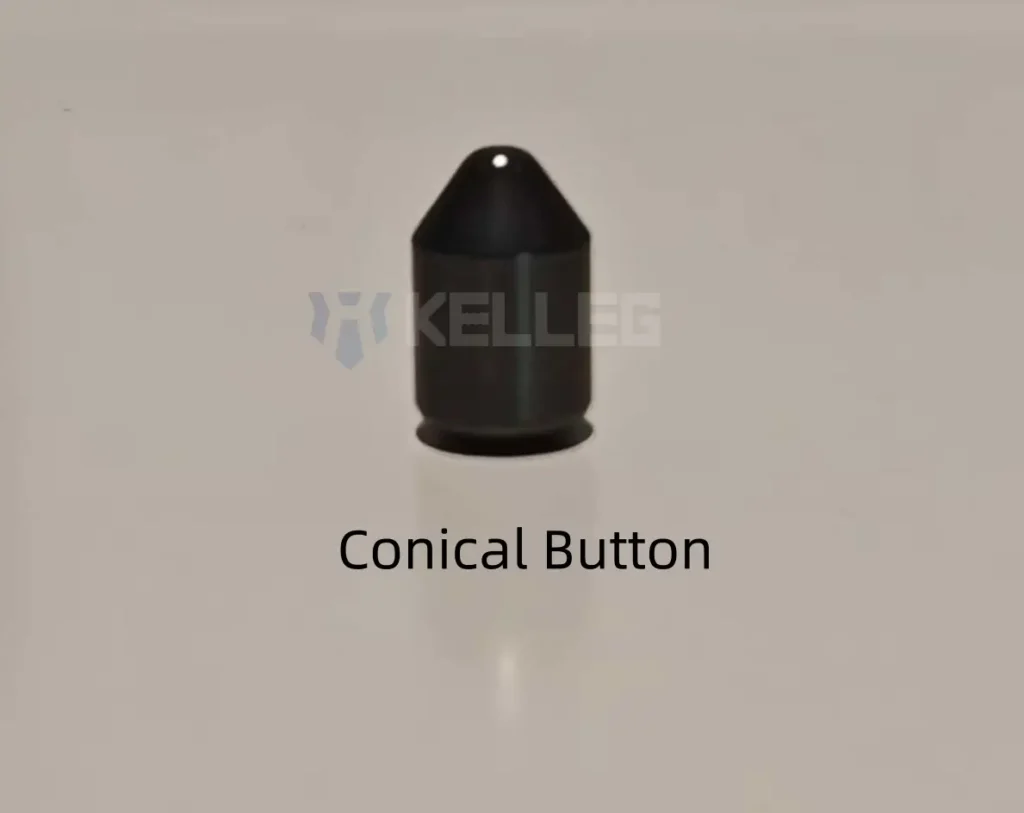
Conical buttons feature a sharp, chisel-like tip that concentrates impact energy into a very small point. In tapered drilling tools, this design delivers extremely aggressive rock-breaking capability, making it ideal for fast penetration in softer formations.
However, this geometry is more vulnerable to wear and chipping under hard rock impact.
Key Characteristics #
- Extremely high penetration capability
- Very fast initial drilling speed
- Highly aggressive rock fragmentation
- Best performance in low-resistance formations
Best Rock Conditions #
- Soft rock
- Medium-soft rock
- Non-abrasive geological formations
Performance in Tapered Bits #
- Fastest drilling speed in suitable conditions
- Common in light-duty pneumatic rock drilling
- Not recommended for hard or abrasive rock due to high wear rate
Parabolic Buttons #
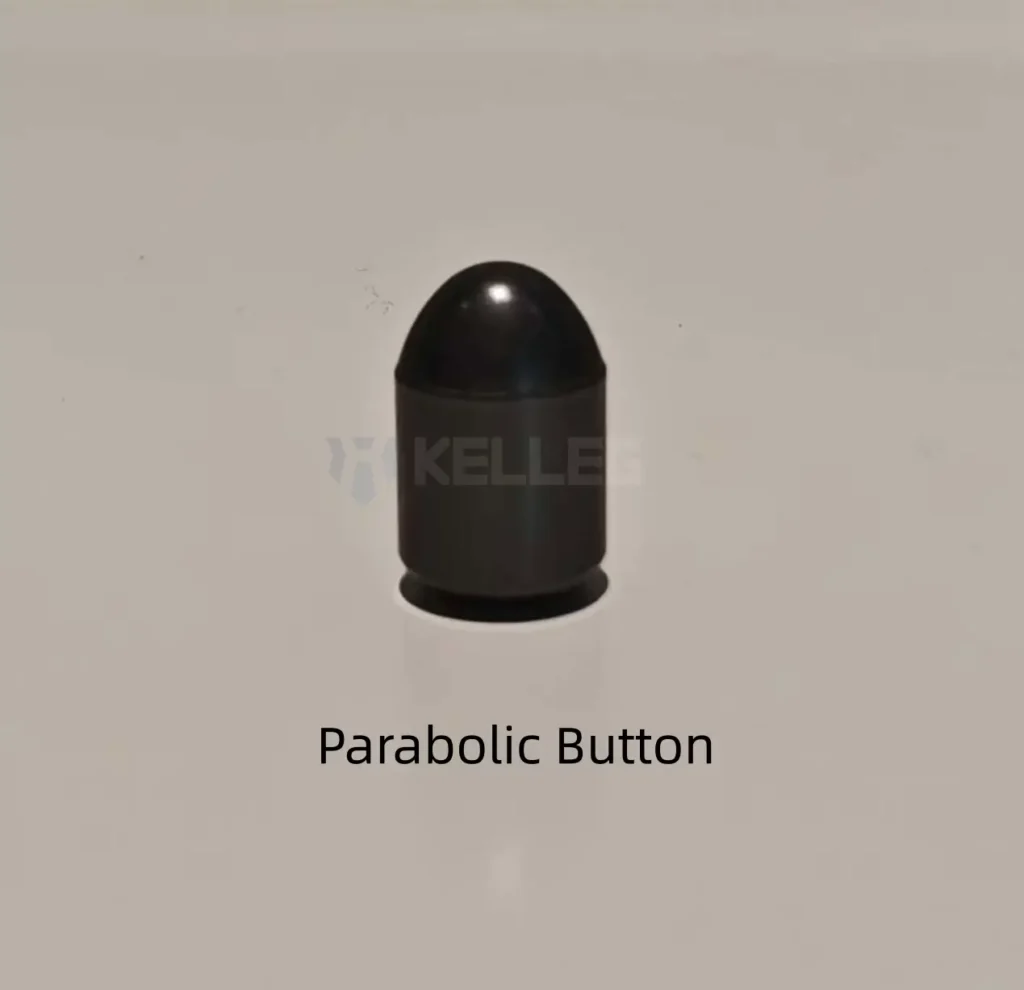
Parabolic buttons combine the advantages of spherical and ballistic geometries. Their smooth, curved profile reduces stress concentration while maintaining efficient penetration performance, making them a highly balanced solution in tapered drilling tools.
Key Characteristics #
- Balanced penetration rate and wear resistance
- Stable performance under varying rock conditions
- Reduced risk of carbide chipping
- Suitable for multi-layer geological formations
Best Rock Conditions #
- Medium-hard rock
- Moderately abrasive formations
- Mixed or variable geological conditions
Performance in Tapered Bits #
- Reliable all-round performance in tapered drilling applications
- Ideal for projects with changing rock formations
- Most commonly recommended “general-purpose” button shape
Button Shape Comparison Table #
| Button Shape | Penetration Rate | Wear Resistance | Rock Condition | Service Life |
|---|---|---|---|---|
| Spherical | Medium | Very High | Hard, abrasive rock | Longest |
| Ballistic | High | Medium | Medium-hard, fractured rock | Medium |
| Conical | Very High | Low | Soft to medium-soft rock | Short |
| Parabolic | High | High | Medium-hard, mixed rock | Medium–Long |
Choosing the Right Bit Diameter and Button Size #
Bit diameter and carbide button size are key factors that directly influence drilling efficiency, hole quality, and overall tool performance in tapered button bits. In pneumatic rock drilling applications, selecting the correct diameter ensures proper energy transfer, stable hole formation, and optimized air flushing performance.
Common Tapered Button Bit Sizes #
Tapered button bits are typically available in a range of diameters to match different drilling requirements and rock drill power levels.
Common sizes include:
- 28mm
- 30mm
- 32mm
- 34mm
- 36mm
- 38mm
- 40mm
- 42mm
How Bit Diameter Influences Drilling #
Bit diameter plays a critical role in overall drilling performance, especially in tapered drilling tools where energy is delivered through pneumatic impact. The main influencing factors include:
Hole Size #
Bit diameter directly determines the final borehole size. Larger diameters create wider holes, which are suitable for blasting, anchoring, and ventilation drilling, while smaller diameters are used for precision drilling and shallow holes.
Flushing Efficiency #
Proper flushing is essential for removing rock cuttings from the borehole. Larger bit diameters generally allow better air or water circulation, improving cutting removal and reducing the risk of hole blockage. Poor flushing can lead to overheating and accelerated carbide wear.
Drilling Stability #
A properly selected bit diameter improves hole straightness and reduces deviation during drilling. Larger bits tend to provide better directional stability in harder rock formations, while smaller bits may be more sensitive to deflection in fractured ground.
Air Consumption #
Bit diameter also affects compressed air requirements in pneumatic rock drilling systems. Larger diameter bits require higher air volume to maintain efficient flushing and impact performance, which can increase compressor load and overall energy consumption.
Smaller bits, on the other hand, consume less air but may have limitations in penetration capacity and flushing efficiency.
Selecting the correct bit diameter is therefore a balance between drilling efficiency, equipment capacity, and rock conditions, ensuring optimal performance and cost-effectiveness in tapered drilling operations.
Skirt Body Design Selection: Short Skirt Body vs Long Skirt Body #
In tapered button bits, the skirt (also called the bit body length below the taper connection) plays an important role in drilling stability, hole accuracy, and overall drilling behavior. Different skirt body designs are optimized for different drilling depths and rock conditions, especially in pneumatic rock drilling systems where impact energy and guidance control are critical.
Short Skirt Body Tapered Bits #
Key Characteristics #
Short skirt body tapered button bits are designed with a more compact body structure. This design reduces overall bit weight and contact resistance during drilling, allowing for faster penetration in suitable rock formations.
- Faster drilling performance due to reduced contact area
- Lighter weight, improving operator control in handheld drilling
- Easier handling in shallow hole applications
- Lower resistance during impact and rotation
Best Applications #
- Shallow hole drilling operations
- Soft to medium rock formations
- Light-duty pneumatic rock drills
- Small-scale quarrying and construction drilling
Short skirt body designs are typically preferred when drilling speed and maneuverability are more important than deep-hole accuracy or extreme stability.
Long Skirt Body Tapered Bits #
Key Characteristics #
Long skirt body tapered button bits feature an extended body length, which provides better guidance and stability during drilling. This design improves hole alignment and reduces deviation, especially in harder and more demanding rock conditions.
- Improved hole straightness and directional control
- Better guidance in deep hole drilling
- Increased stability under high-impact drilling forces
- Reduced risk of hole deviation in hard rock formations
Best Applications #
- Underground mining and tunneling projects
- High-impact pneumatic rock drilling systems
Long skirt body designs are preferred when drilling accuracy, stability, and control are more important than speed, especially in challenging geological environments.
Choosing the correct skirt body design helps ensure better hole quality, improved drilling efficiency, and longer service life of tapered button bits in different working conditions.
How to Choose the Right Tapered Button Bits #
Selecting the right tapered button bit requires a systematic approach that considers rock conditions, drilling equipment, and performance requirements. A correct selection can significantly improve penetration rate, reduce tool wear, and enhance overall drilling efficiency, while incorrect choices often lead to poor drilling performance, bit failure, or increased operational costs.
Below is a practical 5-step selection guide designed for real drilling applications and optimized for engineering decision-making.
Step 1 – Determine Rock Type and Hardness #
The first and most important step is to identify the geological conditions.
Different rock types directly influence bit performance:
- Soft rock → requires higher penetration efficiency
- Medium-hard rock → requires balanced performance
- Hard rock → requires maximum wear resistance
- Abrasive rock → requires high carbide durability
Understanding rock hardness ensures the correct foundation for all subsequent selections.
Step 2 – Select the Appropriate Taper Angle #
Taper angle determines connection stability and energy transmission efficiency in pneumatic rock drilling systems.
- 7° → easy removal, suitable for soft to medium rock
- 11° → most commonly used, balanced performance
- 12° → strongest locking force
Correct taper angle selection ensures stable bit retention and efficient impact energy transfer.
Step 3 – Match the Button Shape #
Carbide button geometry directly affects penetration rate and wear resistance.
- Spherical buttons → best durability, ideal for hard and abrasive rock
- Ballistic buttons → high penetration, suitable for medium-hard rock
- Conical buttons → maximum speed, best for soft rock
- Parabolic buttons → balanced performance for mixed conditions
Choosing the correct button shape ensures optimal balance between speed and service life.
Step 4 – Determine Optimal Size and Specification #
Bit diameter and button size must match both rock conditions and drilling equipment capacity.
Key considerations include:
- Hole diameter requirement
- Flushing efficiency (air or water)
- Drilling stability and hole straightness
- Air consumption and compressor capacity
Typical tapered bit sizes range from 28mm to 42mm, with larger diameters used for harder rock and heavier drilling applications.
Step 5 – Verify Compatibility and Conduct Trial Drilling #
Before full-scale operation, it is essential to ensure system compatibility:
- Check match between tapered bit and drill rod taper angle
- Confirm compatibility with pneumatic rock drill model
- Conduct trial drilling in real rock conditions
- Evaluate penetration rate, wear pattern, and stability
Field testing helps prevent costly mismatches and ensures optimal performance in actual working conditions.
Common Problems Caused by Incorrect Tapered Bit Selection #
Incorrect selection of tapered button bits often leads to performance issues that reduce drilling efficiency, increase tool consumption, and cause unexpected downtime. These problems are usually the result of mismatched taper angle, incorrect button shape, improper bit size, or poor compatibility with rock drilling conditions.
Below are the most common field problems and their practical causes and solutions.
Excessive Bit Wear #
Possible Causes #
- Using ballistic or conical buttons in hard or highly abrasive rock
- Incorrect taper angle leading to unstable energy transfer
- Insufficient flushing is causing overheating
- Overloading drill impact pressure beyond bit capacity
Recommended Solution #
- Use spherical buttons for abrasive and hard formations
- Select a suitable taper angle (often 11° or 12° for harder rock)
- Improve flushing efficiency (air or water)
- Match bit design with rock hardness and drilling power
Poor Hole Straightness #
Possible Causes #
- Short skirt body used in deep drilling operations
- Incorrect bit diameter is causing unstable guidance
- Worn carbide buttons leading to uneven cutting
- Fractured or heterogeneous rock conditions
Recommended Solution #
- Use long skirt body tapered button bits for deeper holes
- Select an appropriate bit diameter for better stability
- Replace worn bits in time to maintain cutting balance
- Use parabolic or spherical buttons for better guidance stability
Slow Penetration Rate #
Possible Causes #
- Using spherical buttons in soft or medium rock
- Insufficient air pressure or drill power mismatch
- Blocked flushing holes reduce debris removal
- Incorrect button size is reducing cutting efficiency
Recommended Solution #
- Use ballistic or conical buttons in suitable rock conditions
- Increase or optimize pneumatic drill impact energy
- Ensure proper flushing system performance
- Match bit size with rock formation and drill capacity
Bit Falling Off During Drilling #
Possible Causes #
- Incorrect taper angle
- Worn or damaged drill rod
- Excessive vibration or impact load
- Improper installation or insufficient seating
Recommended Solution #
- Ensure correct taper match (7°, 11°, or 12° consistency)
- Replace worn tapered drill rods
- Avoid overloading drill impact pressure
- Properly clean and install bit before use
Carbide Button Breakage #
Possible Causes #
- Using conical or ballistic buttons in hard abrasive rock
- Excessive impact energy from pneumatic drill
- Drilling fractured rock without proper bit selection
- Poor-quality flushing is causing overheating
Recommended Solution #
- Use spherical buttons for hard and abrasive formations
- Reduce impact pressure to match bit design capacity
- Select parabolic or spherical geometry for stability
- Improve flushing to reduce heat buildup
Best Practices to Extend Tapered Button Bit Service Life #
Extending the service life of tapered button bits requires proper operation, correct parameter control, and regular maintenance. Even high-quality bits will fail prematurely if used incorrectly.
Proper Regrinding #
Regular regrinding of carbide buttons helps restore cutting efficiency and reduces unnecessary wear.
- Maintain original button geometry
- Avoid over-grinding, which reduces carbide volume
- Regrind at early wear stages for best results
Maintain Correct Impact Pressure #
Excessive impact energy is one of the main causes of bit failure.
- Match drill pressure with bit type and rock condition
- Avoid overloading pneumatic rock drills
- Maintain stable drilling rhythm
Ensure Adequate Flushing #
Flushing is essential for removing cuttings and controlling heat.
- Ensure air or water channels are not blocked
- Maintain sufficient airflow during drilling
- Improve debris removal efficiency to reduce wear
Match Bit with Rock Drill Power #
A mismatch between drill power and bit specification can significantly reduce performance.
- Use appropriate pneumatic rock drill models
- Avoid using heavy-duty bits on low-power equipment
- Ensure energy transfer efficiency in tapered systems
Inspect Carbide Wear Regularly #
Routine inspection helps prevent sudden failure and downtime.
- Check carbide tip wear patterns
- Replace bits showing uneven or excessive wear
- Monitor skirt body and taper condition for deformation
Tapered button bit life is not only determined by material quality, but also by:
- Proper selection (taper angle, button shape, size)
- Correct operation parameters
- Effective flushing and maintenance
How to Match Tapered Button Bits with Rock Drills and Rods #
Proper matching between tapered button bits, tapered drill rods, and rock drills is essential for achieving stable drilling performance. In tapered drilling tools, energy is transmitted through the drill rod to the bit via a taper connection, meaning any mismatch in equipment can lead to energy loss, poor penetration, or premature tool failure.
Compatible Tapered Drill Rods #
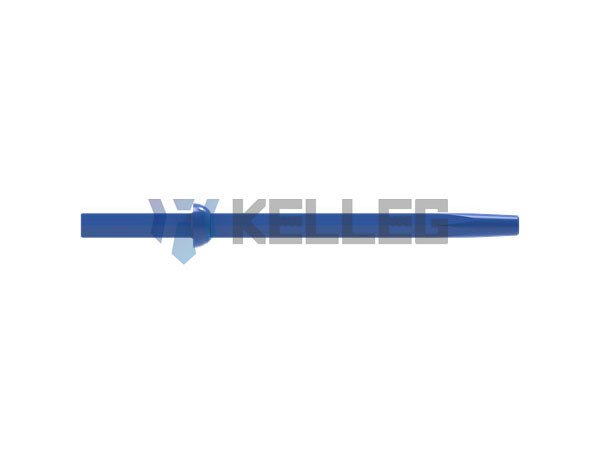
Tapered button bits must be used with corresponding tapered drill rods that share the same taper angle to ensure proper fit and energy transfer.
Common tapered rod configurations include:
- 7° tapered drill rods → used with 7° tapered button bits
- 11° tapered drill rods → most widely used standard tools, with 11° tapered button bits
- 12° tapered drill rods → used with 12° tapered button bits
When the taper angles are correctly matched, the connection becomes self-locking under impact, ensuring stable drilling performance and minimizing energy loss.
Incorrect rod-bit matching can lead to:
- Loose connection during drilling
- Reduced impact energy transfer
- Increased wear on both rod and bit
Hand-Held Rock Drill Compatibility #
Tapered button bits are most commonly used with pneumatic hand-held rock drills. These machines provide high-frequency impact energy suitable for small-diameter drilling in mining, quarrying, and construction.
Typical compatible rock drills include:
- YT27 rock drill – widely used for general mining and tunneling applications
- YT28 rock drill – higher impact power, suitable for harder rock formations
- YN27 portable rock drill – gasoline-powered, ideal for remote or field operations
- Jack hammers – light-duty drilling and construction applications
Each rock drill model delivers different impact energy levels, so selecting the correct tapered button bit design (taper angle, button shape, and diameter) is critical for performance optimization.
Importance of Proper Energy Transfer #
Efficient drilling depends on how effectively impact energy is transmitted from the rock drill through the drill rod to the bit and finally into the rock formation.
When the system is properly matched:
- Drilling efficiency increases due to minimal energy loss
- Reduced stress concentration occurs at the taper connection and carbide buttons
- Longer tool service life is achieved as wear is distributed more evenly
However, if the system is mismatched, energy can be lost at the connection interface, leading to vibration, overheating, and premature failure of both drill rods and tapered button bits.
In summary, correct matching of rock drill, drill rod, and tapered button bit is essential to ensure stable performance, maximize penetration rate, and reduce overall drilling costs.
Conclusion #
Each drilling condition requires a carefully matched combination of design parameters and operating conditions to achieve optimal performance.
Successful drilling depends on correct tool matching, including:
- Taper angle (7°, 11°, 12°) for proper connection stability and energy transfer
- Button shape for balancing penetration rate and wear resistance
- Bit diameter for hole size control, flushing efficiency, and drilling stability
- Rock condition for selecting the appropriate wear and impact resistance level
- Drill power to ensure efficient energy delivery and system compatibility
When all these factors are properly aligned, the drilling tools can achieve significant performance improvements:
- Higher penetration rate
- Lower overall drilling cost
- Longer service life of drilling tools
- Improved drilling efficiency and operational stability
In modern rock drilling applications, efficiency is not determined by a single tool, but by how well the entire system is matched and optimized.