- Introduction
- What Is Energy Transfer in Top Hammer Drilling?
- Key Components That Affect Energy Transfer
- How to Match Top Hammer Drilling Tools
- Best Practices to Improve Energy Transfer Efficiency
- How Modern Top Hammer Drilling Tool Design Improves Energy Transfer
- Conclusion
Introduction #
In top hammer drilling, energy transfer efficiency is one of the most critical factors affecting overall drilling performance. No matter how powerful the rock drill is, drilling productivity will decline significantly if the impact energy cannot be transmitted efficiently through the rock drilling tools to the rock face. Efficient energy transfer directly determines penetration rate, hole quality, tool wear, and operating cost.
Many drilling problems that operators encounter in mining, quarrying, tunneling, and construction projects are often blamed on difficult rock formations. However, in practice, a large percentage of these issues are actually caused by poor matching between drilling tools and drilling parameters. Even high-quality components can perform poorly when the shank adapter, drill rods, couplings, and drill bits are not properly matched as a complete system.
In a top hammer drilling, percussive energy is transmitted through the following path:
Rock drill → Shank adapter → Coupling → Drill rod → Drill bit → Rock
During this process, every connection point influences how much impact energy successfully reaches the drill bit. Any mismatch, excessive wear, poor thread connection, or incorrect component selection can lead to energy loss, vibration, stress concentration, and reduced drilling efficiency.
Properly matched top hammer drilling tools provide several important advantages:
- Higher penetration rate and faster drilling
- Reduced vibration and smoother operation
- Lower fuel and compressed air consumption
- Longer service life for rods, bits, and adapters
- Improved hole straightness and drilling accuracy
- Lower overall drilling and maintenance costs
As drilling projects continue to demand higher productivity and lower operating costs, optimizing energy transfer through proper tool matching has become increasingly important. Understanding how each component works together within the rock drilling tool is essential for achieving stable, efficient, and cost-effective rock drilling performance.
What Is Energy Transfer in Top Hammer Drilling? #
Energy transfer in top hammer drilling refers to the process of transmitting percussive impact energy from the rock drill through the entire drilling tool assembly and finally into the rock. The efficiency of this transfer directly affects drilling speed, tool lifespan, hole quality, and overall operating cost.
In a top hammer drilling tool, every component acts as part of an energy transmission chain. If one section of the tool is poorly matched or damaged, impact energy can be lost before it reaches the rock face. This not only reduces drilling efficiency but also increases vibration, wear, and the risk of component failure.
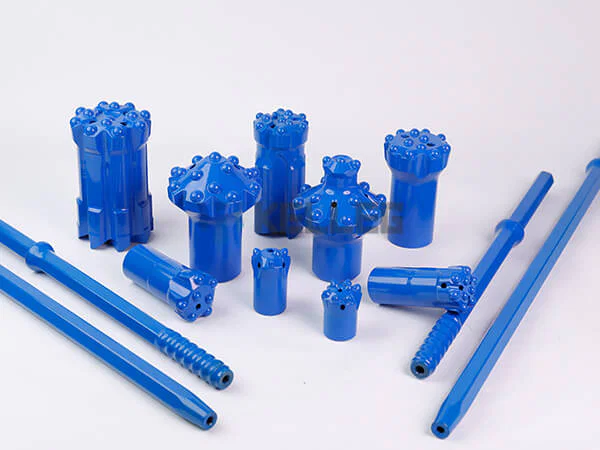
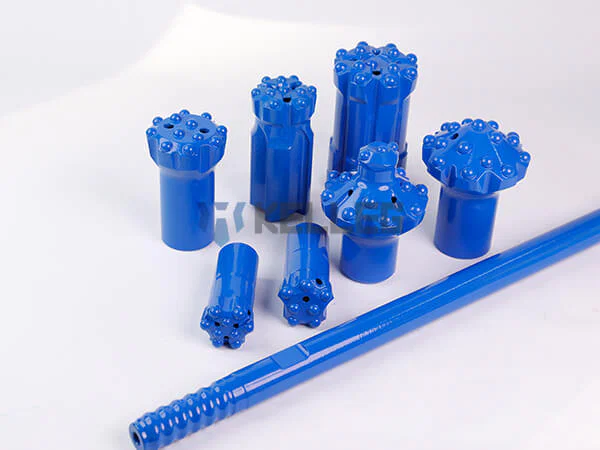
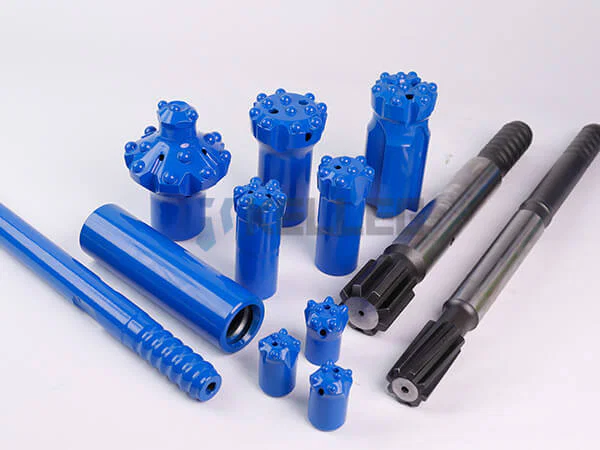
How Percussive Energy Travels Through the Rock Drilling Tools #
Impact Wave Generation #
The drilling process begins inside the rock drill, where the piston repeatedly strikes the shank adapter at high speed. Each impact generates a powerful stress wave, commonly referred to as a percussive wave or impact wave.
This wave contains concentrated mechanical energy designed to travel efficiently through the drilling system with minimal loss. Modern top hammer drills can produce thousands of impacts per minute, making stable energy transmission essential for maintaining high penetration rates.
Transmission Through Threaded Components #
After the impact wave is generated, the energy travels through a series of threaded drilling components, including:
- Shank adapter
- Coupling sleeve
- Drill rods
- Threaded drill bit
Each threaded connection acts as a transfer point for impact energy. Precision thread design and tight contact surfaces are critical because even small gaps or poor alignment can reduce transmission efficiency.
Well-matched threaded connections help:
- Minimize energy reflection
- Reduce stress concentration
- Improve wave continuity
- Lower vibration levels
Poorly matched threads, on the other hand, can absorb or scatter impact energy before it reaches the bit.
Energy Reaching the Drill Bit #
Once the impact wave reaches the drill bit, the energy is concentrated onto the carbide buttons and transferred directly into the rock surface.
At this stage, drilling performance depends heavily on:
- Bit design
- Button layout
- Face shape
- Carbide quality
- Bit-to-rock compatibility
An efficiently matched drill bit converts impact energy into effective rock crushing and cracking action, improving penetration while reducing unnecessary wear.
Rock Fragmentation Process #
When impact energy enters the rock, it creates compressive and tensile stress within the formation. As stress exceeds the rock’s strength limit, cracks begin to form and propagate.
Rock fragmentation occurs through:
- Crushing beneath the carbide buttons
- Crack propagation between stress zones
- Repeated impact loading
- Rotational cutting action
Efficient energy transfer ensures that more impact energy contributes directly to rock breakage rather than being lost through vibration, heat, or tool deformation.
Why Energy Loss Happens #
Even with high-performance drilling equipment, energy loss can occur throughout the drilling system if components are not properly matched or maintained.
Thread Mismatch #
Different thread systems or poorly manufactured threads can create gaps and instability at connection points. This interrupts stress wave transmission and causes energy reflection.
Common issues include:
- Mixing incompatible thread types
- Poor thread precision
- Loose threaded connections
- Uneven thread wear
Poor Contact Surfaces #
Efficient energy transfer requires tight and uniform contact between components. Damaged or worn contact surfaces reduce the effective transfer area and create localized stress concentration.
This can result in:
- Energy leakage
- Increased vibration
- Premature thread damage
- Reduced drilling efficiency
Rod Bending #
Bent drill rods disrupt straight stress wave transmission and introduce additional side loading during drilling.
Consequences include:
- Uneven energy distribution
- Increased fatigue stress
- Hole deviation
- Higher risk of rod breakage
Rod straightness becomes increasingly important in long-hole drilling applications.
Excessive Vibration #
Vibration is one of the largest sources of hidden energy loss in top hammer drilling. Excessive vibration can occur due to:
- Poor tool matching
- Incorrect drilling parameters
- Worn components
- Inconsistent rock conditions
Instead of reaching the rock face, part of the impact energy is dissipated as mechanical vibration and heat.
Incorrect Bit Selection #
Using the wrong drill bit for the rock formation can significantly reduce drilling efficiency.
Examples include:
- Soft-rock bits used in abrasive formations
- Inadequate button configuration
- Incorrect face design
- Undersized or oversized bits
Poor bit selection reduces the drill bit’s ability to effectively convert impact energy into rock fragmentation.
Worn Components #
Over time, drilling tools naturally wear during operation. Excessively worn components reduce drilling system stability and increase energy loss.
Critical wear areas include:
- Threads
- Coupling surfaces
- Carbide buttons
- Rod body
- Shank adapter striking surface
Routine inspection and timely replacement are essential for maintaining optimal energy transfer efficiency.
Signs of Poor Energy Transfer #
Poor energy transfer often causes noticeable drilling performance problems. Identifying these warning signs early can help prevent serious equipment damage and production loss.
Slow Penetration #
One of the most common indicators is reduced drilling speed. When impact energy is lost within the system, less energy reaches the drill bit, lowering rock-breaking efficiency.
High Rod Breakage Rate #
Excessive stress concentration and unstable wave transmission can accelerate metal fatigue, leading to:
- Rod cracking
- Thread failure
- Coupling damage
- Unexpected breakage
Excessive Thread Wear #
Abnormal thread wear often indicates:
- Poor alignment
- Loose connections
- Improper torque
- Energy reflection within the system
Severe thread wear can quickly reduce drilling stability.
Overheating #
Excess friction and vibration generate additional heat during drilling. Overheating may appear on:
- Couplings
- Threads
- Shank adapters
- Drill bits
High operating temperatures can shorten tool lifespan and weaken material strength.
Hole Deviation #
Poor energy transfer and unstable drilling forces can reduce hole straightness, especially in long-hole applications.
This may lead to:
- Inaccurate blasting patterns
- Increased drilling correction
- Reduced production quality
Unusual Vibration or Noise #
Abnormal vibration and irregular drilling noise often indicate unstable energy transmission within the drilling system.
Operators may notice:
- Strong tool shaking
- Irregular hammer sound
- Increased machine stress
- Reduced drilling smoothness
These symptoms should be inspected immediately to prevent further tool damage or drilling downtime.
Key Components That Affect Energy Transfer #
In top hammer drilling, energy transfer efficiency depends on how well every component in the drilling system works together. Even if one part is improperly selected or poorly maintained, impact energy can be lost before it reaches the rock face. To achieve high drilling efficiency and stable performance, operators must understand how each component influences stress wave transmission and drilling stability.
Rock Drill #
The rock drill is the power source of the entire top hammer drilling system. It generates the percussive impact energy and rotational force required to break rock efficiently.
Impact Energy #
Impact energy refers to the amount of energy delivered during each piston strike. Higher impact energy generally improves penetration in hard rock formations because more force is transferred to the drill bit.
However, excessive impact energy can also create problems if the drilling tools are not strong enough to handle the load. Improper matching may lead to:
- Thread failure
- Rod cracking
- Coupling damage
- Increased vibration
The selected drilling tools must be capable of transmitting the rock drill’s impact energy without excessive deformation or fatigue.
Frequency #
Frequency refers to the number of impacts delivered per minute. Modern hydraulic top hammer drills often combine high impact frequency with optimized energy levels to improve drilling efficiency.
A balanced combination of impact energy and frequency helps:
- Maintain smooth drilling
- Improve rock fragmentation
- Reduce stress concentration
- Increase penetration rate
Very high frequencies may accelerate wear if drilling components are not properly matched.
Rotation Speed #
Rotation speed affects how the drill bit distributes impact energy across the rock surface. Proper rotation allows carbide buttons to strike fresh rock with each impact.
Incorrect rotation speed may cause:
- Excessive button wear
- Poor hole cleaning
- Reduced penetration
- Uneven rock fragmentation
Hard rock formations generally require lower rotation speed combined with strong impact force, while softer formations may benefit from higher rotational speed.
Matching Tool Strength to Rock Drill Output #
One of the most important principles in top hammer drilling is matching tool strength to the rock drill’s output capacity.
If the drilling tools are too weak:
- Fatigue failure increases
- Thread wear accelerates
- Rod breakage becomes more common
If the tools are oversized or excessively heavy:
- Energy transmission efficiency decreases
- Drilling responsiveness drops
- Fuel and energy consumption increase
An optimized drilling system balances:
- Hammer power
- Rod dimensions
- Thread strength
- Bit size
- Rock conditions
This balance helps maximize energy transfer while minimizing wear and operating costs.
Shank Adapter #
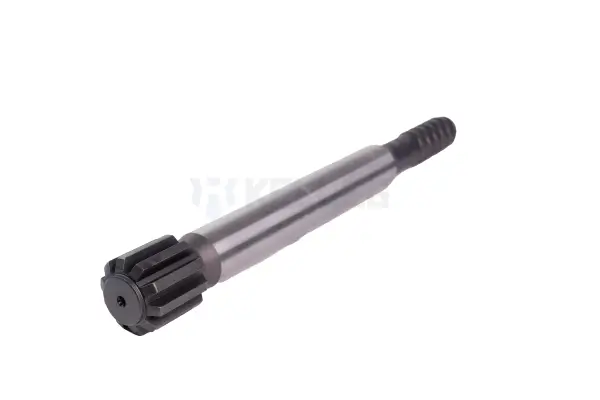
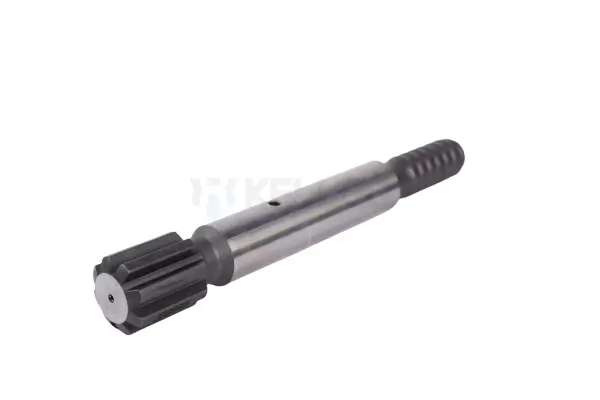
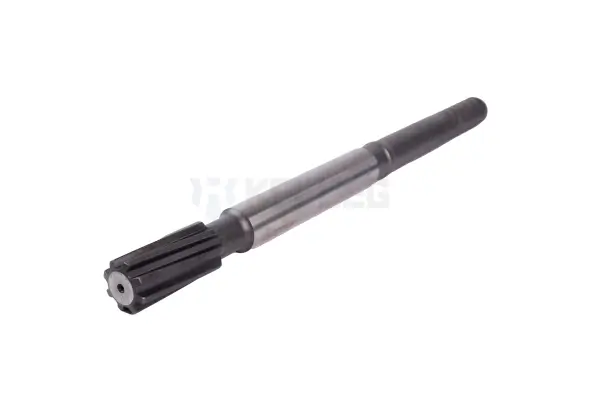
The shank adapter is the first component that transfers impact energy from the rock drill to the drilling tools. Because it directly receives repeated piston impacts, its design and quality significantly affect drilling efficiency and component lifespan.
Correct Spline Compatibility #
Spline compatibility between the rock drill and shank adapter is critical for stable energy transmission.
An incompatible spline design can cause:
- Poor impact alignment
- Uneven force distribution
- Excessive vibration
- Accelerated wear
Proper spline engagement ensures efficient transfer of both rotational torque and impact energy.
Thread Type #
The shank adapter thread must match the entire drilling system, including:
- Couplings
- Drill rods
- Drill bits
Using incompatible thread types may lead to:
- Poor connection stability
- Energy reflection
- Thread damage
- Unsafe drilling conditions
Common thread standards include R, T, and ST threads, each designed for different drilling applications and impact loads.
Length Selection #
Shank adapter length influences drilling stability and stress distribution.
A properly selected length helps:
- Reduce bending stress
- Improve alignment
- Stabilize energy transfer
Excessively long adapters may increase vibration, while adapters that are too short may reduce operational flexibility.
Hardness and Fatigue Resistance #
Since the shank adapter experiences constant high-frequency impact loading, it must have:
- High surface hardness
- Strong fatigue resistance
- Good toughness
Advanced heat treatment and alloy steel materials help improve durability and reduce the risk of cracking or premature failure.
What Happens if the Wrong Shank Adapter Is Used? #
Using the wrong shank adapter can seriously affect drilling performance and equipment reliability.
Potential problems include:
- Reduced energy transfer efficiency
- Increased vibration and noise
- Accelerated thread wear
- Poor hole straightness
- Piston damage
- Adapter cracking or breakage
- Reduced service life of connected tools
In severe cases, improper shank adapter selection can damage the rock drill itself, leading to expensive repairs and downtime.
Drill Rod #
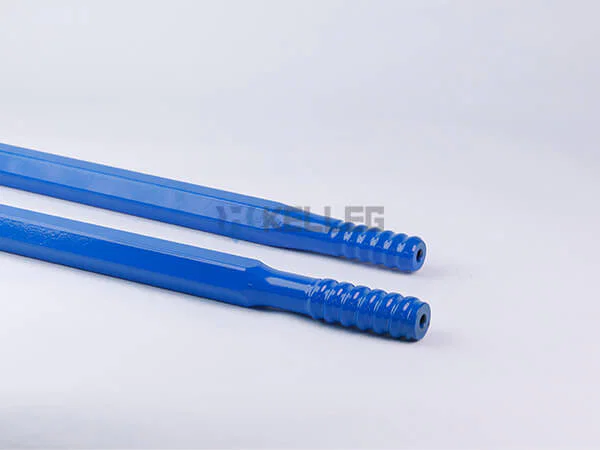
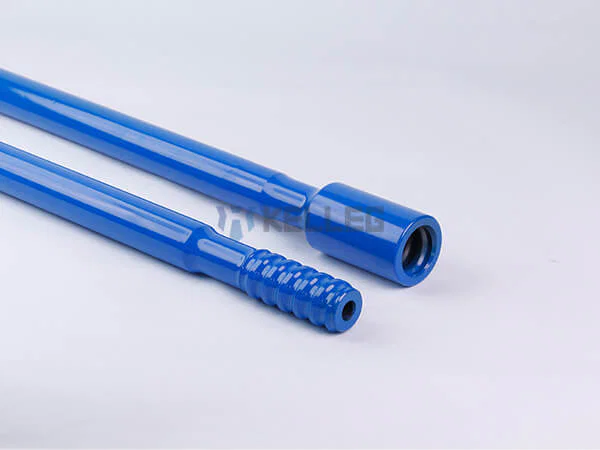
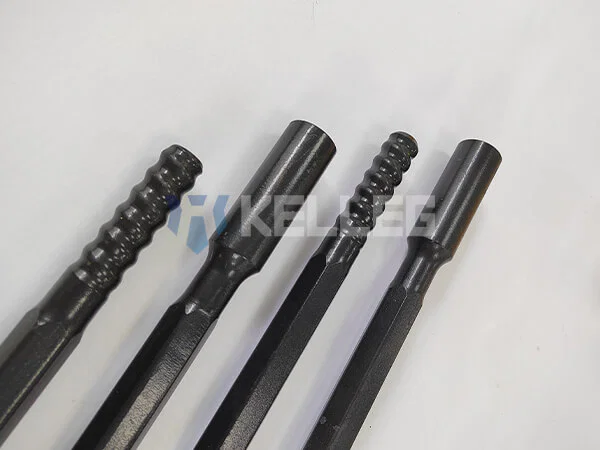
Drill rods act as the main transmission channel for percussive energy. Their design, strength, and compatibility directly influence drilling stability and energy efficiency.
Rod Diameter #
Rod diameter affects:
- Energy transmission capability
- Rigidity
- Hole straightness
- Resistance to bending
Larger diameter rods generally provide:
- Better stiffness
- Lower vibration
- Improved energy transfer in deep-hole drilling
Smaller rods may offer faster handling and lower weight, but can experience higher stress concentration in demanding applications.
Rod Length #
Rod length influences drilling reach and system stability.
Longer rods may increase:
- Energy loss
- Vibration
- Hole deviation
Shorter rods generally provide:
- More efficient energy transfer
- Better drilling control
- Reduced bending stress
Rod length selection should match the drilling depth and application requirements.
Thread Type #
Thread compatibility is essential for maintaining stable impact wave transmission.
Well-designed threads help:
- Minimize energy loss
- Improve connection stability
- Reduce wear
- Extend component life
Poorly matched or damaged threads interrupt stress wave continuity and increase fatigue loading.
Rod Stiffness #
Rod stiffness affects how efficiently impact waves travel through the drilling system.
A stiff rod helps:
- Maintain straight wave transmission
- Reduce vibration
- Improve hole accuracy
Insufficient stiffness may cause:
- Rod bending
- Energy dissipation
- Unstable drilling performance
Steel Quality #
High-quality alloy steel improves:
- Fatigue resistance
- Wear resistance
- Impact strength
- Service life
Advanced heat treatment processes also enhance the rod’s ability to withstand repeated high-energy impacts.
Couplings #
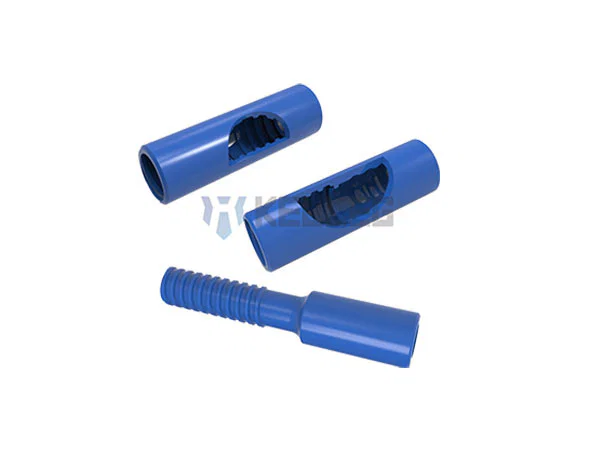
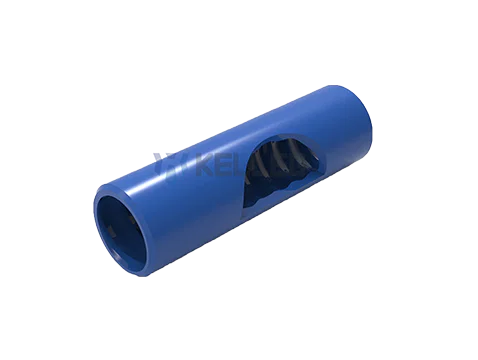
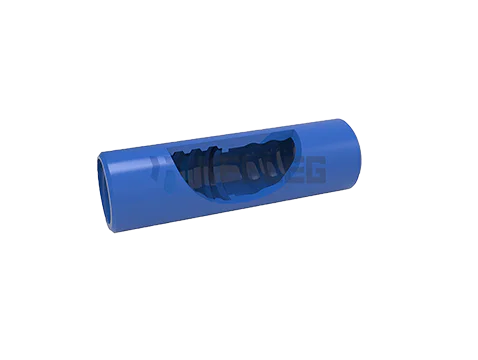
Couplings connect drill rods and play a critical role in maintaining continuous energy transmission through the drilling string.
Importance of Thread Precision #
Thread precision directly affects:
- Connection stability
- Stress wave continuity
- Energy transfer efficiency
Poorly manufactured threads create gaps and misalignment, increasing energy reflection and vibration.
Precision machining improves:
- Tightness
- Alignment
- Load distribution
- Overall drilling efficiency
Thread Wear Impact on Energy Transmission #
Thread wear reduces the contact quality between components and interrupts efficient stress wave transfer.
Severe thread wear may cause:
- Energy leakage
- Connection instability
- Excessive vibration
- Thread stripping
- Rod breakage
Regular inspection and timely replacement are essential to maintain drilling performance.
Rock Drill Bit #
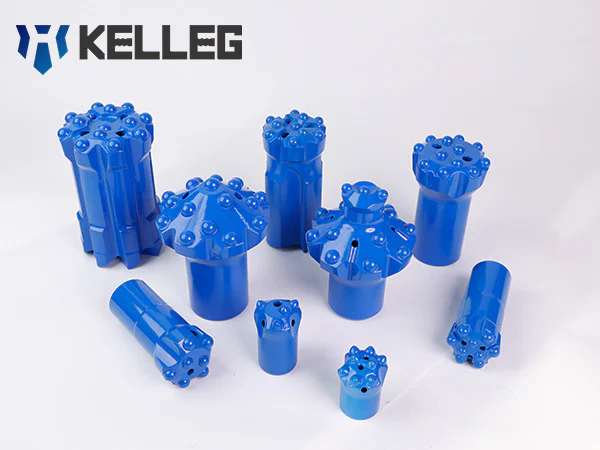
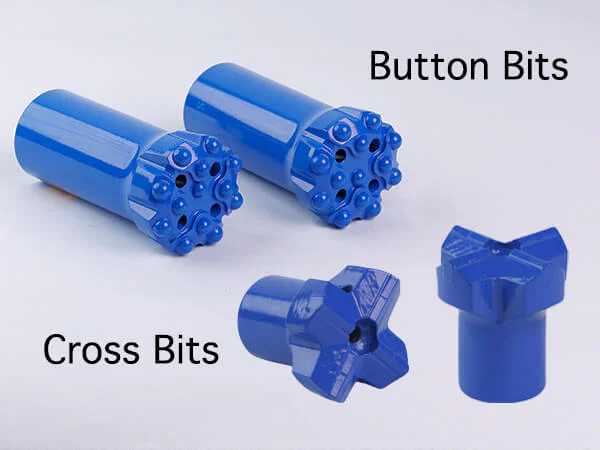
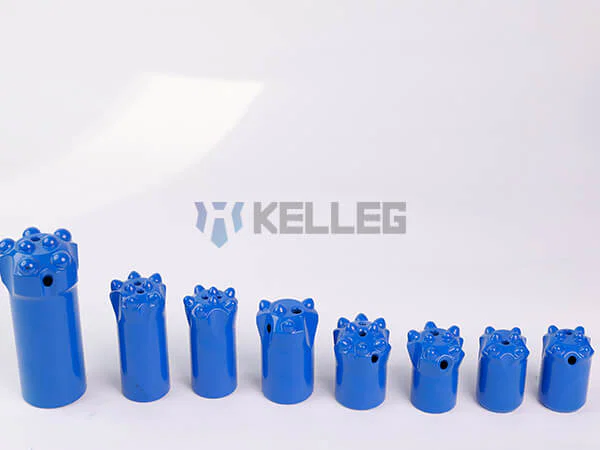
The drill bit is the final component in the energy transmission chain and directly converts impact energy into rock fragmentation.
Proper drill bit design significantly influences:
- Penetration rate
- Hole quality
- Tool wear
- Drilling cost
Button Configuration #
Button layout determines how impact force is distributed across the rock surface.
Different configurations affect:
- Penetration speed
- Rock crushing efficiency
- Hole cleaning performance
- Wear distribution
Optimized button placement improves drilling stability and extends bit life.
Face Design #
Bit face design influences:
- Rock contact pattern
- Flushing efficiency
- Hole straightness
Common face designs include:
- Flat face
- Convex face
- Concave face
Each design performs differently depending on rock hardness and drilling conditions.
Skirt Body Structure #
The skirt body stabilizes the drill bit during operation and protects the bit body from excessive wear.
A strong skirt structure helps:
- Improve guidance
- Reduce vibration
- Maintain hole accuracy
- Increase bit durability
Carbide Grade #
Carbide quality directly affects the drill bit’s wear resistance and impact strength.
High-performance carbide provides:
- Better resistance to abrasion
- Longer service life
- Improved drilling consistency
Different carbide grades are optimized for specific rock conditions.
Matching Bit Design to Rock Conditions #
Selecting the correct drill bit design for the rock formation is essential for maximizing energy transfer and drilling efficiency.
Soft Rock
For softer formations:
- Faster penetration is possible
- Larger flushing channels may improve cuttings removal
- Aggressive button layouts are often preferred
Medium-Hard Rock
Medium-hard formations require balanced bit designs that combine:
- Good penetration
- Stable button wear
- Efficient energy utilization
Hard Abrasive Rock
Hard abrasive formations demand:
- Wear-resistant carbide
- Strong skirt body
- Durable button configuration
- High-strength bit body
Proper design helps reduce premature wear and maintain stable drilling performance.
Fractured Formations #
Fractured or broken ground conditions often create unstable drilling forces.
Recommended bit characteristics include:
- Improved guidance capability
- Stable face design
- Enhanced hole straightness
- Reduced vibration sensitivity
Selecting the correct bit design helps maintain drilling accuracy and minimize tool damage in difficult formations.
How to Match Top Hammer Drilling Tools #
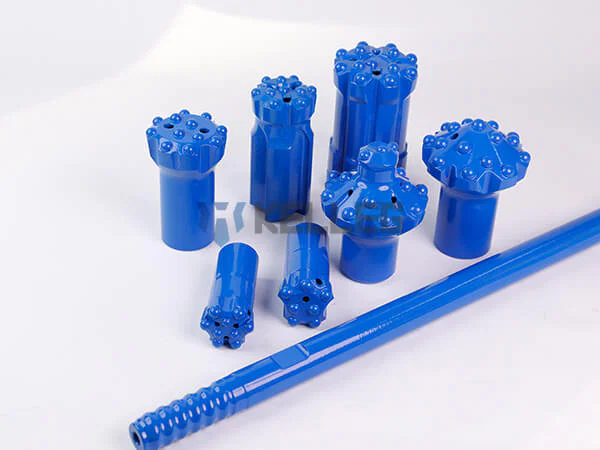
Proper matching of top hammer drilling tools is essential for achieving efficient energy transfer, stable drilling performance, and long service life. Instead of selecting components individually, operators should evaluate the entire drilling system as a complete energy transmission chain.
The following five-step matching process is widely used in mining, quarrying, tunneling, and construction projects to optimize drilling efficiency and reduce operating costs.
Step 1: Determine the Rock Drill Model and Power Output #
The first step is understanding the specifications and output capability of the rock drill.
Key parameters include:
- Impact energy
- Impact frequency
- Rotation torque
- Operating pressure
- Recommended hole diameter range
The drilling tools must be strong enough to handle the rock drill’s impact energy without excessive fatigue or energy loss.
For example:
- High-power hydraulic drifters usually require stronger thread systems and larger diameter rods.
- Smaller rock drills are better matched with lighter drilling tools to maintain efficient wave transmission.
Step 2: Evaluate Hole Depth and Rock Conditions #
Drilling conditions play a major role in tool selection.
Before choosing drilling tools, operators should evaluate:
- Rock hardness
- Abrasiveness
- Fracture conditions
- Hole depth
- Hole diameter
- Ground stability
Different rock formations require different drilling strategies.
Hard Abrasive Rock #
Recommended:
- High-strength rods
- Wear-resistant carbide buttons
- Strong skirt protection
Soft or Medium-Hard Rock #
Recommended:
- Faster penetration bit designs
- Optimized flushing structure
Fractured Ground #
Recommended:
- More stable bit face design
- Improved hole guidance capability
Hole depth also affects tool matching:
- Deep-hole drilling generally requires stiffer and larger diameter rods to reduce bending and energy loss.
- Short-hole applications may prioritize lighter tools and easier handling.
Step 3: Select the Appropriate Thread Series #
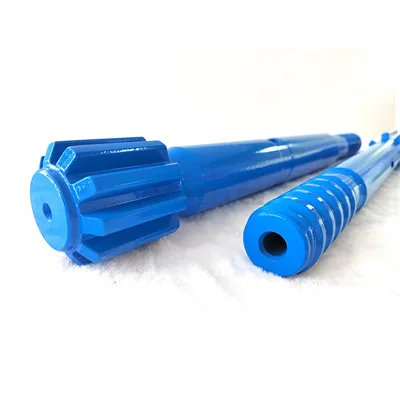
Thread selection is one of the most important factors influencing energy transfer efficiency and connection reliability.
The thread type should match:
- Rock drill power
- Hole size
- Drilling depth
- Ground conditions
When selecting a thread series, consider:
- Impact load capacity
- Connection stability
- Wear resistance
Using incompatible or undersized thread types can cause:
- Energy reflection
- Excessive thread wear
- Loose connections
- Reduced drilling efficiency
Step 4: Match the Correct Drill Rod Type #
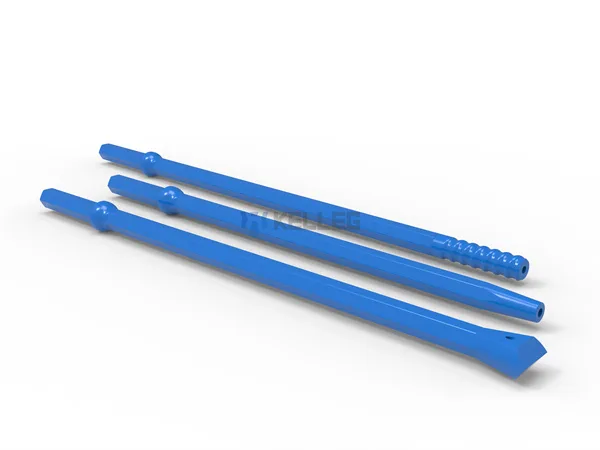
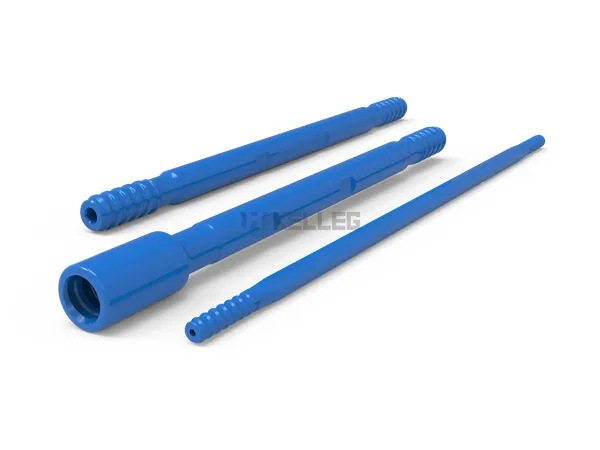
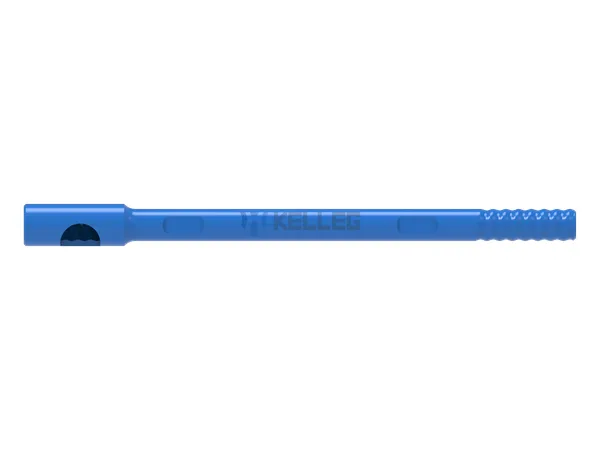
After selecting the thread type, the next step is choosing the appropriate drill rod.
Important factors include:
- Rod diameter
- Rod length
- Rod stiffness
- Rod type
- Steel quality
Step 5: Verify Drilling Tools Compatibility and Optimize Through Test Drilling #
Even when individual components appear suitable, the entire drilling tool must be verified as a complete matched setup.
Before full production drilling, operators should confirm:
- Thread compatibility
- Contact surface quality
- Rod straightness
- Bit alignment
- Coupling fit
- Rotation stability
A trial drilling test is strongly recommended to evaluate actual field performance.
Key performance indicators include:
- Penetration rate
- Vibration level
- Hole straightness
- Tool wear condition
- Fuel or energy consumption
- Thread stability
During test drilling, small adjustments may further optimize performance, such as:
- Changing bit design
- Adjusting rotation speed
- Optimizing flushing pressure
- Modifying rod configuration
Continuous monitoring and optimization help maximize energy transfer efficiency and extend drilling tool service life.
Why Proper Tool Matching Matters #
A properly matched top hammer drilling tool provides significant operational advantages:
- Faster drilling speed
- More efficient energy transfer
- Reduced vibration and stress concentration
- Longer rod and bit lifespan
- Improved hole accuracy
- Reduced downtime
In modern drilling operations, productivity is no longer determined only by rock drill power. The overall compatibility of the entire drilling tool has become equally important for achieving stable, cost-effective, and high-efficiency drilling performance.
Best Practices to Improve Energy Transfer Efficiency #
Efficient energy transfer is essential for achieving high penetration rates, stable drilling performance, and long service life in top hammer drilling operations. Even high-quality drilling tools can suffer from major energy losses if it is poorly maintained or incorrectly operated.
The following best practices help reduce impact energy loss, improve drilling efficiency, and extend the lifespan of drilling components.
Regular Inspection of Thread Wear #
Threads are critical connection points in the drilling tool and directly influence stress wave transmission. Worn or damaged threads create gaps between components, causing impact energy reflection and vibration.
Operators should regularly inspect:
- Rod threads
- Coupling threads
- Shank adapter threads
- Bit threads
Key signs of thread wear include:
- Rounded thread profiles
- Surface cracking
- Excessive looseness
- Uneven wear patterns
- Difficulty tightening connections
Replacing worn threaded components before severe damage occurs helps:
- Maintain stable energy transfer
- Reduce vibration
- Prevent rod breakage
- Improve drilling safety
Consistent thread maintenance also reduces unplanned downtime and repair costs.
Maintain Proper Rod Straightness #
Straight drill rods are essential for efficient stress wave transmission. Bent rods disrupt the path of impact energy and introduce unnecessary side loading during drilling.
Poor rod straightness may lead to:
- Energy loss
- Hole deviation
- Increased vibration
- Coupling wear
- Fatigue cracking
To maintain proper rod condition:
- Inspect rods regularly for bending
- Store rods correctly to avoid deformation
- Avoid improper handling during transportation
- Remove severely bent rods from operation immediately
In deep-hole drilling, rod straightness becomes even more important because small alignment errors can greatly increase energy dissipation and hole deviation.
Use High-Quality Couplings #
Couplings play a major role in maintaining continuous energy transmission through the drilling tools. Poor-quality couplings often create unstable threaded connections and increase stress concentration.
High-quality couplings provide:
- Precision-machined threads
- Better alignment
- Improved fatigue resistance
- Reduced vibration
Well-manufactured couplings help minimize:
- Energy reflection
- Thread loosening
- Premature wear
- Rod connection failure
Selecting couplings made from high-strength alloy steel with proper heat treatment can significantly improve drilling reliability and tool lifespan.
Optimize Flushing Parameters #
Efficient flushing is essential for removing rock cuttings from the hole and maintaining stable drilling conditions.
Improper flushing parameters can cause:
- Cuttings recirculation
- Increased bit wear
- Reduced penetration rate
- Excessive heat generation
- Energy loss through unstable drilling conditions
Operators should optimize:
- Air pressure
- Water flow
- Flushing volume
- Hole cleaning efficiency
Good flushing performance helps:
- Reduce unnecessary resistance at the bit face
- Improve drilling smoothness
- Lower vibration
- Enhance energy utilization efficiency
Flushing requirements may vary depending on:
- Hole depth
- Rock condition
- Hole diameter
- Drilling method
Reduce Unnecessary Connections #
Every threaded connection within the drilling system creates a potential point of energy loss. Additional couplings and unnecessary rod connections can reduce stress wave transmission efficiency.
Reducing unnecessary connections helps:
- Improve impact wave continuity
- Lower vibration
- Reduce thread wear
- Increase drilling stability
A simpler and more rigid drilling string usually provides more stable drilling performance.
Monitor Drilling Data in Real Time #
Modern drilling operations increasingly rely on real-time monitoring systems to optimize drilling efficiency and detect problems early.
Important drilling data includes:
- Penetration rate
- Impact pressure
- Rotation speed
- Feed force
- Vibration level
- Fuel or energy consumption
Real-time monitoring helps operators:
- Detect energy loss quickly
- Identify abnormal vibration
- Optimize drilling parameters
- Prevent premature tool failure
- Improve drilling consistency
Data-driven drilling optimization can significantly improve:
- Productivity
- Hole quality
- Tool life
- Overall operating efficiency
By continuously analyzing drilling performance, operators can make timely adjustments that maximize energy transfer and reduce total drilling costs.
Proper maintenance, correct tool selection, and continuous drilling optimization are all essential for improving energy transfer efficiency in top hammer drilling. In modern drilling operations, long-term productivity depends not only on powerful equipment but also on how effectively impact energy is transmitted through the entire drilling system.
How Modern Top Hammer Drilling Tool Design Improves Energy Transfer #
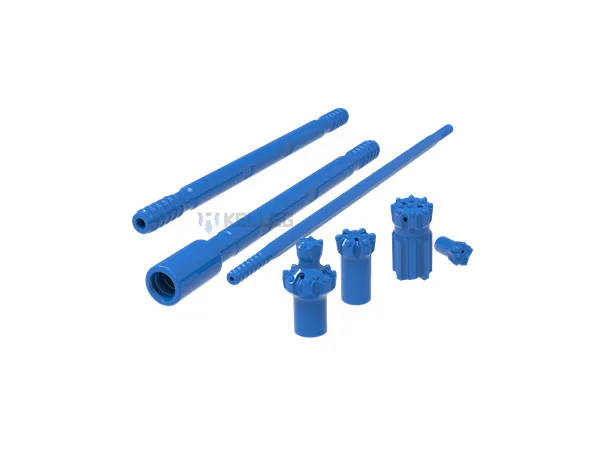
As drilling operations demand higher productivity, longer tool service life, and lower operating costs, modern top hammer drilling tools have evolved far beyond traditional designs. Manufacturers now focus heavily on improving energy transfer efficiency through advanced materials and precision manufacturing.
Modern drilling tool design aims to minimize energy loss throughout the entire drilling system while improving stability, durability, and drilling accuracy.
Advanced Heat Treatment Technology #
Heat treatment plays a critical role in determining the durability and fatigue resistance of top hammer drilling tools.
During drilling, components are exposed to:
- High-frequency impact loading
- Extreme stress concentration
- Abrasive wear
- Continuous vibration
Modern heat treatment processes improve the balance between:
- Surface hardness
- Core toughness
- Fatigue resistance
- Wear resistance
Advanced technologies commonly used include:
- Carburizing
- Induction hardening
- Vacuum heat treatment
- Controlled quenching and tempering
These processes help drilling tools:
- Resist cracking under repeated impacts
- Reduce thread deformation
- Improve wear resistance
- Maintain stable mechanical properties over long operating cycles
Proper heat treatment also improves the tool’s ability to transmit stress waves efficiently without excessive energy absorption caused by material deformation.
Precision CNC Thread Machining #
Thread quality directly affects connection stability and stress wave continuity in top hammer drilling tools.
Modern CNC machining technology allows manufacturers to produce:
- Highly accurate thread profiles
- Consistent thread pitch
- Improved surface finish
- Better concentricity and alignment
Precision-machined threads help:
- Increase contact surface stability
- Reduce energy reflection
- Improve load distribution
- Minimize vibration during drilling
Compared with poorly machined threads, CNC-produced threaded components provide:
- Tighter connections
- Better fatigue resistance
- Longer service life
- More efficient impact energy transmission
High thread precision becomes especially important in high-power hydraulic drilling applications where stress wave stability is critical.
Improved Alloy Steel Materials #
Modern top hammer drilling tools rely on advanced alloy steel materials specifically engineered for high-impact drilling environments.
Compared with conventional steel, modern alloy materials offer:
- Higher tensile strength
- Better fatigue resistance
- Improved toughness
- Greater wear resistance
Carefully controlled chemical composition helps improve:
- Crack resistance
- Impact absorption capability
- Structural stability
- Long-term durability
High-quality alloy steel is particularly important for:
- Drill rods
- Shank adapters
- Couplings
- Rock drill bits
Better material performance allows drilling tools to withstand stronger rock drill output while maintaining efficient energy transfer and reducing the risk of premature failure.
Optimized Wave Transmission Design #
Modern drilling tools are increasingly designed using stress wave analysis and engineering simulations to improve energy transmission efficiency.
Optimized wave transmission design focuses on:
- Reducing energy reflection
- Maintaining wave continuity
- Minimizing vibration
- Improving alignment between components
Manufacturers now optimize:
- Thread geometry
- Rod dimensions
- Coupling structure
- Transition zones between components
The goal is to allow impact waves to travel smoothly through the drilling system with minimal energy loss.
Benefits of optimized wave transmission design include:
- Faster penetration rates
- Reduced stress concentration
- Lower vibration levels
- Improved drilling stability
- Extended component lifespan
This approach is especially important in deep-hole and high-energy drilling applications where even small energy losses can significantly affect overall productivity.
Smart Drilling and Monitoring Systems #
Modern drilling operations increasingly integrate intelligent monitoring technologies to optimize energy transfer in real time.
Smart drilling systems can monitor:
- Impact pressure
- Penetration rate
- Rotation speed
- Feed force
- Tool vibration
- Fuel or energy consumption
Real-time monitoring allows operators to:
- Detect abnormal drilling conditions early
- Identify inefficient energy transfer
- Adjust drilling parameters immediately
- Prevent premature tool damage
Advanced systems may also provide:
- Predictive maintenance alerts
- Automated drilling optimization
- Performance analysis
- Tool wear tracking
By combining modern drilling tools with intelligent monitoring systems, operators can achieve:
- More stable drilling performance
- Reduced operating costs
- Higher productivity
- Longer tool service life
- Improved drilling consistency
As the drilling industry continues moving toward automation and digitalization, smart drilling technologies will play an increasingly important role in maximizing energy transfer efficiency and overall drilling performance.
Conclusion #
In top hammer drilling, achieving high productivity is not simply about using powerful equipment or high-quality individual components. True drilling efficiency depends on how well the entire drilling system is matched and optimized as a complete energy transmission chain.
From the rock drill and shank adapter to the drill rods, couplings, and drill bit, every component affects how efficiently impact energy travels from the hammer to the rock face. Even small mismatches in thread types, rod dimensions, bit design, or drilling parameters can result in significant energy loss, excessive vibration, accelerated wear, and unstable drilling performance.
Proper tool matching helps maximize the effective use of percussive energy throughout the drilling process. A well-balanced top hammer drilling tool can provide:
- Higher energy transfer efficiency
- Faster penetration rates
- More stable and reliable drilling performance
- Reduced vibration and component stress
- Longer service life for drilling tools
- Better hole straightness and drilling accuracy
- Lower operating costs
As drilling projects continue to demand greater efficiency and cost control, optimizing the compatibility between drilling tools and drilling conditions becomes increasingly important. Operators who focus on complete system matching rather than individual component selection are more likely to achieve consistent performance, lower downtime, and improved overall drilling profitability.