
Why Do Shank Adapters Break? Top 5 Causes and Prevention Strategies

The requirements for the anticorrosion process of rock drilling tools include the process of corrosion damage and the method of anticorrosion treatment.
What are the Underground Metal Mining Technologies?

Explore key underground metal mining technologies, including caving, fill mining, waste-free techniques, and more, to enhance efficiency, safety, and sustainability.
The History and Evolution of Rock Drilling Tools: From Early Rock Breaking Methods to Modern Drilling Technologies

Explore the history of rock drilling tools—from ancient hand tools to modern innovations—and discover how their evolution shapes today’s drilling efficiency.
What are Threaded Drill Bits Used for?
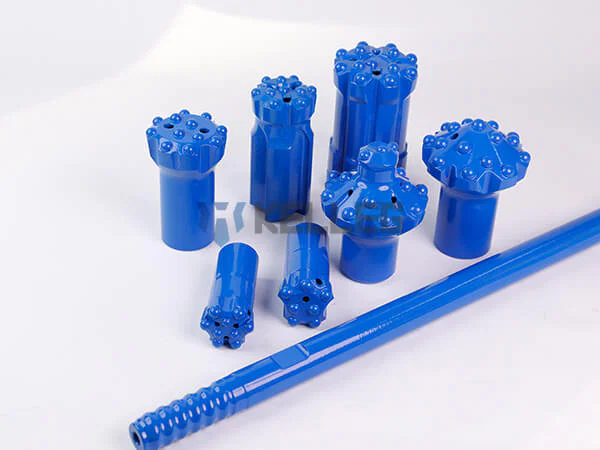
Threaded drill bits are essential tools in the rock drilling industry, prized for their efficiency and durability in penetrating tough rock formations. These specialized rock drilling tools, known as threaded drill bits, are designed to endure the demanding conditions of hard rock excavation, making them indispensable in mining, construction, quarrying, and geotechnical exploration. Their precision and power enable controlled drilling, ensuring optimal results in challenging environments. This article provides a comprehensive overview of threaded drill bits, detailing their definition, types, applications, selection criteria, usage guidelines, and maintenance practices to highlight their critical role in modern rock drilling operations. What is a Threaded Drill Bit? A threaded drill bit is a rock drilling tool attached to the end of a drill rod, engineered to break through hard rock formations with high efficiency. It features a robust steel body embedded with tungsten carbide buttons or cutting edges, strategically arranged to maximize cutting performance. The threaded design ensures a secure connection to the drill rod, providing stability during high-impact drilling. Threaded drill bits are highly versatile, capable of performing in diverse geological conditions, from soft sedimentary rock to hard granite. Their durability and adaptability make them suitable for a variety of harsh rock drilling environments and provide consistent performance in a variety of applications. Types of Threaded Drill Bits Threaded drill bits are categorized based on their design and intended application, each optimized for specific rock characteristics and blasting requirements. The main types include: Button Bits: Equipped with spherical or ballistic tungsten carbide buttons, these bits excel in medium to hard rock formations, offering superior cutting efficiency and longevity. Cross Bits: Featuring a cross-shaped cutting face, these bits are ideal for brittle or fractured rock, providing rapid penetration and effective rock fragmentation. X-Type Bits: With an X-shaped cutting pattern, these bits offer balanced performance in medium-hard and abrasive conditions, ensuring stability and versatility. Chisel Bits: Designed with a single, flat cutting edge, chisel bits are used in softer rock or for precision drilling tasks requiring controlled drilling. Each type is tailored to specific rock hardness, abrasiveness, and fracturing patterns, allowing operators to select the most suitable bit for their project to achieve optimal outcomes. Uses of Threaded Drill Bits Threaded drill bits are employed across a wide range of industries due to their ability to efficiently drill through challenging materials. Their key applications include: Mining: Threaded drill bits are used to drill blast holes for extracting minerals such as gold, copper, iron ore, and coal. They enable precise hole placement, maximizing mineral recovery and minimizing waste. Construction: These bits are critical for foundation drilling, tunneling, and road construction, where they facilitate the creation of stable structures in hard rock environments, such as urban infrastructure projects or mountain road expansions. Quarrying: Threaded drill bits are used to extract stone blocks for construction, landscaping, and decorative purposes, ensuring clean cuts and high productivity in granite or marble quarries. How to Choose the Right Threaded Drill Bit Selecting the appropriate threaded drill bit is essential for achieving optimal performance and cost efficiency. Key considerations include: Rock Type: Button bits are ideal for medium to hard rock, cross bits excel in brittle formations, and chisel bits suit softer rock or precision tasks. Drilling Method: The choice between top hammer and down-the-hole (DTH) drilling significantly impacts bit selection, as each method requires specific bit designs for efficient energy transfer. Bit Size: The bit diameter, typically ranging from 45mm to 152mm, must align with the drill rig and project specifications to ensure compatibility and performance. Thread Type: Common thread types like R32. T38. or T45 must match the drill rod to ensure a secure connection and efficient power transmission. Operating Conditions: Factors such as rock abrasiveness, water presence, drilling depth, and environmental conditions (e.g., temperature, dust, or vibration) influence bit choice. By carefully evaluating these factors, operators can select a threaded drill bit that maximizes drilling efficiency, minimizes wear, and reduces operational costs, ensuring project success. Using Threaded Drill Bits Proper usage of threaded drill bits is critical for ensuring safety, efficiency, and longevity. The process involves: Setup: Securely connect the bit to the drill rod using the appropriate thread type to prevent detachment during high-impact operations. Drilling: Adjust the drill rig’s rotation speed, feed pressure, and percussion force based on the rock’s hardness, density, and fracturing characteristics. Monitoring: Continuously monitor bit performance, checking for signs of wear, overheating, or misalignment, and adjust parameters to prevent damage or inefficiencies. Safety: Operators must wear protective gear, including helmets, gloves, safety glasses, and ear protection, and adhere to strict operational guidelines to minimize risks. Proper usage enhances drilling speed, improves hole quality, and extends the bit’s service life, contributing to overall project efficiency and safety. Maintenance of Threaded Drill Bits Regular maintenance is vital to keep threaded drill bits in optimal condition and prevent costly downtime. Key maintenance practices include: Cleaning: Thoroughly remove rock debris, dust, and mud after each use to prevent clogging and ensure smooth operation in subsequent drilling tasks. Inspection: Regularly inspect the bit for worn or damaged tungsten carbide buttons, cracks in the steel body, or thread wear, and replace components promptly to avoid failures. Sharpening: Regrind the buttons or cutting edges after approximately 100–200 meters of drilling to restore cutting efficiency, using specialized grinding equipment for precision. Storage: Store bits in a dry, cool, and dust-free environment to prevent corrosion and damage to the tungsten carbide buttons or steel body. Implementing a consistent maintenance schedule reduces wear-related failures, enhances drilling performance, and maximizes the return on investment for threaded drill bits. Conclusion Threaded drill bits are indispensable in the rock drilling industry, offering unparalleled efficiency, durability, and versatility in mining, construction, quarrying, and geotechnical exploration. By understanding their types, applications, and proper usage, operators can optimize drilling performance and achieve cost-effective outcomes. Careful selection of the right bit, combined with diligent maintenance practices, ensures reliability, longevity, and consistent results, solidifying the role of threaded drill bits as a cornerstone of modern rock drilling operations.
How to Choose Top Hammer Rock Drilling Tools Compatible with Your Drilling Rig
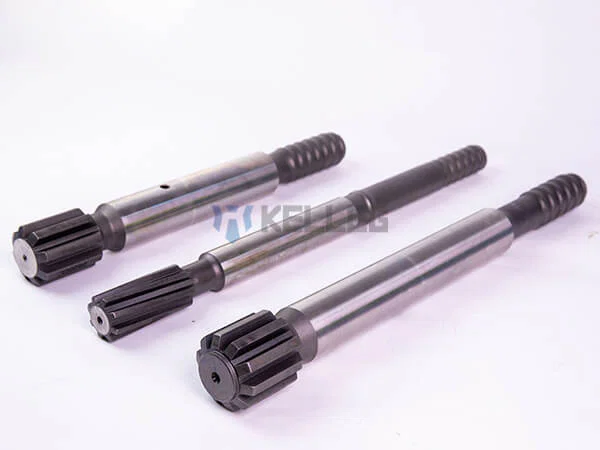
Top hammer rock drilling tools are essential components in mining, tunneling, and foundation engineering, directly impacting drilling efficiency and project costs. Choosing tools compatible with your drilling rig not only optimizes drilling speed but also extends equipment lifespan and reduces maintenance expenses. However, with diverse rig types and complex operational conditions, selecting the right tools can be challenging for many professionals. This article provides the key factors, tool types, and considerations for choosing top hammer drilling tools. Factors Influencing the Selection of Top Hammer Rock Drilling Tools Selecting the right top hammer rock drilling tools is critical for ensuring drilling efficiency, equipment longevity, and cost-effectiveness. The choice depends on several key factors that must be carefully evaluated to match the tools with the drilling rig and operational requirements. Proper selection not only enhances drilling performance but also minimizes equipment failures and maintenance costs, ensuring smooth project execution. Below are the primary factors influencing the selection process: Drilling Rig Parameters The technical specifications of the drilling rig play a pivotal role in determining the compatibility of the drilling tools. Understanding these parameters ensures that the selected tools can withstand the rig’s operational demands and perform optimally. Here are the critical rig parameters to consider: Connection Type: Top hammer drilling rigs typically employ specific thread connection types, such as R32. T38. T45. or T51. Matching the thread type of the drilling tool to the rig is essential to prevent connection failures, ensure secure fastening, and maintain operational efficiency. A mismatched connection can lead to excessive vibrations, energy loss, or even equipment damage, posing safety risks and reducing productivity. Impact Power: The impact power of the rig, measured in kilowatts or joules, dictates the tool’s ability to endure repetitive impact forces. Excessive power can cause premature wear or fracturing of the tool, while insufficient power may result in ineffective rock breaking, slowing down the drilling process. Selecting tools that match the rig’s impact power is crucial for maintaining durability and achieving efficient rock penetration. Rotational Speed: Rotational speed, measured in revolutions per minute (RPM), affects the cutting efficiency and wear rate of the drilling tools. High-speed rotation demands tools made from highly wear-resistant materials, such as premium-grade carbide, to withstand abrasion and maintain performance. Conversely, low-speed rotation requires tools that can handle higher impact forces to achieve effective rock penetration. Proper matching of rotational speed enhances tool lifespan and drilling efficiency. Power System: The power system of the rig—whether hydraulic or pneumatic—significantly influences. Hydraulic rigs, which typically deliver higher impact frequencies, require robust tools capable of withstanding intense and rapid forces. Pneumatic systems, on the other hand, may prioritize lighter tools optimized for energy efficiency, reducing operational costs. The power system directly impacts the design and material requirements of the tools. Geological and Operational Conditions Geological and operational conditions are crucial when selecting drilling tools, as they directly impact drilling performance, tool durability, and overall project success. These conditions vary widely across sites, requiring careful assessment to ensure optimal tool selection. Below is a detailed analysis of key conditions: Rock Hardness: The hardness of the rock, measured by the Mohs scale or compressive strength (MPa), determines the material and design of the drilling tool. Hard rocks like granite or basalt require bits with carbide inserts for superior wear resistance and effective breaking. Softer rocks, such as limestone or sandstone, can be drilled with standard bits, which are less costly but still effective, offering a balance between performance and cost. Drilling Depth: Deep-hole drilling requires longer rods and more durable bits to ensure stability and reduce replacement frequency. Long rods must have sufficient rigidity and torsional strength to prevent bending or breaking during deep-hole drilling, ensuring consistent performance in challenging conditions. Drilling Diameter: The drilling diameter determines the bit size. Larger diameters require stronger tools to handle greater cutting forces and wear, ensuring precision and stability. Selecting the appropriate bit size optimizes drilling efficiency, reduces wear, and extends tool lifespan. Operational Environment: Environmental conditions, such as high temperatures, humidity, or corrosive settings, significantly affect material selection. For instance, in high-humidity or saline mining environments, tools with anti-corrosion coatings are recommended to prevent material degradation and extend service life. Harsh environments require tools with enhanced resistance to corrosion and heat. Brand and Quality Brand and quality are critical when selecting drilling tools. Brands like Kelleg typically offer reliable products tested for performance and durability. This brand uses advanced materials and manufacturing processes to ensure stable performance under demanding conditions. However, high quality often comes with a higher cost, requiring a balance with budget considerations. Choosing trusted brands reduces the risk of equipment failure but necessitates evaluating cost-effectiveness. Cost Cost is a significant factor in tool selection. High-quality tools are typically more expensive but may reduce overall costs due to their durability and efficiency, minimizing downtime and replacement frequency. Conversely, low-cost tools may save money initially but could lead to higher maintenance costs due to frequent replacements or subpar performance. Balancing initial investment with long-term benefits is essential for selecting the most cost-effective tool solution. Types of Top Hammer Rock Drilling Tools Top hammer rock drilling tools primarily include rods and bits, each with various designs to meet different drilling needs. Below are the main types and their applications: Drill Rods Drill rods connect the rig to the bit, transferring impact and rotational forces. Different types of rods are suited for various drilling tasks, ensuring compatibility and efficiency: Tapered Rods: Tapered rods are typically used with small or lightweight rigs, particularly in shallow-hole drilling. The rod is a hexagonal hollow shaft with a shank structure that connects to drilling equipment. The head of the rod is tapered to connect with tapered bits, making them ideal for quick changes and small-scale drilling tasks, often in soft or medium-hard rocks. Their ease of installation and removal makes them suitable for projects requiring frequent bit changes. Extension Rods: Extension rods are used to extend drilling depth, ideal for deep-hole drilling or scenarios requiring multiple rod connections. They offer
Working Principle of Top Hammer Drilling Tools

Top hammer drilling is a widely used method in mining, quarrying, and construction for creating boreholes in hard rock surfaces. This technique relies on top hammer drilling tools, which deliver high-impact energy to break rock efficiently. In this article, we’ll explore the working principle of top hammer drilling tools, their components, and their applications. What Are Top Hammer Drilling Tools? Top hammer drilling tools are used in percussive drilling, where a piston strikes a drill bit to fracture rock. These tools are commonly employed in surface and underground drilling operations for tasks like tunneling, bench drilling, and exploration. The system is known for its efficiency in hard rock conditions, offering precision and high penetration rates. Key Components of Top Hammer Drilling Tools To understand the working principle, it’s essential to know the main components of a top hammer drilling system: 1. Rock Drill rig: The power source, typically hydraulic or pneumatic, that generates the percussive force. 2. Shank Adapter: Connects the rock drill rig to the drill rods, transmitting energy from the piston to the drill rods. 3. Drill Rods: Long, tubular components that extend the reach of the drill bit and transfer impact energy and rotation. 4. Drill Bit: The cutting tool at the end of the drill rod, designed with buttons or inserts (often tungsten carbide) to crush and break rock. 5. Coupling: Joins multiple drill rods to maintain alignment and energy transfer. MF rods are typically used as substitutes. 6. Flushing System: Uses air or water to clear rock cuttings from the borehole, ensuring efficient drilling. How Top Hammer Drilling Tools Work The working principle of top hammer drilling tools is based on percussive drilling, where high-frequency impacts combined with rotation create boreholes in rock. Here’s a step-by-step breakdown: 1. Energy Generation: The rock drill’s piston, powered by hydraulic or pneumatic systems, moves rapidly to strike the shank adapter. This generates a high-impact force, typically delivered at 40–60 Hz. 2. Energy Transmission: The impact energy travels through the shank adapter and drill rods to the drill bit. The drill rods also rotate (usually at 100–200 RPM) to ensure even wear on the drill bit and consistent cutting. 3. Rock Fracturing: The drill bit’s buttons or inserts strike the rock surface, creating micro-fractures. The combination of impact and rotation pulverizes the rock into small fragments. 4. Debris Removal: The flushing system, using compressed air or water, clears rock cuttings from the borehole. This prevents clogging and maintains drilling efficiency. 5. Continuous Drilling: The process repeats as the drill bit advances, creating a borehole of the desired depth and diameter. The system’s design ensures minimal energy loss, maximizing penetration rates. Advantages of Top Hammer Drilling Tools Top hammer drilling tools offer several benefits, making them a preferred choice in many applications: • High Penetration Rates: The percussive mechanism allows for fast drilling in hard rock, improving productivity. • Precision and Accuracy: The top hammer drilling tools provides excellent control over borehole direction and depth. • Versatility: Suitable for various applications, including mining, quarrying, and civil engineering. • Cost-Effectiveness: High efficiency and durability reduce operational costs over time. Applications of Top Hammer Drilling Tools Top hammer drilling tool is used in a wide range of industries, including: • Mining: For exploration, production drilling, and blasting in open-pit and underground mines. • Quarrying: To extract stone for construction and aggregates. • Construction: For foundation work, tunneling, and road building. • Geotechnical Drilling: To investigate subsurface conditions for engineering projects. Factors Affecting Top Hammer Drilling Tools Performance Several factors influence the efficiency of top hammer drilling tools: • Rock Type: Harder rocks require more impact energy, while softer rocks may need less force but faster rotation. • Drill Bit Design: The shape and material of the drill bit (e.g., button bits vs. cross bits) affect performance. • Flushing Efficiency: Proper removal of cuttings prevents drill bit wear and maintains drilling speed. • Equipment Maintenance: Regular upkeep of the rock drill rig and drill rods ensures optimal performance. Conclusion The working principle of top hammer drilling tools revolves around the efficient transfer of percussive energy to fracture rock, combined with rotation and flushing for optimal performance. With their high penetration rates, precision, and versatility, these tools are indispensable in industries like mining, quarrying, and construction. By understanding their components and mechanics, you can maximize efficiency and achieve superior drilling results. For more information on top hammer drilling tools or to explore specific equipment, consult industry-leading manufacturers KELLEG for related technical insights.
Light Weight vs. Heavy-duty Rock Drill Tools: Key Differences and Applications

Rock drill tools are essential equipment in mining, construction, and infrastructure development. These tools are categorized into two main types: light wight and heavy-duty rock drill tools, each designed for specific applications and operating conditions. Understanding the differences between these two categories is crucial for professionals in geology, mining, and construction industries to select the right equipment for their projects. This comprehensive guide will explore the definitions, structural differences, performance characteristics, applications, and prospects of both light weight and Heavy-duty rock drill tools. Definitions Light Weight Rock Drill Tools Light weight rock drill tools refer to manually operated drilling equipment components designed for small-scale rock drilling operations. These tools are typically used with handheld or air-leg supported rock drills weighing less than 35kg (about 77 lbs.). The lightweight rock drill system consists of several key components: Hexagonal shank rods (19mm, 22mm, or 25mm in diameter) Tapered drill rods Small-diameter drill bits (38-42mm or 1.5-1.65 inches) In China’s drilling engineering market, the most used Light weight rock drill tools are H22mm tapered drill rods and 38-42mm rock drill bits. Heavy-Duty Rock Drill Tools Heavy-duty rock drill tools are designed for mechanized drilling equipment with significantly higher impact energy and feed force compared to light weight systems. These tools are used with: Hydraulic or pneumatic rock drills Crawler rock drills Hydraulic Drilling Jumbo Heavy-duty rock drill tools feature more robust construction and larger dimensions to withstand greater forces. Typical components include: Threaded extension rods (32mm, 38mm, 45mm, 51mm, and 60mm diameters) Larger drill bits (55mm to 165mm or 2.17-6.5 inches) Specialized thread connections (R-threads, T-threads, MF systems) These tools are essential for deep hole drilling (depths exceeding 15m or 49ft) and large diameter blasting holes in mining and tunneling operations. Key Differences Between Light weight and Heavy-duty rock drill Tools Connection Equipment and Power Source Light weight rock drill tools: Primarily used with handheld or pneumatic rock drills like YT24. YT27. YT28 models Powered by compressed air with relatively low impact energy (typically below 100J) Simple connection systems: tapered (7°, 11°, or 12° tapers) or hexagonal socket connections Heavy-duty rock drill tools: Used with hydraulic or high-pressure pneumatic rock drills from manufacturers like Sandvik, Atlas Copco, Furukawa Feature threaded connections (R-threads for 32mm systems, T-threads for 38mm/45mm systems, MF quick-change systems) Require significantly higher impact energy (180J-750J) Often used with automatic rod changing systems in drill carriages that can store 6 or more extension rods Structure and Materials Light weight rock drill tools: Simple structure with one-piece or tapered designs Made from 19mm, 22mm, or 25mm hexagonal hollow steel Bit types: chisel, cross, or small button configurations (4-5 buttons) Typically use 40SiMnCrNiMo or 42CrMo materials Example: H22mm tapered rod with 30-42mm chisel bit weighs about 2-3kg (4.4-6.6 lbs.) Heavy-duty rock drill tools: Brazing rods through threaded connections Made from high-grade alloy steels (23CrNi3Mo) with superior fatigue resistance Larger diameter hollow sections (32-60mm) for better energy transmission Advanced bit designs with multiple button configurations (6-8 buttons) using premium carbide Example: T45-MF threaded rod with 76mm button bit can weigh 15-20kg (33-44 lbs.) Performance Characteristics Light weight rock drill tools: Maximum drilling depth: ≤6m (20ft) Hole diameter range: 32-51mm (1.26-2 inches) Lower drilling accuracy due to manual operation Shorter service life Higher energy loss at tapered connections (up to 15-20%) Suitable for soft to medium-hard rock formations Heavy-duty rock drill tools: Drilling depth capability: 15-60m (49-197ft) or more Hole diameter range: 51-165mm (2-6.5 inches) Superior drilling accuracy with mechanized guidance Longer service life More efficient energy transmission (MF systems have 30% less energy loss) Capable of drilling through hard and abrasive rock formations Application Scenarios Light weight rock drill tools: Small construction sites and limited spaces Surface quarrying and small-scale mining Shallow hole blasting in civil engineering projects Tunneling and drifting in small mines Secondary breaking and rock splitting operations Heavy-duty rock drill tools: Large-scale underground mining Tunnel construction for highways and railways Large-diameter blast hole drilling in open-pit mines Hydraulic rock drill applications Deep hole drilling for geological exploration Price Comparison Light weight rock drill tools: Lower initial cost Higher long-term costs due to frequent replacement Dominated by Chinese manufacturers with intense price competition Heavy-duty rock drill tools: Higher initial cost Better long-term value through extended service life International brands dominate the premium segment Construction methods Light weight rock drill tools: Manual handling by operators Requires physical strength and skill Higher safety risks due to vibration exposure Labor-intensive with lower productivity Common in developing countries and small-scale operations Heavy-duty rock drill tools: Mechanized operation via drill rigs Reduced physical demands on operators Improved safety with remote operation options Higher productivity (2-5 times faster than manual drilling) Requires more skilled maintenance but less operator skill Conclusion The choice between light and Heavy-duty rock drill tools depends on multiple factors including project scale, rock conditions, available equipment, and budget considerations. Light weight systems offer cost-effective solutions for small-scale and shallow drilling applications, while heavy systems provide the power and durability needed for large-scale mining and tunneling operations. As drilling technology advances, professionals should carefully evaluate their specific needs against the technical and economic characteristics of both tool categories to optimize their drilling operations. The future of rock drill tools lies in material innovations, intelligent monitoring systems, and environmentally friendly designs that can meet the growing demands of modern mining and construction while addressing challenges of energy efficiency and operator safety.
Rock Drill MF Rod vs. MM Rod: Differences and Application
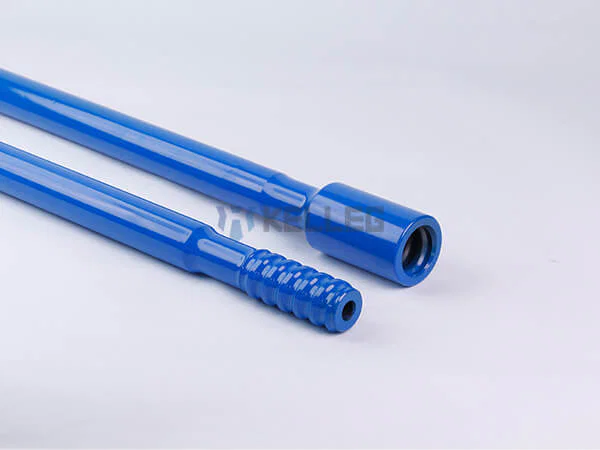
In the world of rock drilling and mining, choosing the right drill rod can make or break your operation. Drill rods are essential tools that transmit rotational force and impact energy from the drill rig to the drill bit, allowing for efficient penetration into rock formations. Among the various types, MF rods (Male-Female) and MM rods (Male-Male) stand out as popular choices, each with unique designs tailored to specific needs. If you’re wondering about their applications in underground mining or tunneling, this guide breaks it down step by step. We’ll explore the differences and real-world scenarios to help you decide which one fits your project best. What is an MF Rod? An MF rod, short for Male-Female rod, features a male thread on one end and a female thread on the other. This design allows rods to connect directly to each other without needing an additional coupling sleeve. Think of it like puzzle pieces that snap together seamlessly. Commonly available in threads like T38. T45. or R32. MF rods are engineered for high-performance drilling in demanding environments. One key advantage of MF rods is their streamlined connection system. By eliminating the need for couplings, they reduce the overall weight of the drill string and minimize potential weak points where failures could occur. This makes them ideal for operations where speed and reliability are paramount. The T38 MF rod enables faster assembly and disassembly, saving valuable time on site in underground mining. MF rods are typically made from high-strength alloy steel, often carburized or heat-treated for enhanced durability. Their lengths vary, but popular sizes include 3660mm or 4270mm, depending on the rig and application. The MF drill rod integrated threading reduces vibration and improves energy transfer to the drill bit, leading to better hole straightness and less deviation. What is an MM Rod? An MM rod, or Male-Male rod, has male threads on both ends. To connect two MM rods, you’ll need a separate coupling sleeve with female threads on both sides. This setup is more traditional and widely used in various drilling setups, especially where flexibility in rod length adjustments is needed. MM rods are versatile and often come in standard threads like T38 or T51. They’re popular for bench drilling because the coupling sleeves allow for easy extension and customization of the drill rod string. Made from similar high-quality steel as MF rods, they undergo processes like normalization or quenching to withstand high-impact forces. A notable feature of MM rods is their modularity. If a coupling sleeve wears out, you can replace just that part without discarding the entire rod, which can be cost-effective in the long run. However, this added component can introduce more points of potential failure, such as thread stripping or loosening under heavy vibration. Key Differences Between MF Rods and MM Rods When comparing MF rod vs MM rod, several factors come into play. Let’s dive into the main distinctions: 1. Connection Mechanism The most obvious difference is how they link up. MF rods connect end-to-end directly (male to female), forming a rigid, coupling sleeves-free string. MM rods require a coupling sleeve, which adds an extra step but offers interchangeability. 2. Weight and Handling Without coupling sleeves, MF rods are lighter overall, making them easier to handle in confined spaces like tunnels. This can reduce operator fatigue and improve safety in MF extension rod. MM rods, with their coupling sleeves, might add 10-20% more weight per connection, which accumulates in longer strings. 3. Efficiency and Performance MF rods often provide better energy transmission due to fewer joints, leading to less energy loss and straighter holes. In tests, MF systems can achieve up to 15% higher penetration rates in hard rock. MM rods, while reliable, may experience more wear at the coupling points, potentially shortening lifespan in abrasive conditions. 4. Cost Implications Initially, MF rods might cost more due to their integrated design, but they save on coupling sleeves and maintenance. MM rods are cheaper upfront, but factor in ongoing coupling sleeve replacements. 5. Durability and Maintenance MF rods have fewer components, meaning less maintenance, but if the threads wear, the whole rod might need replacement. MM rods allow targeted repairs. The MF rod maintenance tips focus on regular thread cleaning and lubrication to prevent galling. Other nuances include thread design: MF rods’ alternating threads reduce the risk of unscrewing under rotation, while MM rods rely on the coupling sleeve’s integrity. Application Scenarios for MF Rods MF rods shine in scenarios demanding efficiency and minimal downtime. Here are some prime examples: • Underground Mining: In tight spaces like drift development, MF rod for deep hole drilling allows for rapid rod changes, boosting productivity. • Tunneling and Infrastructure: The high-quality MF rod for tunneling their a lightweight design that aids in horizontal or inclined drilling in projects like subway expansions. The direct connection minimizes deviation, ensuring precise blast holes. • Hydropower and Geotechnical Drilling: The T38 MF rod for hydropower station drilling, where water and vibration are factors, MF rods’ sealed connections resist corrosion better. Overall, choose MF rods if your operation prioritizes speed, like in high-volume quarries or automated rigs. Application Scenarios for MM Rods MM rods are go-to for versatile, adaptable setups: • Surface Drilling and Quarrying: The carburized MM rod for bench drilling, the ability to mix rod lengths with coupling sleeves makes them perfect for varying depths in open-pit mines. • Exploration Drilling: For exploratory work where rod strings need frequent adjustments, MM rods offer flexibility without custom ordering. • Heavy-Duty Blasting: In large-scale blasting, MM rods handle high torque well, especially with robust coupling sleeves. If cost control and part replaceability are key, MM fits budget-conscious operations. Making the Right Choice MF Rod: Faster assembly, better efficiency, lighter weight. But higher initial cost, less flexible for repairs. MM Rod: Modular, cost-effective, widely available. But more maintenance, potential energy loss. In conclusion, the choice between MF and MM rods depends on your specific needs. Choose the MF rod for modern, high-performance long-hole
Understanding Top Hammer Drill Bits in Different Geological Applications
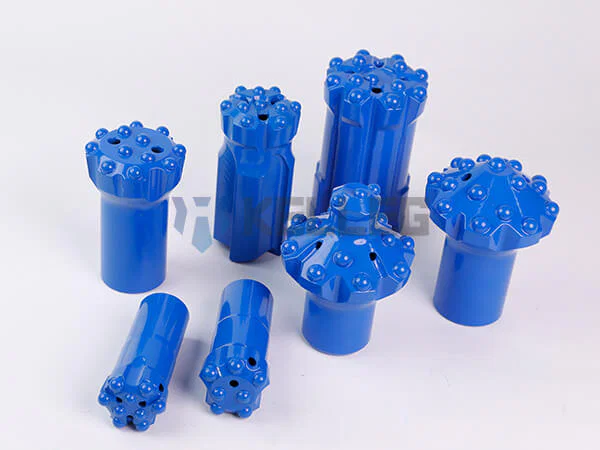
Top hammer drill bits are critical tools in rock drilling technology, widely used in mining, tunneling, construction, and geological exploration. These bits operate by delivering high-frequency impacts combined with rotational motion to break rock, making them particularly effective in hard and medium-hard formations. The complexity of geological conditions demands that top hammer drill bits be highly adaptable in design, materials, and operational parameters. This article explores the applications of top hammer drill bits in various geological environments, analyzing their technical features, categories, selection criteria, and suitable applications to provide practical insights for professionals. Design and Features of Top Hammer Drill Bits Top hammer drill bits are typically used with top hammer drilling rigs, where energy from a high-frequency piston is transmitted to the bit, combined with rotation to fracture rock. Key features include: Structural Design: The bit’s cutting face is embedded with carbide, and the body is made of high-strength steel for durability and impact resistance. Impact Efficiency: Operating at 2.000–3.000 impacts per minute, top hammer bits excel at breaking hard rock. Application Scope: They are primarily suited for medium-hard to hard formations, such as granite, quartzite, and certain sandstones. Variety of Models: Bits come in various tooth shapes and arrangements tailored to specific applications. Applications in Different Geological Conditions The performance of top hammer drill bits varies across geological conditions. Below is an analysis of their applications: 1. Hard Formations Hard formations like granite, basalt, or quartzite are characterized by high strength and abrasiveness. Top hammer bits, with their high-frequency impact and carbide button designs, effectively fracture such rocks. Button bits are preferred for their wear resistance and impact strength, commonly used in mining for blast hole drilling. 2. Medium-Hard Formations Medium-hard formations, such as sandstone, limestone, or shale, have moderate hardness and abrasiveness. Button bits are ideal due to their high cutting efficiency and longer lifespan. These bits are frequently used in tunneling for excavation. 3. Soft Formations While top hammer bits are designed for harder formations, they can be used in soft formations like clay or sandy layers with adjusted low-impact frequencies. However, soft formations may cause balling, requiring enhanced flushing systems to prevent clogging. 4. Complex Formations Complex formations with alternating soft and hard layers or fault zones pose significant challenges. Hybrid top hammer bits, combining button and chisel designs, offer greater adaptability. Real-time monitoring of impact force and rotation speed, along with parameter adjustments, can significantly improve drilling efficiency. Categories of Top Hammer Drill Bits Top hammer drill bits are classified based on tooth shape, structure, and application. The main categories include: 1. Button Bits Button bits are the most common type of top hammer drill bits, featuring hemispherical carbide inserts on the cutting face. This design offers excellent wear resistance and impact strength, making it ideal for hard formations like granite and quartzite. Button bits are widely used in mining blast holes and tunnel excavation due to their ability to efficiently break hard rock. 2. Chisel Bits Chisel bits use cylindrical carbide inserts, providing high cutting efficiency in medium-hard formations such as sandstone and limestone. They offer faster drilling speeds but may be less durable in highly abrasive conditions compared to button bits. Chisel bits are commonly used for anchor bolt holes and shallow drilling. 3. Cross Bits Cross bits feature four carbide inserts arranged in a cross pattern, suitable for medium-hard to hard formations, particularly in fractured rock. Their structure provides stability and reduces deviation risks, making them ideal for geological exploration and small-scale blast hole drilling. 4. X-Bits X-bits are a variation of cross bits, with inserts arranged in an X-shaped pattern, enhancing cutting efficiency and debris removal. They perform well in complex formations, such as fault zones, and are often used in deep hole drilling and tunneling projects. 5. Hybrid Bits Hybrid bits combine the advantages of button and chisel designs, making them suitable for alternating soft and hard formations or complex environments. Their flexible tooth configurations can be customized for specific geological conditions, offering versatility in challenging drilling scenarios. Selection Criteria for Top Hammer Drill Bits Choosing the right top hammer drill bit involves several considerations: Rock Properties: Hardness, abrasiveness, and fracture patterns influence drill bit tooth design and material selection. Drilling Objectives: Tasks like blast hole drilling or anchor bolting require specific drill bit diameters and configurations. Equipment Compatibility: The drill bit must match the drilling rig’s power, impact frequency, and drill rod specifications. Cost-Effectiveness: Balancing drill bit cost with lifespan is critical, especially in large-scale mining operations. Conclusion Top hammer drill bits excel in hard and medium-hard formations, making them indispensable in mining, tunneling, and geological exploration. Understanding their design features, categories, suitable geological applications, and selection criteria enables operators to optimize drilling efficiency and reduce costs. Selecting the appropriate bit category and optimizing operational parameters will deliver higher productivity and economic benefits in drilling operations.
KELLEG 2025 Quality Month

Kelleg convene Quality Month alerting meeting to enhance quality awareness of all employees. Kelleg holds similar product identification competitions to test employees’ insight into product details and their ability to identify various products, improve product inspection capabilities, enhance product quality from the source, and build a solid quality defense line. Kelleg conducts a variety of training programs to enhance employees’ skills and knowledge in measuring tool operation, drawing reading, quality inspection, etc., which helps reduce errors in the production and inspection processes and ensures product quality. Kelleg organizes a quality knowledge contest and selects “Quality Stars” to inspire the enthusiasm of all employees to participate, set a quality benchmark, and promote a culture of excellence. Quality is the lifeline of an enterprise and the cornerstone of winning the trust of customers. Kelleg has always taken “quality as the basis, serving the world” as its core concept. We have built a quality management system covering the entire process of R&D, production, inspection and delivery. Through strict standardized management, we ensure that every product can stand the test of the market.
How to Choose High-Quality Rock Drilling Tools for Your Project?
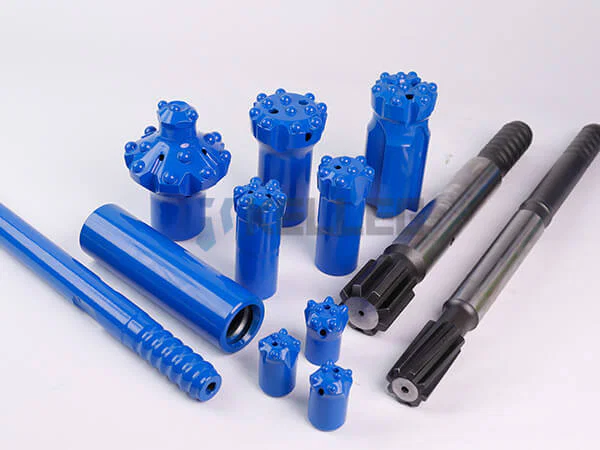
Rock drilling tools are essential components in industries like mining, tunneling, and infrastructure development, directly influencing project efficiency and safety. Renowned for their exceptional performance and durability, these tools are indispensable to modern engineering. As global demand for mining and construction surges, selecting high-quality rock drilling tools has become a critical strategy for businesses aiming to enhance competitiveness. This comprehensive guide explores the importance of rock drilling tools, highlights emerging market trends, and provides practical advice on choosing the right tools to meet modern engineering demands. The Vital Role of Rock Drilling Tools Rock drilling tools form the core of rock drills and drilling rigs, widely utilized in mining operations, tunnel construction, and road infrastructure projects. By delivering powerful impact and rotation, these tools break through hard rock surfaces, laying the groundwork for subsequent engineering tasks. High-quality tools significantly improve drilling efficiency, minimize equipment wear, extend tool lifespan, and reduce overall operational costs. Industry data forecasts steady growth in the global rock drilling tools market over the next five years, driven by increased infrastructure investments in emerging markets and the rise of automation in the mining sector. Selecting the right tools optimizes construction efficiency, enhances project safety, and delivers a higher return on investment. Types of Rock Drilling Tools and Their Applications Rock drilling tools come in various types, each designed for specific applications. Understanding these types is crucial for selecting the most suitable tools for your project. Below are the primary types and their uses: Kelleg rock drilling tools, crafted from high-strength alloy steel and treated with advanced heat-processing techniques, ensure outstanding performance in extreme environments. This durability reduces replacement frequency and maintenance costs, saving businesses significant time and resources. How to Select High-Quality Rock Drilling Tools Choosing the right rock drilling tools requires careful consideration of several factors to ensure they meet specific project requirements. Here are key criteria to guide your selection: Proper maintenance is equally critical. Regularly inspecting tools for wear and replacing them promptly prevents costly project delays due to equipment failure. Correct storage and handling practices also extend tool lifespan. Market Trends and Technological Innovations in Rock Drilling Tools The rock drilling tools industry is evolving rapidly, presenting new opportunities for businesses and users. Key trends and innovations include: Why Choose Kelleg Rock Drilling Tools? Kelleg rock drilling tools are trusted worldwide for their superior performance and reliability. Here’s what sets them apart: Whether you’re engaged in mining, tunneling, or infrastructure development, Kelleg’s rock drilling tools deliver dependable solutions to drive project success. In the rapidly evolving mining and construction industries, high-quality rock drilling tools are essential for achieving project success. By selecting the right tools, staying informed about technological innovations, and leveraging market trends, businesses can optimize operational efficiency and gain a competitive edge. Contact Kelleg today to learn more about our high-performance rock drilling tools and transform your projects with reliable, cutting-edge solutions!
How to Select a Mining Method for Gently Inclined Thin Ore Bodies?

Learn how to choose the best mining method for gently inclined thin ore bodies by balancing safety, efficiency, cost, and ore recovery in challenging conditions.
Gas Accident Response Measures in Underground Mining Projects
Explore effective gas accident response measures in underground mining to enhance safety, prevent explosions, and ensure sustainable, efficient mine operations.
What Impact Do Different Mining Methods Have on Stripping Efficiency in Open-Pit Metal Mines?

Discover how blasting and mechanical excavation affect stripping efficiency in open-pit metal mines, from cost and recovery rates to environmental impact.
How to Mine Gently Inclined, Moderately Thick Ore Bodies in Soft and Fragile Rock Formations?
Discover efficient and safe mining methods for gently inclined, moderately thick ore bodies in soft, fragile rock formations to boost productivity and minimize risks.
Annealing Process of 23CrNi3MoA Rock Drilling Tools Steel
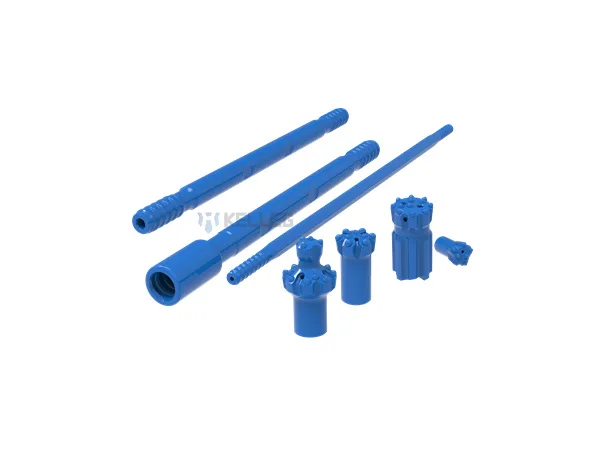
Learn how the annealing process enhances 23CrNi3MoA rock drilling steel’s machinability, toughness, and performance for demanding industrial applications.
How to Control the Formation of Banded Structure in 23CrNi3Mo Rock Drilling Tool Steel?
Learn effective methods to control banded structure in 23CrNi3Mo tool steel and improve rock drilling tool performance and durability.
Why Does 55SiMnMo Tool Steel for Brazing Show Surface Cracks?
Discover the causes of surface cracks in 55SiMnMo drilling tool steel, including issues in continuous casting, heating, and rolling processes, and how to improve quality.
What Are the Key Technologies for Open-Pit Mining of Copper Polymetallic Deposits?

Discover the key technologies driving efficient, safe, and eco-friendly open-pit mining of copper polymetallic deposits, from exploration to environmental protection.
Application of Modern Mining Technologies in Metal Open-Pit Mines
Explore the impact of modern mining technologies in metal open-pit mines, enhancing efficiency, reducing costs, and promoting sustainability in mining operations.