Introduction #
Borehole drilling plays a critical role in modern mining, quarrying, water well development, geotechnical investigation, and infrastructure construction. Whether the objective is blast hole drilling, groundwater extraction, or deep rock exploration, drilling performance directly affects project efficiency, safety, and overall cost control.
However, many contractors face common challenges: low penetration rates, excessive drill bit wear, hole deviation, unstable borehole walls, and rising operational expenses. A single factor rarely causes these problems. In most cases, they result from choosing the wrong drilling method, mismatched equipment, or low-quality rock drilling tools that cannot withstand demanding rock conditions.
Selecting the right borehole drilling solution requires a clear understanding of rock type, required hole depth and diameter, site conditions, and production targets. Today, multiple drilling methods are available, each designed for specific geological conditions, depth requirements, and project objectives.
Among these technologies, Down-the-Hole (DTH) drilling has become one of the most widely used solutions for hard rock applications due to its high penetration rate, excellent hole straightness, and reliable impact energy delivery. For projects involving abrasive or high-strength rock formations, DTH drilling often provides a better balance between performance and operational cost.
This guide will explain what borehole drilling is, how the drilling process works, the main types and methods of drilling, and why DTH drilling has become the preferred choice for hard rock operations.
What Is a Borehole? #
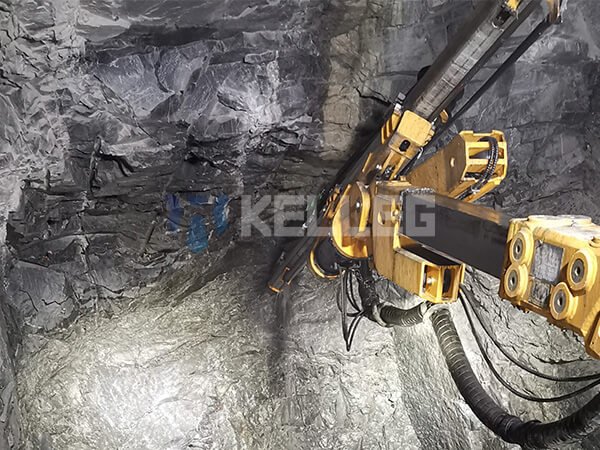
A borehole is a narrow, deep shaft drilled into the ground, either vertically or horizontally, to access underground resources or collect geological data. In most water well and mining applications, boreholes typically range from 110–150 mm in diameter, although the size can vary depending on project requirements, depth, and purpose.
Boreholes are created for a wide range of industrial, environmental, and infrastructure uses. The most common applications include:
- Groundwater extraction for drinking water, agriculture, and commercial supply
- Oil and natural gas exploration and production
- Mineral exploration and blast hole drilling in mining
- Geotechnical site investigations and soil testing
- Environmental assessments and groundwater monitoring
- Geothermal energy installations
- Pilot holes for foundations, piers, and underground utilities
- Carbon capture and underground storage projects
In water supply projects, a borehole functions as a drilled well that provides direct access to underground aquifers. Compared to surface water sources, boreholes offer a more stable, independent, and often cleaner water supply, making them essential in rural areas, remote mining sites, and regions with limited infrastructure.
In mining and construction, boreholes are fundamental to blasting operations, rock mass evaluation, and foundation engineering. The performance, straightness, and stability of a borehole directly impact drilling efficiency, safety, and overall project cost.
Understanding what a borehole is—and how it is used—is the first step toward selecting the right borehole drilling method and equipment for your specific project conditions.
Now that we understand what a borehole is, the next important question is: how does the drilling process actually work in real-world projects?
How Does Borehole Drilling Work? #
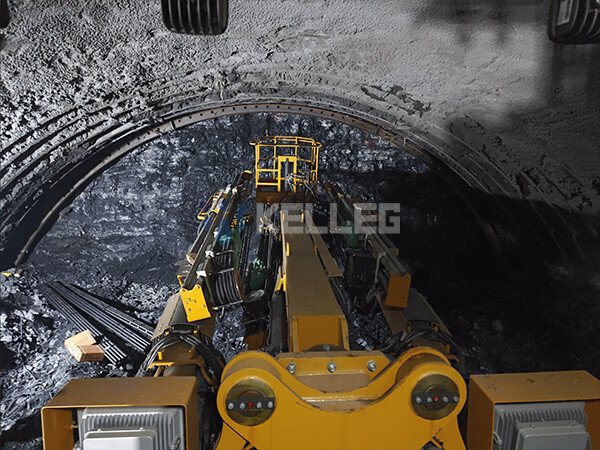
Borehole drilling is a structured, multi-step process designed to create a stable cylindrical hole in the ground to access underground resources such as groundwater, minerals, or energy reserves. From initial site investigation to completion, each stage directly affects drilling efficiency, borehole stability, and long-term performance.
Site Assessment and Planning #
Before drilling begins, a detailed geological survey is conducted to:
- Identify the optimal drilling location
- Analyze soil and rock conditions
- Determine the presence and depth of target resources
Drilling the Borehole #
Once the site is prepared, a drilling rig begins penetrating the ground using a specialized drill bit. The rig applies:
- Rotational force
- Downward pressure
- Impact energy (depending on the drilling method)
As the bit cuts through soil and rock layers, broken fragments—called cuttings—must be continuously removed to prevent clogging and maintain penetration efficiency.
Cutting removal is typically achieved by circulating:
- Compressed air (common in hard rock drilling)
- Water-based drilling mud (common in soft formations)
This circulation system serves multiple purposes:
- Lifts cuttings to the surface
- Cools and lubricates the drill bit
- Stabilizes borehole walls
- Reduces tool wear
The borehole is drilled from ground level downward until it penetrates the target formation, such as passing through an aquifer in water well applications.
Borehole Stabilization #
As depth increases, borehole walls may become unstable, especially in fractured rock or loose soil. To prevent collapse and contamination:
- A steel casing is installed to reinforce the borehole walls
- Drilling fluid may be used to maintain internal pressure balance
Casing also helps seal off unwanted water layers and protects the integrity of the well structure over time.
Completion and Resource Extraction #
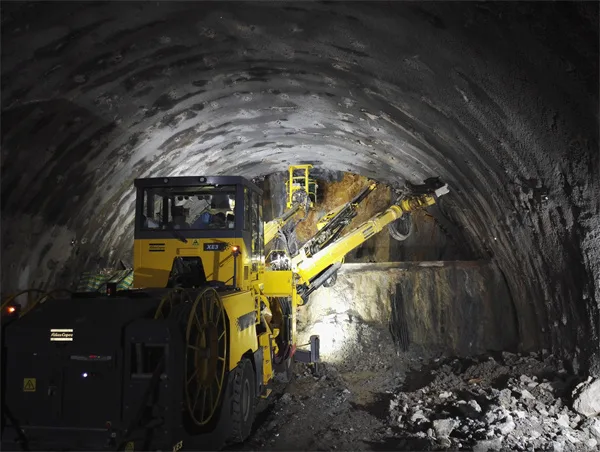
Once the desired depth is reached, the borehole is prepared for its intended use.
For groundwater applications:
- The borehole passes through the aquifer and below the water table
- The well is developed to improve water flow
- A submersible pump is installed below the water level
A submersible pump is a cylindrical, electrically powered unit designed to fit inside the borehole column. Depending on project requirements, pumps can deliver small volumes for rural supply or large volumes for commercial and industrial use.
When activated, groundwater is pumped to the surface on demand. Optional treatment systems may be installed to ensure the water meets required quality standards.
While the drilling process follows a general structure, the purpose of the borehole determines the type of drilling required.
Main Types of Borehole Drilling #
Borehole drilling is used across multiple industries, but the drilling objectives, depth requirements, equipment selection, and cost structures vary significantly depending on the application. Understanding the different types of borehole drilling helps contractors and project owners choose the most efficient and cost-effective solution.
Water Well Borehole Drilling #
Water well borehole drilling is primarily used for accessing underground aquifers to provide a stable and independent water supply.
Typical applications include:
- Rural water supply systems
- Municipal water infrastructure
- Agricultural irrigation
- Industrial and commercial water usage
These boreholes are drilled until they penetrate a water-bearing formation below the water table. Once completed, casing and a submersible pump are installed to extract groundwater on demand.
Key considerations:
- Aquifer depth and yield
- Borehole diameter requirements
- Water quality standards
- Long-term pumping performance
Reliable drilling accuracy and proper well development are critical to ensure sustainable groundwater production and reduce maintenance costs.
Mining Borehole Drilling #

Mining borehole drilling plays a vital role in resource extraction and production efficiency. It is widely used in both surface and underground mining operations.
Main types include:
Blast Hole Drilling #
Used to create precise holes for explosives in quarrying and open-pit mining. Hole straightness and depth accuracy directly affect blasting results and fragmentation efficiency.
Exploration Drilling #
Conducted to locate and evaluate mineral deposits before full-scale production begins. Core samples and geological data are collected during this phase.
Production Drilling #
Performed during active mining to facilitate ore extraction, rock fragmentation, and tunnel advancement.
Mining boreholes often require high penetration rates, durable drill bits, and strong impact energy—especially in hard rock formations. Equipment reliability directly influences production output and operational costs.
Geotechnical Boreholes #
Geotechnical boreholes are drilled to investigate subsurface conditions before construction or infrastructure projects begin.
Common uses include:
- Soil and rock investigation
- Foundation design verification
- Load-bearing capacity testing
- Environmental and groundwater monitoring
These boreholes provide critical data for engineers to assess soil stability, rock strength, and potential risks such as settlement or collapse.
Precision and accurate sampling are essential in geotechnical drilling, as engineering decisions depend heavily on the collected data.
Oil and Gas Boreholes #
Oil and gas boreholes are typically deeper and more technically complex than other types of drilling.
Key applications include:
- Deep vertical drilling for hydrocarbon extraction
- Directional drilling to access reservoirs from a single surface location
- Horizontal drilling for increased production efficiency
These boreholes often reach depths of thousands of meters and require advanced rotary drilling systems, high-pressure control equipment, and real-time monitoring technology.
Operational safety, well control, and borehole stability are critical in this sector due to high pressures and complex geological conditions.
Once the application is defined, selecting the appropriate drilling method becomes critical to project efficiency and cost control.
Borehole Drilling Methods #
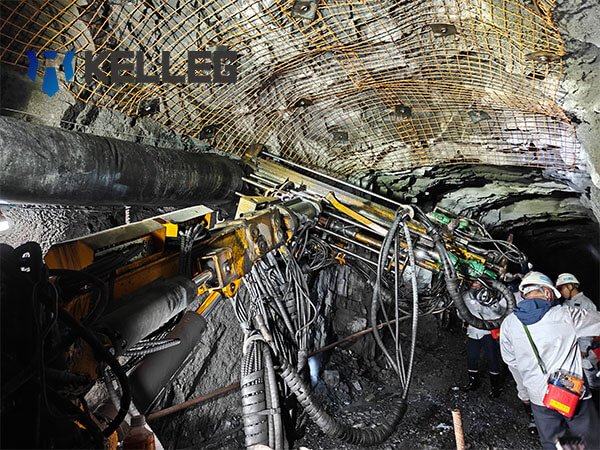
Selecting the correct borehole drilling method is critical for achieving high penetration rates, maintaining borehole stability, and controlling overall project costs. The ideal method depends on factors such as rock hardness, required depth, borehole diameter, sampling accuracy, and budget constraints.
Below are the most commonly used borehole drilling methods across water well, mining, geotechnical, and energy sectors.
Rotary Drilling #
Rotary drilling is one of the most widely used borehole drilling methods, especially in deep and large-diameter applications.
This technique uses a rotating drill bit connected to a string of drill pipes. As the bit rotates, it cuts through soil and rock formations. Broken material (cuttings) is transported to the surface by circulating drilling fluid—commonly known as drilling mud—through the borehole.
Key advantages:
- Suitable for deep boreholes
- Capable of drilling large diameters
- Continuous and efficient operation
- Effective in soft to medium formations
Rotary drilling is widely used in oil and gas, deep-water wells, and large infrastructure projects where depth and diameter are major considerations.
Down-the-Hole (DTH) Drilling #
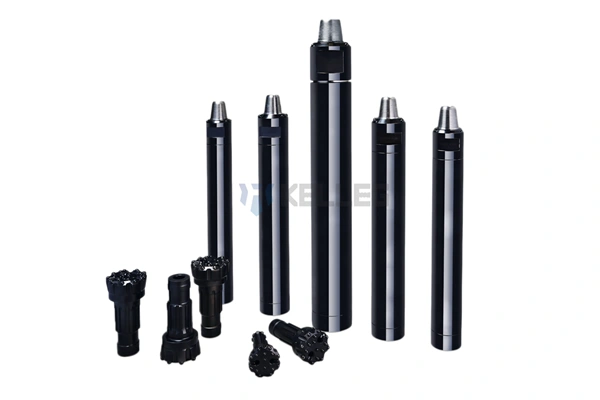
Down-the-Hole (DTH) drilling places the hammer mechanism directly behind the drill bit inside the borehole. The hammer delivers high-frequency impact energy directly to the bit while compressed air removes cuttings.
Because the impact energy is generated at the bottom of the hole, energy loss is minimized compared to top hammer systems.
Key advantages:
- Highly effective in hard rock formations
- High penetration rates
- Excellent hole straightness
- Reliable performance at greater depths
DTH drilling is widely used in mining blast hole drilling, quarrying, geothermal wells, and deep water well drilling in hard rock conditions.
Reverse Circulation (RC) Drilling #
Reverse Circulation (RC) drilling is a specialized rotary method that uses dual-walled drill pipes. Compressed air forces cuttings up through the inner tube, returning samples directly to the surface.
This reverse flow system minimizes contamination and improves sample quality.
Key advantages:
- High-quality geological samples
- Reduced contamination
- Fast drilling speeds
- Suitable for mineral exploration
RC drilling is commonly used in mining exploration, where accurate and uncontaminated samples are essential for resource evaluation.
Directional Drilling #
Directional drilling allows operators to drill non-vertical boreholes and precisely control the well trajectory.
Instead of drilling straight down, the borehole can be steered to reach specific underground targets from a single surface location.
Key advantages:
- Access to hard-to-reach reservoirs
- Reduced surface footprint
- Increased resource recovery
- Greater drilling flexibility
This method is widely applied in oil and gas extraction, especially in complex reservoirs requiring horizontal or deviated wells.
Sonic Drilling #
Sonic drilling uses high-frequency mechanical vibrations (resonance) to advance the drill string through subsurface materials. The vibration reduces friction between the drill pipe and surrounding formations, allowing smoother penetration.
Key advantages:
- Minimal disturbance to surrounding formations
- Continuous core sampling
- High recovery rates in unconsolidated soils
- Reduced need for drilling fluids
Sonic drilling is commonly used in environmental studies, geotechnical investigations, and projects requiring high-quality soil sampling.
Auger Drilling #
Auger drilling uses a helical screw (auger) to penetrate the ground and bring soil to the surface.
This method is most effective in soft soils or unconsolidated formations. The auger design helps prevent borehole collapse during drilling.
Key advantages:
- Simple and cost-effective
- Ideal for shallow drilling
- Minimal equipment complexity
However, auger drilling is generally limited to shallow depths and is not suitable for hard rock or deep geological investigations.
Percussion Drilling #
Percussion drilling is a traditional method that uses repeated lifting and dropping of a heavy drill bit to fracture subsurface material.
After breaking the formation, loosened material is removed using a bailer.
Key advantages:
- Cost-effective for small projects
- Suitable for rocky terrains
- Simple mechanical system
Although slower than modern rotary or DTH systems, percussion drilling remains useful for small-diameter wells and projects where speed is not the primary concern.
Borehole Drilling Methods Comparison (With Hard Rock Focus) #
| Method | Best For | Depth Range | Rock Type | Cost Efficiency in Hard Rock |
|---|---|---|---|---|
| Rotary Drilling | Deep wells & large diameter holes | Medium to Very Deep | Soft to Medium formations | Low |
| DTH Drilling | Blast holes, deep water wells, mining | Medium to Deep | Hard Rock | ⭐⭐⭐⭐⭐ |
| Reverse Circulation (RC) | Mineral exploration sampling | Medium to Deep | Medium to Hard Rock | ⭐⭐⭐ |
| Directional Drilling | Oil & gas reservoir access | Deep to Very Deep | Variable formations | Low |
| Sonic Drilling | Environmental & soil sampling | Shallow to Medium | Unconsolidated soils | Not Suitable |
| Auger Drilling | Shallow soil drilling | Shallow | Soft soils | Not Suitable |
| Percussion | Small rocky wells | Shallow to Medium | Hard & fractured rock | ⭐⭐ |
Among all drilling methods, one technology consistently delivers superior performance in hard rock conditions: Down-the-Hole (DTH) drilling.
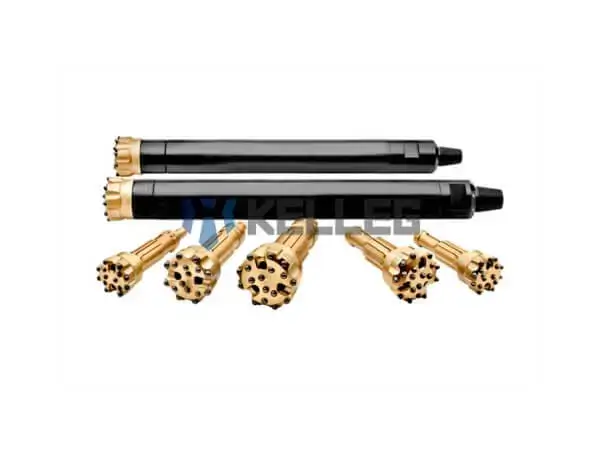
Why DTH Drilling Dominates in Hard Rock Projects #
When drilling in granite, basalt, limestone, or other high-compressive-strength formations, many conventional methods face serious limitations:
- Low penetration rate
- High energy loss
- Hole deviation
- Excessive drill bit wear
- Increased fuel and labor costs
Down-the-Hole (DTH) drilling solves these problems because:
Impact Energy Is Generated at the Bottom of the Hole #
Unlike top hammer systems, the hammer is positioned directly behind the bit. This minimizes energy loss and maximizes rock-breaking efficiency.
Superior Hole Straightness #
DTH systems maintain better alignment in deep holes, making them ideal for:
- Blast hole drilling
- Deep water well drilling
- Geothermal wells
- Production drilling
Higher Penetration Rates in Hard Rock #
DTH delivers consistent impact force regardless of depth, allowing fast and stable drilling even in high-density formations.
Lower Cost Per Meter in Hard Rock #
Although initial equipment cost may be moderate, DTH typically reduces:
- Bit consumption
- Fuel usage
- Downtime
- Re-drilling caused by deviation
Over the full project lifecycle, this results in significantly better cost control.
Understanding the strengths of DTH drilling naturally leads to the next question: when should you choose it for your project?
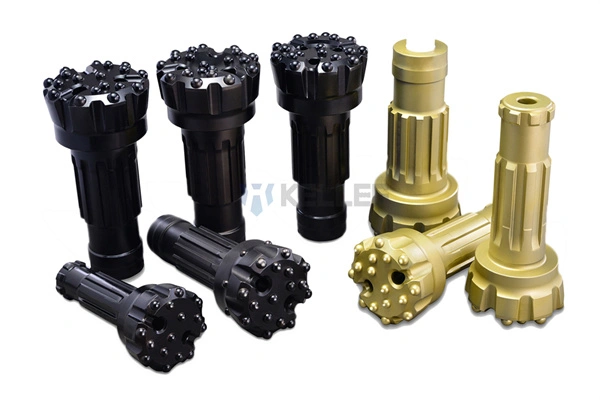
When Should You Choose DTH Drilling? #
DTH drilling is the preferred solution if your project involves:
- Hard or highly abrasive rock
- Hole depths exceeding 20–30 meters
- Strict straightness requirements
- High production targets
- Cost-per-meter optimization
If your borehole project falls into any of these categories, DTH drilling is likely the most efficient and reliable option.
However, choosing DTH as a method is only the first step. Real performance depends on selecting the correct DTH hammer and drill bit combination.
Choosing the Right DTH Hammer and Drill Bit for Maximum Borehole Performance #
In hard rock borehole drilling, performance is not determined by the drilling method alone. The real efficiency of a DTH operation depends on the correct combination of:
- DTH hammer design
- Drill bit structure
- Air pressure matching
- Rock formation characteristics
A mismatch between hammer and bit can reduce penetration rate by 20–40%, increase tool wear, and significantly raise cost per meter.
How to Choose the Right DTH Hammer #
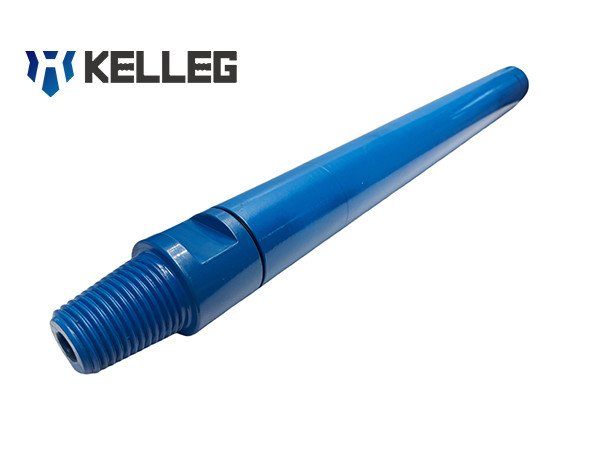
A DTH hammer converts compressed air into high-frequency impact energy. Its internal structure directly affects drilling speed, stability, and service life.
Match Hammer Size to Hole Diameter
Common sizes include:
- 3” hammer → 90–110 mm holes
- 4” hammer → 110–140 mm holes
- 5” hammer → 140–165 mm holes
- 6” hammer → 165–203 mm holes
Consider Air Pressure and Air Volume
Low air pressure:
- Lower penetration rate
- Poor cutting removal
- Increased bit regrinding
Evaluate Internal Hammer Design
High-quality DTH hammers offer:
- Optimized air cycle design
- Reduced internal wear
- Stable impact energy output
- Longer maintenance intervals
How to Choose the Right DTH Drill Bit #
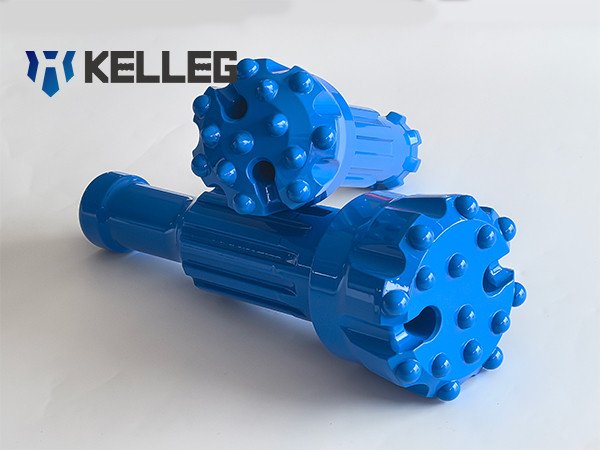
The drill bit is the component that directly contacts the rock. Its design determines fragmentation efficiency and wear resistance.
Button Type Selection #
Different carbide button shapes perform differently in various rock conditions:
- Spherical buttons → Best for very hard and abrasive rock
- Ballistic buttons → Faster penetration in medium-hard formations
- Parabolic buttons → Balanced performance and durability
Face Design Matters #
Common bit face designs:
- Flat face → Hard, abrasive rock
- Concave face → Better hole straightness
- Convex face → Faster penetration in softer rock
Material and Heat Treatment Quality #
Premium DTH bits use:
- High-grade alloy steel
- Advanced heat treatment processes
These factors improve:
- Impact resistance
- Button holding strength
- Overall durability
Conclusion #
Borehole drilling is a critical operation across mining, water well development, construction, and energy industries. From basic vertical wells to deep hard rock blast holes, drilling efficiency directly determines project cost, productivity, and long-term performance.
While multiple drilling methods exist, Down-the-Hole (DTH) drilling has proven to be one of the most reliable and cost-effective solutions for hard rock conditions. Its ability to deliver high-impact energy directly at the bottom of the hole ensures:
- Faster penetration rates
- Superior hole straightness
- Reduced tool wear
- Lower cost per meter
However, drilling success does not depend on the method alone. True performance comes from selecting the right combination of:
- DTH hammer size and air pressure
- Drill bit button design and face structure
- Rock condition matching
- Compressor capacity optimization
A properly matched DTH hammer and drill bit system can significantly improve drilling speed while reducing downtime and overall operational cost.