- Introduction
- What Are Button Drill Bits?
- Overview of Button Shapes Used in Rock Drilling
- Detailed Comparison of Button Shapes in Rock Drilling
- Comparison: Spherical vs Ballistic vs Conical vs Parabolic Buttons
- How to Choose the Right Button Shape for Your Rock
- Common Button Wear and Failure Modes
- Expert Tips to Maximize Drill Bit Performance
- Conclusion
Introduction #
Button drill bits are widely used in top hammer drilling and down-the-hole (DTH) drilling operations across mining, tunneling, quarrying, and construction projects.
A key factor that determines the performance of a drill bit is the shape of the tungsten carbide buttons installed on the bit face. Button geometry directly influences several critical drilling parameters, including:
- Penetration rate
- Wear resistance
- Drilling stability
- Overall service life of the drill bit
Because rock formations vary significantly in hardness, abrasiveness, and structural conditions, different button geometries are required to achieve optimal drilling results.
Selecting the appropriate button type can significantly improve drilling performance. In many cases, the right choice can increase drilling efficiency by 20–35% while reducing overall drilling costs by more than 25% through longer bit life and fewer replacements.
This leads to an important question for drilling engineers and project managers:
Which button type is best for your rock: spherical, ballistic, conical, or parabolic?
In this guide, we will compare the four most common button shapes used in rock drilling and explain how to choose the right option based on rock conditions and drilling requirements.
What Are Button Drill Bits? #
Definition #
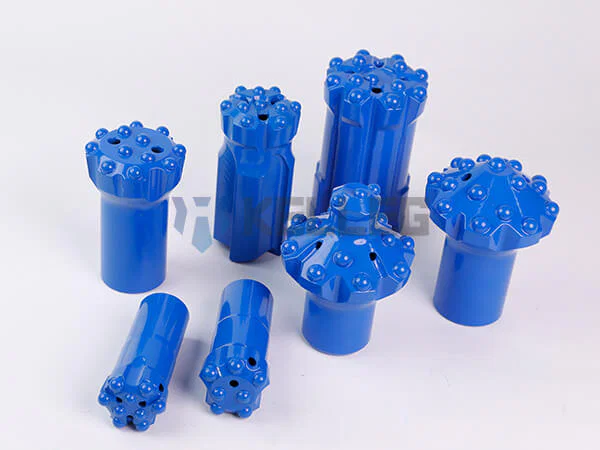
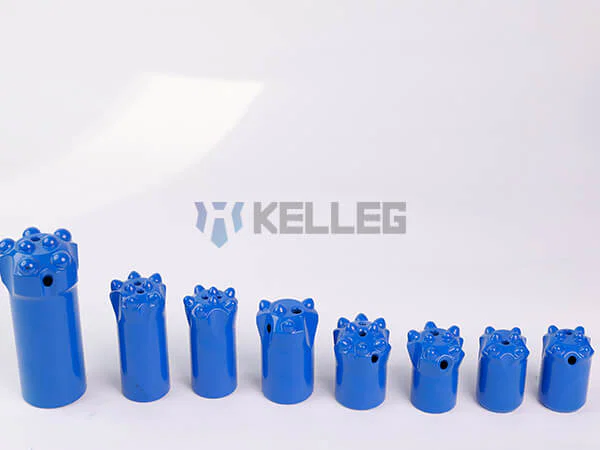
Button drill bits are rock drilling tools designed with tungsten carbide inserts (buttons) mounted on the surface of the bit face. These hardened carbide buttons act as the primary cutting elements during drilling.
When the drill bit strikes the rock, the buttons transfer impact energy to the formation, crushing and fracturing the rock while rotating to progressively deepen the borehole. Because tungsten carbide offers exceptional hardness and wear resistance, button drill bits are widely used in demanding drilling environments.
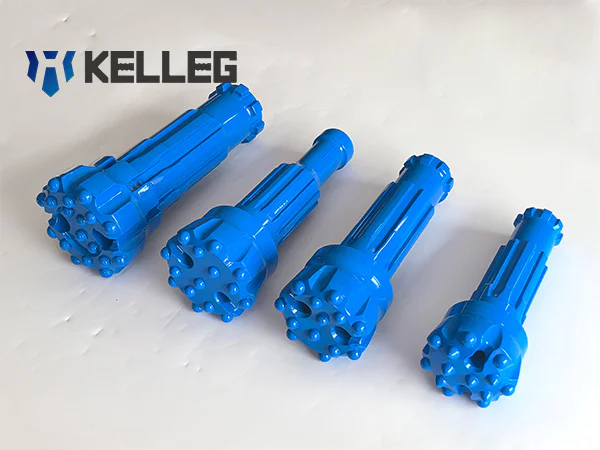
Button bits are commonly applied in top hammer drilling and down-the-hole (DTH) drilling across industries such as mining, tunneling, quarrying, and construction.
Main Components of Button Drill Bits #
A typical button drill bit consists of several key components that work together to ensure efficient rock drilling:
- Bit body (steel): The steel structure that provides strength and supports the carbide buttons.
- Tungsten carbide buttons: Hard inserts that directly contact the rock and perform the crushing action.
- Flushing holes: Channels that allow compressed air or water to remove rock cuttings and cool the drill bit.
- Bit face design: The layout and geometry of the bit surface, which determines button arrangement, rock fragmentation, and drilling stability.
Why Button Shape Matters #
The geometry of the carbide buttons plays a critical role in drilling performance. Different button shapes distribute impact forces differently and interact with rock formations in unique ways.
Button shape can affect:
- Impact resistance
- Penetration rate
- Wear pattern and button life
- Rock fragmentation efficiency
Because rock formations vary widely in hardness and abrasiveness, selecting the correct button geometry is essential for achieving optimal drilling results.
The right button shape can significantly improve drilling efficiency while extending the service life of the drill bit.
Overview of Button Shapes Used in Rock Drilling #
Carbide Designs #
One of the most fundamental considerations when selecting a button drill bit is the profile shape of the tungsten carbide inserts. The geometry of these buttons determines how impact energy is transferred to the rock and how the rock fractures during drilling.
In most rock drilling applications, button bits are equipped with hemispherical (spherical) or semi-ballistic carbide designs. However, other geometries—such as conical and parabolic profiles—are also widely used to meet specific drilling requirements and rock conditions.
Different carbide designs influence key performance factors such as strength, penetration capability, and wear resistance, making button shape an important parameter in drill bit selection.
Carbide Configurations #
In addition to button shape, button drill bits are available in various carbide configurations. These configurations typically differ in:
- Button diameter
- Button profile (shape)
- Number and arrangement of buttons
Selecting the appropriate carbide configuration requires balancing several performance considerations, including:
- Resistance to wear
- Penetration rate
- Drilling stability and vibration control
- Specific rock conditions (hardness and abrasiveness)
A well-designed configuration ensures efficient rock fragmentation while maintaining durability under high-impact drilling conditions.
Common Button Shapes and Their Applications #
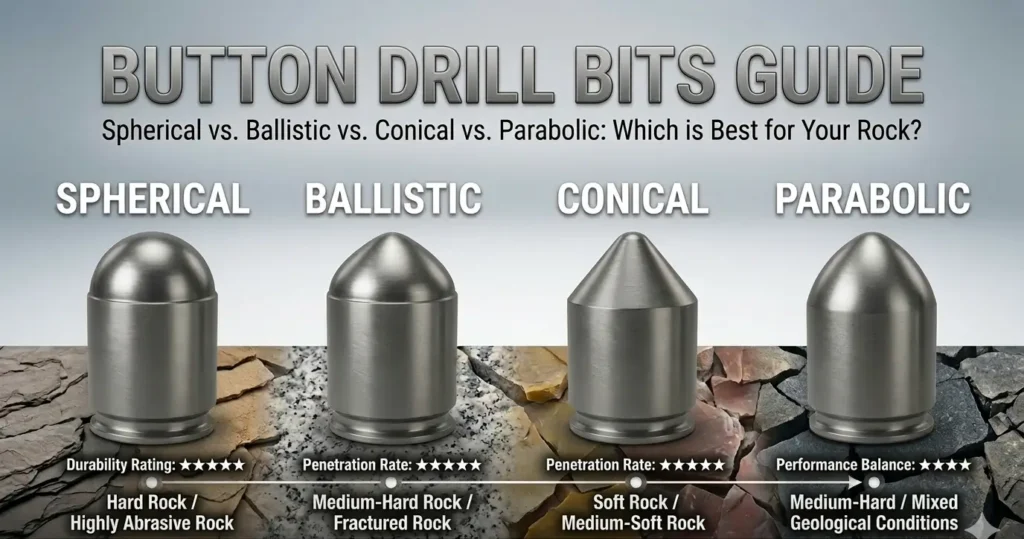
| Button Shape | Key Feature | Best For |
|---|---|---|
| Spherical | Maximum strength and durability | Hard and highly abrasive rock |
| Ballistic | High penetration capability | Medium-hard and fractured rock |
| Conical | Balanced penetration and durability | Medium rock formations |
| Parabolic | Improved wear resistance with good penetration | Abrasive rock conditions |
Each button geometry offers different performance characteristics depending on rock hardness, abrasiveness, and drilling conditions. Understanding these differences helps drilling operators select the most suitable button type for their specific application.
Detailed Comparison of Button Shapes in Rock Drilling #
Different tungsten carbide button shapes are designed to handle specific rock conditions and drilling requirements. Their geometry determines how impact energy is transferred to the rock, affecting penetration rate, wear resistance, and overall drilling stability.
Below is a detailed comparison of the four most common button shapes used in rock drilling.
Spherical Buttons #
What Are Spherical Buttons? #
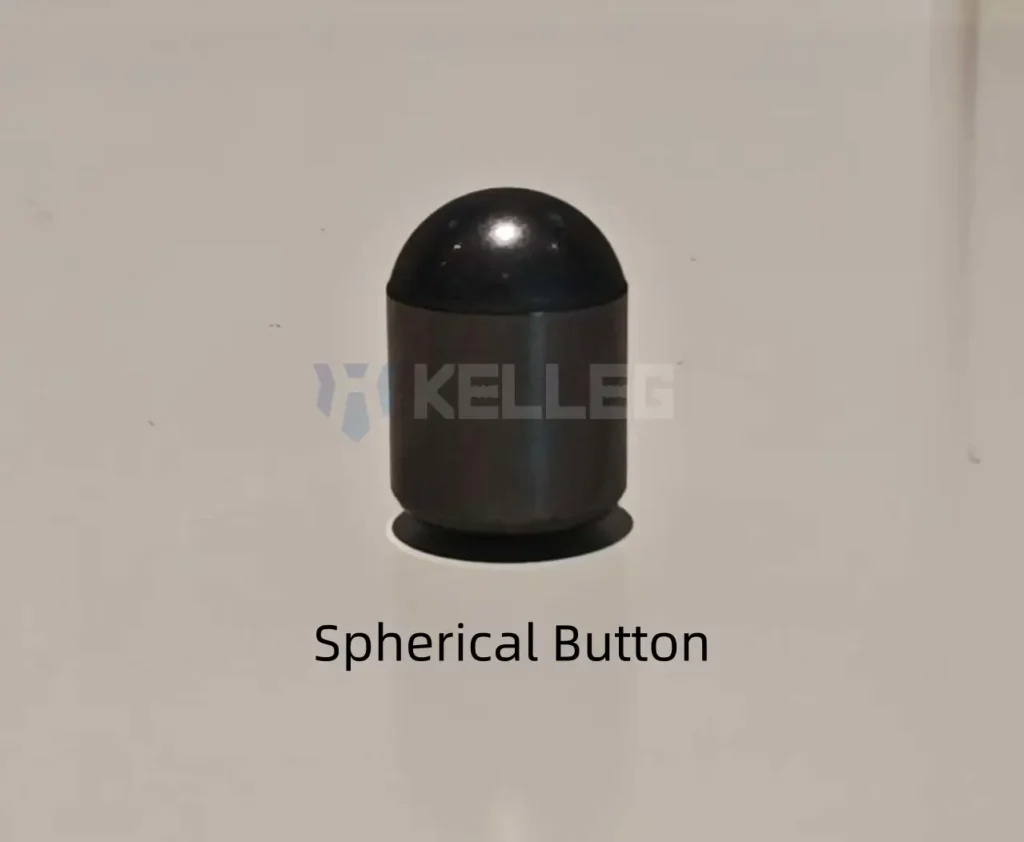
Spherical buttons feature a fully rounded dome shape. This geometry distributes impact stress evenly across the carbide surface, making it the strongest and most durable button type used in rock drilling.
Because of their high structural strength, spherical buttons are widely used in hard and highly abrasive rock formations.
Advantages #
- Stress is evenly distributed across the button surface
- Highest wear resistance and fracture resistance
- Extremely durable under high-impact drilling conditions
- Longest service life among all button shapes
Durability Rating: ★★★★★
Limitations #
- Lower rock penetration compared with other button shapes
- Slightly slower drilling speed
Penetration Rate: ★★★
Best Rock Conditions #
Spherical buttons perform best in:
- Hard rock formations
- Highly abrasive rock
These formations require maximum button strength and wear resistance rather than aggressive penetration.
Field Selection Checklist #
Use spherical buttons if:
✔ The rock is very hard
✔ The formation is highly abrasive
✔ Drill bit wear is a major concern
✔ You need maximum service life
Ballistic Buttons #
What Are Ballistic Buttons? #
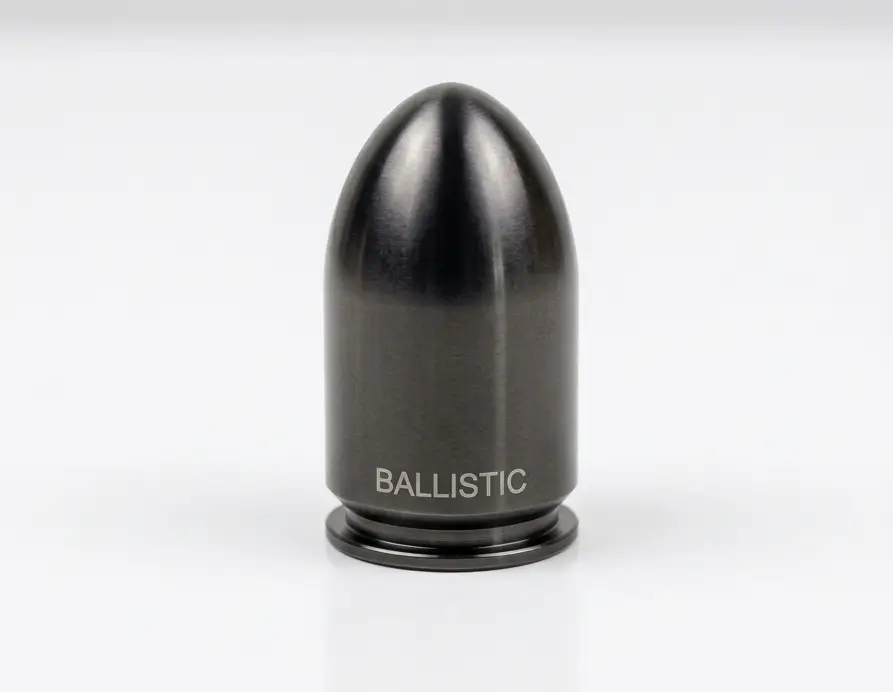
Ballistic buttons have a pointed dome profile, designed to concentrate impact energy into a smaller contact area. This increases pressure on the rock surface and improves penetration efficiency.
This design makes ballistic buttons particularly effective in medium-hard and fractured rock formations.
Advantages #
- Higher penetration rate due to concentrated impact force
- Faster drilling speed compared with spherical buttons
- Better flushing performance due to a smaller contact area
Penetration Rate: ★★★★★
Limitations #
- Lower wear resistance than spherical buttons
- Higher risk of edge chipping in very hard rock formations
Durability Rating: ★★★
Best Rock Conditions #
Ballistic buttons perform best in:
- Medium-hard rock formations
- Fractured rock structures
These formations allow the pointed geometry to maximize drilling speed without excessive wear.
Field Selection Checklist #
Use ballistic buttons if:
✔ The rock is medium-hard
✔ The formation is fractured or layered
✔ You want a higher drilling speed
✔ Abrasiveness is moderate or low
Conical Buttons #
What Are Conical Buttons? #
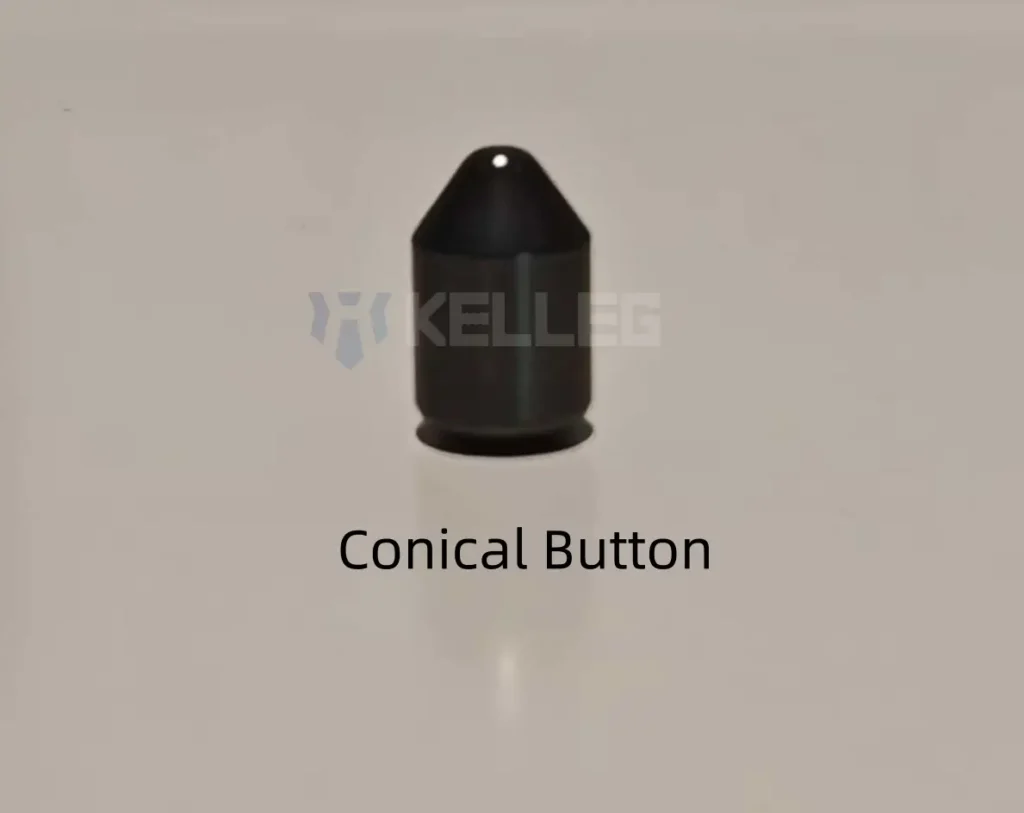
Conical buttons feature a cone-shaped tip, similar to a small chisel. This geometry concentrates impact force into a narrow point, enabling very aggressive rock breaking.
Because of this design, conical buttons often provide the highest penetration rate, but they also experience faster wear and higher breakage risk in hard rock.
Advantages #
- Extremely high penetration capability
- Efficient rock crushing
- Very fast drilling in softer formations
Penetration Rate: ★★★★★
Limitations #
- Shortest service life among common button shapes
- High risk of breakage in hard or abrasive rock
Durability Rating: ★
Best Rock Conditions #
Conical buttons are best suited for:
- Soft rock
- Medium-soft rock
- Non-abrasive formations
In these conditions, their aggressive geometry can maximize drilling productivity.
Field Selection Checklist #
Use conical buttons if:
✔ The rock is soft to medium-soft
✔ Abrasiveness is low
✔ You want maximum penetration speed
✔ Bit wear is not the primary concern
Parabolic Buttons #
What Are Parabolic Buttons? #
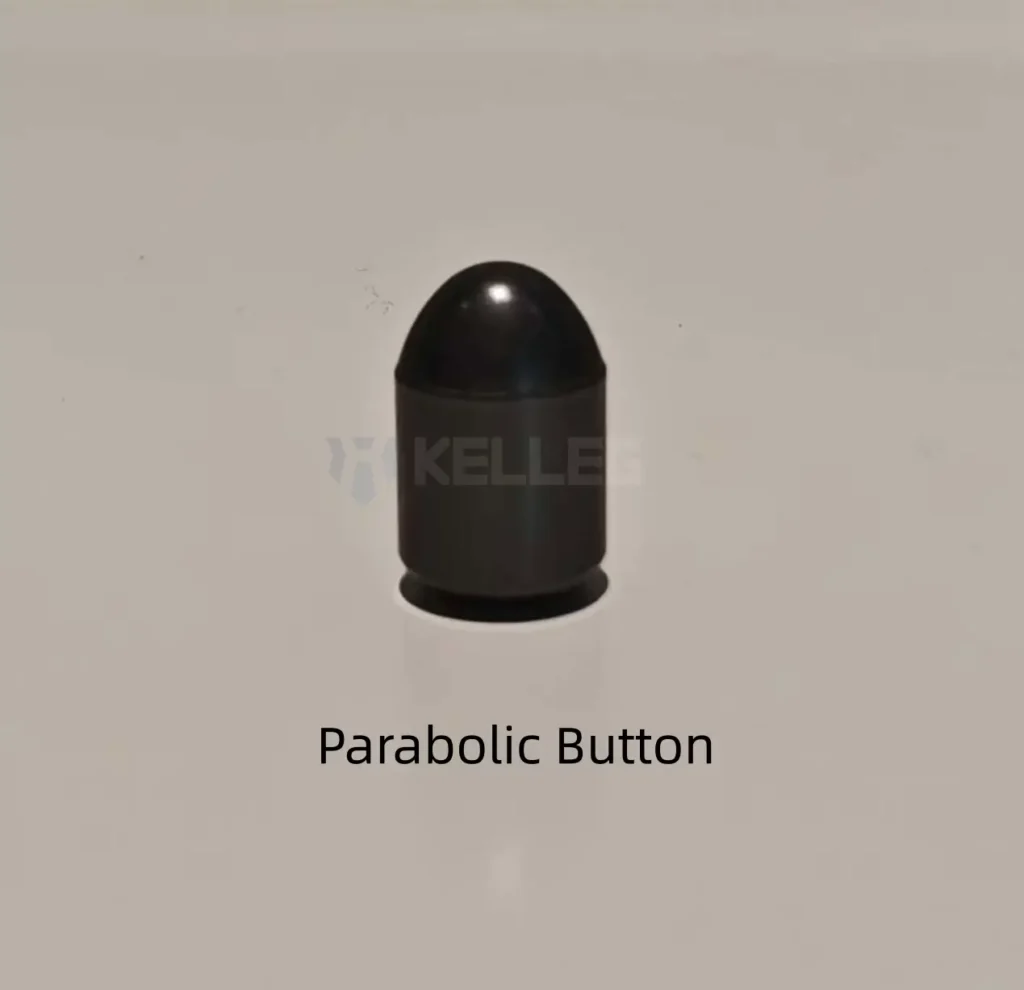
Parabolic buttons combine characteristics of spherical and ballistic buttons, featuring a smooth, curved profile that reduces stress concentration while maintaining good penetration capability.
This geometry provides a balanced performance between penetration rate and durability, making it suitable for varied geological conditions.
Advantages #
- Excellent balance between drilling speed and tool life
- Good wear resistance
- Stable drilling performance across changing formations
Performance Balance: ★★★★
Limitations #
- No extreme advantage in either penetration or durability
- May not be optimal for very hard or very soft formations
Best Rock Conditions #
Parabolic buttons perform well in:
- Medium-hard rock
- Moderately abrasive formations
- Mixed geological conditions
They are often chosen for projects where rock conditions vary along the drilling path.
Field Selection Checklist #
Use parabolic buttons if:
✔ Rock conditions change frequently
✔ The formation is medium-hard with moderate abrasiveness
✔ You need a balanced solution between speed and durability
Comparison: Spherical vs Ballistic vs Conical vs Parabolic Buttons #
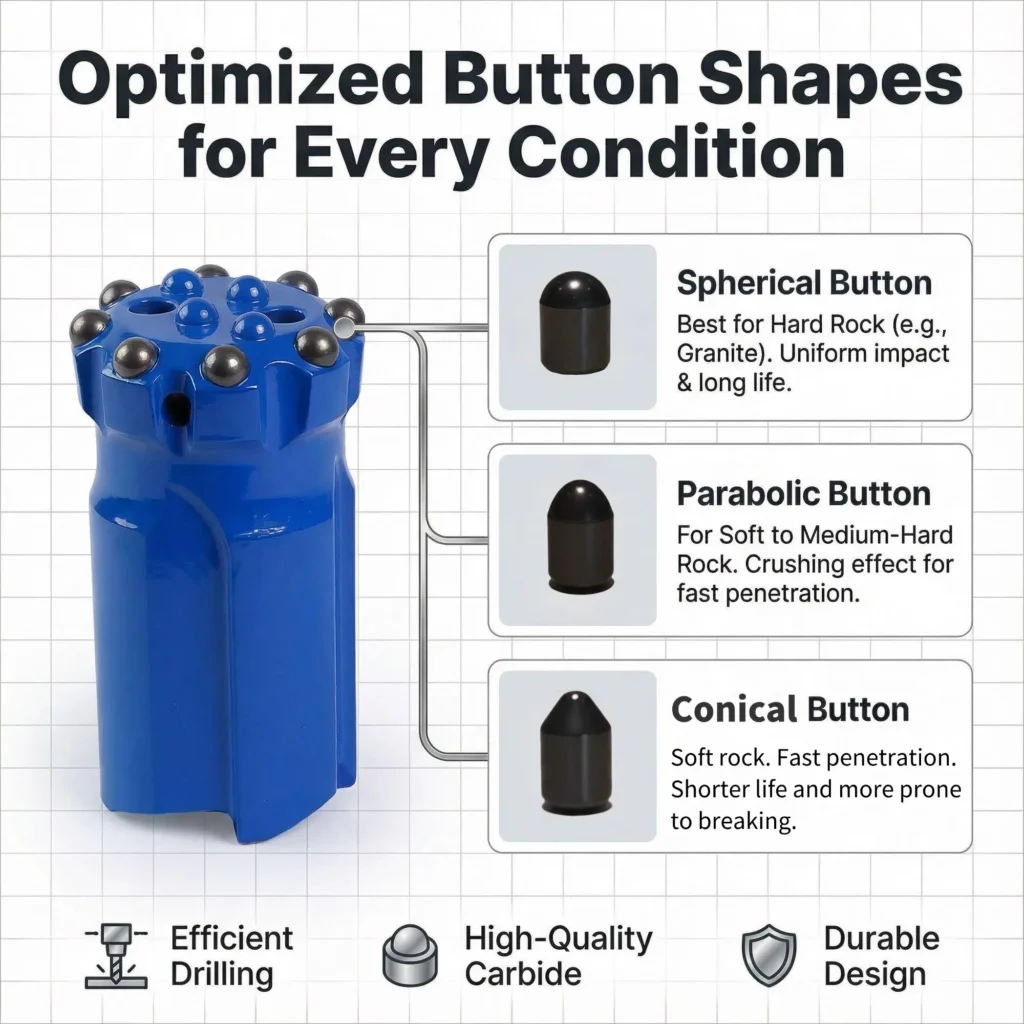
To select the right button drill bit design, drilling engineers often compare key performance indicators such as service life, penetration rate, and wear resistance. The table below summarizes the main differences between the four common button shapes.
| Feature | Spherical | Ballistic | Conical | Parabolic |
|---|---|---|---|---|
| Service Life | ★★★★★ | ★★★ | ★★ | ★★★★ |
| Penetration Rate | ★ | ★★★★ | ★★★★★ | ★★★ |
| Wear Resistance | ★★★★★ | ★★★ | ★ | ★★★★ |
| Best Rock Conditions | Hard & highly abrasive rock | Medium-hard, non-abrasive rock | Soft to medium-hard, non-abrasive rock | Medium-hard, moderately abrasive rock |
Key Takeaways #
- Spherical buttons provide the longest service life and highest wear resistance, making them ideal for hard and highly abrasive formations.
- Ballistic buttons deliver higher penetration rates, suitable for medium-hard formations where speed is important.
- Conical buttons offer the highest penetration capability, but their durability is limited, making them better suited for soft to medium-hard, non-abrasive rock.
- Parabolic buttons provide a balanced combination of drilling speed and durability, making them suitable for medium-hard rock with moderate abrasiveness.
In practice, selecting the correct button type depends on rock hardness, abrasiveness, drilling parameters, and desired drilling efficiency. Choosing the proper configuration can significantly improve both drilling productivity and bit lifespan.
How to Choose the Right Button Shape for Your Rock #
Selecting the correct button shape is critical for achieving efficient drilling performance and maximizing drill bit life. The optimal choice depends on several key factors, including rock hardness, abrasiveness, drilling method, and hole specifications.
Below are the main factors drilling engineers should evaluate when choosing a button configuration.
Rock Hardness #
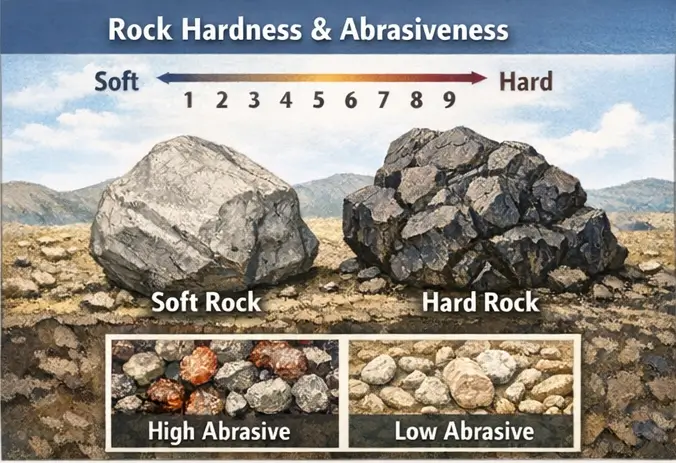
Rock hardness is one of the most important parameters affecting button selection. Harder formations require stronger button geometries that can withstand higher impact forces.
Recommended selection:
- Soft to medium rock → Ballistic buttons or Conical buttons
- Hard rock → Spherical buttons or Parabolic buttons
Softer rocks allow more aggressive button shapes to increase penetration speed, while hard rock formations require stronger and more durable button profiles.
Rock Abrasiveness #
Abrasive formations can cause rapid wear of carbide buttons. In these conditions, button shapes with higher wear resistance and stronger geometry should be selected.
Highly abrasive rock typically requires:
- Stronger button structures
- Higher wear resistance
- Longer service life
Recommended button types:
- Spherical buttons
- Parabolic buttons
These designs distribute stress more evenly and resist abrasive wear more effectively.
Drilling Method #
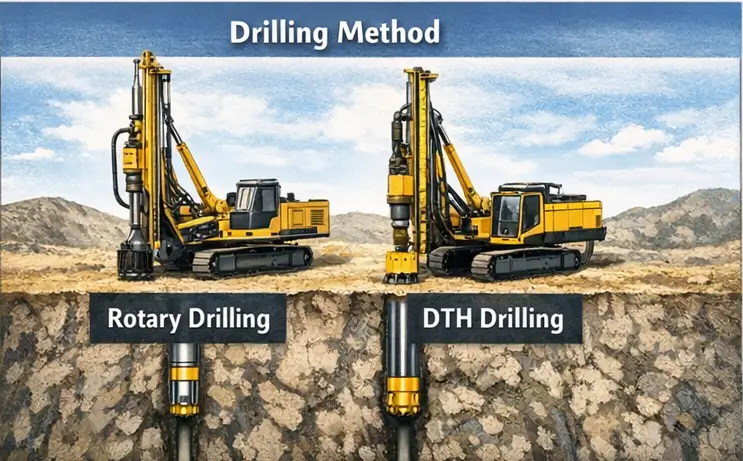
The drilling technique used can also influence the optimal button geometry. Different drilling environments place different mechanical stresses on the drill bit.
Common drilling methods include:
- Top hammer drilling – often requires durable buttons due to high impact energy
- Down-the-hole (DTH) drilling – favors efficient rock penetration and stable wear
- Bench drilling in quarries – may prioritize drilling speed
- Underground mining drilling requires stability and a long service life
Selecting the correct button design helps match the impact energy and drilling conditions of each method.
Hole Depth and Diameter #
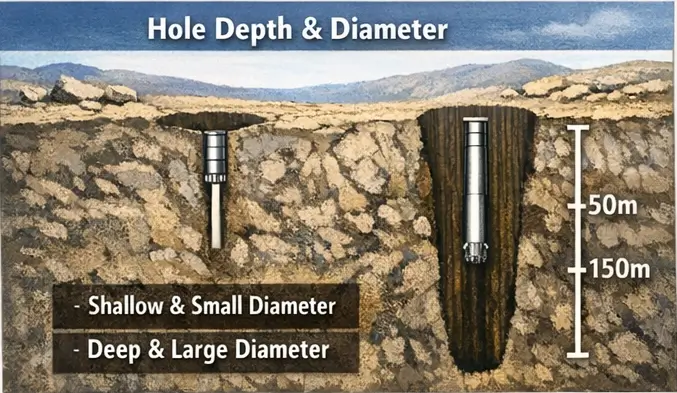
Hole geometry also plays an important role in button selection.
For deep holes or large-diameter drilling, drill bits experience higher loads and longer operating times. These conditions require:
- Stronger button shapes
- Better wear resistance
- More stable drilling performance
In these cases, spherical or parabolic buttons are often preferred because they provide improved durability and longer service life during extended drilling operations.
By considering these four factors—rock hardness, abrasiveness, drilling method, and hole specifications—operators can select the most suitable button configuration and significantly improve both drilling efficiency and drill bit lifespan.
Common Button Wear and Failure Modes #
During rock drilling operations, tungsten carbide buttons are subjected to repeated high-impact forces, abrasive contact, and thermal stress. Over time, these conditions can lead to various forms of wear or failure.
Understanding common failure modes helps operators identify problems early, optimize drilling parameters, and select the correct button design for the rock conditions.
Button Wear #
Button wear is the most common issue affecting drill bit performance. As drilling progresses, the carbide inserts gradually lose material due to constant contact with rock.
Typical wear patterns include:
- Flat wear: The top of the button becomes flattened by repeated impact and friction. Excessive flat wear can reduce penetration efficiency and increase drilling vibration.
- Abrasive wear: Occurs when drilling in highly abrasive formations such as quartz-rich rock. The button surface gradually erodes, reducing the effective cutting geometry.
Proper button selection and timely bit replacement can help minimize excessive wear.
Button Breakage #
Button breakage occurs when the carbide insert cracks or fractures under excessive stress. This failure mode is often related to inappropriate button design or unsuitable drilling conditions.
Common causes include:
- Improper button type selection for the rock formation
- Excessive impact energy or drilling pressure
- Using ballistic buttons in very hard rock, which increases the risk of edge chipping or cracking
Selecting stronger button geometries, such as spherical buttons, can significantly reduce breakage in hard rock conditions.
Button Loss #
Button loss occurs when the carbide insert becomes detached from the bit body. This issue can lead to rapid drill bit failure and poor drilling performance.
Typical causes include:
- Poor brazing or manufacturing defects
- Severe vibration during drilling
- Excessive drilling loads or unstable drilling conditions
Maintaining proper drilling parameters and using high-quality drill bits can help reduce the risk of button loss.
Recognizing these wear and failure patterns allows drilling operators to adjust drilling practices, improve bit selection, and extend the service life of rock drilling tools.
Expert Tips to Maximize Drill Bit Performance #
Optimizing the performance of button drill bits requires more than simply selecting the correct button shape. Proper tool configuration, drilling practices, and routine inspection all play important roles in maintaining high drilling efficiency and extending drill bit life.
The following expert recommendations can help operators achieve better results in rock drilling operations.
Choose the Right Button Type Based on Rock Hardness #
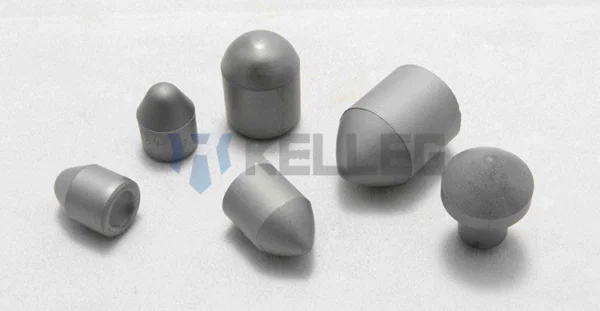
Different rock formations require different button geometries. Selecting the correct button type ensures the drill bit can withstand impact forces while maintaining efficient rock penetration.
For example:
- Spherical buttons are ideal for hard and highly abrasive rock.
- Ballistic buttons perform well in medium-hard formations where faster penetration is desired.
- Conical buttons are suitable for softer rock.
- Parabolic buttons offer balanced performance in mixed geological conditions.
Matching button shape to rock hardness helps prevent premature wear or breakage.
Match Button Geometry with Bit Face Design #
Button arrangement and bit face design work together to determine drilling performance. Even the best button shape may perform poorly if it is not properly matched with the bit face configuration.
Consider factors such as:
- Button distribution on the bit face
- Face design (flat face, drop center, concave, etc.)
- Flushing hole placement
A well-balanced design improves rock fragmentation, hole straightness, and drilling stability.
Maintain Proper Drilling Parameters #
Incorrect drilling parameters can significantly reduce drill bit life and efficiency. Operators should carefully control:
- Impact energy
- Rotation speed
- Feed pressure
- Flushing air or water flow
Proper parameter control reduces vibration, improves rock removal, and prevents excessive button stress.
Regularly Inspect Button Wear #
Routine inspection is essential for maintaining drilling performance. Over time, button wear can reduce penetration efficiency and increase the risk of bit damage.
Operators should regularly check for:
- Flattened button surfaces
- Uneven wear patterns
- Cracks or chipped edges
- Loose or missing buttons
Replacing worn drill bits at the right time helps maintain consistent drilling performance and avoids costly downtime.
By combining proper button selection, bit design, drilling parameters, and maintenance practices, drilling operators can significantly improve drilling efficiency, service life, and overall project productivity.
Conclusion #
Button geometry plays a critical role in determining overall drilling performance. The shape of the tungsten carbide buttons directly influences penetration rate, wear resistance, drilling stability, and service life.
As discussed in this guide, no single button type is suitable for all rock conditions. Each design—spherical, ballistic, conical, and parabolic—offers distinct advantages depending on factors such as rock hardness, abrasiveness, and drilling requirements.
For drilling operators and project managers, the key to success lies in matching the right button geometry to the specific application. Making the correct choice can lead to:
- Higher drilling efficiency
- Longer drill bit life
- Reduced downtime
- Lower overall operational costs
Choosing the right button drill bit design is not just a technical decision—it is a direct driver of productivity and cost control in rock drilling operations.