
Although digital transformation has been discussed in the mining industry for many years, intelligent mining is no longer just a future trend — it has become an urgent requirement driven by safety concerns, cost pressures, labor constraints, and rising ESG responsibilities. Traditional mining models are increasingly unable to meet modern operational demands.
What is “Intelligent Mining”?
Intelligent mining refers to a new generation of mining operations where digital technologies, automation, and artificial intelligence (AI) are deeply integrated into every stage of the mining value chain. Instead of relying mainly on manual operations and isolated systems, intelligent mines use connected equipment, real-time data, advanced analytics, and autonomous decision-making to manage production, safety, maintenance, and logistics in a coordinated way.
In simple terms, an intelligent mine is data-driven, automated, safer, and highly optimized, enabling mining companies to achieve higher efficiency and lower risk compared with traditional mining models.
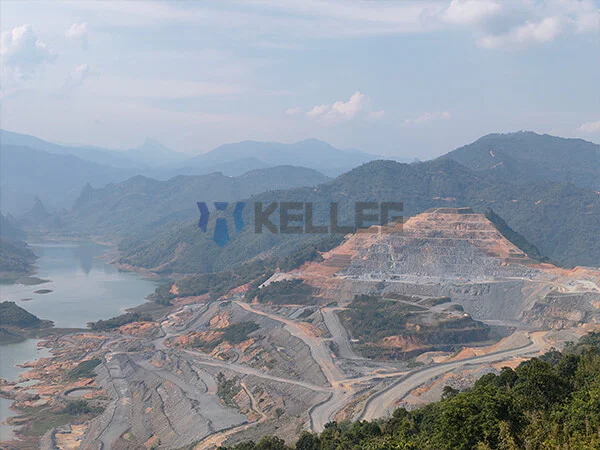
The Urgent Need for Intelligent Mining
High-Risk Working Environments
Mining operations frequently occur in deep, remote, and geologically complex locations. Workers are exposed to hazards such as:
- Rockfalls and collapses
- Gas and dust exposure
- Equipment collisions
- Blasting operations
- Extreme underground conditions
Intelligent mining reduces direct human exposure by implementing automation, remote operation, and AI-driven hazard monitoring, significantly improving worker safety.
Rising Operational and Maintenance Costs
Mining companies face continuous cost pressure due to:
- Increasing fuel and energy costs
- Expensive equipment maintenance
- Unplanned downtime
- Declining ore grades
AI-powered predictive maintenance, production optimization, and energy management help operators lower cost per tonne and stabilize profitability, which is critical in volatile commodity markets.
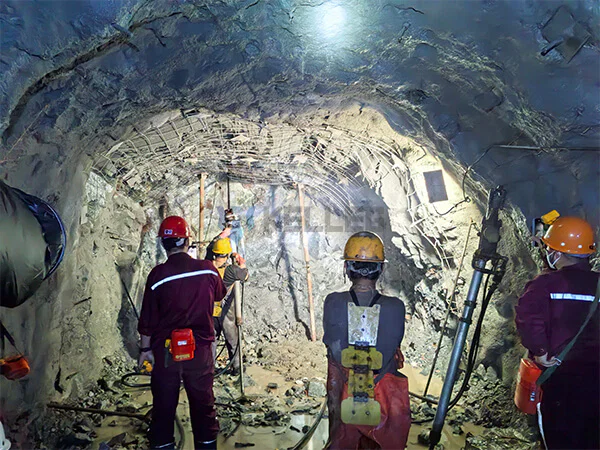
Equipment Downtime and Efficiency Loss
Unplanned equipment failures lead to:
- Production interruption
- High repair expenses
- Schedule delays
- Safety risks
AI enables early fault detection and predictive asset health monitoring, shifting maintenance from a reactive to a proactive approach — thereby extending equipment life and maintaining continuous operations.
Skilled Labor Shortages and Workforce Transformation
Many mining regions are facing aging workforces and difficulty attracting young talent — especially to remote or harsh environments. At the same time, modern mining requires advanced digital and technical skills.
Intelligent mining:
- Reduces reliance on manual labor in dangerous zones
- Enables remote control centers
- Creates higher-skill digital roles instead of purely physical ones
This helps operators maintain workforce stability and capability.
Increasing ESG and Regulatory Pressure
Governments, investors, and communities expect mining companies to:
- Reduce emissions
- Improve environmental protection
- Ensure workplace safety
- Provide transparent reporting
- Minimize land and water impact
AI supports environmental monitoring, compliance analytics, and ESG reporting, helping companies meet stricter global sustainability standards.
Complex and Data-Intensive Operations
Modern mines generate vast volumes of data from sensors, equipment, geological surveys, and production systems — but much of it remains underutilized.
AI transforms raw data into:
- Real-time insights
- Predictive models
- Optimization strategies
allowing mining companies to transition from experience-based decision-making to data-driven management.
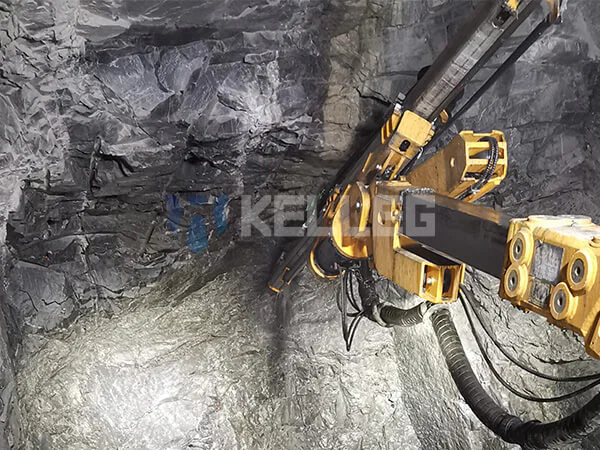
Demand for Safer, More Predictable, and More Profitable Operations
Ultimately, mining companies need to:
- Improve safety outcomes
- Maintain stable production
- Reduce variability in performance
- Control costs sustainably
- Protect long-term asset value
Intelligent mining — powered by AI — provides the tools, automation, and intelligence required to achieve these goals.
Core AI Technologies Powering Intelligent Mining
Artificial Intelligence is not a single technology, but a combination of data, analytics, sensing, automation, and simulation systems working together. The following AI technology stacks form the foundation of the modern intelligent mine.
AI-Powered Data Collection & Sensing
AI depends on accurate, continuous data from the field. In intelligent mining, this is enabled through:
Smart Sensors
Sensors installed on equipment, conveyors, plants, tailings dams, and underground areas collect data such as:
- Vibration
- Pressure
- Temperature
- Machine load
- Gas concentration
- Ground stability
- Environmental indicators
These devices help build a real-time digital picture of mine operations.
Edge Computing
Instead of sending all data to the cloud, edge devices process information locally — close to the equipment. This enables:
- Ultra-fast response times
- Lower data transmission costs
- Reliable performance in remote mine sites
It ensures AI decisions can be made even when connectivity is limited.
Real-Time Monitoring Platforms
All collected data flows into centralized dashboards and AI systems, enabling operators to monitor mine health, performance, and safety conditions in real-time.
Machine Learning & Predictive Analytics
Machine learning models analyze historical and live data to identify patterns and predict outcomes.
Predictive Maintenance
AI detects early signals of component wear or abnormal operation — allowing maintenance teams to repair equipment before failure occurs.
Failure Risk Modeling
Algorithms evaluate operating conditions and performance trends to calculate the probability of breakdowns, safety risks, or process deviations.
Energy Optimization
AI analyzes energy consumption across the mine and automatically recommends or executes strategies to reduce fuel and electricity usage without affecting output.
Computer Vision in Mining
Computer vision systems use AI-powered cameras to “see” and interpret the mine environment.
Applications include:
- Conveyor belt monitoring — detecting blockages, misalignment, or spillage
- Ore sorting — classifying material based on color, texture, or composition
- Worker and hazard detection — PPE compliance, proximity alerts, collision avoidance
- Environmental monitoring — tailings surveillance, water level tracking, dust emission detection
These systems enable continuous visual inspection at a scale no human workforce can achieve.
Autonomous & Semi-Autonomous Systems
AI supports automation ranging from operator-assisted systems to fully autonomous fleets.
Key applications include:
Autonomous Haul Trucks
AI guides trucks safely around the mine site, improving fleet coordination and reducing accident risk.
Drilling Automation
Automated DTH, RC, and rotary drilling systems enhance:
- Precision
- Penetration consistency
- Tool life
- Operator safety
Remote Operation Centers
Operators can control and supervise machinery from safe, centralized locations — even hundreds of kilometers away.
This reduces human exposure and allows round-the-clock, consistent production.
Digital Twins & Simulation
A digital twin is a virtual replica of the entire mine — including geology, equipment, infrastructure, and process flows.
It allows mining companies to:
- Simulate production changes
- Test “what-if” scenarios
- Optimize mine design
- Predict long-term asset behavior
Combined with AI, digital twins enable real-time operational decision modeling and strategic planning.
Real-World Applications of AI in Mining
Beyond the technology layer, AI delivers value through practical field-level applications that directly improve safety, production, and cost performance.
AI-Driven Mine Planning & Exploration
AI enhances geological interpretation and resource evaluation by:
- Integrating data from drilling logs, geophysics, core samples, and remote sensing
- Identifying mineralization patterns
- Improving resource estimation accuracy
This helps geologists reduce uncertainty and improve planning decisions.
AI for Drilling & Blasting Optimization
By analyzing rock properties, drilling data, and fragmentation results, AI supports:
- Precision drilling — correct depth, spacing, and alignment
- Fragmentation prediction — producing optimal rock size for downstream processing
This reduces explosives waste and improves crusher and mill performance.
AI-Enhanced Equipment Health Monitoring
AI monitors vibration, temperature, pressure, oil quality, and acoustic signals to detect:
- Abnormal wear
- Bearing failure
- Hydraulic issues
- Structural stress
This enables early detection of mechanical problems, helping mines:
- Reduce unplanned shutdowns
- Extend asset life
- Lower maintenance costs
AI for Production Optimization
AI continuously analyzes production flow across loading, hauling, crushing, conveying, and processing to improve performance.
Key outcomes include:
- Load-haul-dump optimization — better dispatching and cycle utilization
- Ore recovery improvement — minimizing dilution and loss
- Reducing bottlenecks and idle time
This results in higher throughput and more stable production.
AI for Worker Safety & Risk Control
AI-enabled safety systems provide:
- Real-time hazard alerts
- Fatigue and distraction monitoring
- Proximity and collision avoidance
- Emergency communication and incident detection
These technologies help prevent accidents before they occur and protect high-risk personnel.
Environmental & ESG Applications
AI supports responsible and sustainable mining by improving:
- Tailings monitoring — stability and leakage detection
- Emissions tracking — air quality, GHGs, and dust
- Water and land use optimization — consumption monitoring and risk prevention
This strengthens ESG performance and compliance reporting.
Conclusion
Artificial intelligence is no longer an experimental concept in the mining industry — it is becoming the central engine that supports safer, smarter, and more efficient mining operations. By combining AI-driven sensing, data analytics, automation, and digital simulation, intelligent mining transforms how resources are explored, extracted, transported, and managed across the entire value chain.
For mining companies, the benefits are tangible and strategic. AI enables predictable production, proactive maintenance, lower cost per tonne, reduced downtime, and stronger risk control. At the same time, it helps protect workers by minimizing exposure to high-risk environments and supports ESG and sustainability goals through better environmental monitoring and responsible resource use.
However, the transition to intelligent mining is not only a technology upgrade — it requires data governance, cross-system integration, skilled digital talent, and long-term strategic planning. Companies that begin this transformation early will build a strong competitive advantage, while those who delay risk being left behind in a rapidly digitizing industry.
Ultimately, AI is reshaping the mining ecosystem from manual control to autonomous intelligence, creating mines that are safer for people, more efficient for operators, and more sustainable for the planet. The future of mining will not simply be automated — it will be intelligent.