Introduction #
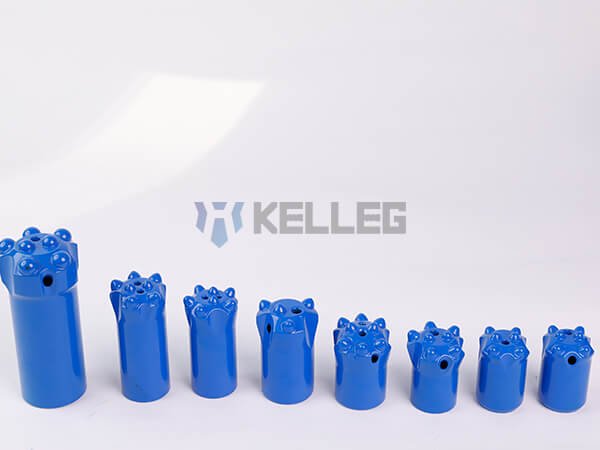
In deep underground non-ferrous metal mining, pneumatic rock drills equipped with medium- to long-hole button bits are widely used for rock drilling and tunneling operations. Button bits are manufactured by installing cemented carbide buttons into a steel bit body using hot-press insert technology, forming a robust and reliable cutting structure.
Compared with traditional blade-type drill bits, button bits offer significantly greater design flexibility. The number and layout of edge and center buttons can be precisely optimized according to hole diameter and rock-breaking load requirements, without practical limitations on bit diameter. This flexible button arrangement enables multi-point impact rock fragmentation, resulting in higher drilling efficiency. It effectively eliminates unbroken zones while avoiding repeated crushing of rock cuttings, thereby improving overall energy utilization.
In mining operations, blast holes are drilled into the rock mass, explosives are charged, and controlled blasting is carried out to fragment the rock for ore extraction. The drilling speed and drilling quality directly affect subsequent blasting performance and have a decisive impact on project progress, construction quality, operational safety, and overall mining cost.
Rock drilling methods can generally be classified into mechanical and non-mechanical rock-breaking techniques, among which mechanical drilling is the most widely applied in underground mining. With the increasing modernization and performance capabilities of drilling equipment, higher demands are being placed on drilling tools in terms of performance, durability, and productivity per bit.
Modern drill bits are required not only to achieve high penetration rates and efficient rock fragmentation, but also to deliver extended service life in order to effectively control operating costs. As market demands continue to evolve and performance expectations increase, in-depth research into drill bit manufacturing processes has become essential. Continuous improvement in product quality—particularly through the optimization of insert retention systems and hot-press insert processes—has proven to be a key approach to enhancing the overall performance and reliability of rock drill bits for deep mining applications.
What Is Hot-Press Insert Technology for Rock Drill Bits? #
Hot-press insert technology is a manufacturing process used to securely install cemented carbide inserts into the steel body of rock drill bits. Unlike traditional cold press-fitting or brazing methods, this technology combines elevated temperature and controlled mechanical pressure to achieve a strong and stable metallurgical bond between the insert and the bit body.

Definition of Hot-Press Insert Technology #
Hot-press insert technology is a process in which pre-formed cemented carbide buttons are inserted into precisely machined holes in the drill bit body under high-temperature conditions and controlled axial and radial pressure. During the process, the steel around the insert undergoes localized thermal expansion and plastic deformation, allowing the insert to be firmly embedded. After cooling, the interference fit and metallurgical interaction together provide superior retention of the insert.
Core Principle: High Temperature, Controlled Pressure, and Metallurgical Bonding #
The effectiveness of hot-press insert technology is based on the combined action of three key factors:
- High temperature: Heating softens the steel bit body and promotes controlled thermal expansion, reducing insertion stress and minimizing the risk of micro-cracking in the carbide insert.
- Controlled pressure: Precisely applied pressure ensures accurate insert positioning, proper seating depth, and uniform contact between the insert and the hole wall.
- Metallurgical bonding: At elevated temperatures, intimate contact between the insert and the steel matrix enhances interfacial bonding, improving resistance to loosening under repeated impact loads.
Together, these factors create a highly reliable insert retention system capable of withstanding the extreme impact, vibration, and thermal stresses encountered in deep mining operations.
Typical Insert Materials Used in Hot-Press Insert Processes #
The inserts used in hot-press technology are typically made from cemented carbide, selected according to rock hardness, abrasiveness, and drilling conditions. Common carbide grades include:
- Medium-grain carbide grades for balanced toughness and wear resistance
- Fine-grain carbide grades for high wear resistance in abrasive formations
- Toughened carbide grades for high-impact and fractured rock environments
The compatibility between the carbide grade and the steel bit body is a critical factor in ensuring long-term insert stability and drilling performance.
Application Scope in Deep Mining Rock Drilling #
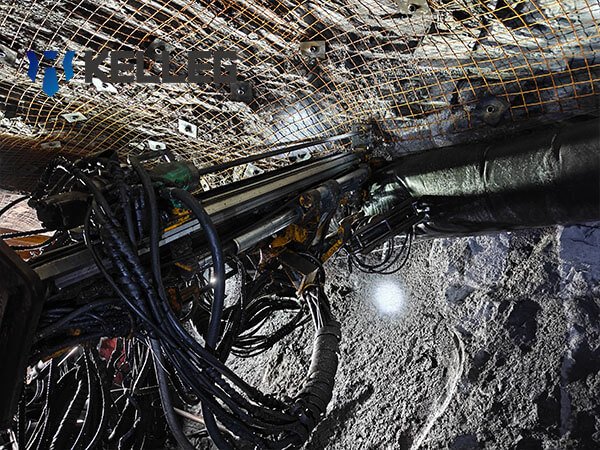
Hot-press insert technology is widely applied in rock drill bits used for deep underground mining, where high confining pressure, hard and abrasive rock formations, and intense cyclic impact loads characterize drilling conditions. Typical applications include:
- Deep metal mining blast-hole drilling
- Medium- and long-hole drilling operations
- Hard rock tunneling and development headings
High-stress drilling environments requiring extended bit service life #
By providing superior insert retention and enhanced durability, hot-press insert technology has become an essential manufacturing solution for high-performance rock drill bits designed for deep mining applications.
Hot-Press Insert Process #
The hot-press insert process scheme for button-type rock drill bits is designed to achieve high insert retention strength, structural stability, and long service life under deep mining conditions. The process integrates precision machining, controlled heat treatment, and optimized insert installation. The typical process scheme is described below.
Initial Hole Drilling and Pre-Heat Treatment #
Initial insert holes are drilled in the mechanically machined drill bit body, with a reaming allowance of 0.08–0.12 mm reserved for subsequent finishing. The drill bit body is then placed in a salt bath furnace and heated to 700–900 °C, followed by a soaking period of 30–90 minutes to ensure uniform temperature distribution and effective quenching and tempering preparation.
Controlled Quenching Treatment #
After heat treatment, the drill bit body is transferred to a constant-temperature quenching system with a liquid temperature of 60–100 °C. The bit body is gently agitated for 10–30 minutes to ensure uniform cooling, then removed and suspended for air cooling. This step improves hardness while minimizing internal stress concentration.
Tempering Treatment and Hardness Control #
The quenched drill bit body is placed in a box-type furnace and tempered at 400–600 °C for 1–3 hours, followed by furnace cooling. After tempering, the surface hardness of the bit body is controlled within HRC 52–56, providing an optimal balance between strength and toughness for high-impact drilling.
Precision Reaming and Interference Fit Control #
After tempering, the insert holes are precision reamed. The final interference allowance is controlled within 0.02–0.06 mm, and the internal surface finish of the holes is maintained at Ra ≤ 0.6 μm. Accurate hole geometry and surface quality are critical for uniform stress distribution and reliable insert retention.
Anti-Oxidation Treatment #
Following reaming, an anti-oxidation agent is sprayed inside the insert holes to prevent oxidation during subsequent heating. This treatment ensures clean metal contact and promotes effective metallurgical bonding during the hot-press insert process.
Hot-Press Insert Installation and Surface Strengthening #
Cylindrical cemented carbide inserts are first subjected to barrel tumbling to eliminate residual surface stress. The inserts are then ground so that their outer diameter exceeds the design requirement by 0.04–0.08 mm.
The drill bit body is heated to 200–220 °C, and the carbide inserts are pressed into the holes using a dedicated press-fitting device. Thermal expansion of the steel bit body allows smooth insertion of the carbide buttons. Upon cooling, the bit body contracts and firmly locks the inserts in place.
This hot-press method effectively avoids cutting or damaging the hole wall, which can occur during cold press-fitting, and prevents insert damage caused by external impact during installation. As a result, the insert retention is strong, stable, and highly reliable.
Shot peening is subsequently applied to introduce beneficial compressive residual stress on the surface of the drill bit body. This treatment plays a critical role in suppressing fatigue crack initiation and further enhancing insert retention.
Final Cooling and Shot Blasting Treatment #
After insert installation, the entire drill bit body is placed in a vacuum chamber for controlled cooling and stabilization. The bit is then subjected to shot blasting, which significantly improves fatigue life, wear resistance, and surface hardness.
This final surface treatment effectively prevents common failure modes such as brittle fracture, insert loosening, insert breakage, and short fatigue life, thereby ensuring reliable performance in demanding deep mining applications.
Hot-Press Insert vs Other Insert Methods #
| Aspect | Hot-Press Insert | Cold Press / Brazing |
| Bonding strength | High | Medium |
| Insert retention | Excellent | Prone to loosening |
| Thermal resistance | High | Limited |
| Service life | Longer | Shorter |
| Suitability for deep mining | Highly suitable | Limited |
Performance Benefits in Deep Mining Applications #
In deep mining environments, rock drill bits are exposed to extreme operating conditions, including high confining pressure, strong impact loads, intense vibration, and abrasive rock formations. Under these demanding conditions, hot-press insert technology delivers significant performance advantages that directly enhance drilling efficiency, reliability, and overall mining productivity.
Improved Insert Retention and Bit Reliability #
Hot-press insert technology provides superior insert retention by combining thermal expansion of the steel bit body with controlled interference fit and enhanced metallurgical bonding. This robust retention mechanism significantly reduces the risk of insert loosening, rotation, or pull-out during high-impact drilling.
As a result, the overall reliability of the drill bit is improved, enabling consistent performance even in fractured or highly stressed rock formations commonly encountered in deep mining operations.
Longer Service Life Under Extreme Conditions #
Deep mining drilling generates severe mechanical and thermal stresses that accelerate tool wear and fatigue. The optimized insert retention and residual compressive stress introduced during the hot-press insert process effectively suppress fatigue crack initiation and propagation.
This leads to a substantially longer service life of the drill bit, even under continuous high-energy impact and elevated temperature conditions. An extended bit life directly contributes to reduced tool consumption and lower operating costs per meter drilled.
Better Drilling Stability and Penetration Consistency #
Securely retained inserts maintain their designed position and cutting geometry throughout the drilling process. This stability results in smoother energy transfer from the rock drill to the rock face, reducing vibration and impact energy loss.
Consequently, hot-press insert drill bits deliver more consistent penetration rates and stable drilling performance, enabling predictable drilling results and improved blast hole quality in deep mining applications.
Conclusion #
As mining operations continue to move deeper, drilling conditions become increasingly severe, characterized by higher in-situ stress, harder and more abrasive rock formations, and intensified impact loads. Under these extreme conditions, the performance of rock drill bits is no longer determined solely by material selection or bit geometry, but by the reliability of the insert retention system.
Hot-press insert technology has proven to be an essential manufacturing solution for rock drill bits used in deep mining applications. By combining elevated temperature, controlled pressure, and optimized interference fit, this technology creates a strong and stable bond between cemented carbide inserts and the steel bit body. The result is superior resistance to insert loosening, breakage, and fatigue failure under continuous high-energy drilling.
More importantly, hot-press insert technology enables drill bits to meet the evolving demands of deep mining, where productivity, safety, and cost control must be balanced under increasingly challenging geological conditions.